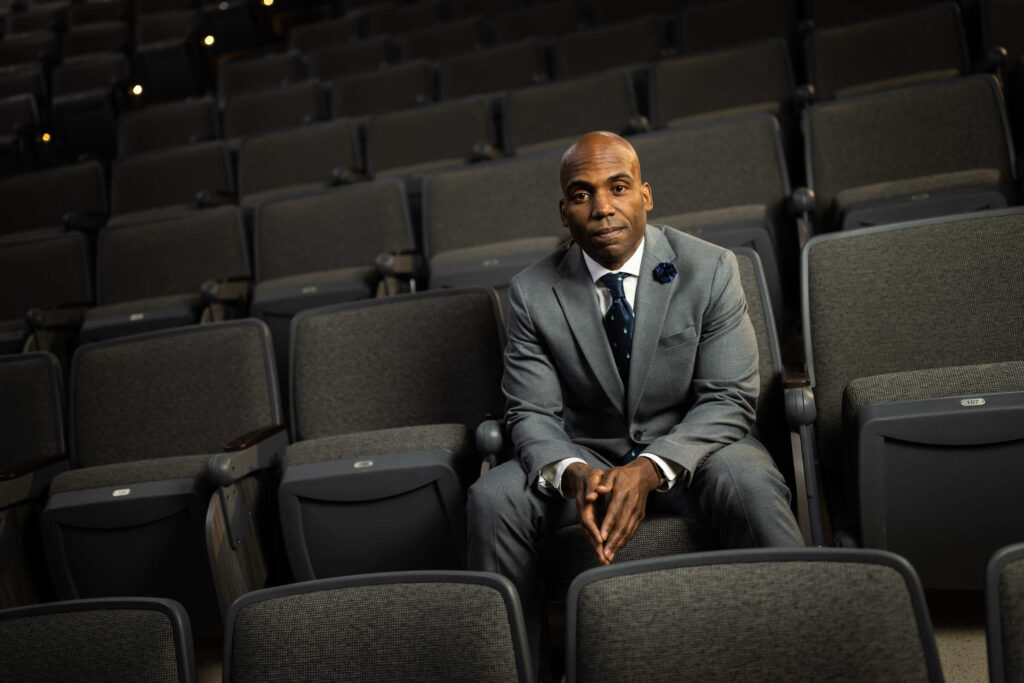
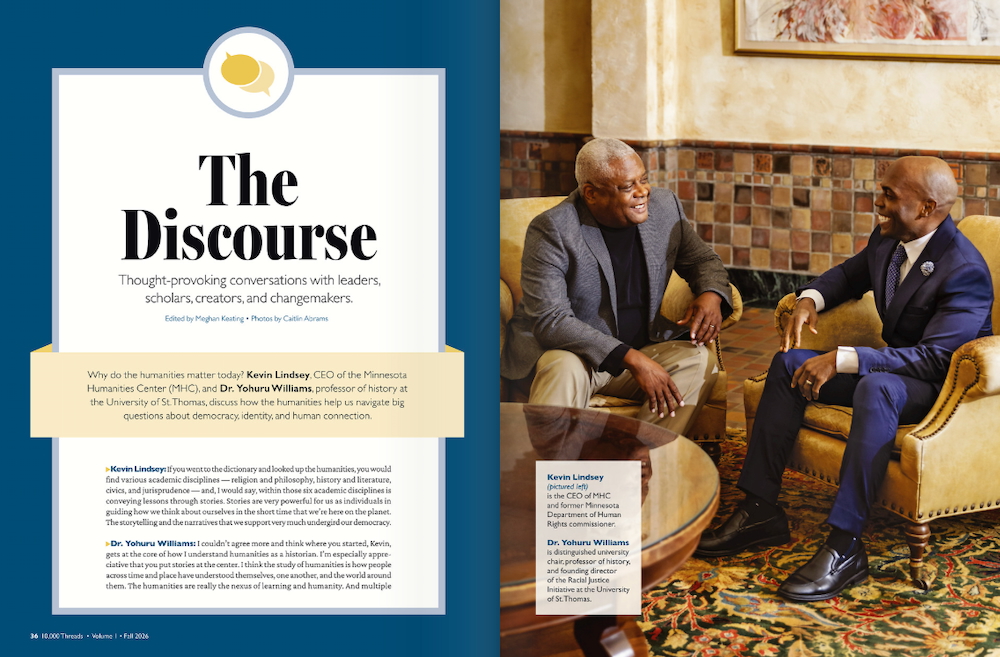
Dr. Yohuru Williams, Distinguished University Chair, professor of history and director of the Racial Justice Initiative at the University of St. Thomas, spoke with 10,000 Threads, a publication of the Minnesota Humanities Center, about the importance of the humanities in today's society. In a five-page Q&A with Minnesota Humanities Center CEO Kevin Lindsey, Williams discussed how the humanities help people navigate questions of democracy, identity and belonging while preserving human connection in an increasingly technology-driven world.
From the conversation:
|
|
|
On artificial intelligence and human connection |

Lindsey: ... It’s a really important time for the humanities to be leaning in and attentive to how AI is going to be transformative within our respective economy and society.
Dr. Williams: And I think there’s fundamentally a question around what the purpose of AI is. Artificial intelligence, by definition, reminds us that artificial is a substitute. When you cut the human out of the intelligence, when it’s artificial intelligence, it’s kind of like an artificial sweetener. By definition, it loses something of the essence that made it special and unique. And I think we’ll find ourselves increasingly leaning into — and not from a place of nostalgia, but from a deep longing for — that authentic human experience. Not perfection, not speed, not efficiency, but connection. Humanities have always been about connection. Allow me to share my story with you. Allow me to share my language and culture with you. ... So I sit in the discomfort that I think everyone does in this moment about the existential threat posed by artificial intelligence. And yet I also think it’s an invitation and an opportunity to remember the importance of human connection.
|
|
|
On the importance of the humanities |
Lindsey: ... The storytelling and the narratives that we support very much undergird our democracy.
Dr. Williams: The humanities allow us to wrestle with questions at the core of our own humanity: Who are we? What do we value? What do we owe one another? What does it mean to live a meaningful life? These are questions that continue to echo and reverberate in our contemporary moment, and remain front and center in ways that I think we can’t ignore.
|
|
|
On democracy and America's future |
Lindsey: ... What are the things that you’re thinking about at this moment in American history?
Dr. Williams: It’s interesting because the 250th anniversary has been this opportunity for people to reflect on the grand narrative, the meta-narrative that we want to tell about the American experience. And the stories that you and I are in the work of collecting and sharing broaden that story and show how it has evolved. ... We need people pushing at those boundaries, expanding those definitions, and pushing for the aspirational language of what America might be. Not what it was, not what it is, but what it might be.