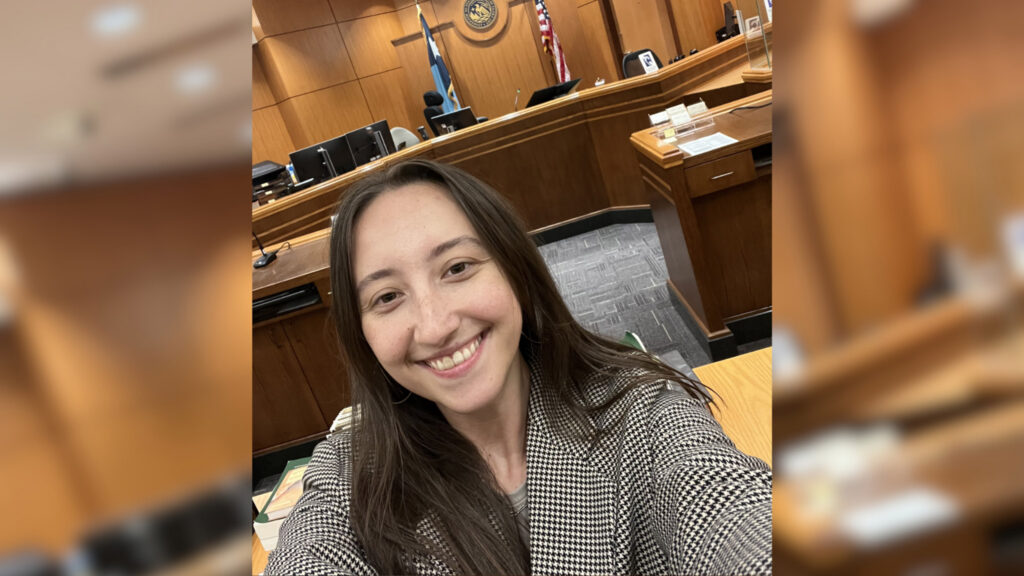
About a year into the Executive MBA program at the University of St. Thomas Opus College of Business, Claire Groh ’26 MBA took on one of the biggest responsibilities of her career.
Her employer, Medica, a nonprofit health plan headquartered in Minnesota, was undertaking a significant enterprise-wide strategic and transformation initiative. Groh, a senior director of operations and program management, had been asked to provide program leadership for the work, which she described as bringing together teams across the organization to translate strategy into coordinated execution.
Fresh in her expanded role, she drew directly on what she was learning in the Executive MBA about strategy, organizational change, and finance. As she put those lessons to use, Groh was able to turn to her professors for advice, another point of view, and even a professional connection when she needed it.
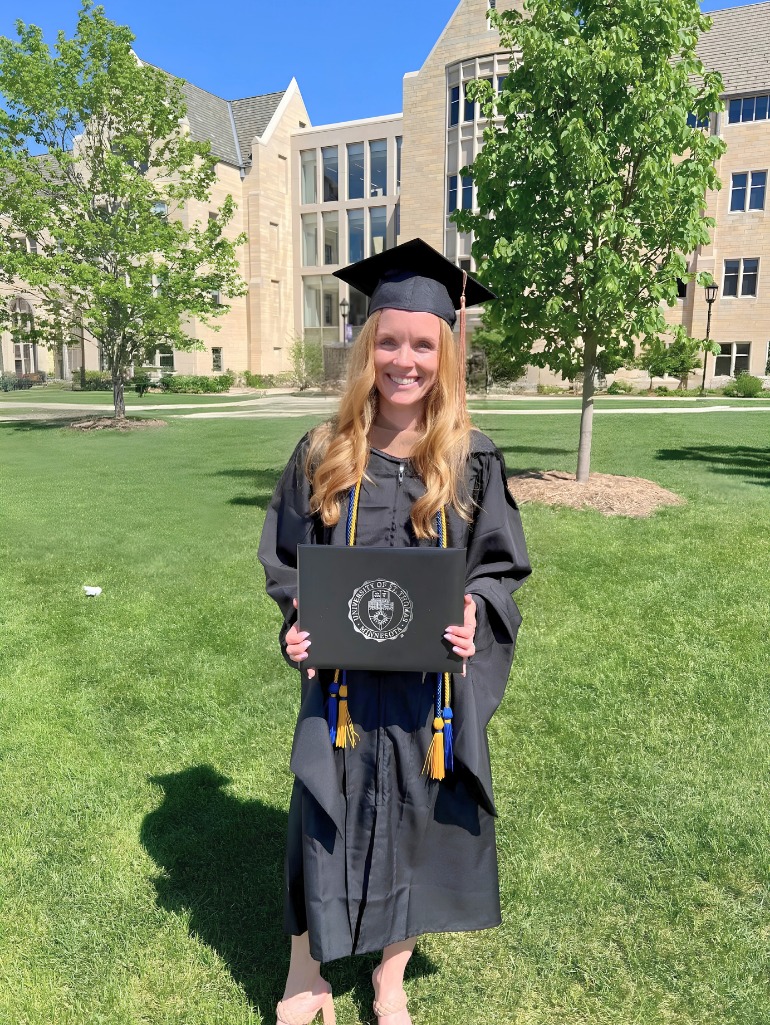
“What I learned from my Executive MBA is a case study in and of itself on how applicable it is to what I do today,” she said. “I wanted to be treated like an executive in this program, and I felt that way.”
Putting executive MBA lessons to work
Leading an enterprise-wide transformation initiative required Groh to turn a broad goal into a plan and quickly earn trust across Medica. She had been with the organization for only 10 months when she was asked to step into the new leadership role.
Her MBA coursework in strategy and organizational change helped her set expectations with Medica’s executive leadership team, communicate potential risks, and bring colleagues along, which helped her build trust sooner.
Groh also developed the financial acumen to connect the numbers to broader business decisions, especially during budget conversations that now required her to weigh in.
“I might not be doing the financial modeling, but I’m asking the questions,” she said. “What my professors taught me is that as a leader sitting in the room, you don’t necessarily need to know how they got there, but you need to know the questions to ask.”
Building financial literacy has been one of Groh’s main reasons for choosing the Executive MBA. Much of her business knowledge had come from years of learning on the job over her 15-year career. A prior leader advised Groh that, in order to keep advancing, she needed to increase her financial acumen. They encouraged her to pair her experience with formal business education, which led her to explore the MBA programs at Opus College.
Groh also wanted an MBA she could carry into another industry. Her job experience had already crossed health care and financial services, and she wanted to keep her options open in case she made an industry switch.
Learning with leaders from other industries
Groh earned her Executive MBA while working full time, raising two children and coaching high school soccer. Her cohort of peers was among the standout parts of the experience.
Her classmates included executives from different industries with very different perspectives. Early in the program, they agreed that they could challenge one another without making those disagreements personal.
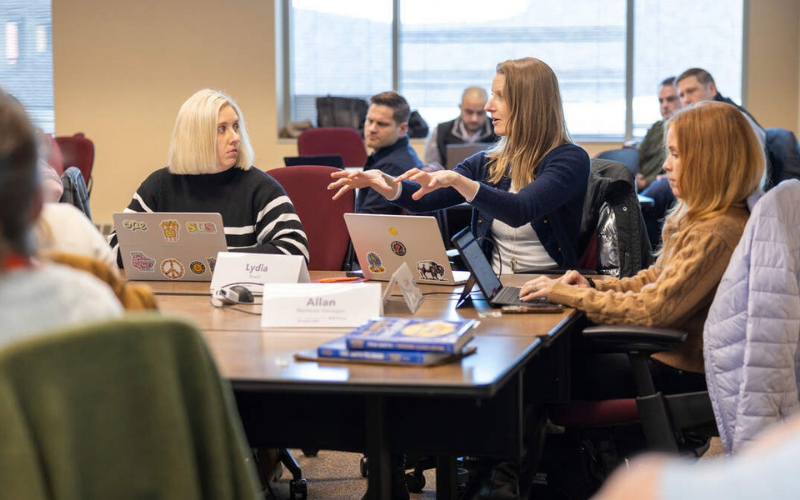
“We would have debates, and we would still walk out and have snacks and enjoy our time with each other afterwards,” Groh said. “That experience made me more comfortable navigating differing perspectives. It taught me how to challenge assumptions, bring a different point of view, and still maintain trust with my colleagues and the leadership team.”
The Executive MBA program also changed what Groh expects of herself as a leader.
“I’m direct, and I push really hard on what we need to do to get across the finish line,” she said. “But I’ve also learned to appreciate the value of pausing before reacting, and that has helped make me become a much more present and intentional leader.”