Success doesn't always bring happiness. But bestselling author and scholar Arthur Brooks, who studies the science of happiness, says understanding happiness requires looking beyond how we feel at any given moment.
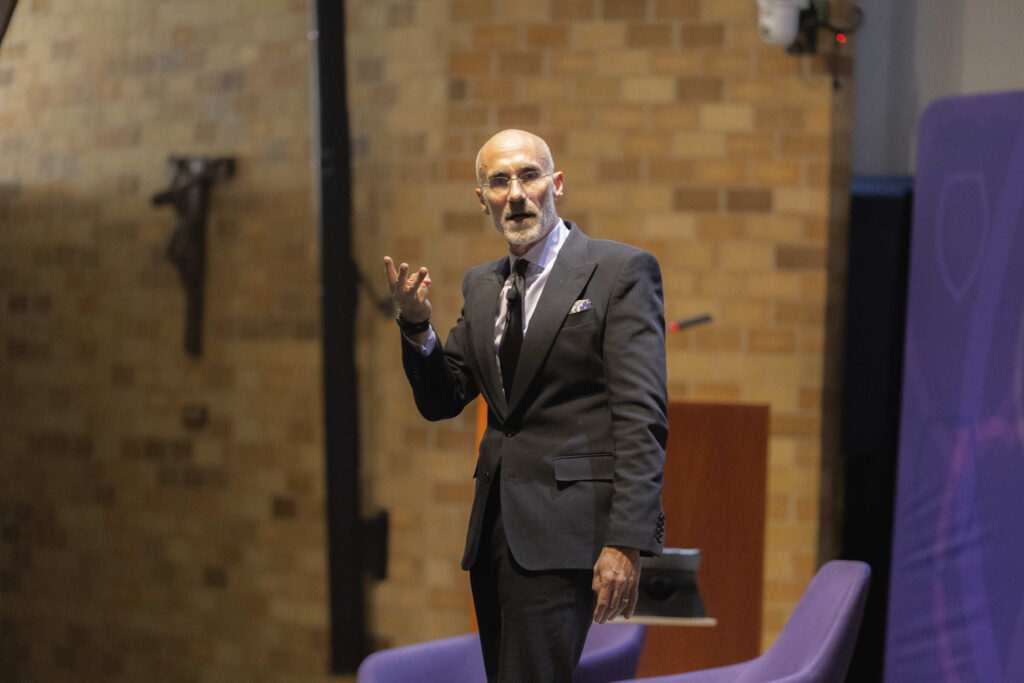
"Happiness isn't a feeling any more than the smell of turkey is Thanksgiving dinner," Brooks said. "The smell of the turkey is evidence of dinner, and your feelings are evidence of happiness."
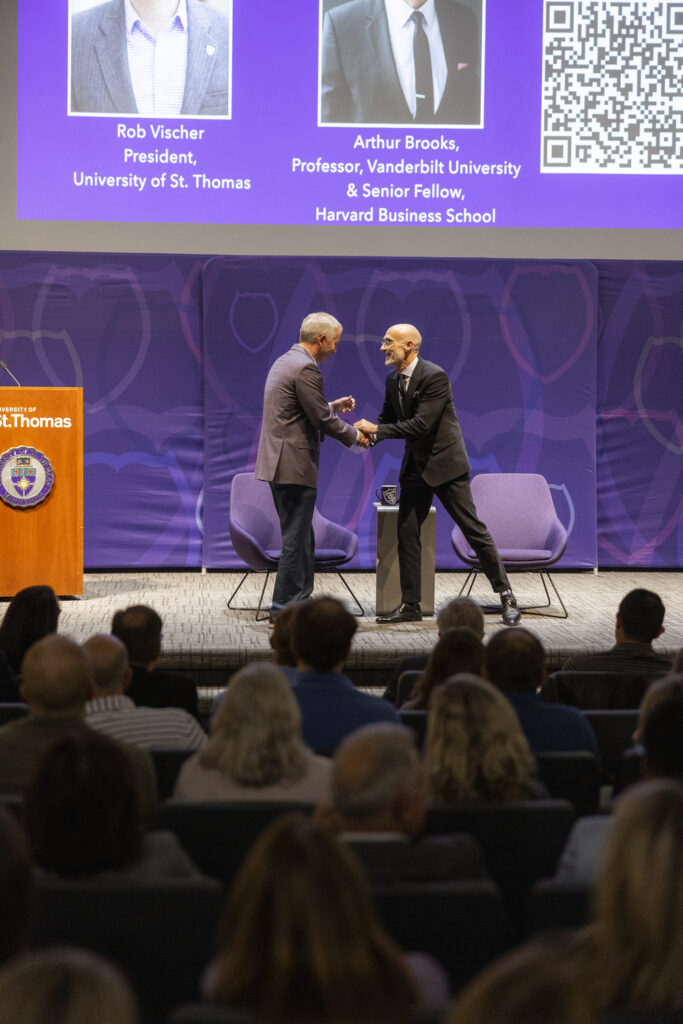
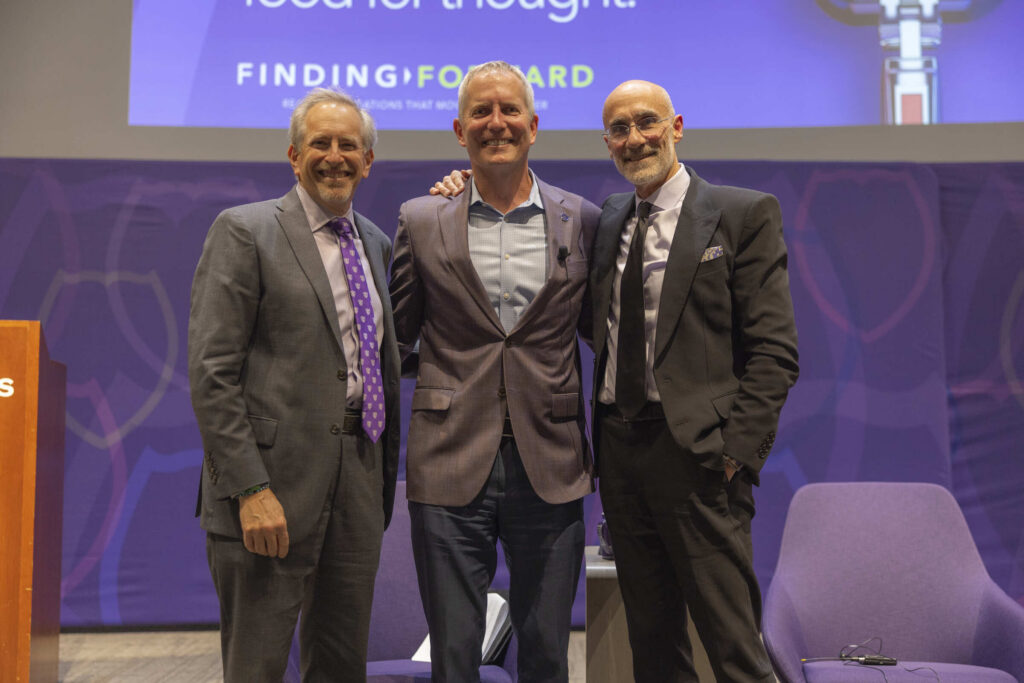
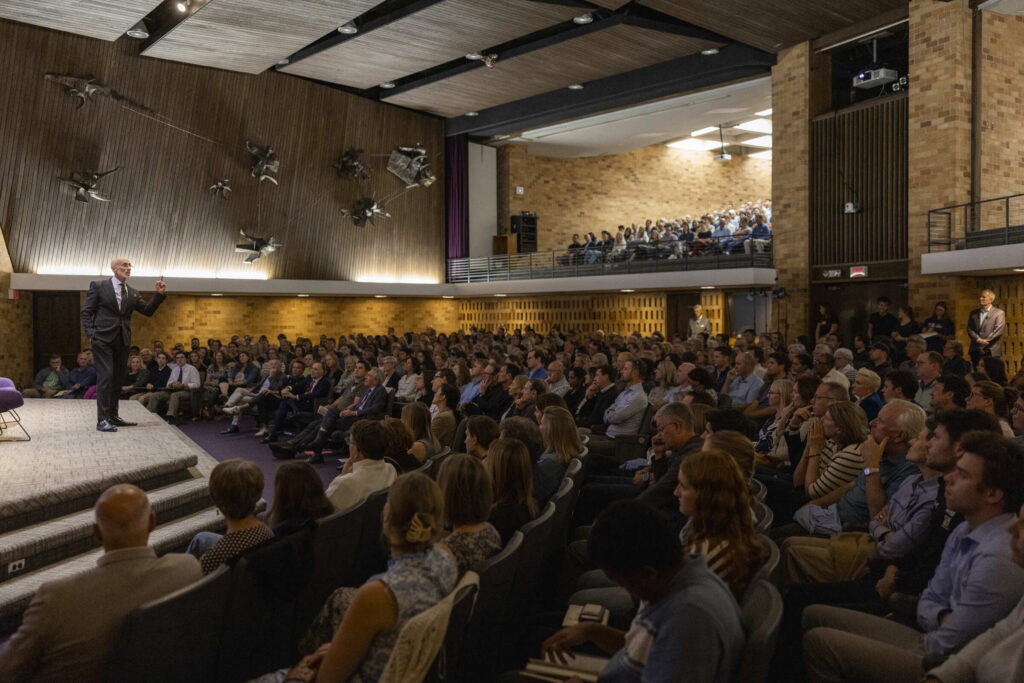
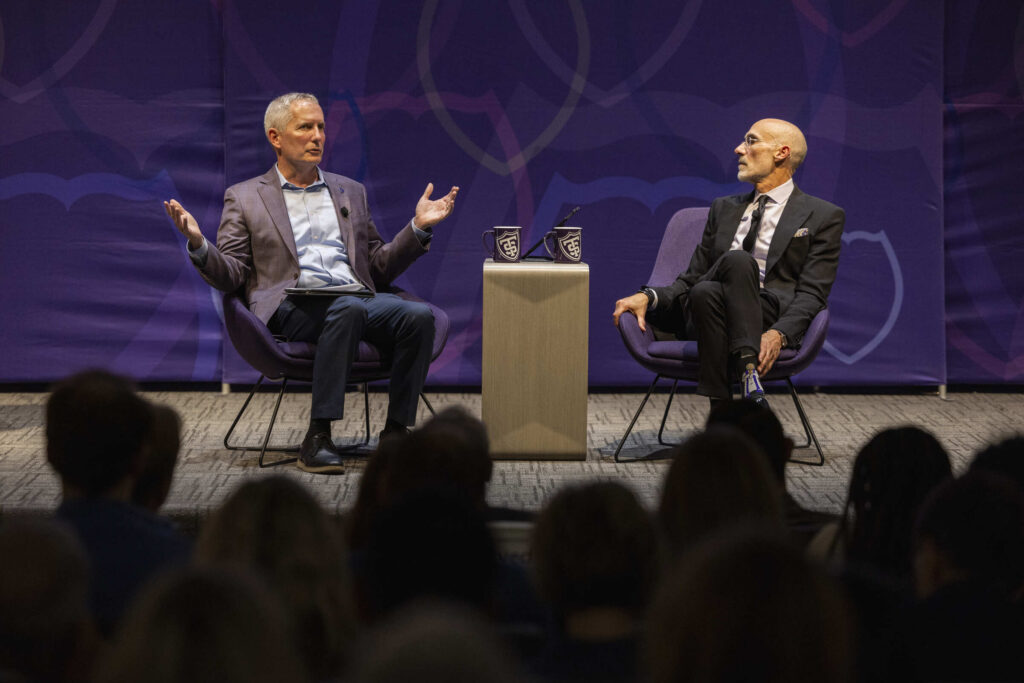
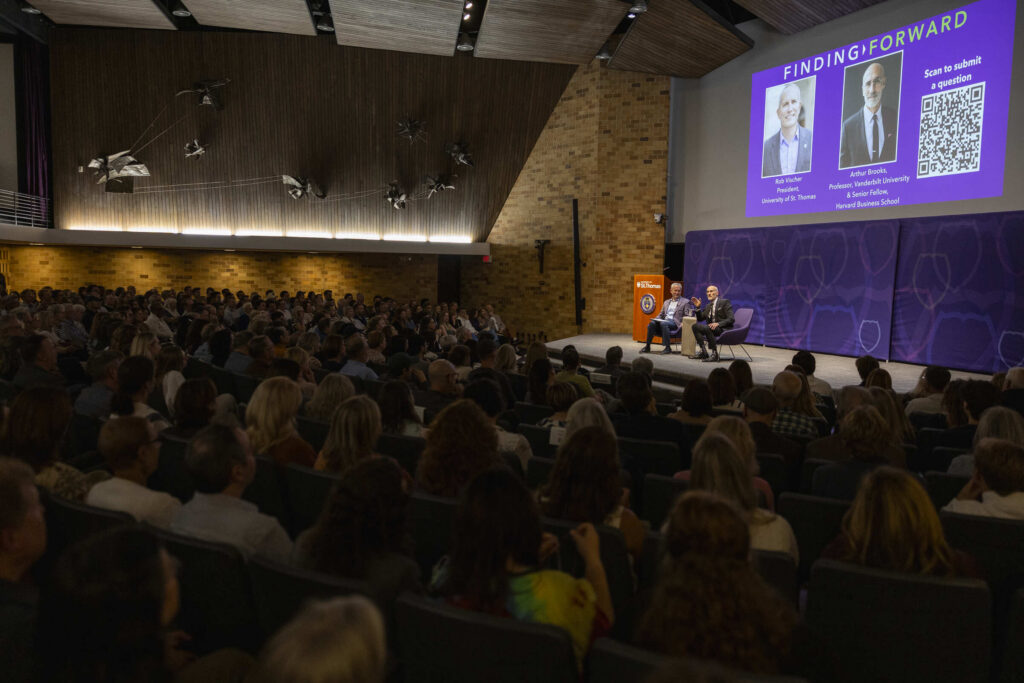
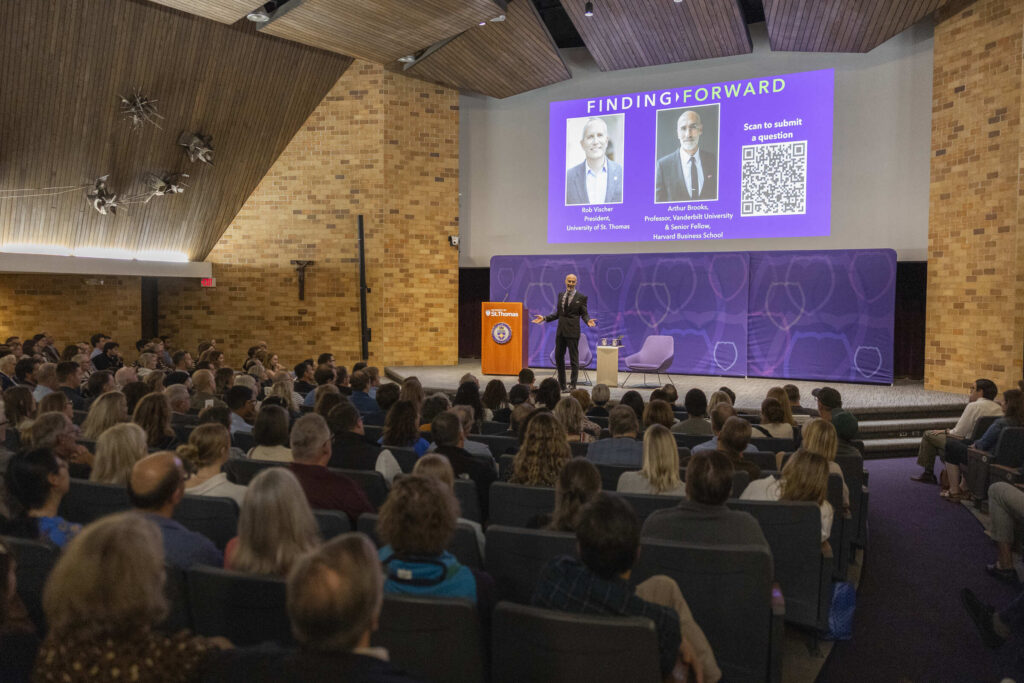
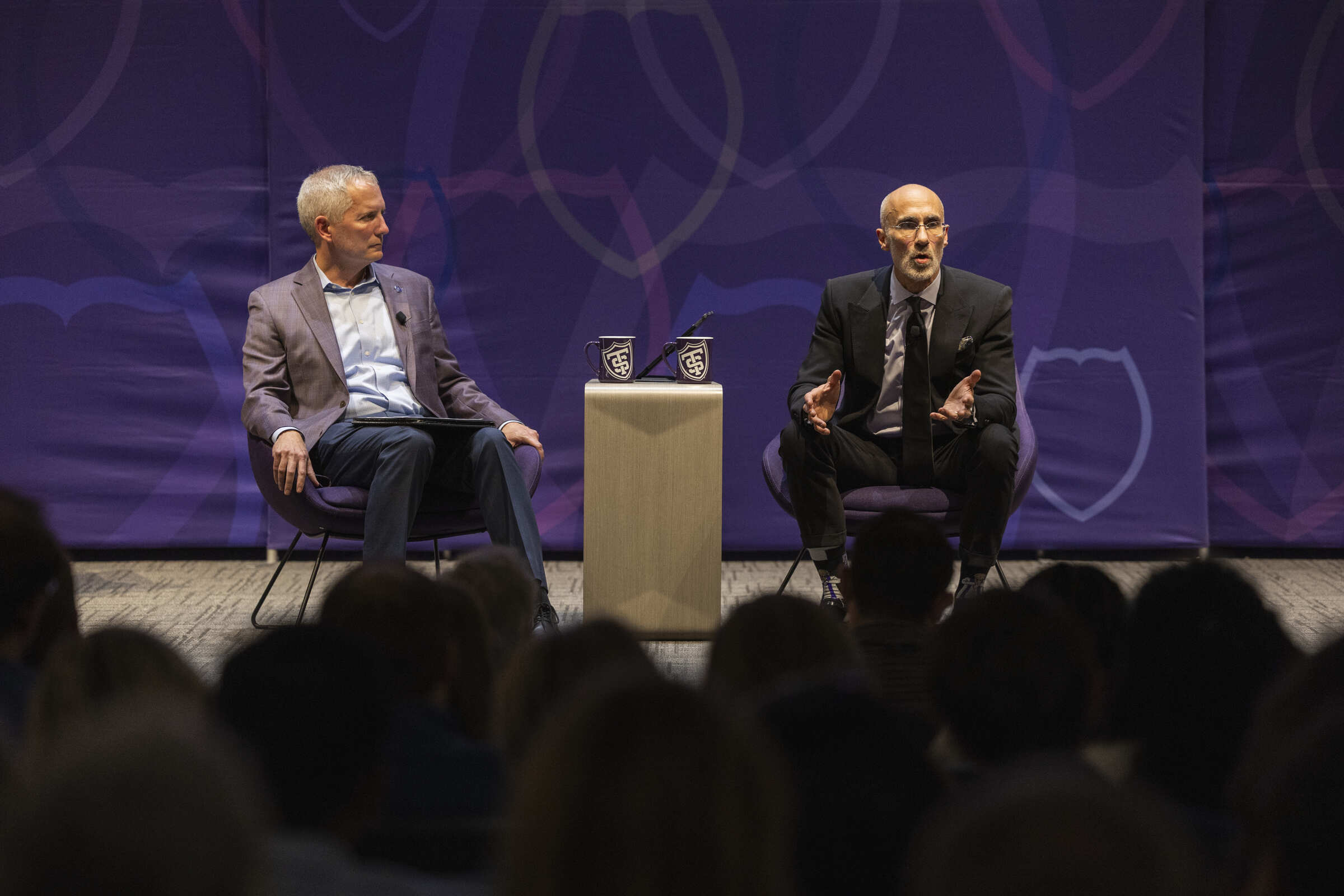
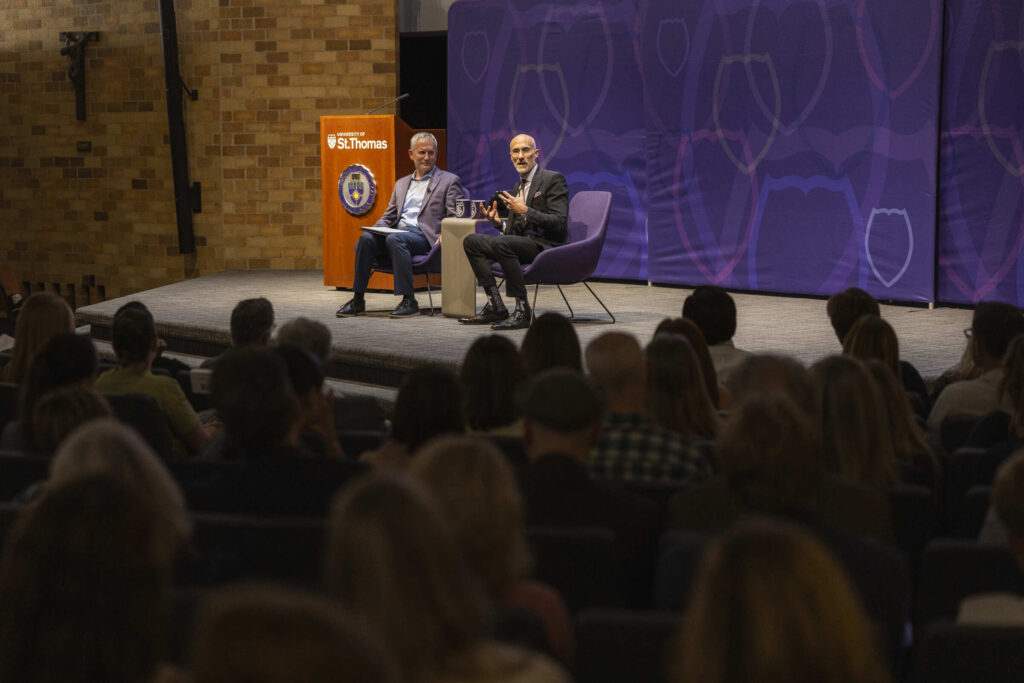
Brooks explored what makes a happy and meaningful life during a Finding Forward conversation with University of St. Thomas President Rob Vischer. Presented by St. Thomas in partnership with the Minnesota Star Tribune, the speaker series brings people together for conversations about issues shaping society.
Happiness, Brooks explained, has three essential ingredients: enjoyment, satisfaction and meaning.
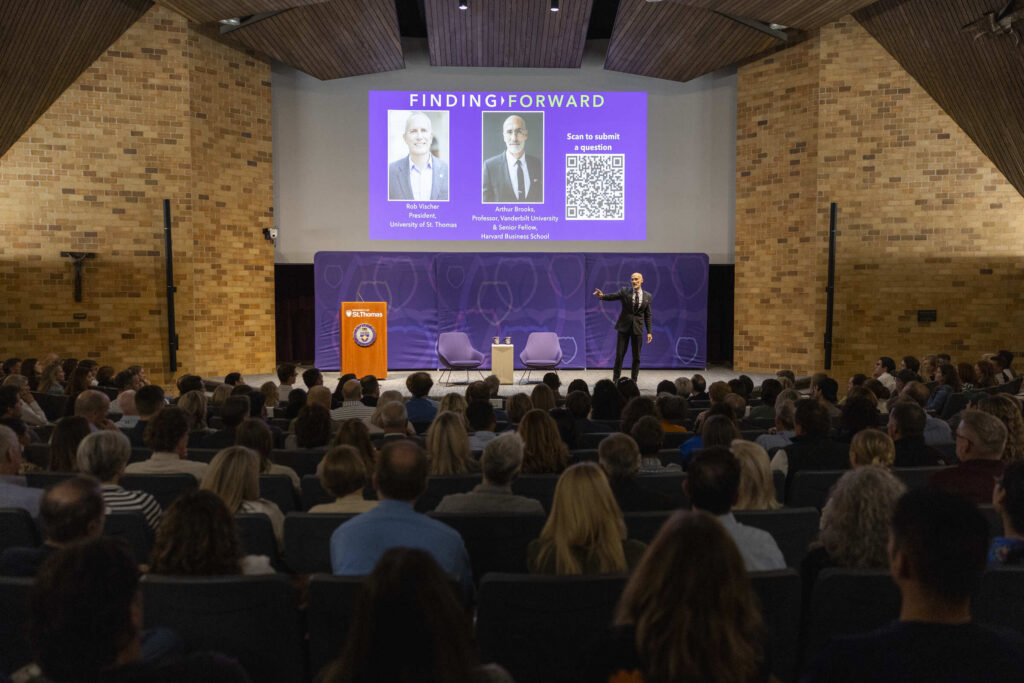
"Enjoyment is pleasure plus people plus memory," he said. "Satisfaction is the joy of accomplishments and activities with struggle." Meaning, he added, comes from understanding one's purpose in life and why that life matters.
For three decades, Brooks has asked young people two questions: Why are you alive? And for what would you happily give your life right now?
Historically, about 15% of his students couldn't answer both questions, he said. Since 2008, that percentage has climbed to 50%.
Brooks connects the shift partly to smartphones, which he says the average American now checks 205 times a day. Devices can relieve momentary boredom, he said, but they also crowd out reflection and opportunities to connect.
"If you eradicate moment-to-moment boredom, your life will be boring," Brooks said. "If you don't eradicate the boredom moment to moment, your life will be interesting."
His advice isn't to abandon technology. "You don't have to throw your phone in the ocean," he said. Instead, he recommends three phone-free periods each day: the first hour after waking, during meals and the last hour before bed. Exercising without headphones or commuting in silence can also make room to think.
Brooks' message holds particular relevance this fall for St. Thomas' first-year students, who are reading his latest book, “The Meaning of Your Life: Finding Purpose in an Age of Emptiness.”
Vischer asked what experiences Brooks would make essential if he were building a university from scratch. Brooks pointed to the friendships students make and the conversations they share, recalling how students once spent evenings discussing questions as big as whether God exists. Such conversations, he suggested, are harder to sustain when everyone turns to a phone.
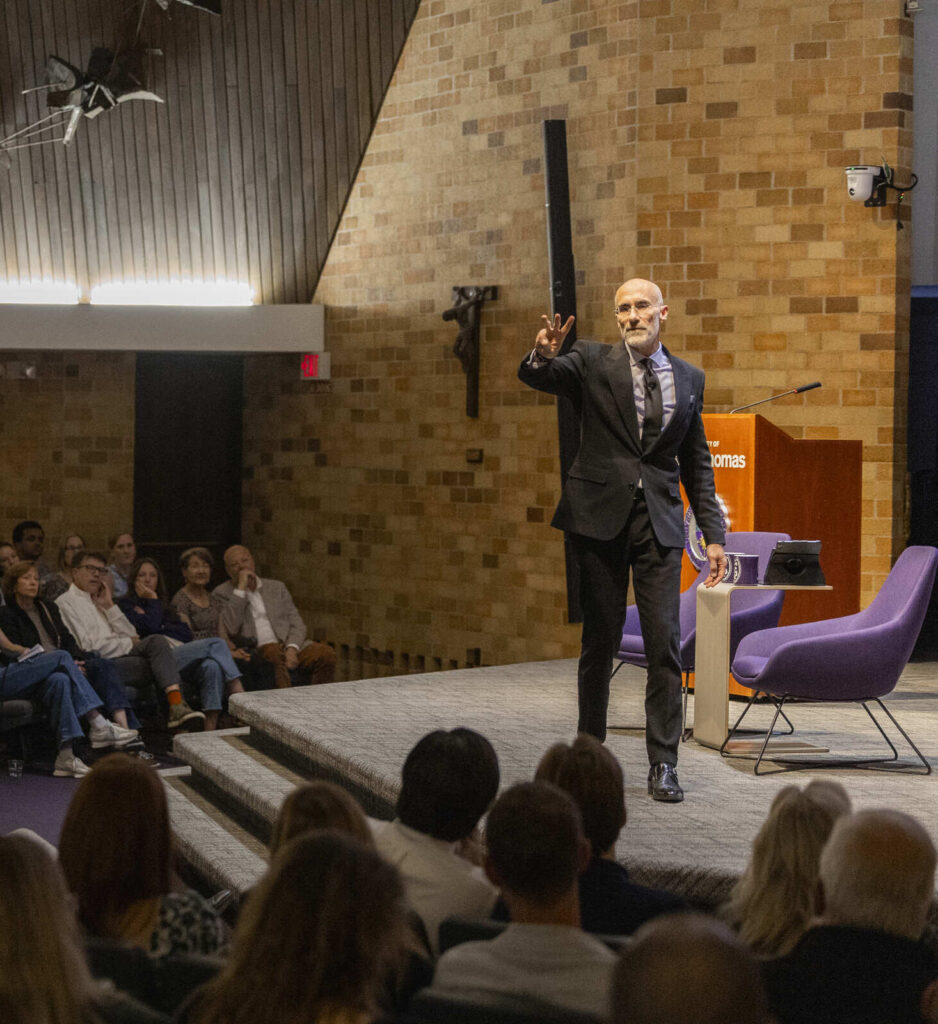
"The best thing that we can possibly do is recreate the ecosystem of actual in-person human bonding while people are actually learning and developing their brains," said Brooks, whose visit was sponsored by the university's College of Arts and Sciences with support from the Mike and Linda Fitterman Foundation.
Brooks described three elements of meaning: coherence, understanding why things happen as they do; purpose, having a sense of direction; and significance, knowing why one's life matters and to whom.
"Human beings need to be needed," Brooks said. "The essence of dignity is to be needed. The essence of despair is to be unnecessary, to be superfluous."
The pursuit of meaning also shapes how St. Thomas approaches education, Vischer said.
"On the first day of orientation, I tell all entering St. Thomas students that St. Thomas is not a career prep program," Vischer said. "We're very good at preparing you for careers and we've got great employment numbers, but our aspiration is so much broader and deeper than that. Our goal is to equip and empower you for lifelong flourishing. We're in the business of formation."
Drawing on St. Thomas Aquinas, for whom the university is named, Brooks identified money, power, pleasure and fame as four pursuits that can become substitutes for genuine happiness.
"The people who are most unfortunate are the ones who succeed and their dreams come true, and they realize they had the wrong dreams," he said.
He recalled interviewing a highly successful Wall Street executive who had grown distant from her family and faith. Asked why she hadn't changed course, she told him: "I guess I've always chosen to be special rather than happy."
Brooks recognized that same tendency in himself. As a CEO, he recalled spending long hours at the office rather than with his young children.
"They were little and they grew up and I missed a lot of it," he said.
Despite such regrets and the challenges facing young adults today, Brooks believes people have the power to change course. When Vischer asked what gave him hope for the future, Brooks emphasized that capacity to act.
"Hope means something can be done and I can do it," Brooks said.
"I look at young people today, and I see the most untapped potential of anything I've ever seen," he added. "Are there problems? Absolutely. But if we can harness that potential and provide the opportunities and the examples, then my hope will turn into wholesale optimism."