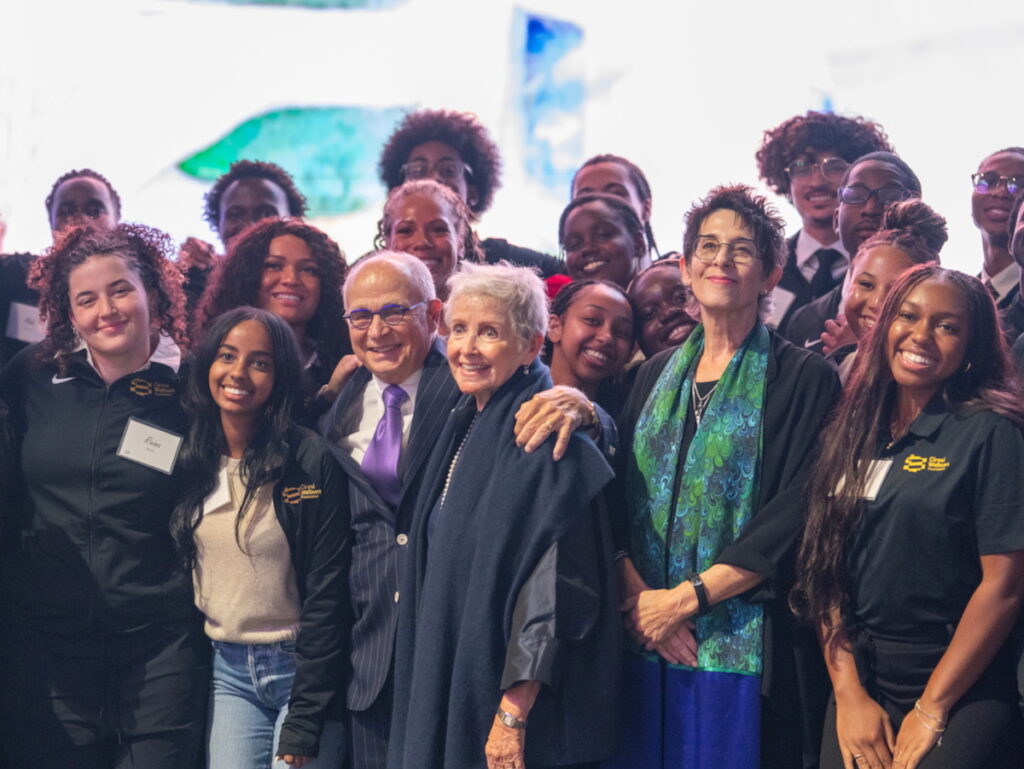
Learning that her ancestors were among the people enslaved and sold by the Jesuits in 1838 challenged Monique Trusclair Maddox's Catholic faith and changed her understanding of reconciliation.
“What I've learned is that I had a wound that I did not know that I had,” Maddox shared about her unexpected journey during a Finding Forward conversation at the University of St. Thomas. “And that wound continues to be exposed. It gets bruised over and over again."
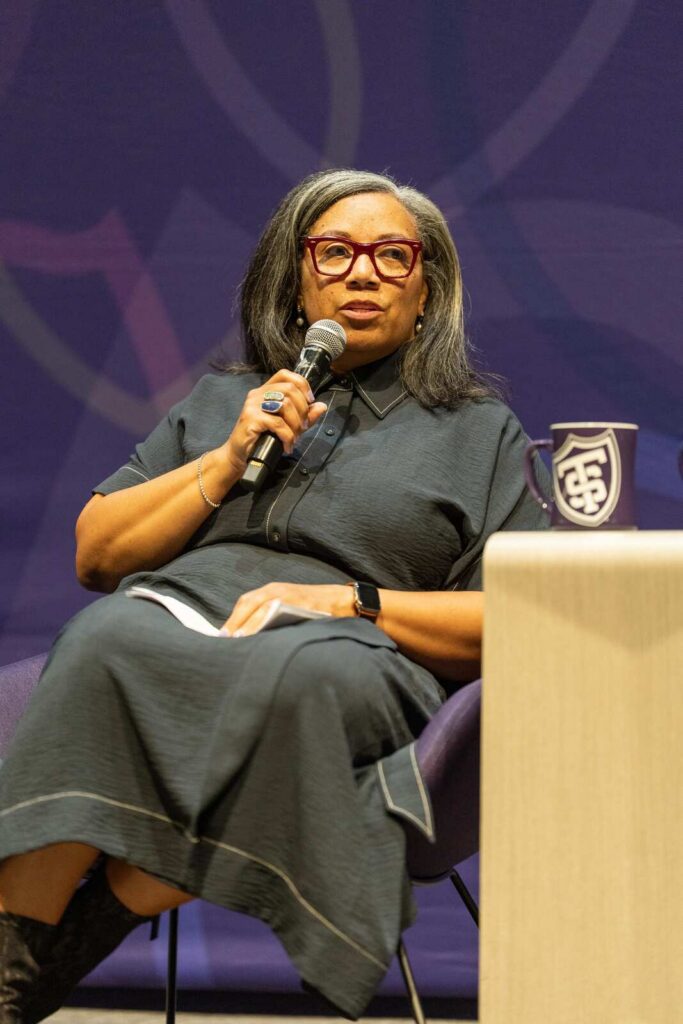
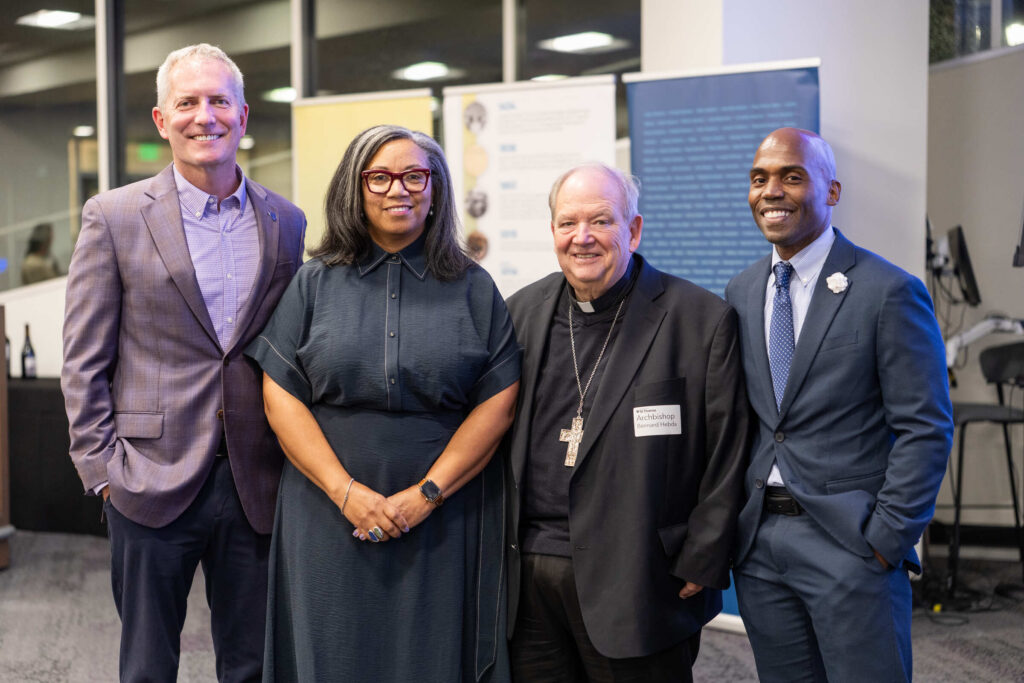
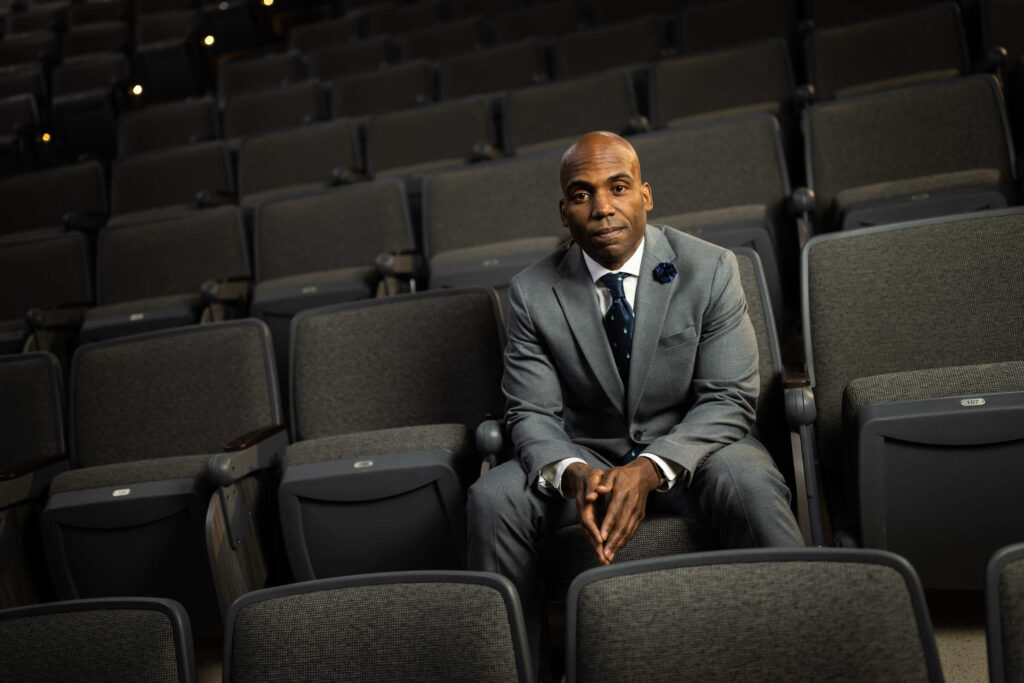
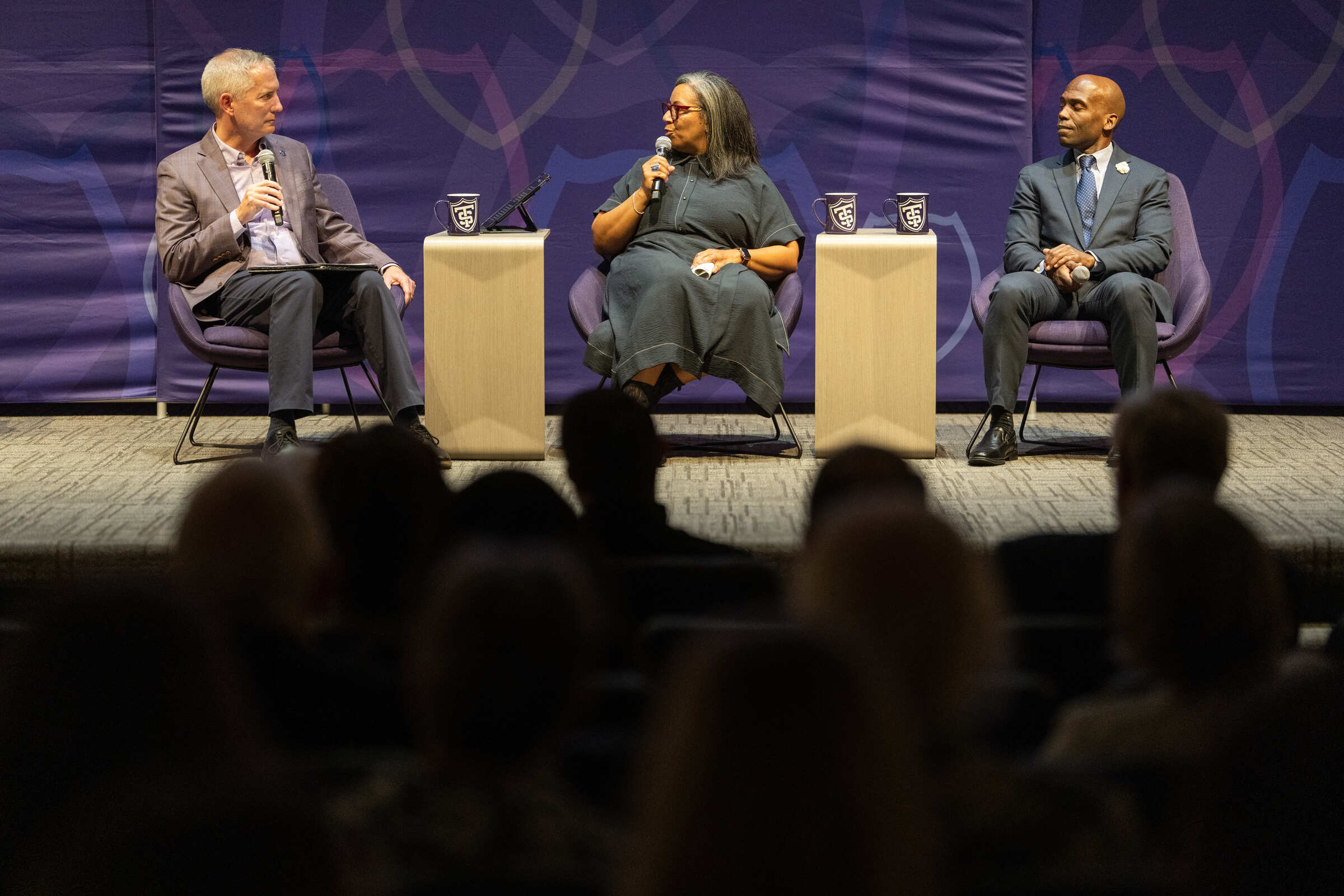
Maddox, who leads the Descendants Truth and Reconciliation Foundation, a partnership between descendants and Jesuits, joined historian Dr. Yohuru Williams, a professor and the founding director of the university’s Racial Justice Initiative, for a conversation moderated by St. Thomas President Rob Vischer. She discussed how discovering her family's history strengthened relationships she hadn't known existed while raising difficult questions about the Catholic Church and its leaders.
Together, Maddox and Williams explored why institutions struggle to confront painful histories, what separates an apology from meaningful repair and why the hardest part of reconciliation may be refusing to walk away.
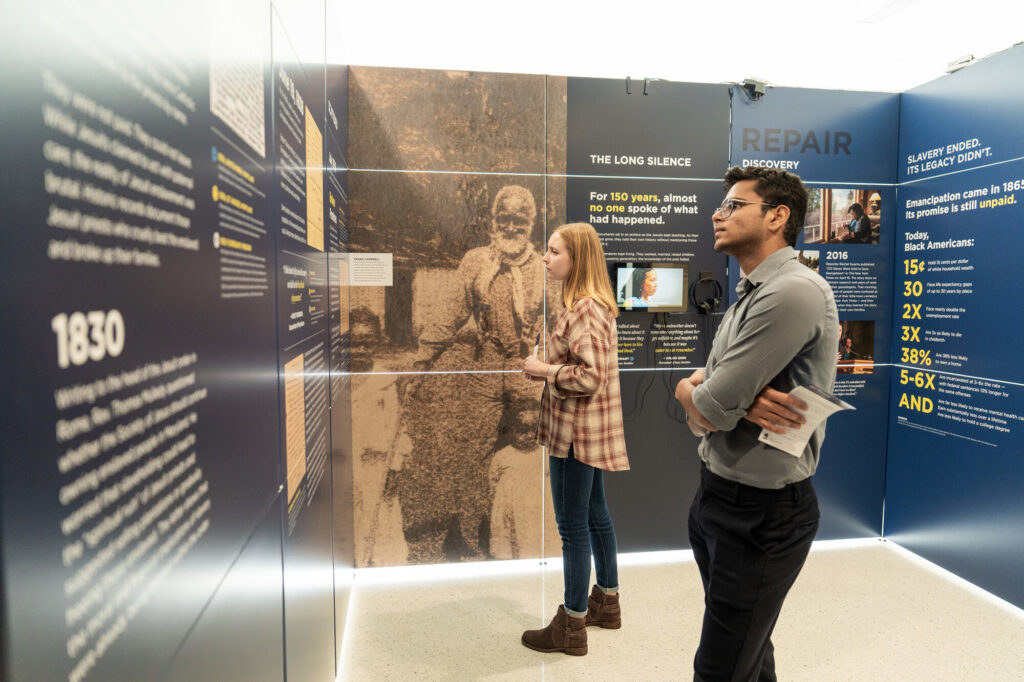
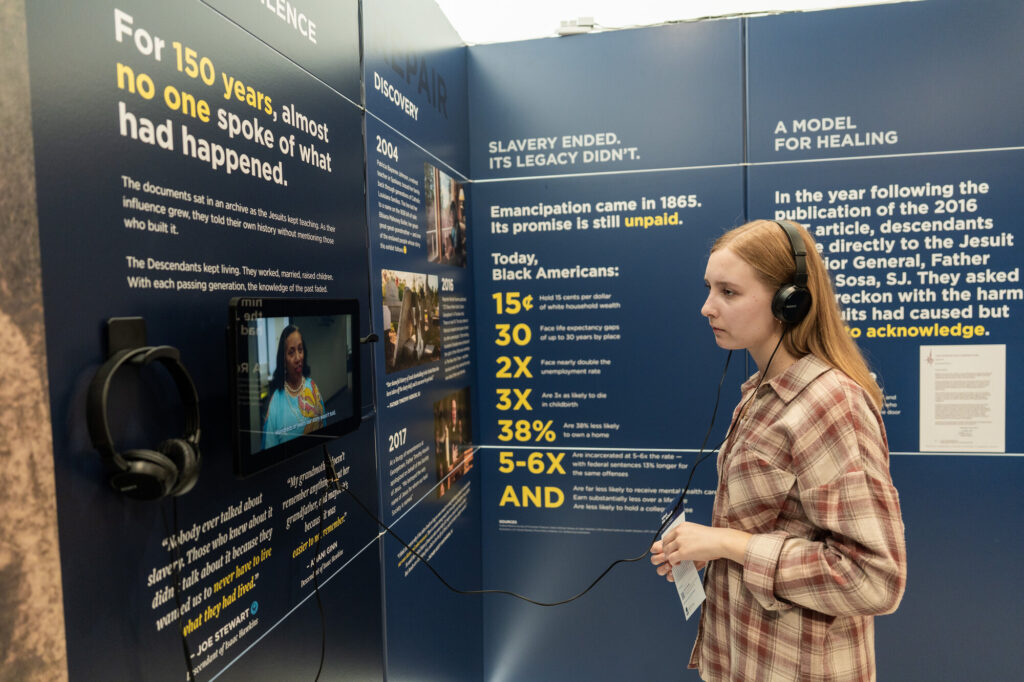
The conversation accompanied “What We Inherit: Truth, Repair, and a Promise to the Future,” an exhibition funded by that made its national debut at St. Thomas and examines the Jesuits' sale of 272 enslaved people and the continuing efforts of descendants seeking reconciliation and repair.
"I knew my grandmother, and my grandmother knew her grandfather," she said. "And her grandfather's name is in that exhibit. So it was not so long ago that this historical trauma happened.”
The exhibit is funded by the foundation, which supports scholarships and community healing programs.
Reconciliation is not a transaction
"Before, I thought reconciliation was going in and asking for forgiveness, more in a transactional state," Maddox said. But now she recognizes that reconciliation is not a single act of absolution. It is "a constant care and feeding of the wound."
Williams agreed that reconciliation is a process, not an event. "It's about restoring balance or equilibrium in a relationship," he said. "And that requires consistency. It requires vulnerability. It requires us to be uncomfortable."
He cautioned against what Americans tend to want from painful stories, namely "a tragedy with a happy ending. The exhibit is not the end. It's the beginning. It's the invitation into the broader discourse."
Burying history or planting something new
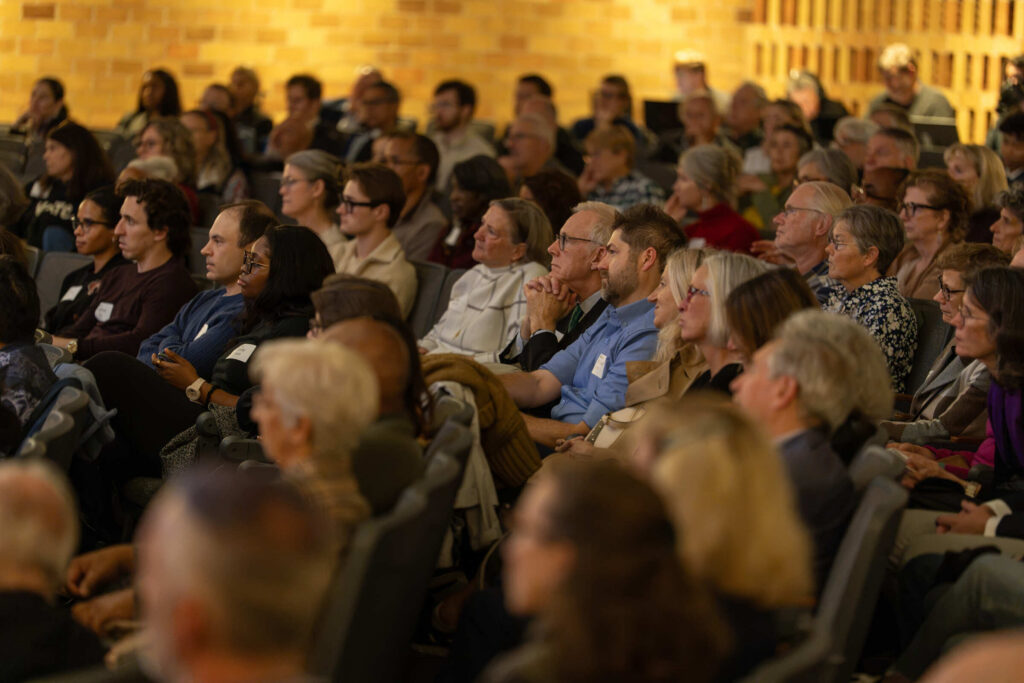
Vischer noted that many people resist these hard conversations, including this Finding Forward event itself. “We heard from members of the public [saying] ‘Get over it. Move on. It was a long time ago’”, he shared. "How do we confront difficult histories without becoming captive to them?"

Williams answered with a lesson from his grandfather, a gardener. "Planting and burying involve identical actions, but they have very different outcomes," he said. "You can dig up dirt and you can bury history, but something is going to sprout from that dirt."
On the other hand, Williams said, purposefully nourishing and watering and providing light to a plant can help it grow into something beneficial – an effect he sees in the foundation.
He pointed to recent Twin Cities history as proof that the past is actually the present for people who have to live with the aftereffects of history. When people say "just get over it," Williams said, "they're saying, bury it. But recognize that's also going to sprout." That, he argued, is why the same issues keep coming back. "Why are we still talking about this? Because we never talked about it."
For Maddox, the urge to move on often comes from fear. "They are afraid of what they have to give up,” she said. “You can't reconcile with something if you're not willing to give something up." Neither side, she added, gets exactly what it set out for. "It's somewhere in the middle. We can't let fear get in the way of progress."
Mission as a compass
The Jesuits are a community grounded in faith, Vischer noted, "which makes the contradiction between professed values and actions all the more striking and heartbreaking."
Maddox's advice to institutions is to remember their missions. "Many institutions have missions that are rooted in human dignity, truth, common good," she said. Had the Jesuits followed their own principles in 1838, she said, the current superior general would not have needed to apologize to descendant families in 2018.
Williams said a mission statement should be a source of accountability. "Our missions aren't liabilities," he said. "They force us to contend with what we haven't dealt with substantively. They hold us accountable, but they also give us a compass."
The foundation applied that idea to its own work. Common ground came from the 20 conditions written into the original 1838 sale. Among them were education for the young and care for the elderly and infirm. Those became the foundation's pillars. "Not today's decisions, but the decisions from the 19th century," Maddox said. "And that's how we could agree to move forward."
The call to stay
The work can be lonely, Maddox acknowledged. After learning her family's history, she wrestled with whether to remain Catholic. "It probably took me three solid years," she said. She chose to stay. "If I'm not there, I get pushed aside. But if we are in front in that church, I get seen, I get acknowledged."
That persistence is also how the foundation grew. Looking ahead, it hopes to give three to four times its current amount within five years, including at least $1.5 million in scholarships each year. Williams urged the audience not to wait for the opportunity to make a grand gesture, but to do what they can. "Every act of intentional engagement is actually an act of reconciliation and repair," he said.
Asked what it means to take responsibility for a history we didn't create, Maddox answered with two words: patience and commitment. "A commitment to not walk away, to stay in a relationship and to build something that you didn't know was possible," she said. "It is an honor to walk this journey in a very difficult way, but in a way that is led by grace."