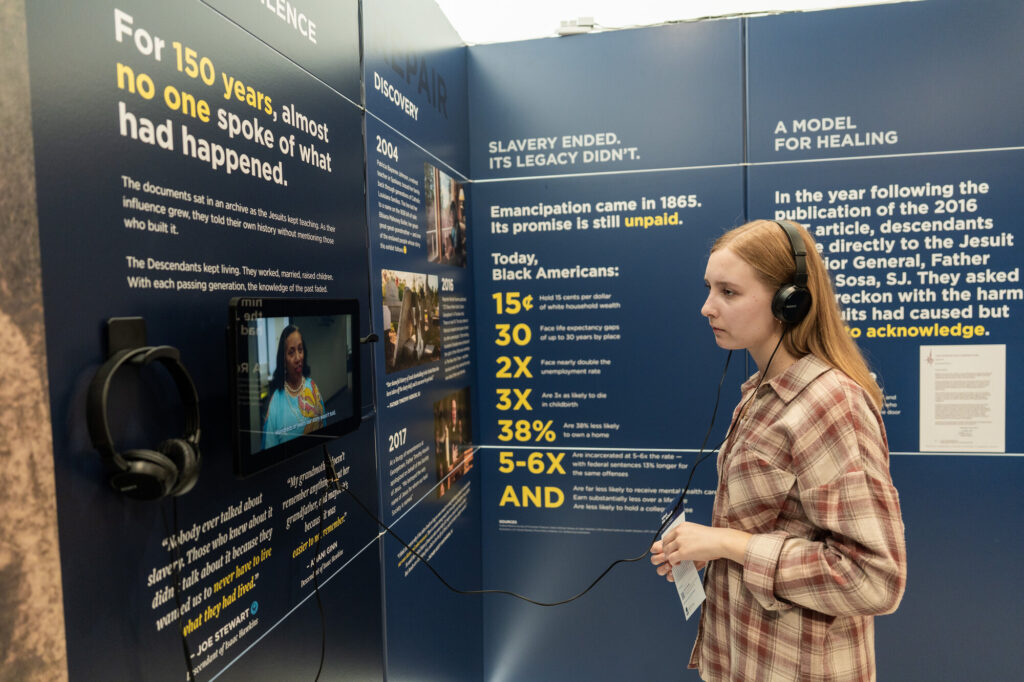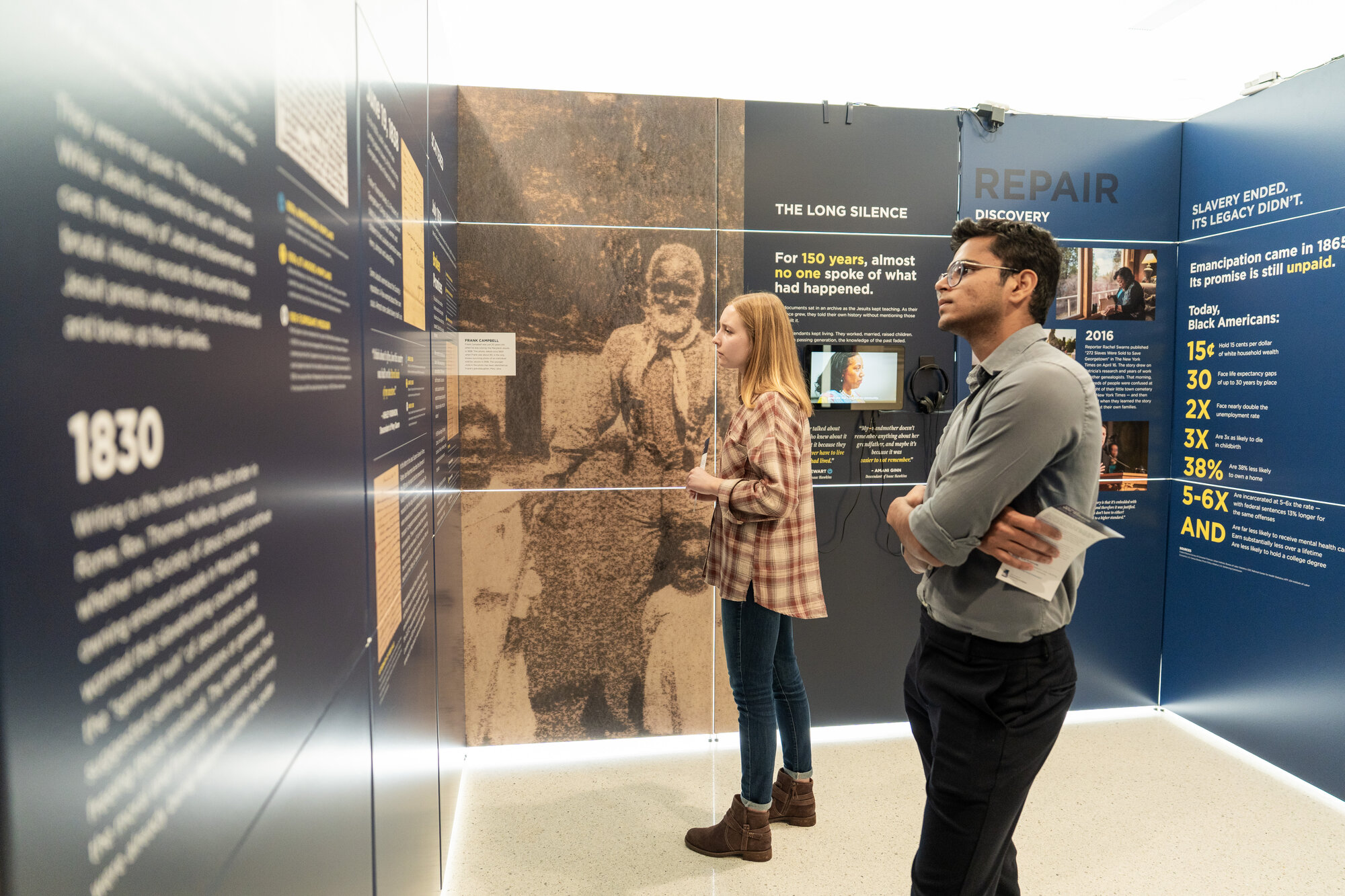
The University of St. Thomas is hosting the national debut of What We Inherit: Truth, Repair and a Promise to the Future, a traveling exhibition exploring the history of 314 Black men, women and children sold by the Jesuits in 1838 and the ongoing efforts of their descendants to address that legacy. MPR News and WCCO Radio covered the exhibition, highlighting its use of historical records, personal stories and testimony to examine the lasting impact of slavery and the work toward reconciliation.
The exhibition, hosted by the university’s Racial Justice Initiative in partnership with the Descendants Truth & Reconciliation Foundation, is on display through Nov. 7.

From MPR:
Nina Moini: And what we’re discussing right now, the term really is restorative justice. Can you tell us about the touring exhibition? And Jesuits are very involved in the Catholic education. Can you tell me why it was important to come to St. Thomas to debut the project and get these conversations started there?
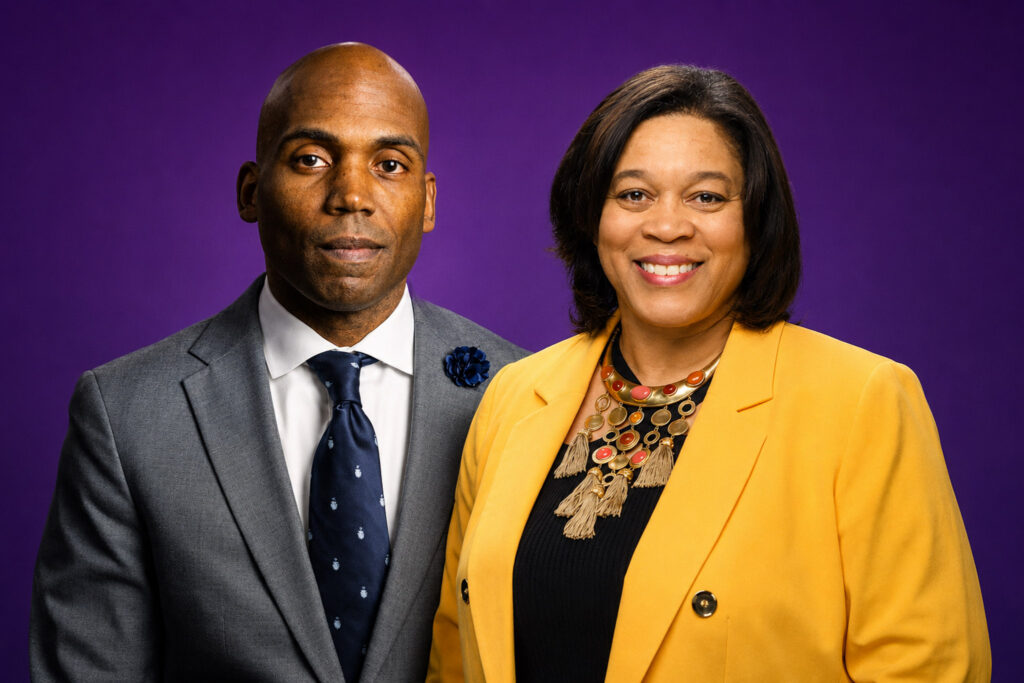
Monique Trusclair Maddox: It was twofold, because in January, we had a private foundation come to us and say, we like the work that you’re doing. It’s a Minnesota-based foundation. And they said, why can’t you do something here to tell this story? And so we began to plot and think about how do we begin to share our story here in Minnesota? And at the same time, I was meeting with Dr. Yohuru Williams from the Racial Justice Initiative at the University of St. Thomas, and he was a keynote speaker for our Joseph M. Stewart speaker series this year.
And we came together to talk about America 250 and what does it look like for all Americans. So, Yohuru and I began to talk about bringing this exhibit as a part of America 250 in the classes that he was teaching as well. And our local donor was so excited that we could partner with the University of St. Thomas on this.

From WCCO-AM:
The exhibition is being hosted by the University of St. Thomas’ Racial Justice Initiative.
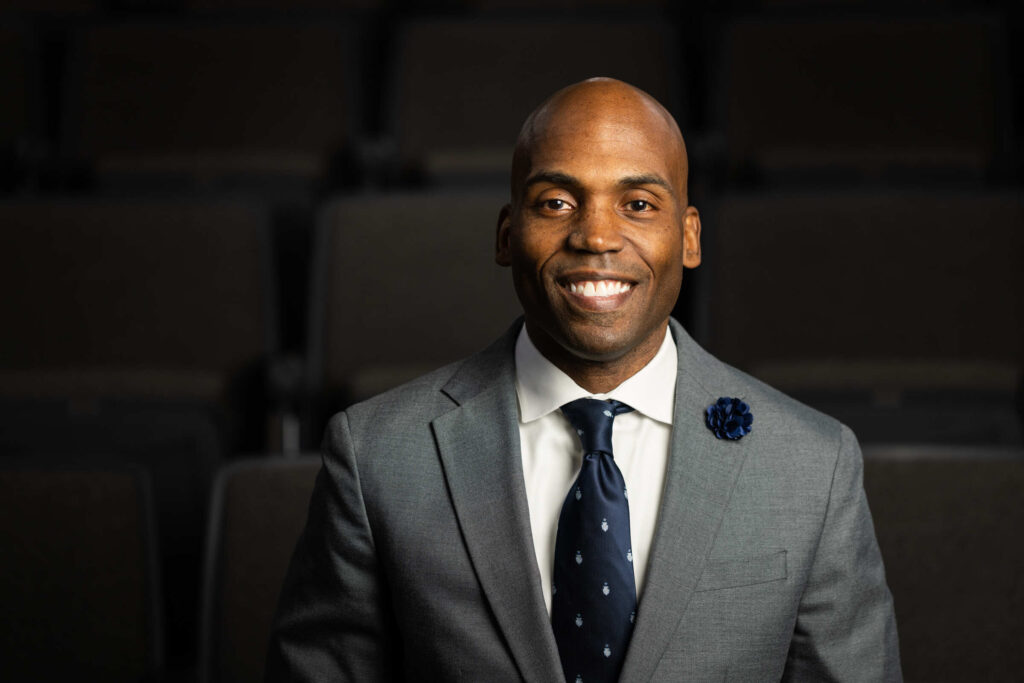
“We are tremendously excited about this exhibit and about the partnership with the Descendants of Truth & Reconciliation Foundation that made it possible,” said Dr. Yohuru Williams, Distinguished University Chair, Professor of History, and Founding Director of the Racial Justice Initiative at the University of St. Thomas.
A discussion about how to confront difficult histories without becoming captive to them will take place during a panel on Nov. 2 moderated by University of St. Thomas President Rob Vischer.

From Pioneer Press:
Yohuru Williams, university chair, professor of history and founding director of the Racial Justice Initiative at St. Thomas, said that when discussing the exhibit with Trusclair Maddox, the two decided the Roman Catholic University of St. Thomas would be a good fit for its first showing.
Minnesota, like America, has unfortunately contributed to the harmful treatment of communities of color and Black people in particular, said Williams.
“I hope that people come out and experience the exhibit, both to learn about the experience of the descendants, but also this isn’t an opportunity to kind of gaze at what happened in some distant place; it’s an invitation for us to think about our community and the people who’ve been impacted by prejudices, policies and practices which have produced the disparities that we’re also familiar with,” Williams said.
Williams cited examples of harm done to the Black communities in Minnesota, including racial harassment across college campuses; policing in the state, such as the murder of George Floyd; and the creation of Interstate 94 in St. Paul’s Rondo neighborhood in 1956.

Minnesota Spokesman-Recorder:
“It’s a much broader story in terms of the long shadow of slavery, racial inequality and how we address that,” Williams said. “The first step is in confronting the history. That’s partly what this exhibit is about. The next step is moving toward reconciliation.”
What makes the story unique, he said, is that the Jesuits and descendants have moved from confronting the history to working on repair.
Visitors can choose one of three ancestors and follow that person’s life through the exhibit. Williams said that personal approach is what resonates most with him.
“No matter who you choose, whether you choose it from the perspective of a young child who survived this or the other two descendants who are represented, it’s an opportunity for us to think about the legacy that we’re leaving,” he said.
Faculty across the university, not just in the history department, are encouraging students to visit, Williams said.
“It wasn’t just a question of emancipation, and that was it,” he said. “You have large-scale institutions that were built on the financial gain from slavery.”