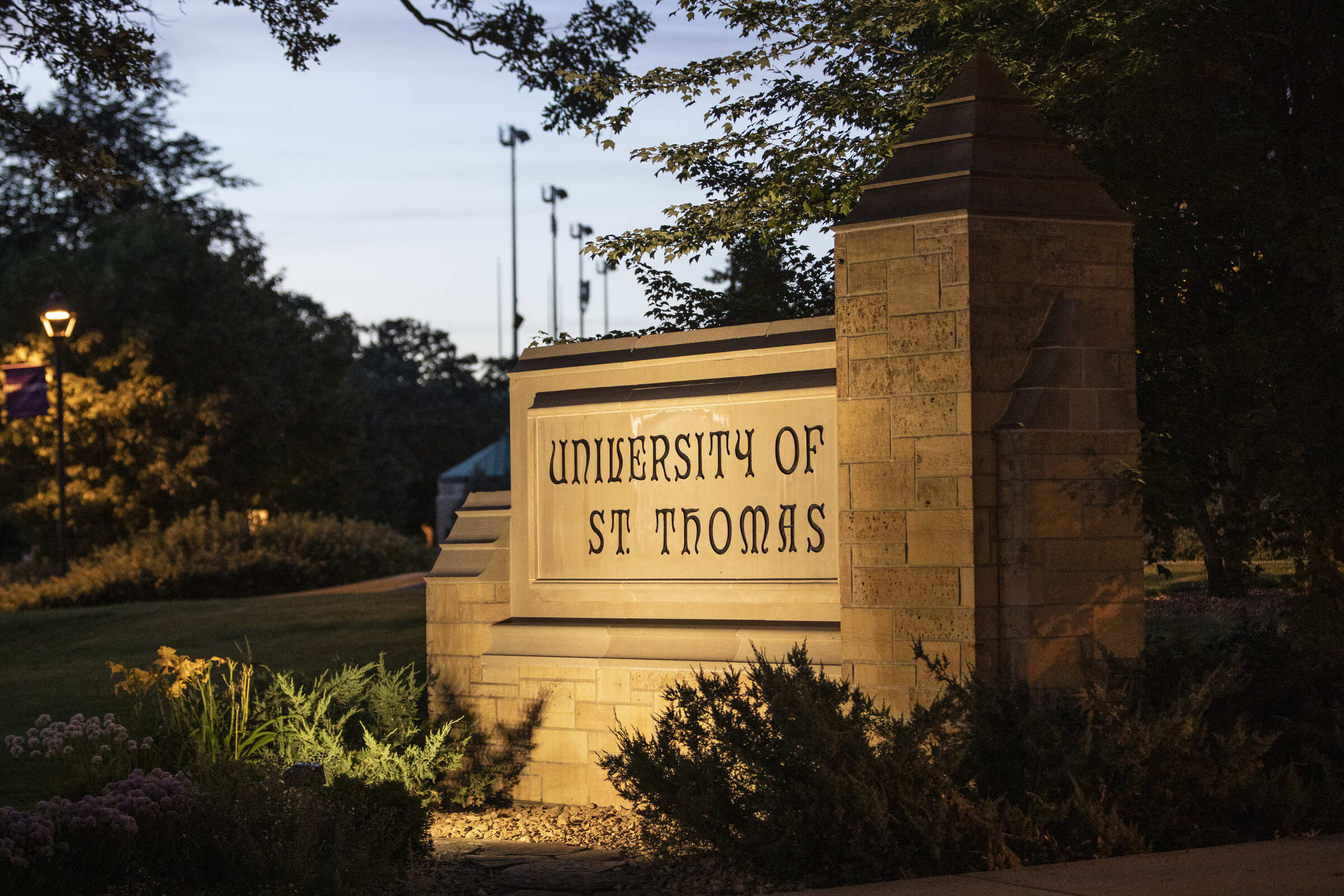
The Pioneer Press ran a feature story about the University of St. Thomas seeking to build up properties along Summit, Cretin and Grand avenues.

From the article:
Homeowners living near the University of St. Thomas in St. Paul have long asked their academic neighbor to provide more parking on campus, especially in light of the recent construction of a new Division I hockey and basketball arena drawing fans by the thousands.
Officials with the state’s largest private university have said they’d love to comply, and they even have a site or two in mind – such as the Anderson Parking Facility at Grand and Cretin avenues. However, a binding agreement hammered out with residents more than 30 years ago limits building heights, which would prevent them from adding two stories at Anderson Parking without eliminating the building’s rooftop observatory.
Along a similar vein, students on campus have pined for more retail spaces to visit within walking distance of campus beyond a Davanni’s Pizza on Grand Avenue. ...
In the fall of 2021, St. Thomas moved all of its first-year and second-year students on campus, in keeping with neighborhood demands, but it’s run out of room to build new dorms for juniors and seniors, who are effectively pushed off campus. Again, the 2004 conditional-use permit adds barriers that could hinder reconfigured residences along Grand Avenue, and it expressly prohibits housing for first-year and second-year students on the blocks in question.
“We don’t really have a lot of commuter students anymore,” said Amy McDonough, chief of staff to university President Rob Vischer. “You have to live on campus your first two years. The neighbors love that. They don’t want sophomores living in the neighborhood. That’s a big change compared to what at the time people thought would happen. We still have students who want to live on campus that we can’t accommodate.”
St. Thomas hopes to someday replace those 11 aging single-family homes along the Summit Avenue historic district with academic buildings, but the 2004 permit requires “mansion-style” housing to replace lost homes, and the outright preservation of six of the properties between Cretin and Finn Street. Building mansions is a requirement St. Thomas officials call well outside their bailiwick, and far outside of the city’s priorities.
“The conditions that were envisioned in 2004 when the CUP was developed are no longer the conditions for today’s needs,” said Jim Brummer, the university’s vice president for facilities management. “It is outdated.”