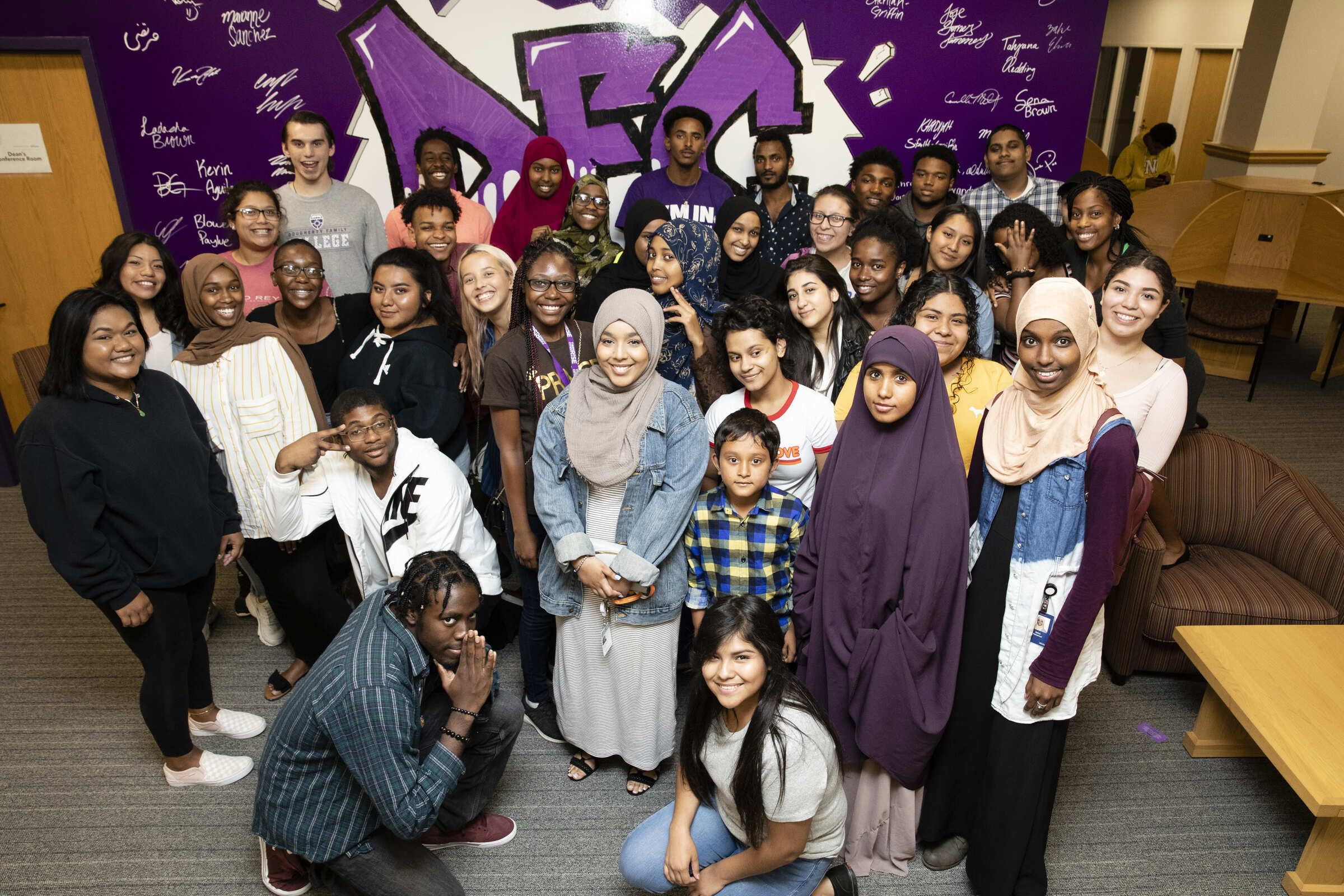
As higher education confronts demographic and economic challenges, Dougherty Family College's first decade shows what it takes to turn college access into opportunity.
Renee Sandy took a chance in 2017 on a college that had never had a graduating class. She was part of the inaugural cohort at Dougherty Family College, the University of St. Thomas' two-year college.
“The small classroom sizes, I really liked that,” said Sandy, who arrived after a difficult high school experience and a year away from schooling. “I felt like it was more individualized, and that was something that I knew I needed.”
After Sandy earned an associate degree from DFC in 2019, she continued at St. Thomas, majoring in psychology. Unsure of her next step after earning her bachelor's degree, she reached back out to DFC staff. Her former DFC psychology instructor, Noah Gagner, connected her with a speech-language pathologist who spent an hour talking with her about the field.
“I just felt so much love poured into me even after graduating from Dougherty,” said Sandy, who is now pursuing a master’s speech-language pathology.
As Dougherty Family College approaches its 10th anniversary, higher education is confronting many of the issues at the heart of DFC's mission. The college was created to make a St. Thomas education more accessible to underserved students with significant financial need. Today, the number of high school graduates is projected to decline, the demographics of those graduates are shifting, and nationally, prospective students and their families are increasingly questioning the affordability and value of a college degree.
Getting students through the door matters. So do the conditions that enable them to earn a degree and translate that education into careers.
Beyond the demographic cliff
For years, colleges and universities have been preparing for what has become known as the “demographic cliff,” the projected decline in U.S. high school graduates, largely due to birthrates falling beginning during the Great Recession. Despite the drop, students of color, especially Hispanic students, are expected to account for a growing share of graduates.
Disparities in educational outcomes aren't defined by race alone. Research from the Federal Reserve Bank of Minneapolis has documented significant disparities by socioeconomic status.
Higher education has become increasingly intentional about recruiting first-generation students and students from economically distressed communities, said Buffy Smith, dean of Dougherty Family College.
“What makes the DFC model especially unique is our intentionality, not in terms of just helping them get in the door, but also how to make sure they're successful and that they thrive once they're in college,” Smith said. “The infrastructure of an institution matters.”
Without that infrastructure, Smith said, colleges risk creating “a revolving door,” increasing recruitment without producing corresponding gains in retention and graduation.
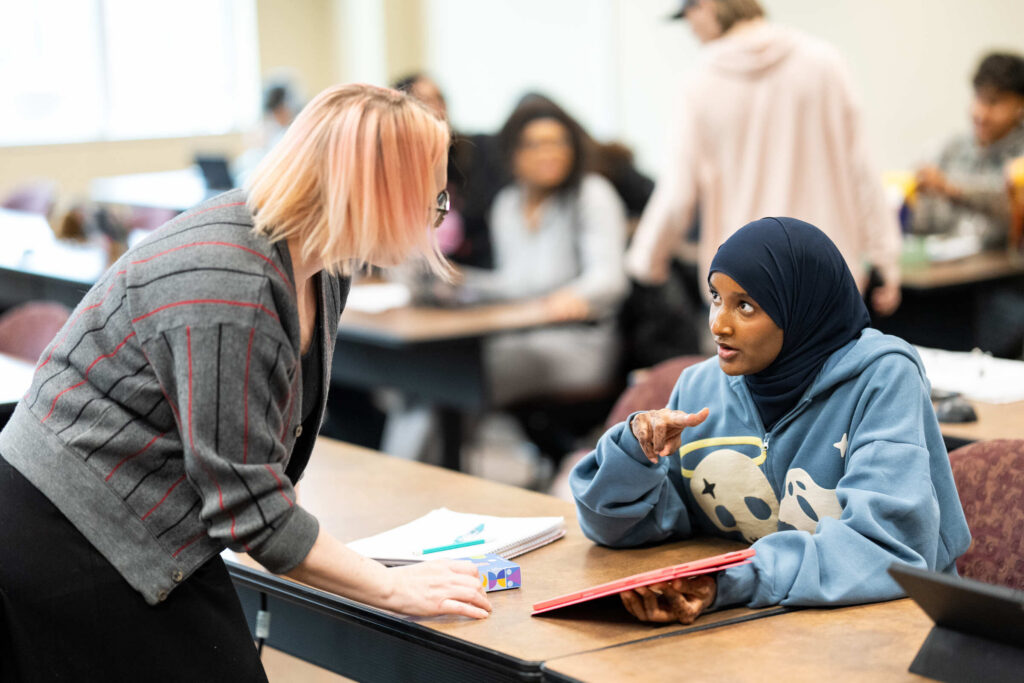
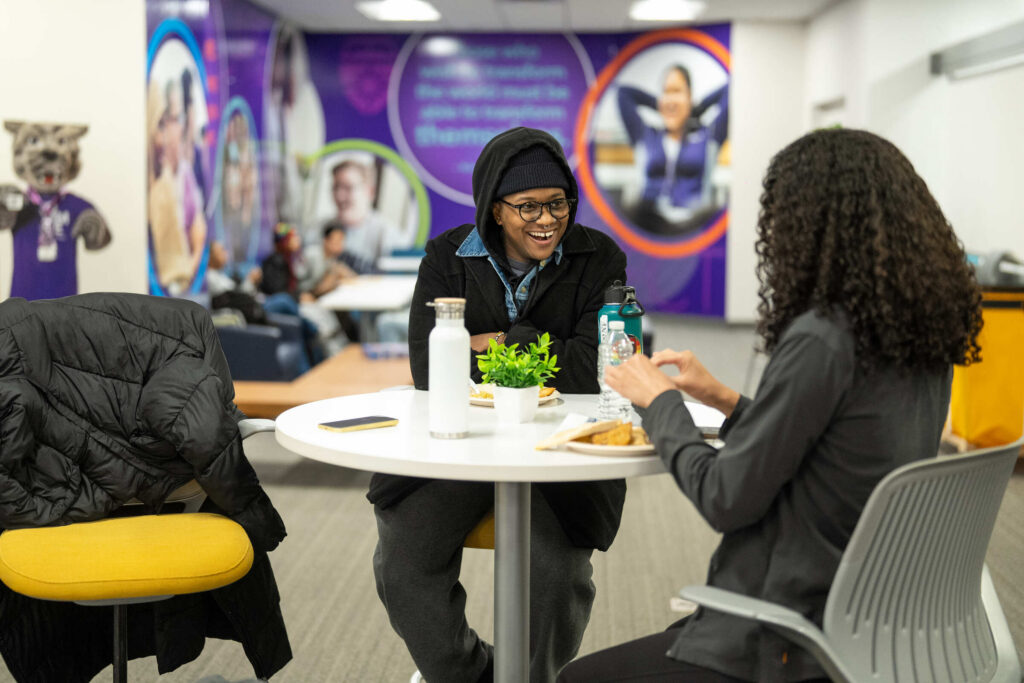
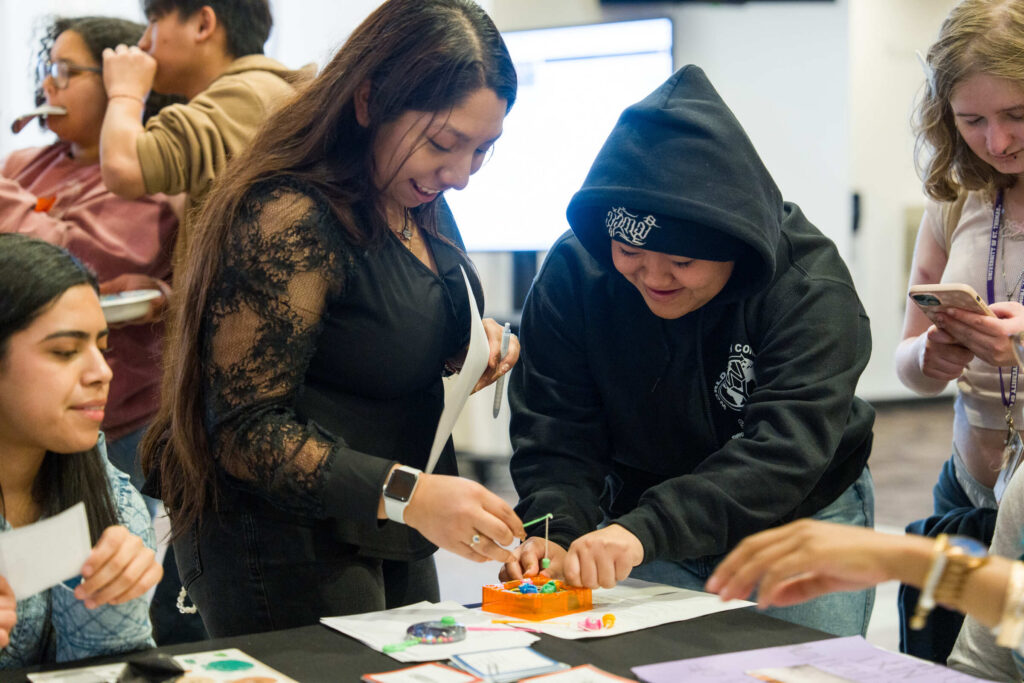
Infrastructure at DFC to address barriers includes giving students free laptops, free meals and transportation assistance, while offering small classes, embedded tutoring, peer mentoring and one-on-one support from faculty and staff.
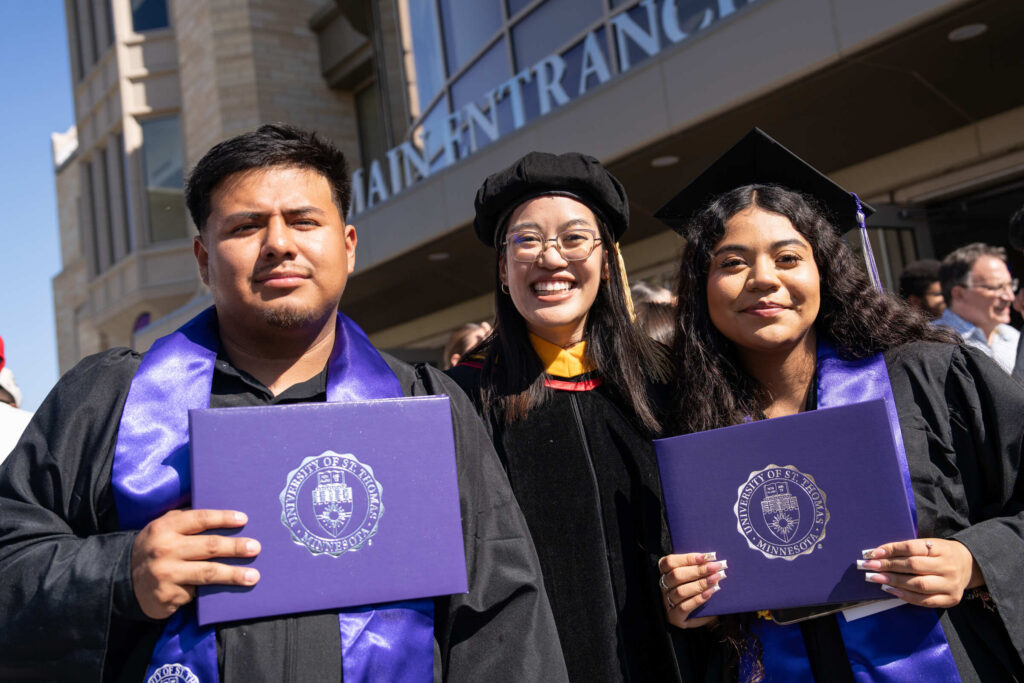
A decade in, the DFC model is paying off. Compared with Minnesota community college students, DFC scholars are 2.2 times more likely to earn an associate degree and 3.2 times more likely to earn a bachelor's degree, according to DFC's 2025 Report to the Community.
Access isn't admission
When Cielo Garcia Villordo was nearing graduation from Spring Lake Park High School, she and her mom toured St. Thomas and "fell in love with the campus and everything it had to offer,” she said, but she wasn't sure what she wanted to study in college so she wasn’t ready to financially commit. A high school teacher told her to consider DFC as an option. More than half of FAFSA-filing DFC scholars pay just over $1,000 per year in tuition and fees.
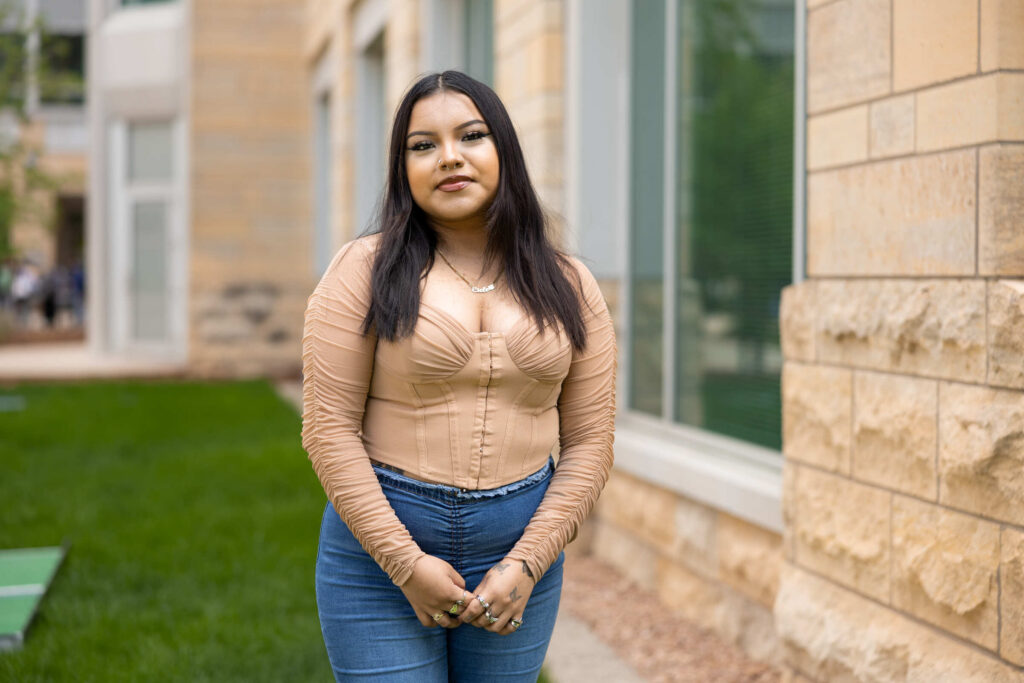
“After viewing all the resources DFC provided and learning that I could be transferred to St. Thomas, plus receive a scholarship if I did well, I knew I had to come here," she said. "There are many clubs available, small classes, and there are different opportunities available such as paid internships and on-campus jobs.”
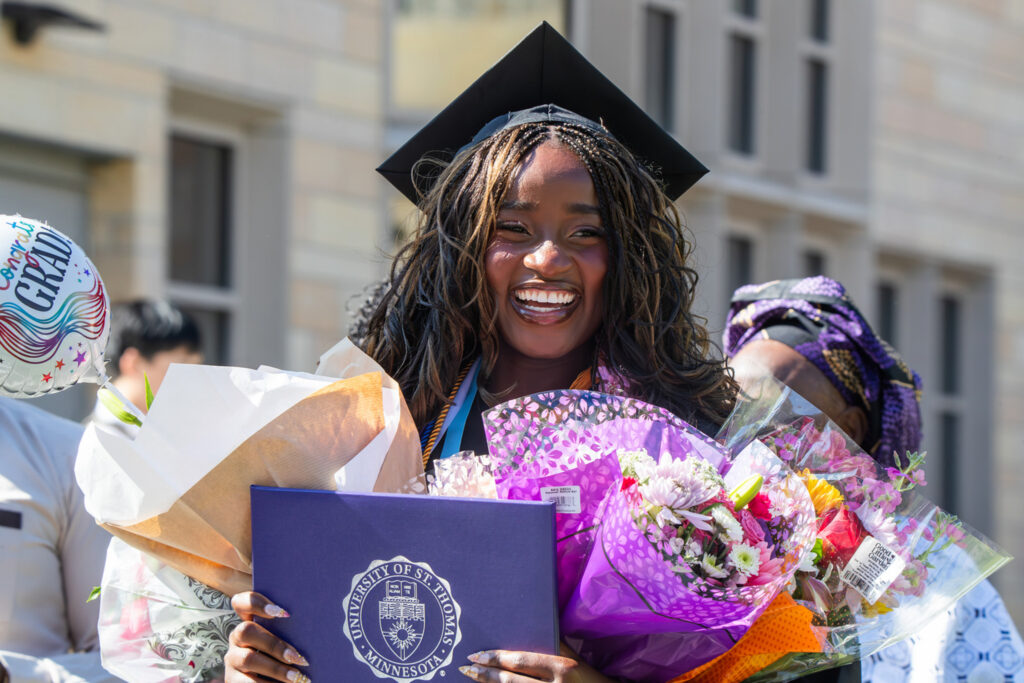
Upon graduating from DFC in 2024, Garcia Villordo received a DFC Excellence Scholarship, which provides full tuition for scholars with high GPAs to continue their education at St. Thomas. But she said the sense of belonging she found at DFC was just as important as the financial support.
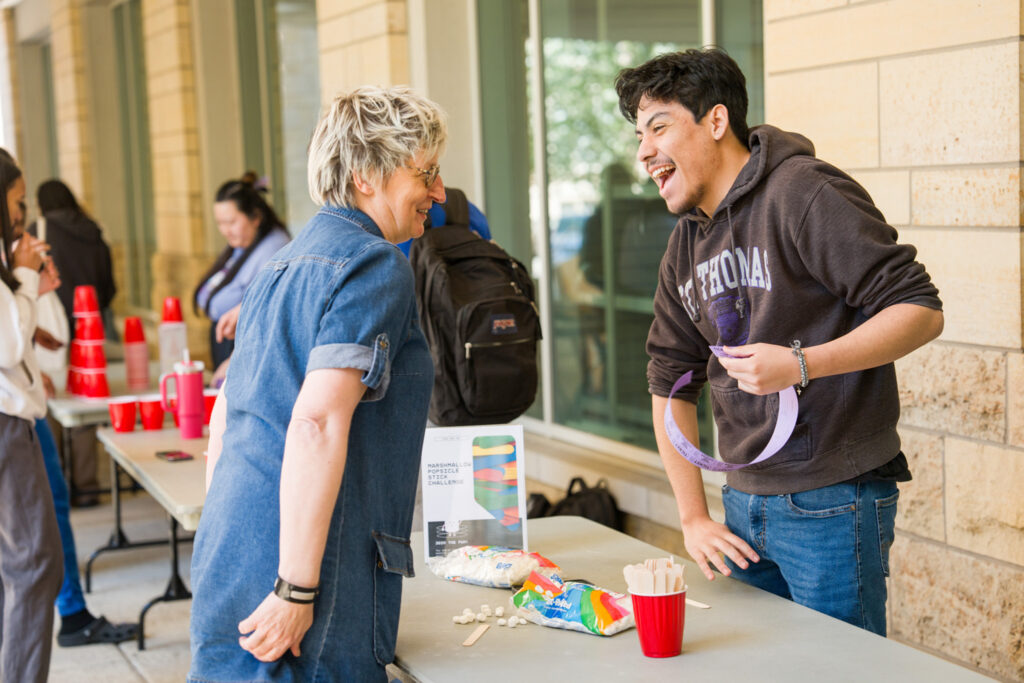
“Not once did I feel alone or helpless during my time at DFC because everyone here acknowledges and recognizes us,” she said.
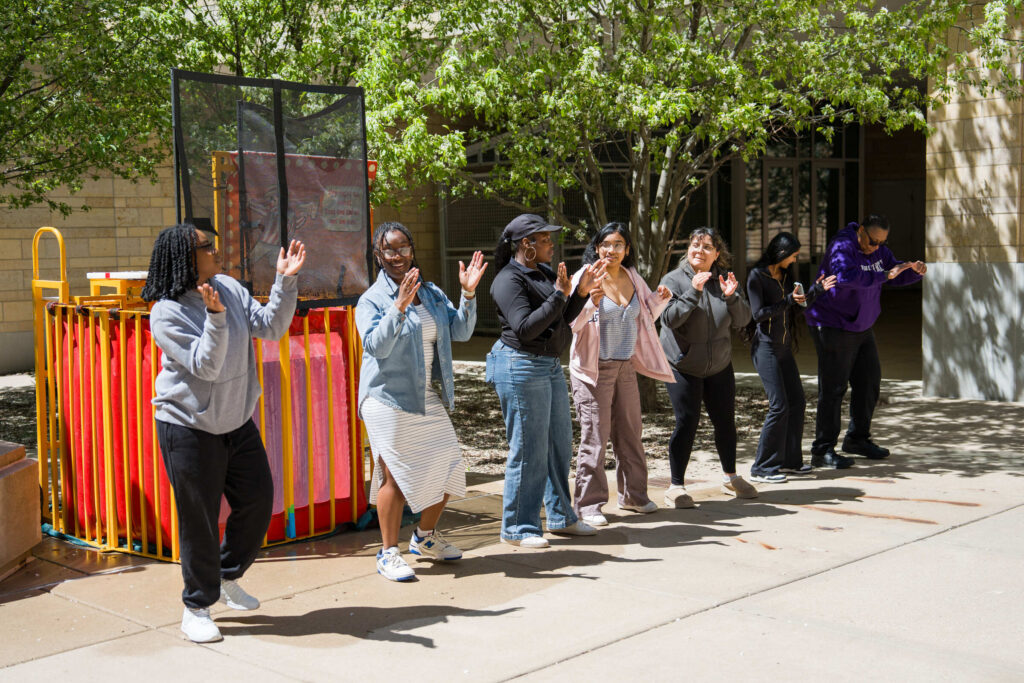
Smith said that a sense of belonging is as important to the students as the resources.
“If scholars don't feel like they belong, simply having them in that space isn't going to contribute to their success,” Smith said.
King Larmie ’24 AA, who also received a DFC Excellence Scholarship, agrees.
“Everyone here looks out for one another like a real family,” Larmie said. “It is encouraging and I believe it allows students to realize their strengths they never thought they had.”
From surviving to thriving
DFC's approach to student success extends into the classroom, where longer class periods provide more time for instruction, and students' lived experiences become part of the learning. Smith describes scholars not simply as consumers of knowledge but as “co-producers of knowledge.”
“We try to make sure that our assignments, examples that we use in the class, are grounded in their cultural realities and encompass their rich, diverse background,” Smith said.
“I always tell scholars that I have no tips on how to help you survive because you are all survivors, and you don't need a professional to help you survive,” she said.
Her job as an educator, she said, is to provide the tools and resources that allow them to thrive.
(Brandon Woller '17 / University of St. Thomas)
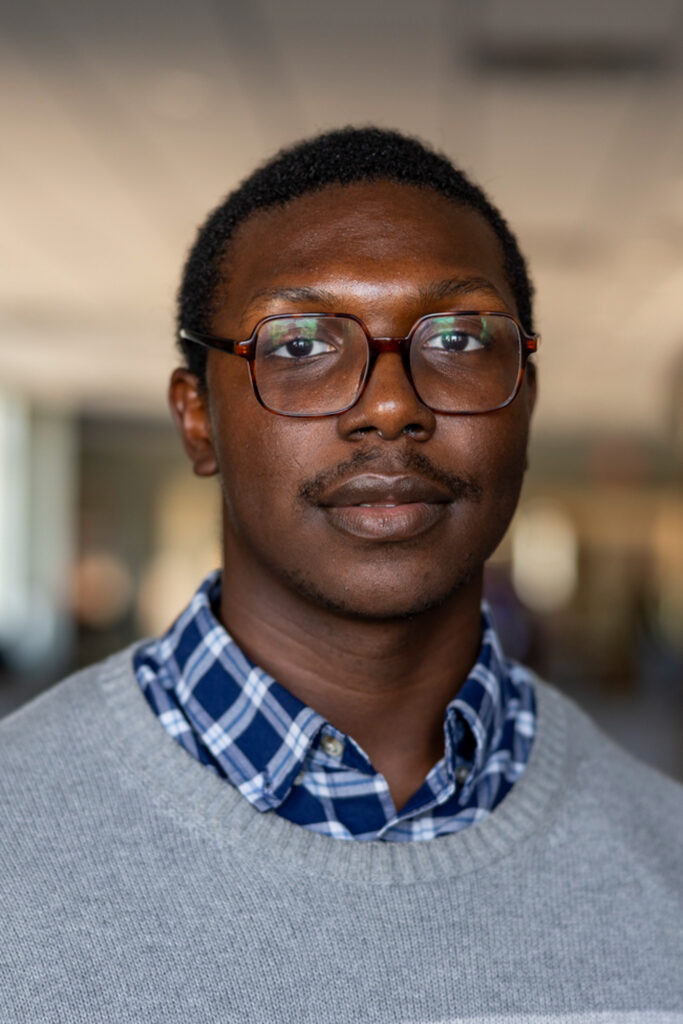
Theodes Saine ’24 AA, ’26 arrived at DFC without a clear vision of where college might take him.
“After actually being here, that meaning and that kind of passion and drive kind of built on its own,” he said.
He earned his associate degree from DFC in 2024, continued at St. Thomas, and graduated in 2026 with a bachelor's degree in social work. When his family first moved to Minnesota, he saw how social workers had an impact on their lives. His interest in social work grew from a passion for community building and amplifying voices that aren't always heard.
“I find that I'm my best when I'm able to help others and also build and strengthen community and relationships with other people,” he said. "Connections and relationships are some of the most important things we have."
Beyond the classroom
By 2025, 325 DFC scholars had completed 353 internships with 95 companies and organizations.
One student said an internship increased their independence and confidence. Another described learning "how to write emails, work in cross-functioning teams, and navigate a project from scratch.”
DFC has built relationships with companies and organizations that provide scholars with internships as early as the summer before their second year.


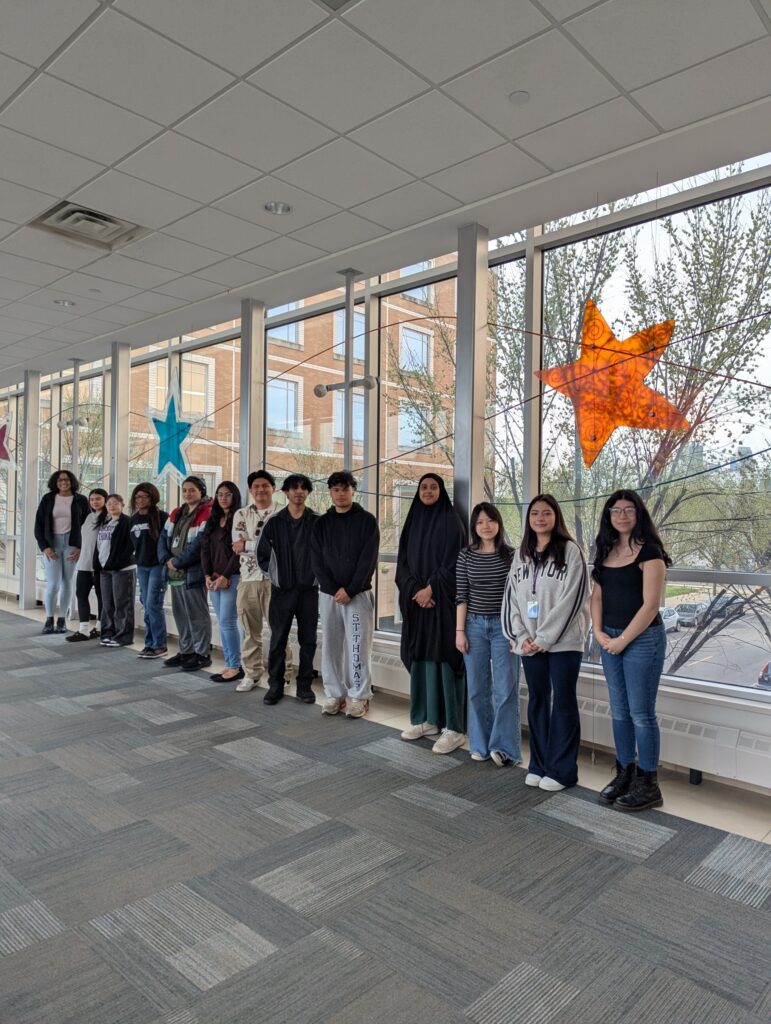

“It's very difficult to get a professional internship as a sophomore," said Lauren Loeffler, senior student and community partner manager at SPS Commerce, a supply chain management company that partnered with DFC from the beginning.
DFC interns at SPS Commerce work alongside employees on projects connected to actual business goals. One recent intern helped train a new artificial intelligence agent. The work continued after the student's internship ended, Loeffler said, and the technology is being rolled out to SPS customers.
“We provide opportunities for young people because they're going to be our workforce sooner than we know it," Loeffler said, "and so it's an investment in our community and in our business.”
DFC also offers corporate site visits, career fairs and networking instruction, along with help obtaining interview attire and paying for professional licenses and training.
“We want them to be emerging leaders in their professions,” Smith said.
Among known DFC graduates who went on to earn bachelor's degrees, 89% are employed in fields related to their major, according to the college's 2025 report. Their occupations include teachers, IT specialists, marketing analysts, auditors, mental health specialists, public health coordinators and implementation consultants across more than 80 companies and organizations.
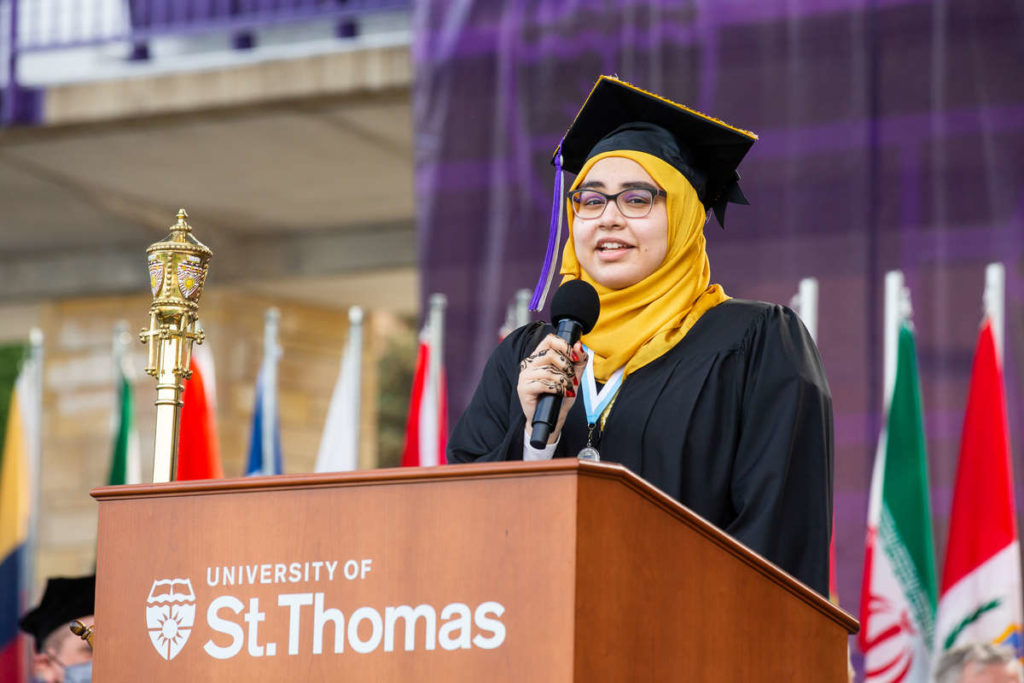
“You can truly feel that they are invested in your success and want to see you thrive,” said DFC alumna Aiesha Osman ’21 AA, ’23, who earned a bachelor's degree in environmental studies from St. Thomas.
She went on to work with the City of Minneapolis' City Trees team, bringing trees to residential properties and educating residents about urban forestry. She later earned a master's degree in natural science and environmental education from Hamline University.
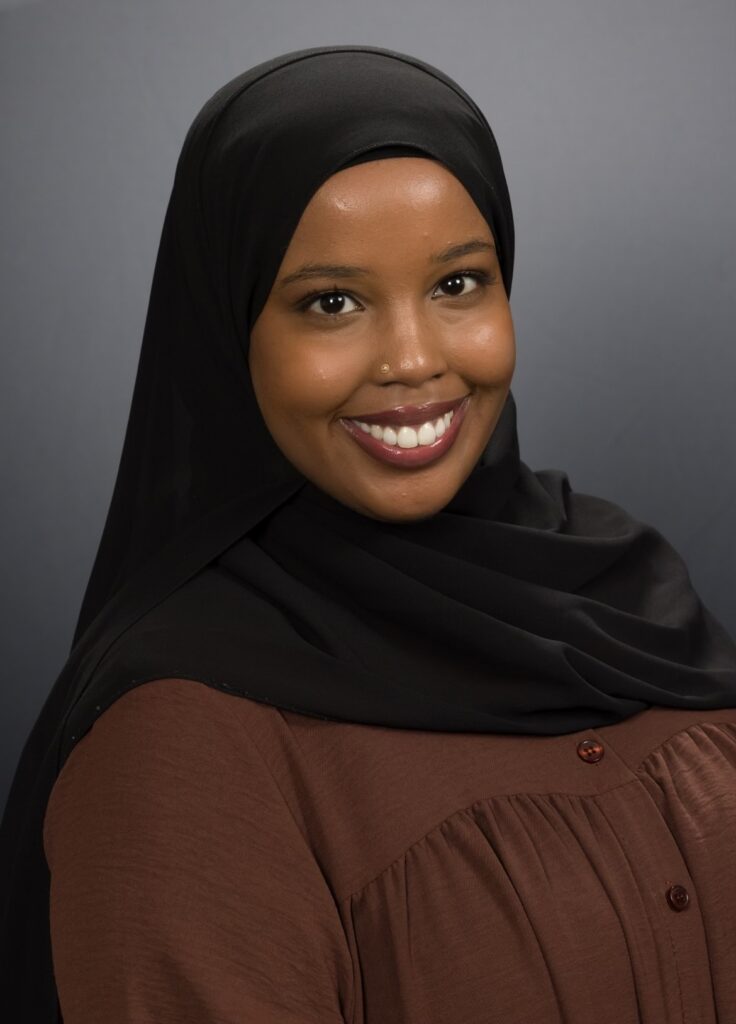
Today, Osman teaches sixth- and seventh-grade social studies at Al-Amal School, her alma mater. She also serves on DFC's advisory board, where she provides an alumni perspective on the college's work.
“DFC truly becomes an Ohana – a family,” Osman said. “What makes that so special is that the connection doesn't end when you graduate or move on.”
Nasteho Yasin ’20 AA, ’23 agrees. “Many of my closest friendships and professional connections were formed through DFC and continue to be a meaningful part of my life today,” she said. “Through my role at Genesys Works, I've connected with students who are DFC alumni and have seen firsthand the incredible growth and success they've achieved.”
Philanthropy as investment
The college is named for co-founding benefactors Mike and Kathy Dougherty and their daughters, Sarah and Mollie. Mike Dougherty, who died in 2025, also encouraged longtime business partner David Juran '88 and his wife Sheila (chair of DFC advisory board) to become DFC donors and advisory board members when the college opened.
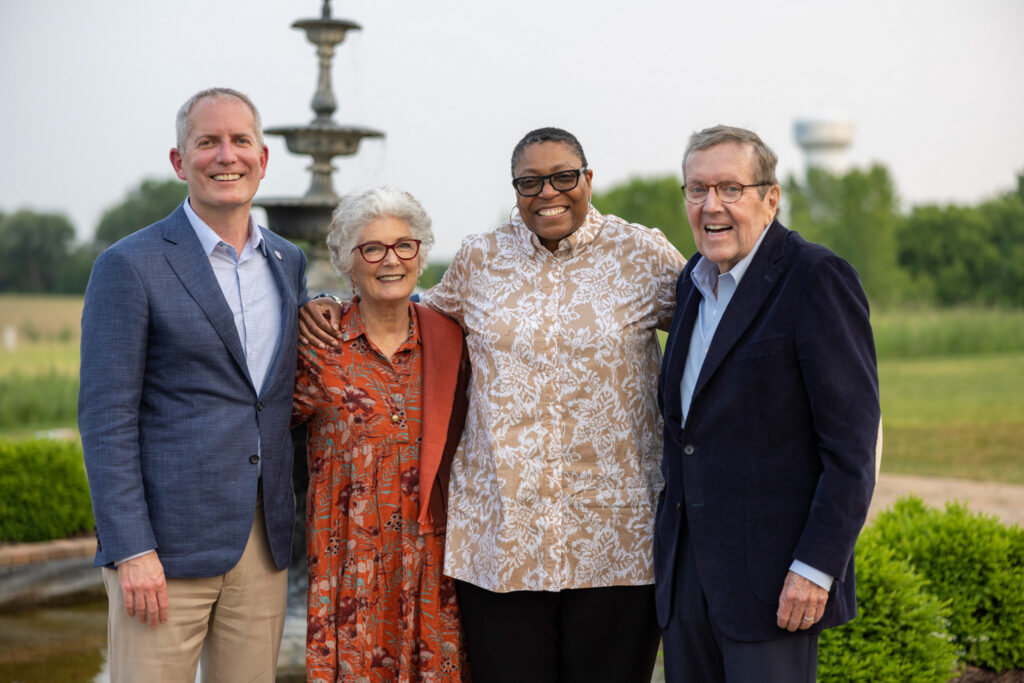
“Investing in DFC is an investment in talent,” said Juran, a St. Thomas trustee and president and CEO of Colliers Debt & Structured Finance who remains involved with DFC. “These students are earning degrees, building careers and contributing to their communities. That's good for the students, and it's good for Minnesota's workforce and economy.”
Independent economists at the Constellation Fund calculated that every dollar invested in DFC yields $5.29 in benefits that reduce poverty, according to DFC's 2025 Report to the Community.
As DFC enters its second decade, Smith said its scholars will continue to shape what comes next.
“We're constantly learning every year from our scholars what type of initiatives work,” she said.