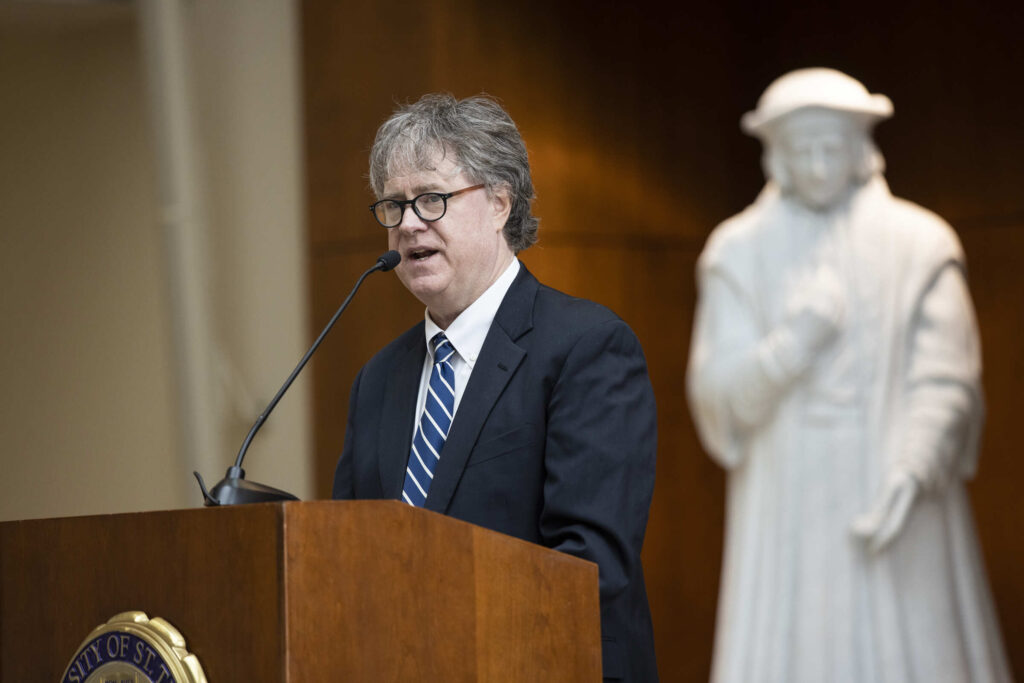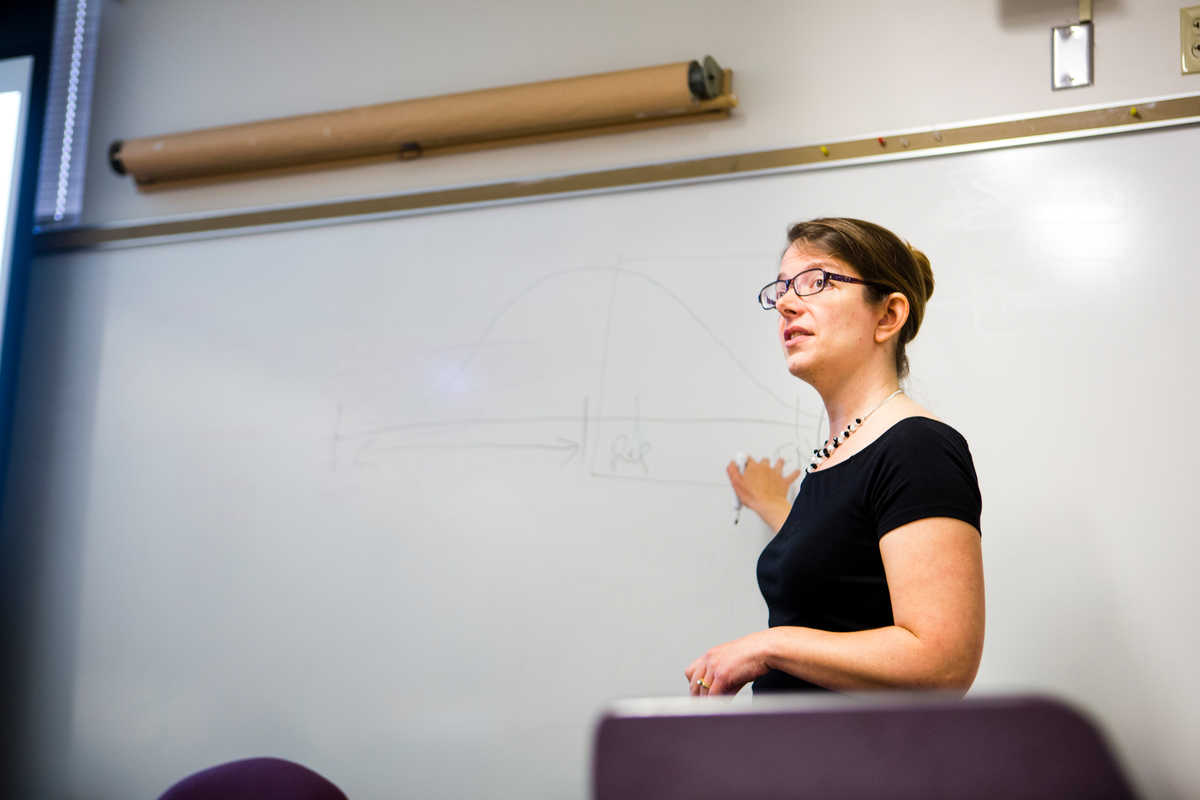
Renee Buhr, professor of political science and international studies at the University of St. Thomas, spoke with WCCO Radio about the latest developments in the war involving Iran and the deaths of U.S. service members. Buhr explained that the conflict reflects long-standing tensions over Iran’s nuclear program and regional power dynamics, noting that U.S. involvement has been shaped by decades of efforts to limit Iran’s nuclear ambitions. She said Americans should expect continued uncertainty as military operations unfold and the broader geopolitical consequences become clearer.

From the conversation:
Adam Carter: What, as American citizens, can we expect? Certainly, we understand that any kind of military operation, any war, there are strategic plans, and those plans should be classified for the element of surprise and not to endanger American or allied soldiers and members of the military. But what do we, as citizens, what more should we expect as far as a clear message as to the reason?
Buhr: We definitely should expect a clear rationale. We don’t need to know tactics, but we should know the broad strategy. We should have an idea of what the desired end state is and a general idea of the ways in which our military or diplomatic or other assets can be used.
Under normal circumstances, we would definitely see a war like this coming. There would have been a long period of trying to persuade the American public that this is the right decision, that there’s a good security rationale for it, really explaining that security rationale in terms that lay people can understand.
Thinking about the lead-in to Iraq, there was a real effort to explain what the national security objective was and roughly how we were going to achieve it. The things that need to stay classified might be tactical, but that big-picture stuff, you don’t need to keep that classified.
If you are in a democracy, the biggest benefit to our government and our military in being transparent about these sorts of things is that democracies tend to make smarter decisions, because they have to go through that process of explaining the rationale and convincing the people.
So if you take out that period of explanation and pushback from other parts of the government and other parts of the populace, then you lose the strength that democracies have in making better decisions that are better informed and have been sort of pushed on a bit.