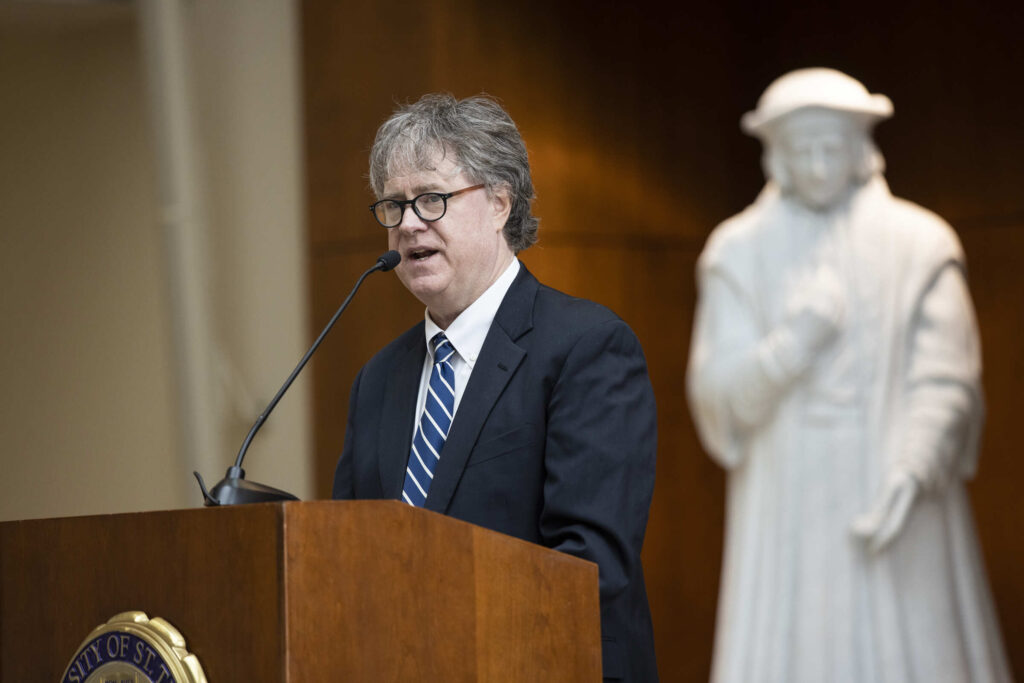
Tyler Schipper, an economics professor at the University of St. Thomas, spoke with KARE 11, WCCO-TV and WCCO Radio about escalating trade tensions between the United States and Canada. Schipper discussed what the dispute could mean for Minnesotans, including higher consumer and energy costs if tariffs and retaliatory measures continue to expand.
From KARE 11:
University of St. Thomas Economics Professor Tyler Schipper is also worried about an escalating trade war and how it could affect long-term relationships with our neighbor to the north.
“Canada has been one of the countries that has been least likely to back down, which kind of raises the prospects that this gets worse rather than better,” Professor Schipper explained.
So again, the tariffs that went into effect over the weekend only affect about 5% of the goods the U.S. imports from Canada every year.
The question moving forward is: What happens next? Do both sides come back to negotiate, or is this just the beginning?
From WCCO-TV:
Tyler Schipper, an economics professor at the University of St. Thomas, said he doesn’t expect broad economic consequences in Minnesota.
“Nobody’s winning right now,” Schipper said.
He noted that some consumers could feel the impact if tariffs drive up prices on imported products.
“If you’re an individual consumer and you really like that Canadian whisky, this could hurt a lot,” Schipper said.
However, Schipper noted that any tariff-related price increases could be moderated by reduced demand, making the ultimate impact difficult to predict.
He does have one big worry.
“One of the places where this trade war could escalate, if it did, would be with petroleum exports,” Schipper said. “We get a lot of our crude oil here in Minnesota from Canada, and if that was something that the Canadians decided to use as a lever, as was actually suggested by the prime minister, that could really escalate the effect on people here in Minnesota.”
From WCCO Radio:
How much of a reality is the threat of cutting off electricity?
“Nationally, we import, call it 1% of total power from Canada, but here in Minnesota that percentage is probably more in the 5% to 10% range,” explains University of St. Thomas Economics Professor Tyler Schipper. “And that means that it’s likely power prices go up if there’s any kind of sustained delay in delivering electricity from Canada.”
Schipper said if this were to occur, there wouldn’t be instant blackouts. Instead, it is one more thing that would affect pocketbooks with it mostly being a cost issue.
“Hopefully there’s additional capacity from local power generations and elsewhere in the regional grid that you would be able to make up for this, but for the most part this is mostly a cost issue,” Schipper adds.