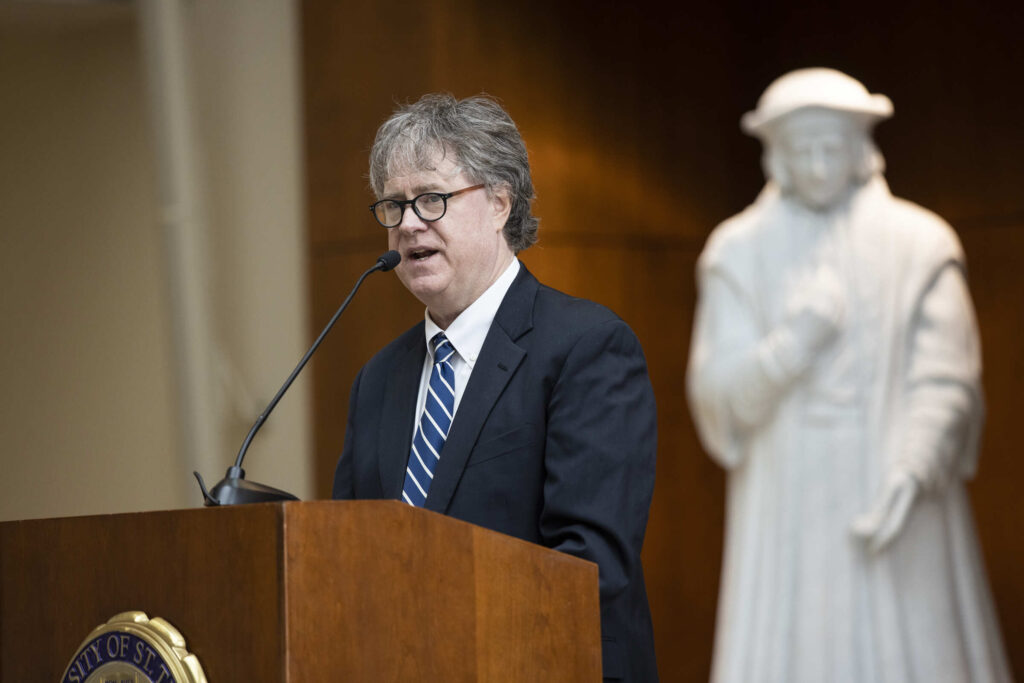
Tyler Schipper, an economics professor at the University of St. Thomas, spoke with MPR News about rising gas prices in Minnesota and why the state is currently above the national average. Schipper pointed to global oil markets and ongoing conflicts in the Middle East and Ukraine as major factors driving prices, while also explaining how higher fuel costs could affect inflation and other household expenses.

From the conversation:
Schipper: The other one is that there tends to be a shift to a winter blend of gasoline. And I’m not a petroleum engineer, so I don’t know the difference. But that tends to put a little downward pressure on gasoline prices.
We’re still a little bit early for that transition, as I understand it, so that might help a little bit. But the effect of switching blends, it’s going to be marginal compared to getting some kind of resolution to the conflicts both in the Middle East and Ukraine and Russia.
Nina Moini: Other than resolution to those conflicts, are there other factors that might help those prices to drop back to perhaps where they were a year or so ago, which was below $3 per gallon? Is that possible?
Schipper: I’m not hopeful that we’ll get there within the next year to even two years. The supplies of oil out there are sufficient to get us back there. It’s mostly about getting that oil to refineries and to consumers, and that’s where the pain points are going to be.
In addition to that, even if there is some resolution to the conflict with Iran, you’ve had a bunch of countries the world over that have dipped into their strategic reserves. So in the U.S., we have the Strategic Petroleum Reserve that we’ve been using to blunt some of the effects of oil price increases, as have other countries.
For instance, China has really used their reserves to make sure that they didn’t have to import oil at unreasonably high prices. And so those countries will want to replenish their reserves once we see some more normalization in oil markets. And that’s going to put upward pressure on oil prices even after the conflict of Iran kind of gets resolved in some way, shape or form.