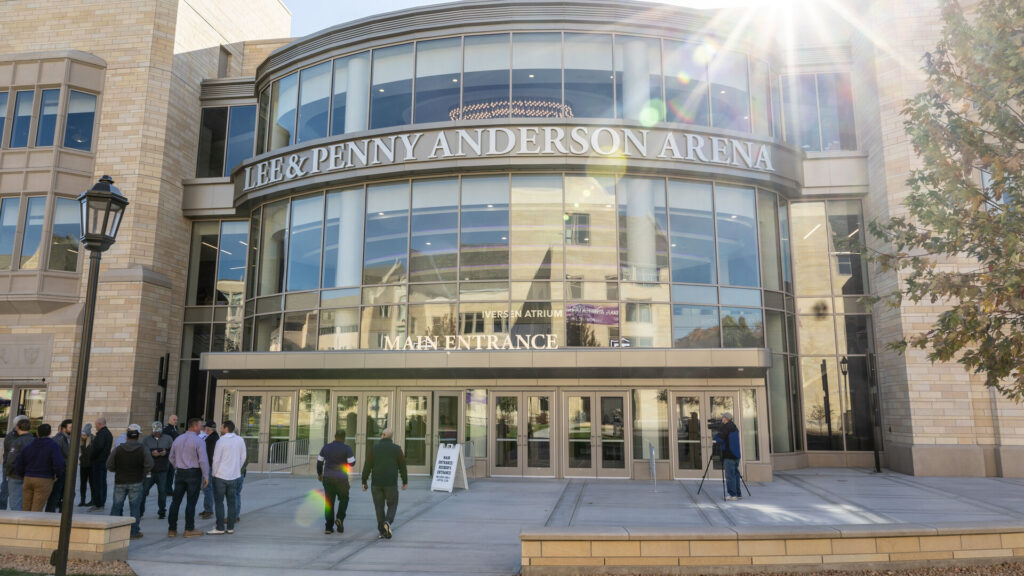
As we count down to the opening of the Lee & Penny Anderson Arena, let’s look back at the many venues St. Thomas basketball and hockey teams once called home.
The first St. Thomas basketball team tipped off in 1904 inside a narrow, low-ceiling gym on the first floor of the Dormitory Building. The space was so cramped that when they visited schools with regulation-sized courts, the Tommies had to scramble to adjust to all that extra room.

In 1914, the team moved into the new Armory and finally played on a standard-sized court for home games. The upgrade came with a catch, however. For the first few years, players dribbled on a packed dirt floor that doubled as a military drill site. It wasn’t until the mid-1920s did the Armory swap the dirt for a maple hardwood floor, giving games a proper bounce.
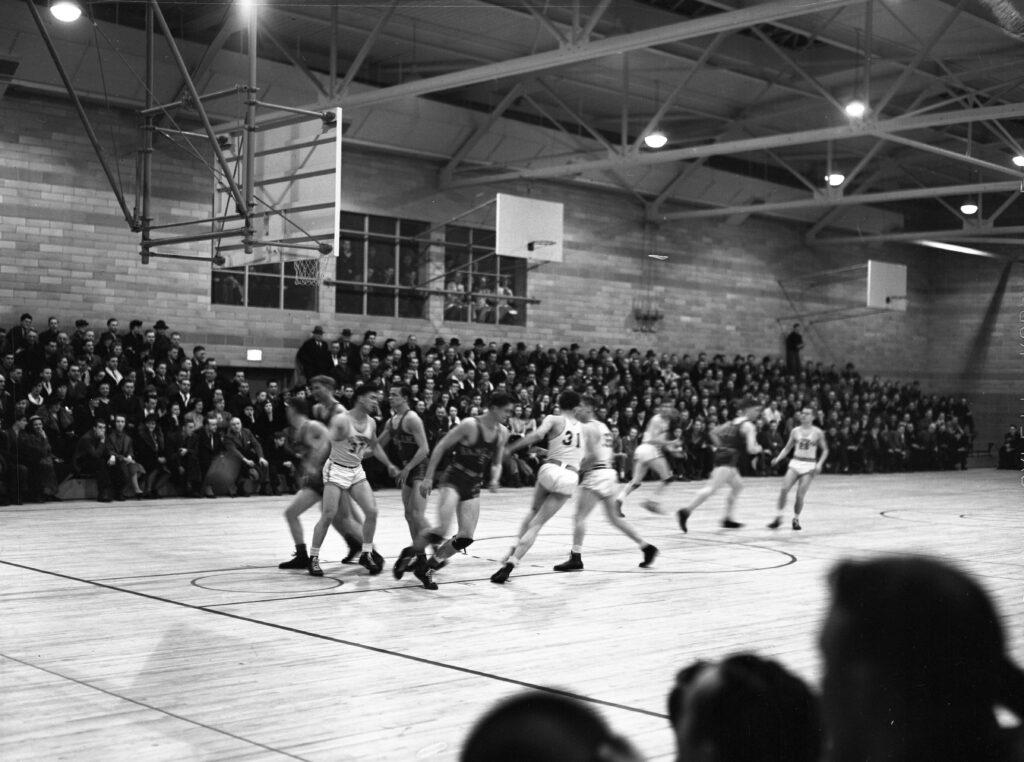
The next leap forward for the basketball team arrived in 1939 with O’Shaughnessy Hall, the first St. Thomas building devoted to athletics. On its third floor, a new gym featured roll-away bleachers for 1,000 fans and an electric scoreboard, touted at the time as “the latest and most efficient design.” The compact space packed in fans and created an atmosphere that felt electric.
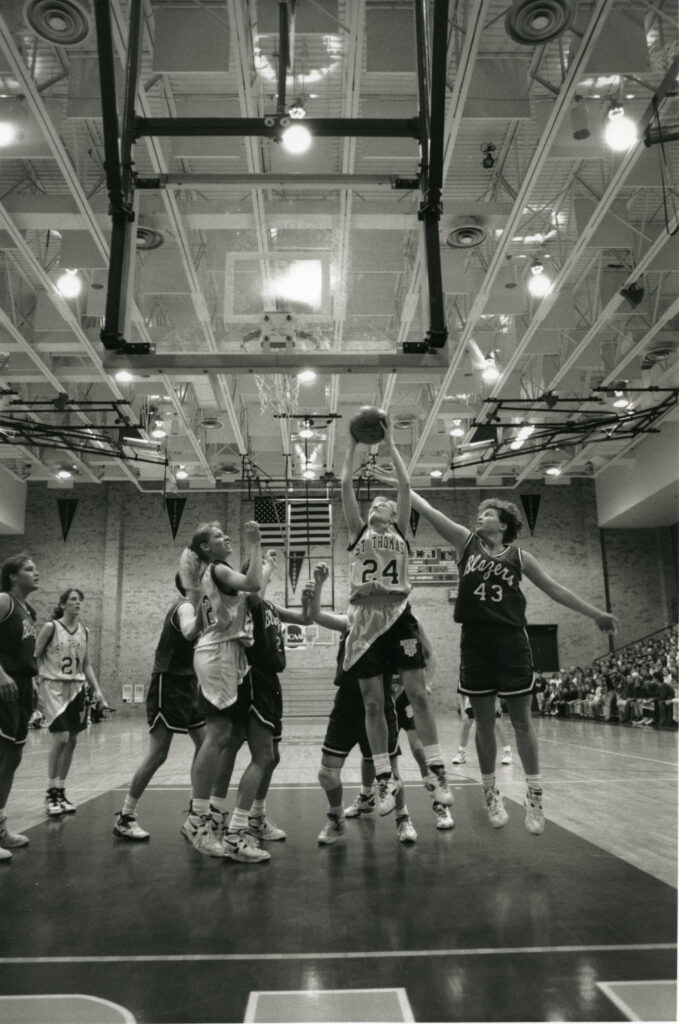
By the late 1970s, O’Shaughnessy Hall no longer fit the growing student body or the school’s athletic ambitions. In 1980, St. Thomas opened the Physical Education Facility (later renamed Schoenecker Arena and Coughlan Field House) on the old Armory site. For more than 25 years, Schoenecker Arena hosted countless highlights, including the women’s basketball team’s first NCAA Division III National Championship in 1991.
By the late 2000s, enrollment at St. Thomas had doubled from the 1980s, and the school once again needed to modernize its athletic spaces. In August 2010, St. Thomas opened the Anderson Athletic and Recreation Complex and unveiled a new Schoenecker Arena, giving men’s and women’s basketball an exciting new home.
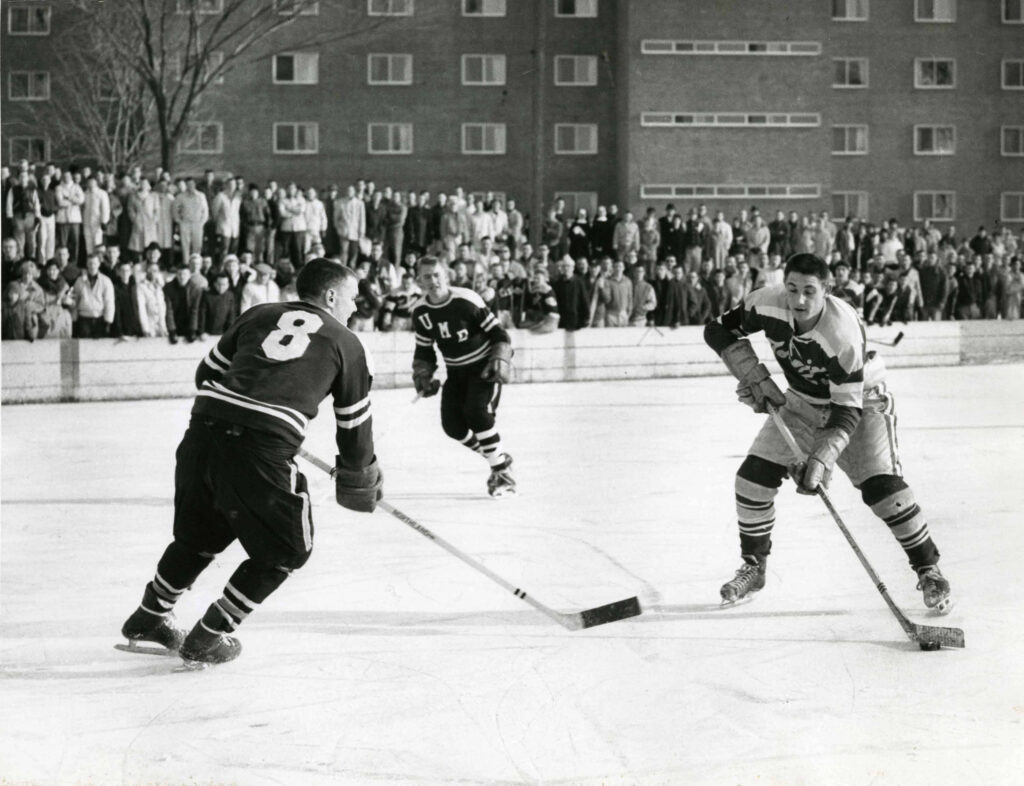
The St. Thomas hockey teams first used makeshift outdoor rinks built each winter at different campus spots, including atop the tennis courts behind Ireland Hall and later a patch of land behind Dowling Hall. Players shoveled snow, patched ice, and prepared the rinks themselves for each practice and game. Despite their efforts, poor conditions sometimes forced the Tommies to forfeit games. A 1940 Aquin article described one February matchup: “The ice, which was dotted with puddles and was covered with slush in many places, held play to a minimum. Many times, a player would start up the ice only to end up flat on his face in a puddle of water.”
In the early 1960s, the men’s hockey team left campus and rotated among Twin Cities indoor rinks: the “Cow Palace” in South St. Paul (1962–63), Aldrich Arena in Maplewood (1963–70), St. Paul Academy (1970–76), and the Coliseum Ice Arena at the Minnesota State Fairgrounds (1976–2003). When women’s varsity hockey launched in 1999, the team skated at the Parade Ice Garden in Minneapolis.
These off-campus rinks caused their own issues with long commutes from campus for practice and difficulty attracting fans to games. As Coach Terry Skrypek once recalled, the Tommies even lost home-ice advantage in the NCAA hockey tournament because the Coliseum melted its rink before postseason play.

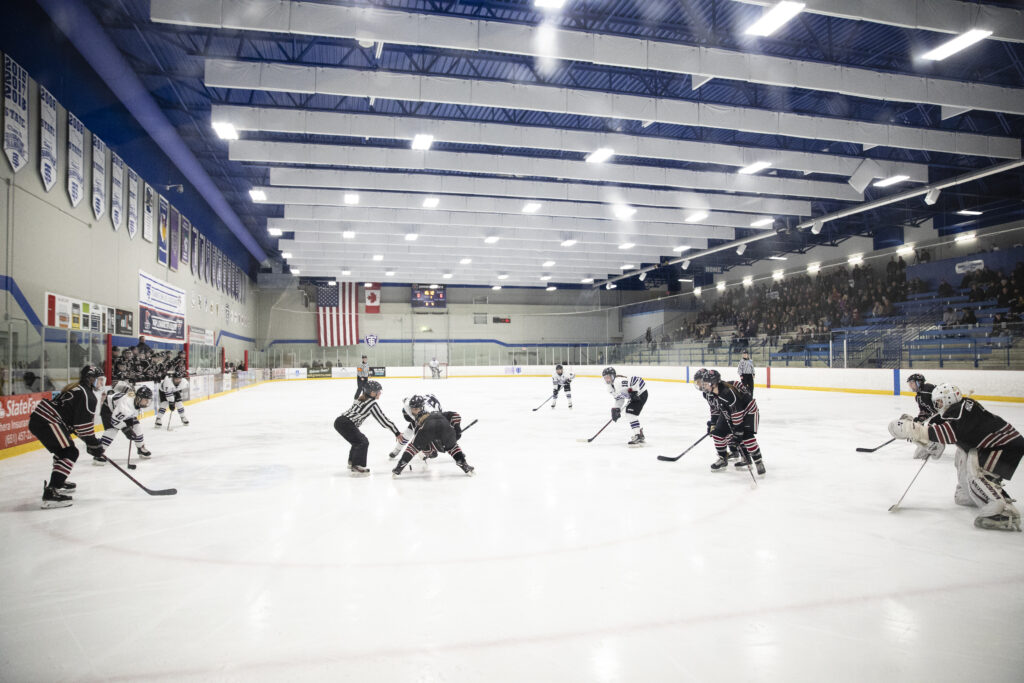
St. Thomas supporters attempted to fund an on-campus rink in the mid-1980s, but ultimately the project did not get off the ground. Not until 2003 did the Tommies finally get a dedicated hockey facility with the opening of the Saint Thomas Ice Arena, built on the Saint Thomas Academy campus in Mendota Heights. For the first time, both men’s and women’s teams shared a single rink where they could display banners and trophies. Even then, players and fans faced a 12-mile trek from campus.
From historical gymnasiums on the St. Paul campus to off-campus rinks around the Twin Cities, Tommie basketball and hockey teams of the past succeeded in all different environments. Now, with the opening of the Lee & Penny Anderson Arena, the programs step into a home worthy of their legacy and their future.