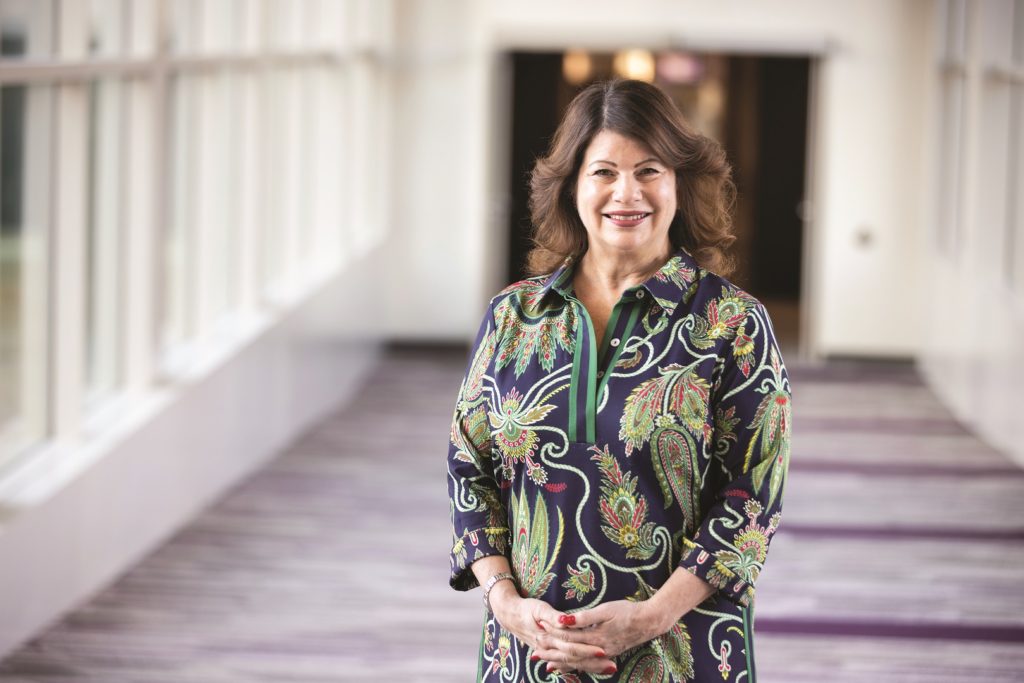
Laura Russ, a professor and director of the Master of Real Estate Development program in the Opus College of Business at the University of St. Thomas, spoke with MPR News about efforts by Twin Cities suburbs to encourage “missing middle” housing through zoning changes. Russ discussed how adding duplexes, triplexes and other small-scale housing can expand housing choices, improve affordability over time and strengthen communities’ tax bases while balancing neighborhood concerns.

From the conversation:
Nina Moini: Could you tell us more, professor, about how these changes are effective or how they actually lead to more affordable housing? Because I’ve seen some duplexes and triplexes built that are not the most affordable, and they might as well be in a single-family home. How does that actually lead to affordability?
Russ: That’s an important point because when we’re talking about affordability, what’s important to distinguish is between impact on an individual home or unit of housing and impact more in the aggregate or looking at it as a whole. So one for one, it’s usually true. If you do replace a single-family home with a new one or even, in some cases, with duplexes or even a small apartment building, because that is a brand-new building likely with new amenities, likely with new materials that may be more expensive, that home in and of itself may not be less expensive than the home it replaced.
At the same time, we know when we add more density, when we add more housing in the aggregate and over time, that eases pressure on the housing market and allows overall affordability to increase. That does not mean that every resident will be able to afford an individual home, and there will always be residents, because of low income, who may not qualify without assistance, without government subsidies for any housing in that area, which is why it’s important that cities and states take a holistic and multipronged approach. This is just one element of that.
One other point for cities that I think has just recently become more important is the issue of their tax base. More dense housing is going to be more productive from a tax base standpoint. And I was on your program a couple of weeks ago. We were talking about the declining commercial tax base and how that burden may start to shift onto single-family homeowners. Well, this is one way to broaden that tax base to use that land more efficiently for purposes of property tax revenue.