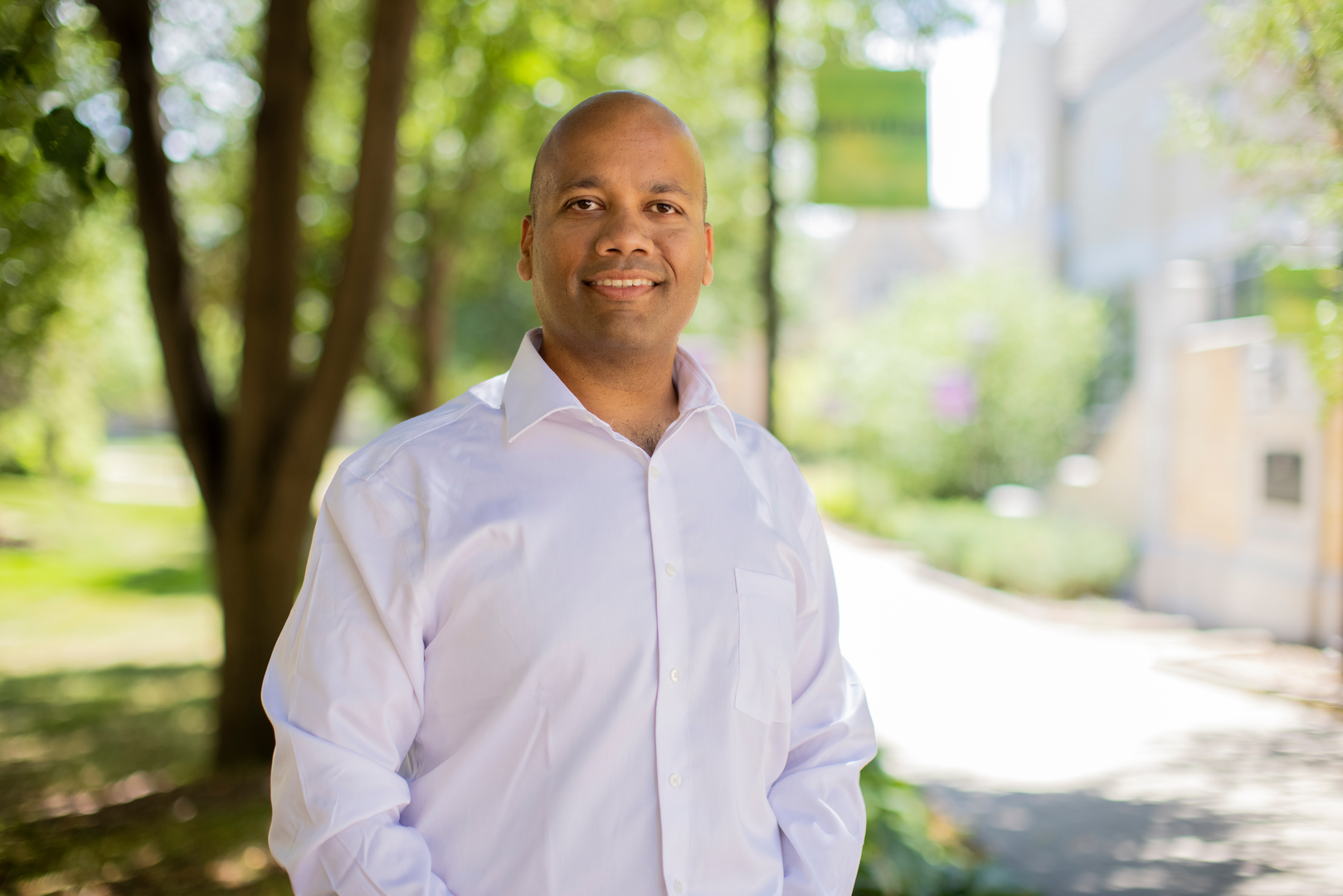
Manjeet Rege, software engineering and data science professor at the University of St. Thomas School of Engineering and director of the Center for Applied Artificial Intelligence, recently discussed the growing global competition over the physical resources that power artificial intelligence during an interview with WCCO Radio, explaining how minerals, energy and supply chains are becoming central to national security and technological leadership.
From the conversation:

Jordana Green: I use AI every day. I use it for the radio show, for research, for trip planning, and for a lot of other things. I am enjoying the benefits of AI right now, but there are deep concerns about artificial intelligence and the battle for resources needed to keep it running.
For years, the United States and China have been locked in a race for AI dominance. Apparently, the real battle they have been fighting is over the supply chain that keeps AI going.
On Friday, the White House is hosting a pivotal summit with eight key allies, including Japan, South Korea, and Australia, to secure the physical materials that AI depends on.
I am very curious. What physical materials are these? Are these countries going to be allies to us, or is this a race to the bottom where whoever controls the most materials wins?
To answer these questions, we are joined by Dr. Manjeet Rege. He is a professor at the University of St Thomas and chair of the Department of Software Engineering and Data Science. He is also the director of the Center for Applied Artificial Intelligence.
Dr. Rege, I am so happy to have you back on the show.
Dr. Manjeet Rege: Always a pleasure.
Green: So what are the physical materials that AI depends on?
Rege: AI is physical at its core. Every large model runs on chips made from rare minerals mined in specific corners of the world. Those chips sit in massive data centers that require enormous amounts of energy and water to operate and stay cool.
If any part of that physical chain breaks, innovation slows to a crawl. While the public sees AI as something that runs in the cloud, the reality is that the cloud sits firmly on the ground, on minerals, silicon, and power grids.
This summit reframes AI as a material science and infrastructure challenge just as much as a software one. What is really being discussed is who controls the materials needed to keep the supply chain moving.
The United States views AI as a strategic competition with China and wants to avoid dependencies where Beijing could slow or block allied AI development by restricting exports of key inputs.
Today, a large share of rare earth refining, magnet production, and key chip related materials are concentrated in China. China has already used export controls as a geopolitical tool.
This summit builds on earlier efforts like the CHIPS Act. With these eight allied nations coming together, the goal is to create alternative strategies. We saw during the pandemic how fragile supply chains can be. No country wants a single point of failure.