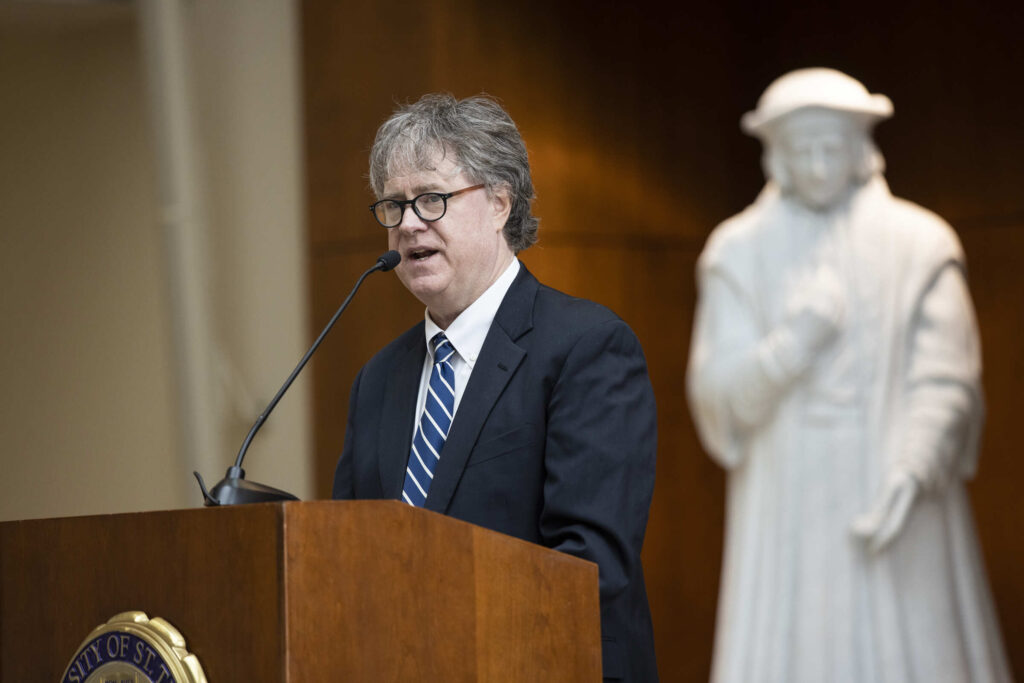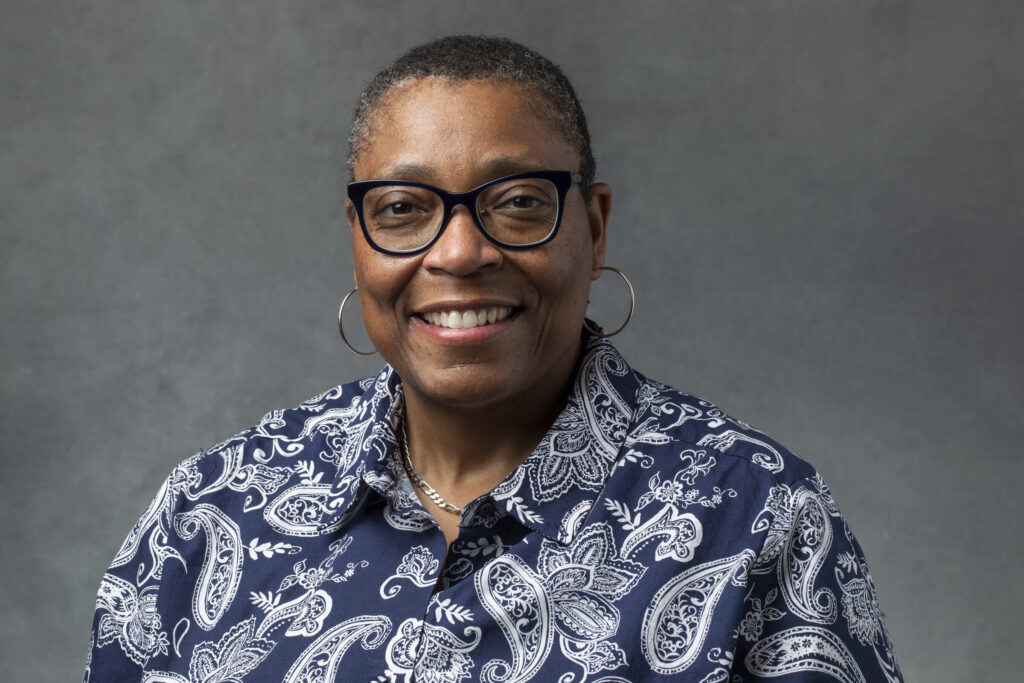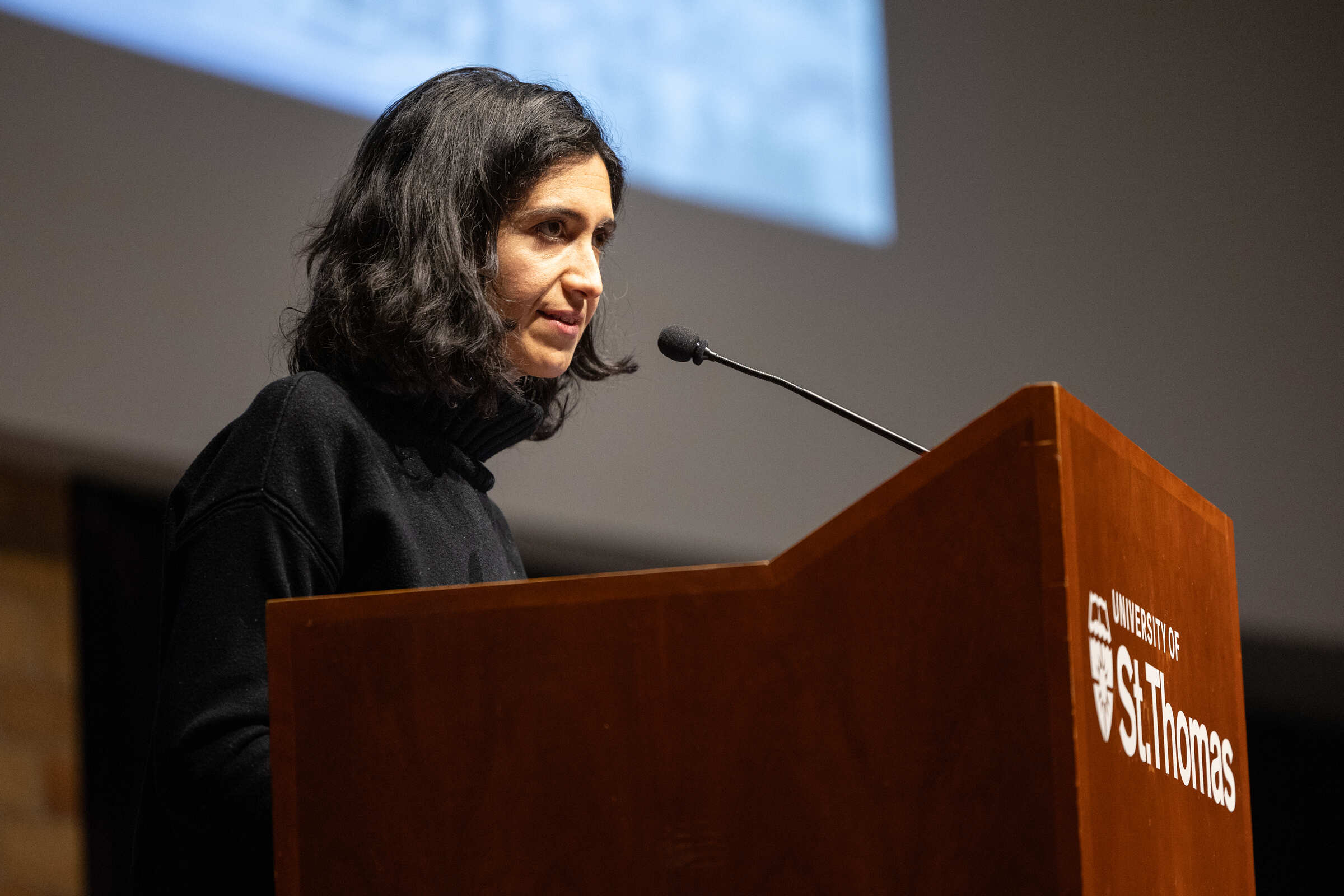
Shaherzad Ahmadi, associate professor of history at the University of St. Thomas, joined MPR News to discuss the historical roots of the conflict involving Iran following U.S. and Israeli attacks and calls for regime change. Ahmadi, whose research focuses on the Iran–Iraq War, explained how decades of regional tensions and past conflicts continue to shape the current situation and its potential implications for the Middle East and U.S. involvement in the region.

From the conversation:
Catherine Richert: I want to come back to Venezuela in a few minutes here, but I think I just want to stay on this for just a little bit longer, which is this. Last summer we saw maybe a bit of a preview for this weekend’s attacks, and I’m referring to the 12-day war, where there was that direct military conflict between Iran and Israel. And I feel like the consensus after that was that Iran wasn’t as strong as maybe they thought it might be.
I think people probably are still struggling with why now, and why the U.S. appears to be so interested in regime change at this moment. And Shaz, I’m wondering if you have any thoughts on that.
Ahmadi: To me, it’s an open question whether or not they’re interested in regime change to begin with. I don’t think the Trump administration has explicitly stated that that is the only outcome that they’re looking for, although Rubio seemed to imply it.
There are a few scenarios in my mind. One scenario is that they’re hoping for the result to be a kind of rump state, so a civil war to break out, something like Libya. The second scenario would be that the Islamic Republic’s Revolutionary Guard takes over, and that they think there might be some sympathetic members of the military who might be willing to do business with the Trump administration. Maybe they aren’t as ideological. Perhaps this is a gamble they’re making.
And the third scenario, and the final one in my mind, is that they would like to see a kind of transitional government, somebody that has ties to Iran but is very much working in lockstep with the Trump administration, say Reza Pahlavi, who is the son of the ousted monarch from 1979, Mohammad Reza Shah.
So it could be that any of those scenarios would be a desirable outcome for Trump.
Richert: Laura, what about you? What do you think the interest is here?
Laura Dickinson: Well, I would focus on the legal issue, really, and just what is lawful. That’s what I want to focus on. And I think if we’re looking at international law, we have even bigger questions than we do under domestic law.
Partly the president really hasn’t made a clear case to the American people as to what the objectives are, nor has he made a strong legal case as to what the objectives are.
So I guess it’s really hard to speculate. It is possible that they’re hoping for something like a Venezuela situation, although we don’t even know how the Venezuela situation is going to unfold over time.
Richert: And now, Shaz, I want to back up just a little bit. Iran has been in the news a lot for a lot of reasons. In the last few weeks, we saw these large protests at the end of last year and into this year over this deepening economic crisis there. Has this been sort of snowballing to this moment? Can you help us connect the dots between those protests and what we’ve seen over the last few days?
Ahmadi: It’s likely that the people around Trump have swayed him to believe that an American intervention would result in a quick shift that would make him seem, let’s say, very courageous and forward-thinking. And he’s probably imagining that there will be a lot of praise heaped on him if things go well. So he’s making a gamble.
The truth is, Iran has always been extremely fraught politically. There have been demonstrations, very aggressive demonstrations, against the regime for decades. So this particular moment that we’re in right now, although the leadership of the regime is tenuous, does not necessarily mean that the public would be able to mediate a transition away from the Islamic Republic of Iran.
In other words, is there really an organic movement within Iran that can create a governmental leadership that will take over after the fall of the Islamic Republic? That there are demonstrations, that there are people who are dissatisfied with the regime, that’s been true for decades.
So what is it about this moment that made Trump think he can do something about the landscape there? This is an open question, and to me, based on what I’ve seen Trump say, I’m not sure that he knows what the goals are. I’m not sure he understands his own objectives.