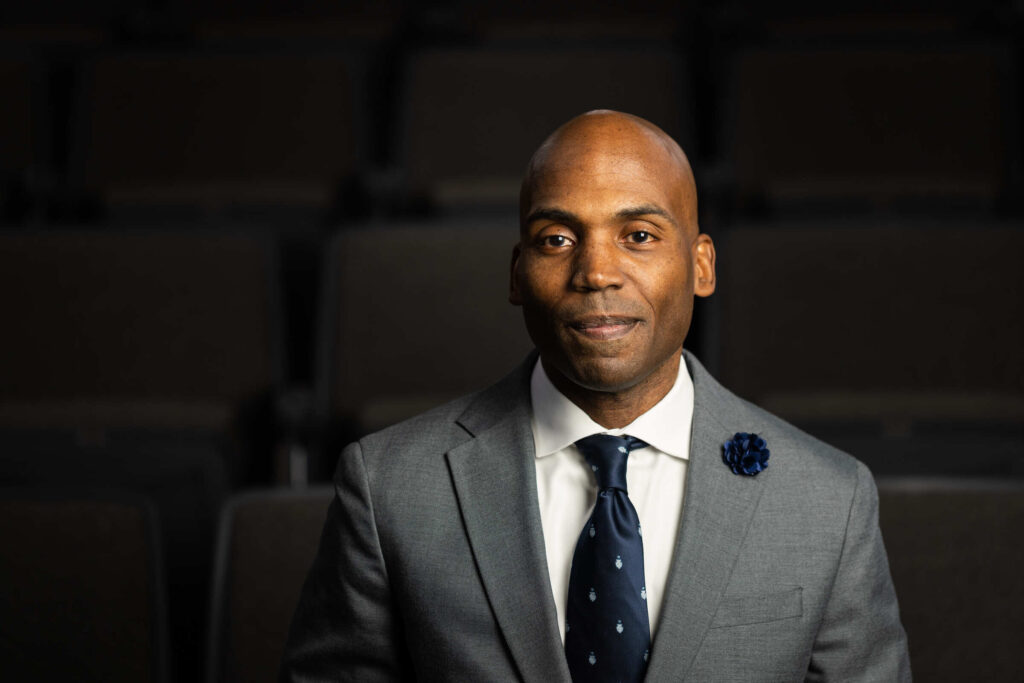
Dr. Yohuru Williams, Distinguished University Chair and Professor of History and Founding Director of the Racial Justice Initiative, wrote an op-ed for the Minnesota Star Tribune on how Hennepin County’s new policy on pretext traffic stops can reduce racial profiling and signal a safer course for all drivers.
From the story:

Reports from both the U.S. Department of Justice and Minnesota Department of Human Rights have made it crystal-clear: Traffic enforcement in Minneapolis is permeated by racial bias. Compared with white drivers, Black drivers were 6.5 times more likely to be stopped for minor infractions, 1.5 times more likely to receive a citation, 12.8 times more likely to have their vehicles searched and 9 times more likely to suffer violence at the hands of police.
Pretext stops are not just biased, they’re ineffective. The DOJ found that only 0.3% of Minneapolis Police Department (MPD) traffic stops resulted in the recovery of weapons. And the racial double standard is unmistakable: Police disproportionately pull over Black motorists, yet they’re more likely to recover contraband from vehicles operated by white drivers.
The DOJ’s findings establish that Minneapolis traffic stops were not based on the number of accidents in an area, but were instead tied to the number of Black and brown residents who lived there. Even when traffic accident rates were the same in different neighborhoods, MPD initiated a larger number of stops for minor reasons in neighborhoods with fewer white people.
Perhaps most telling is that pretext stops do not increase road safety. Instead, they squander limited resources on targeting minor, non-dangerous offenses rather than on driving offenses that lead to destruction and, far too often, death.
We already know that moving resources to combating dangerous driving pays significant dividends. After Ramsey County limited enforcement of minor traffic offenses, stops fell by 86%, with a 66% drop in the number of stops of Black drivers. These changes came at no cost to public safety. The number of firearms confiscated remained stable.