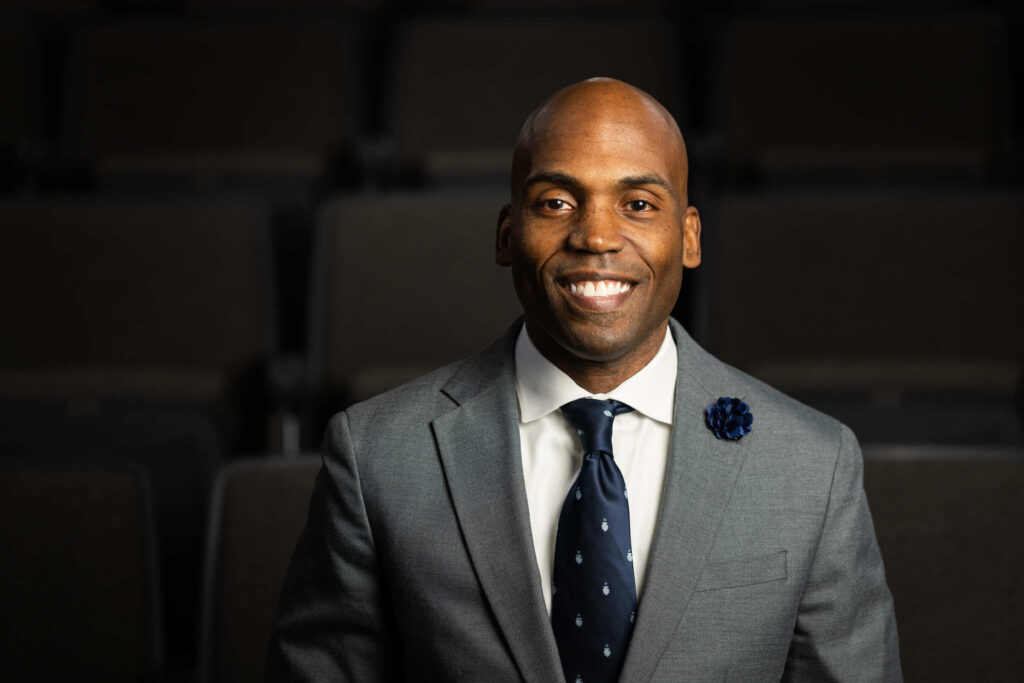
History is not confined to textbooks. It lives in stories and the ways people remember, reckon, and reimagine their shared past. That’s a message that is important to Dr. Yohuru Williams, founding director of the Racial Justice Initiative (RJI) at the University of St. Thomas. As a historian and educator, he often turns to various forms of art as a bridge to history.
RJI’s AfterClass series is one way he brings artists and audiences together to explore how creative works can make complex issues of race, justice and history come alive.
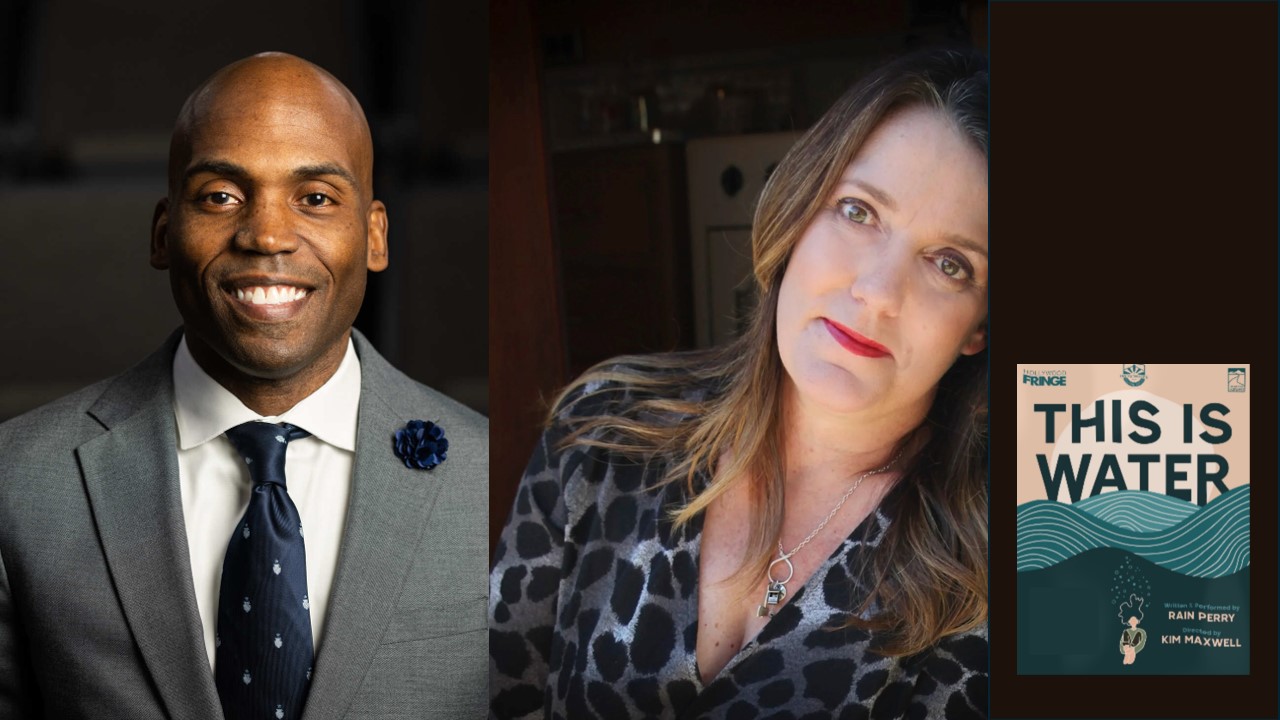
One such work is "This Is Water," a solo performance by award-winning musician and playwright Rain Perry that uses her family history as a lens to examine America’s long struggle with racism and racial inequality. The play will be performed at 6 p.m. on Wednesday, Oct. 22, at The Capri in Minneapolis, followed by a conversation with Williams and Perry. The performance only can also be seen at 7:30 p.m. Thursday, Oct. 23.
Williams, who was a consultant on the play, said the storyline mirrors the work of RJI to bridge history and humanity.
“Every difficult chapter that Rain uncovers,” he said, “is an opportunity for the audience to think through the opportunities in their own lives to make different decisions.”
Perry began writing the play in 2020, after the murder of George Floyd.

“It feels very full circle,” she said of bringing the play to Minneapolis. “At that time, the call I saw going out on social media was, ‘White people, collect your cousins.’ I thought, well, how do I do that in a way that’s actually going to work? My way of doing it was through art, through trying to tell my own story.”
The idea for This Is Water began with a simple family story. Perry’s grandmother once told her about her mother’s childhood friendship with a young Black boy in 1950s California — a story that, on the surface, seemed innocent and sweet.
“My mom and she had this group of friends and one of the boys was Black,” Perry said. “He told my grandma that he loved my mom and he was going to marry her someday. They were just little kids. And this was like this little sweet family story. But it was so much deeper when I started to think about it.”
That story, set against the backdrop of the Jim Crow era and overlapping with the timeline of Emmett Till’s murder, became the spark for Perry’s exploration of how racism shaped even the most ordinary American families.
“A lot of Californians really think that racism happens in the South,” Perry said. “And that is just not true. It didn’t take too much digging to find connections to the Klan, connections to slavery. The full American story exists in my family.”
Perry decided that her rule for writing the play would be simple: she could only talk about things she could connect to her own family history.
“I think it makes it easier for people to grapple with if they don’t feel like I’m telling them about them. Instead, I’m telling them about me,” she said. “And when I tell them about me, they hear themselves.”