Minnesotans living outside the Twin Cities metro area plan to spend an average of $1,182 this holiday season, approximately 37% more than the $863 anticipated by metro residents, according to a new University of St. Thomas survey.
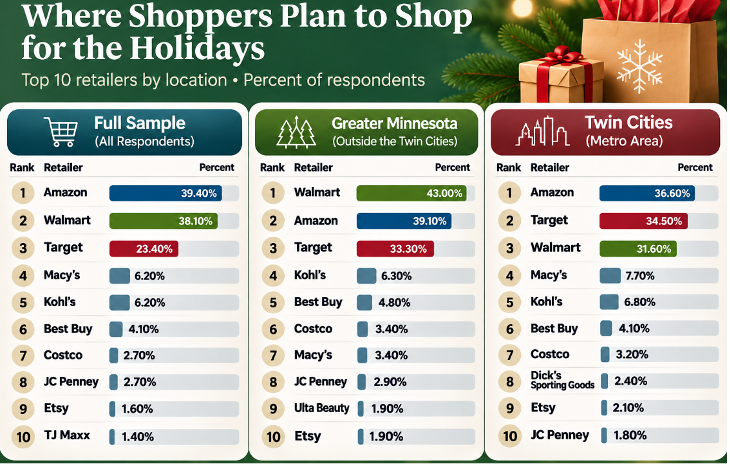
The survey also found differences in where Minnesotans plan to shop. Walmart ranked first among Greater Minnesota respondents, while Amazon and Target led among Twin Cities residents.
Marketing professors Seth Ketron and Mike Porter of the Opus College of Business conducted the survey during the last two weeks of October, gathering responses from approximately 1,100 people, about half from Minnesota and the remainder from across the country.
The survey examines how much consumers plan to spend, when they intend to shop, what they expect to buy and which retailers they prefer. Respondents outside Minnesota reported average planned holiday spending of $1,155.
Where Minnesotans plan to shop
Among Greater Minnesota respondents, Walmart was the most frequently selected retailer at 43%, followed by Amazon at 39.1% and Target at 33.3%.
In the Twin Cities, Amazon led at 36.6%, followed by Target at 34.5% and Walmart at 31.6%.
The preferences coincide with differences in the retailers' geographic presence. Target has approximately 50 stores in the seven-county Twin Cities metro area, compared with 23 Walmart locations. Outside the metro, Walmart has approximately 44 stores, compared with 22 Target locations, according to the retailers' store directories.
Holiday budgets and gift preferences
Across all respondents, the average planned holiday budget was approximately $1,000, while the median was $500. The difference reflects the influence of higher spending estimates among some respondents.
Survey participants expect to spend about 78% of their holiday budgets on others, with the remainder going toward purchases for themselves.
Men reported average planned budgets of $1,127, compared with $910 among women. Women expected to devote a slightly larger share of their budgets to others, at 81%, compared with 76% among men.
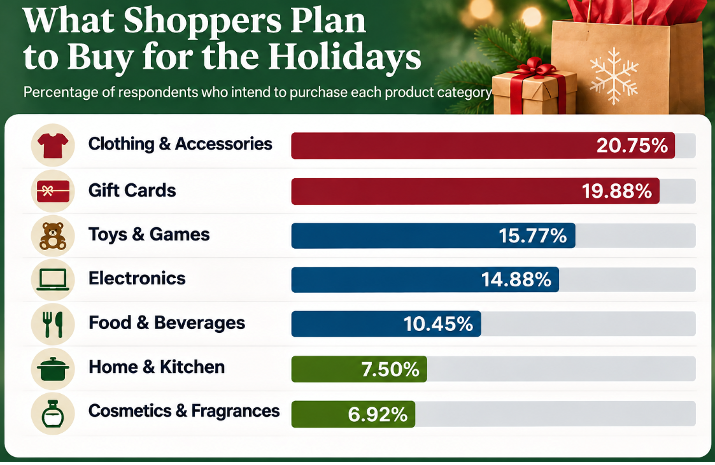
Clothing and accessories, gift cards, and toys and games were among the leading gift categories identified in the survey.
When holiday shopping begins
The survey also examined when consumers expect to begin shopping and how holiday promotions influence their plans.
More than 60% of respondents across the geographic groups indicated plans to start shopping before Black Friday.
"The October timing of the survey represents when we expect most people are both ready to begin shopping and also have a budget in mind," Ketron said.
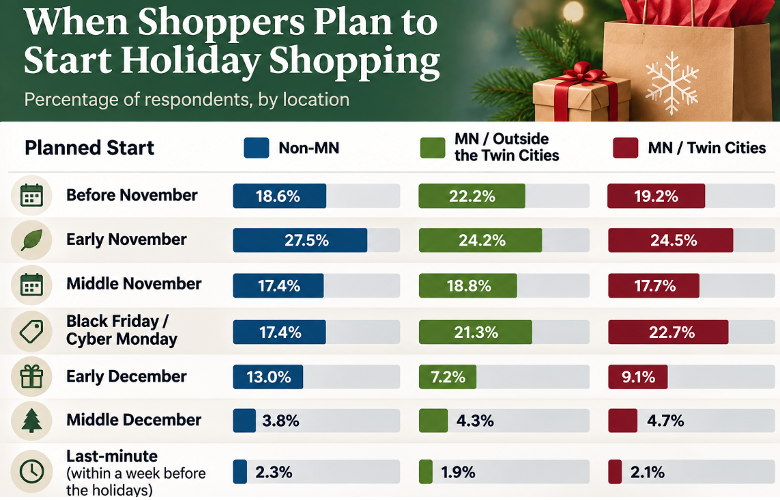
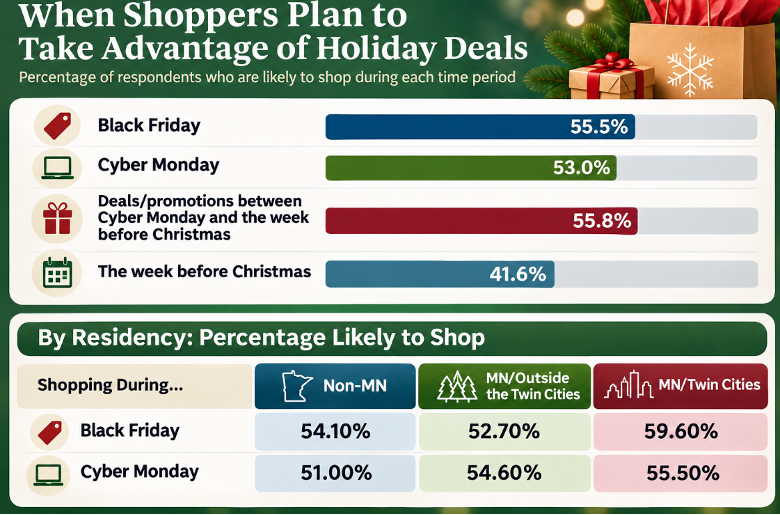
Holiday promotions remain an important part of shopping plans. About 56% of respondents said they were likely to shop on Black Friday, 53% on Cyber Monday and 56% during promotional periods between Cyber Monday and the week before Christmas. About 42% expected to shop during the week before Christmas.
A St. Thomas survey returns
The 2026 Holiday Shopping Survey marks the return of a St. Thomas research initiative last conducted in 2015.
"Last year about this time, Seth and I started talking about the Holiday Shopping Survey that used to be done by some of our long-retired colleagues," Porter said. "We decided it was time to bring it back."
The researchers spent spring 2026 preparing for the survey, which concluded Nov. 1. They plan to continue examining how income, gender, marital status, race and other demographic characteristics relate to consumers' shopping intentions.
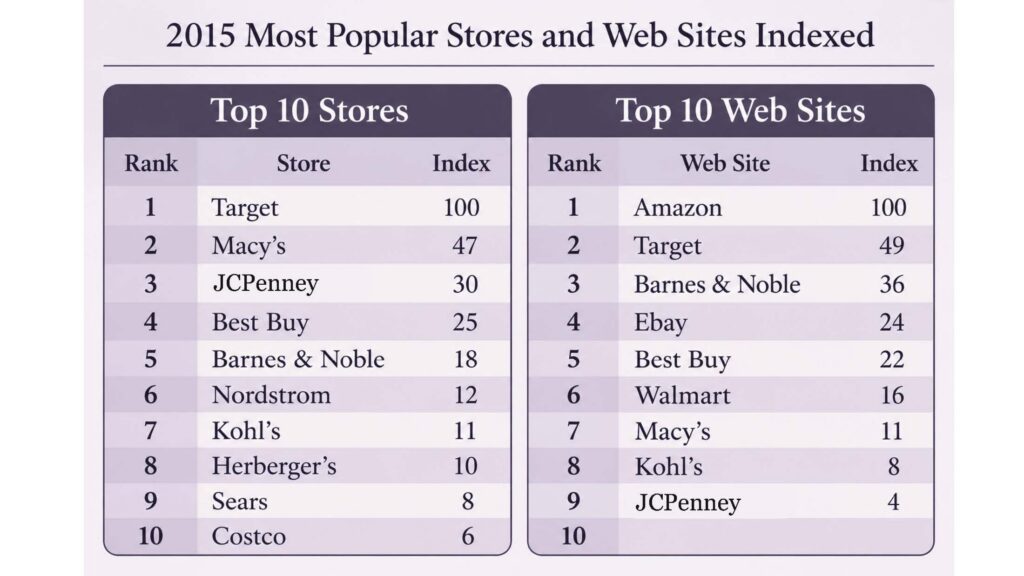
The 2026 findings also provide a new look at shopping preferences more than a decade after the university's previous survey, when retailers' physical stores and websites were examined separately.
Janine Sanders Jones, associate dean of faculty excellence for the Opus College of Business, said this research aligns with the college’s focus on societal impact.
"In the Opus College we consistently strive to be a trusted community partner to drive to make the economic environment of the greater Twin Cities more inclusive, sustainable and entrepreneurial,” she said. “This data set was gathered specifically from a pool of folks in and out of Minnesota to provide insights about holiday shopping across these three areas."
In the coming weeks, Ketron and Porter expect to uncover much more as analysis of this fresh data continues. This will include deeper cross tabulation into how income, gender, marital status and race may factor into spending habits, and more about how Minnesotans seem to be different this year.
About the survey
The median household income bracket was the same for respondents in Greater Minnesota and the Twin Cities, at $50,000 to $74,999. Respondents outside Minnesota reported a lower median income bracket of $25,000 to $49,999.
Based on the final sample of 1,121 respondents, the survey has a calculated margin of sampling error of +/- 2.93 percentage points at a 95% confidence level, assuming a probability-based sample. The margin applies to the full sample; margins of error for individual geographic or demographic groups would be larger.
Graphics created using AI