When it rained, Percival Everett’s mother would lay newspapers across the floor where the family could soak their wet shoes. Everett remembers his father quipping what remains his favorite pun: “These are the times that dry men’s soles.”
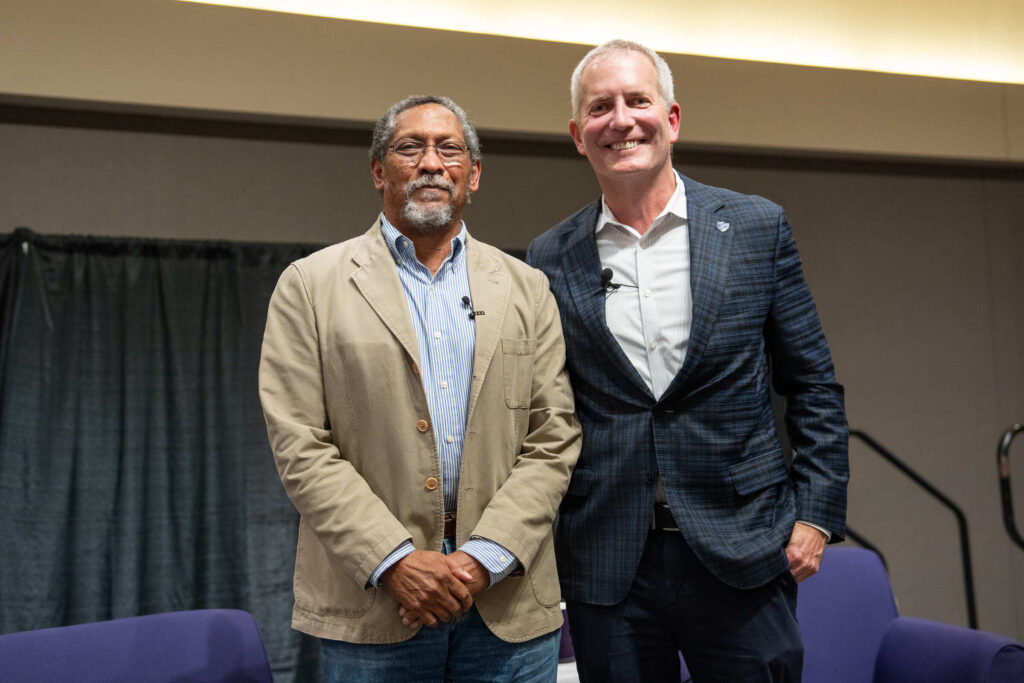
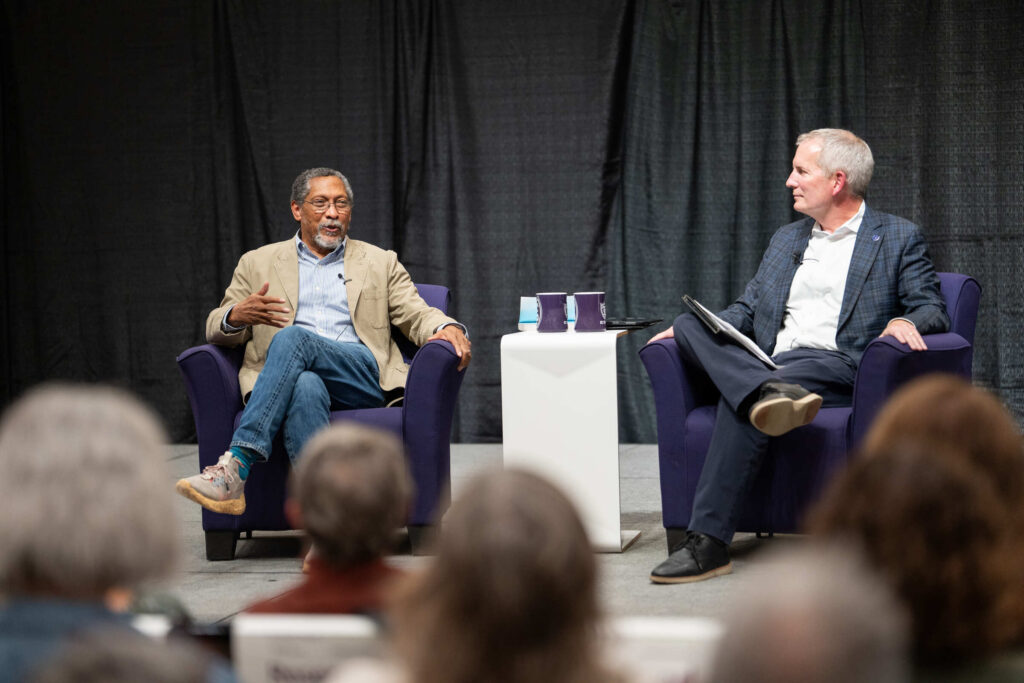
Everett, a Pulitzer Prize-winning author who credits his father with helping develop his appreciation for words, was the featured speaker at the University of St. Thomas’ first Finding Forward event of the academic year.
He spoke about his latest novel, James, which won both the 2024 National Book Award for Fiction and the 2025 Pulitzer Prize for Fiction. It reimagines Mark Twain’s Adventures of Huckleberry Finn from the perspective of Jim, the enslaved man who travels down the Mississippi River with Huck Finn.

In hosting Finding Forward, St. Thomas President Rob Vischer framed the novel as an example of what can be gained by revisiting a familiar story through another perspective. Everett said he didn’t approach the novel as a correction of Twain.
“I don’t fault Twain for his thinking or his rendering,” Everett said. “He wasn’t there to write a novel about Jim. He was writing a novel about a 13-year-old white boy.”
Everett also challenged familiar portrayals of how enslaved people spoke. With no audio recordings from the period in which James is set, he questioned the assumption that enslaved communities in different parts of the country would have shared one uniform dialect. He pointed to later historical recordings and portrayals of speech in literature and other media.
“A lot of language gets learned from media and it’s a self-perpetuating language, but not real,” Everett said. “Oppressed, enslaved and imprisoned people find ways to speak to each other that do not invite entry of their oppressors.”
Reading beyond the familiar
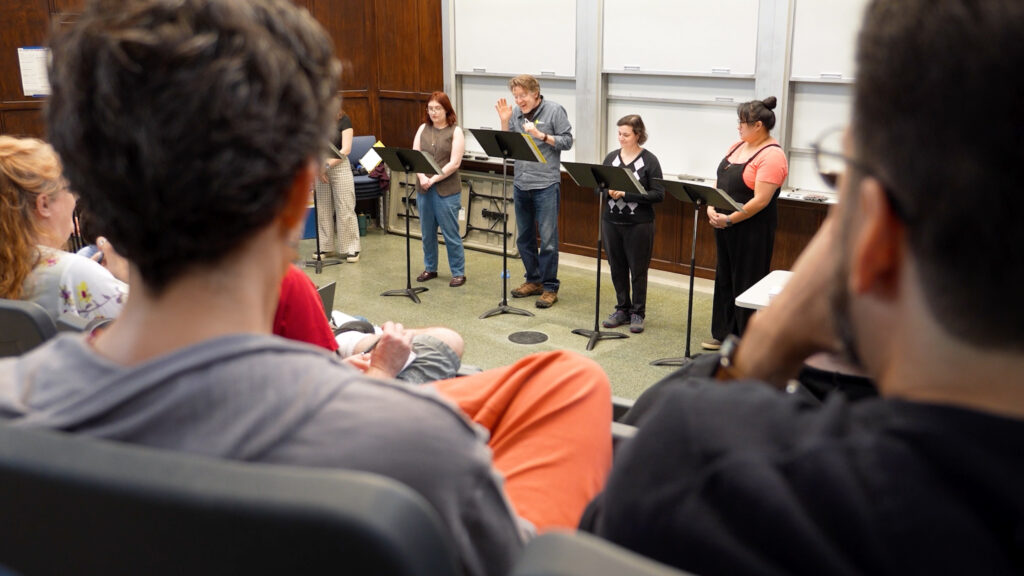
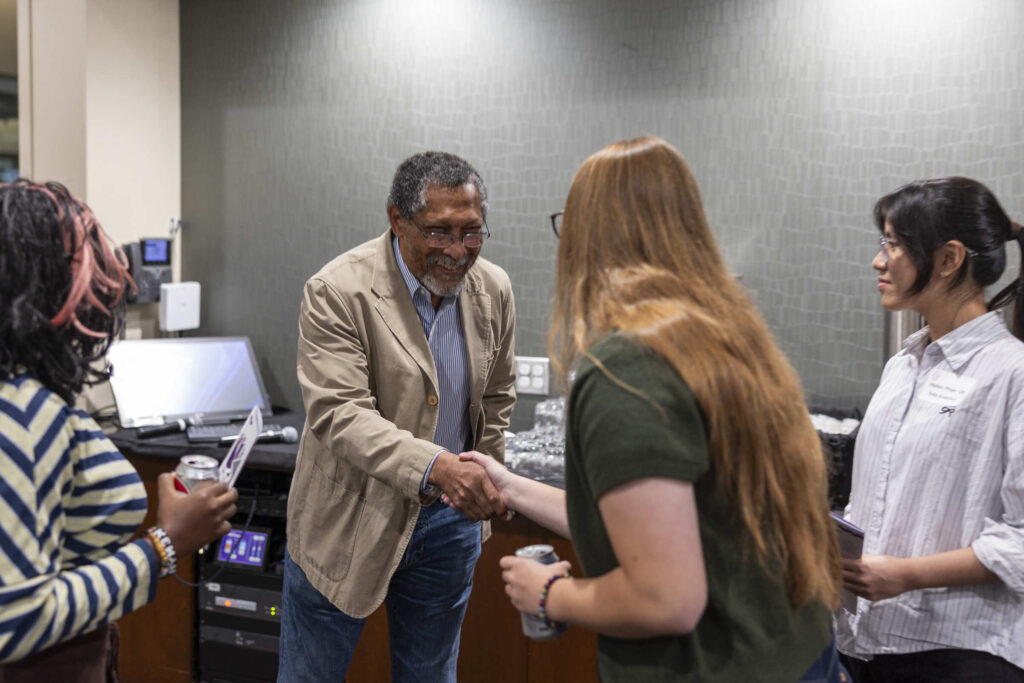
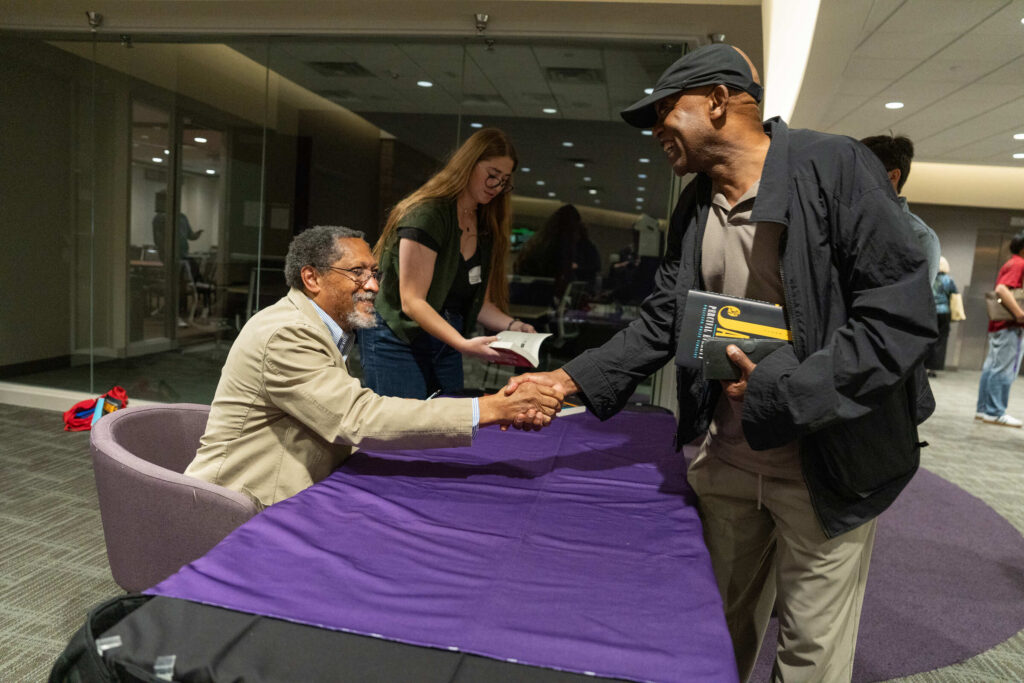
Everett also explored voice earlier in the day when he met with about 30 St. Thomas students studying English, creative writing and history.
“Being able to see a living writer working and writing and thinking in today’s climate is really important for students,” said Assistant Professor of English and novelist Leila Renee, who moderated the session.
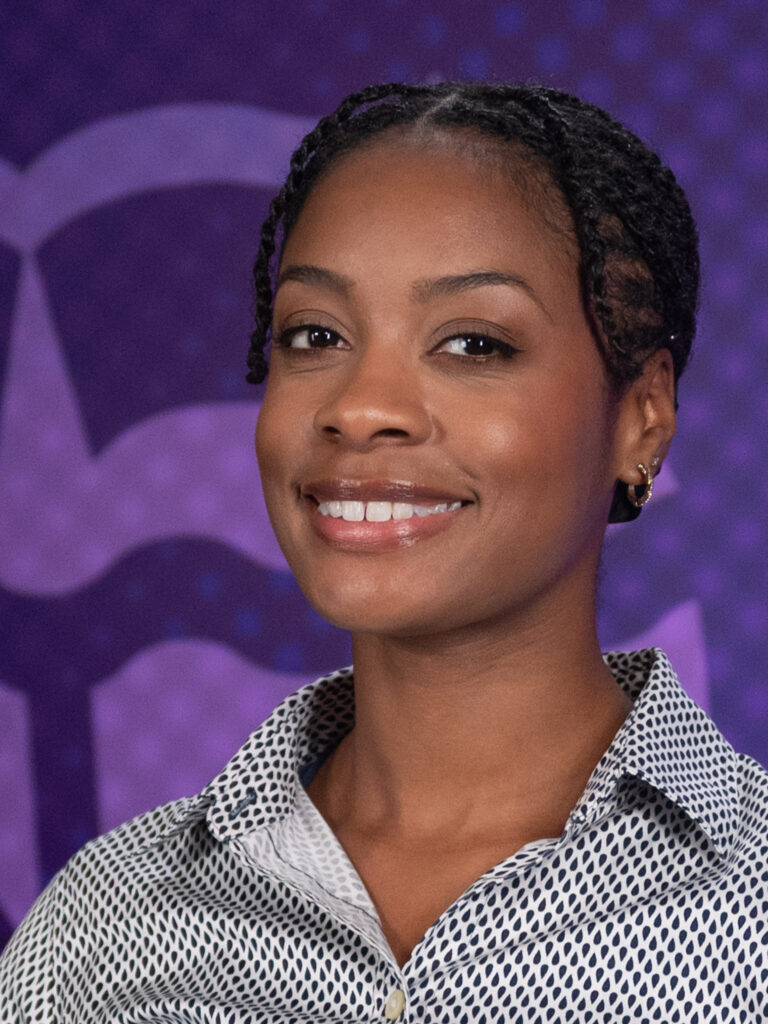
(Gino Terrell / University of St. Thomas)
Renee said James also prompted students to think more broadly about stories that have long shaped the culture.
“I think a novel like James is very important today because it’s a book that asks us to consider which narratives might need or require retelling or reimagining,” she said.
Graduate English literature student Kristin Boldon was struck by a student’s question about the challenge of taking a relatively minor character in Twain’s novel and giving him greater dimension.
“This led into a discussion of voice, and how as James becomes more present in the world, Everett changed James’ language so that James’ power came from his ability to express himself,” Boldon said.
Everett made a similar point during Finding Forward, telling Vischer that James becomes more assertive and less concerned with survival as the novel progresses.
“Once one abandons fear, one can speak more freely and be more oneself,” Everett said.
The classroom discussion also turned to which voices become part of the literary canon. When someone said James’ voice reminded them of Frederick Douglass, Everett noted that such comparisons can reflect a canon in which racism helped determine which Black voices became widely known.

Boldon, who was already familiar with Everett’s extensive body of work before James, including Erasure, which was adapted into the film “American Fiction,” said the conversation reinforced the value of reading beyond the most familiar books and writers.
“The lunch discussion reminded me we should listen and read widely,” she said.
Everett also told the group he wished readers could encounter literature and say, “That’s hard, but it’s also fun to read.”
Humor as an opening
Everett said he doesn't think he's being funny when he writes, although he recognizes humor as a tool for reaching readers.
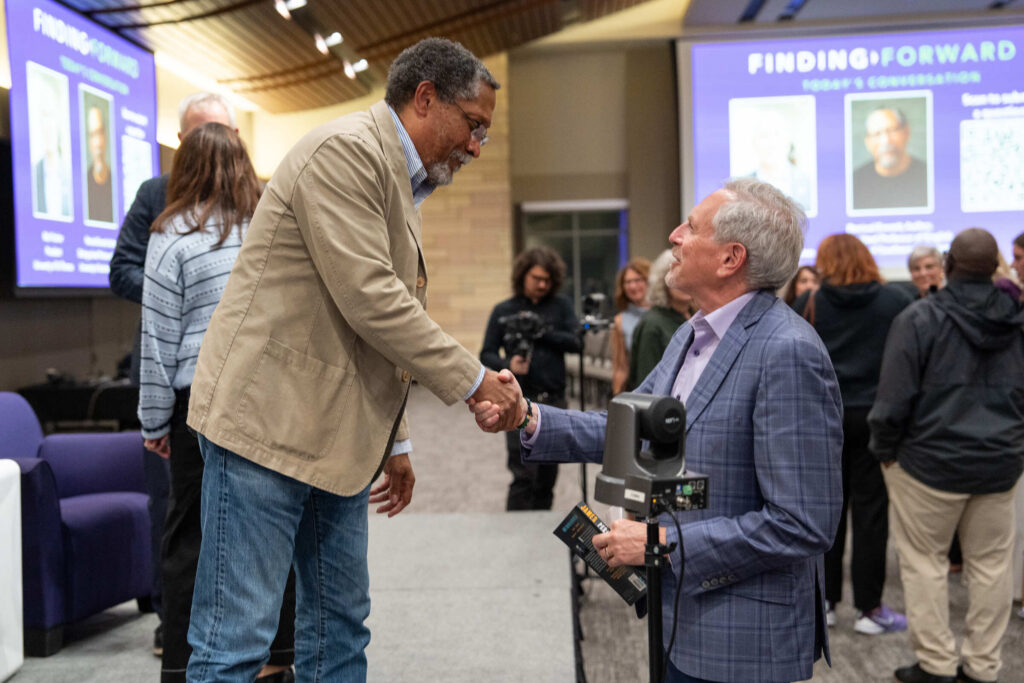

“A wall comes down,” he said. “If I can get a reader to laugh, then I’m free to do all sorts of nefarious things to them. If you’re comfortable enough to laugh, you’re comfortable enough to cry.”
Bill Tolman, dean of the College of Arts and Sciences, had his own assessment.
“You may not laugh at your own writing,” Tolman told Everett, “but I think you’re pretty funny.”
What stories can do
Everett also encouraged the audience to revisit books.
Percival everettI'm not encouraging book collecting ... but I am encouraging rereading. When we come back to stories, they mean different things to us because we are different people.”
Everett said sometimes readers find meanings an author may not have consciously intended, allowing them to imagine experiences beyond their own experiences.
“That’s what art in general does for us,” Everett said. “It makes us better. It teaches us to think, and it teaches us to stretch.”
Vischer closed by asking what advice Everett would give young people trying to find their voices in a world increasingly shaped by algorithms and artificial intelligence.
He encouraged writers and artists to keep creating, strengthen their craft through practice and be honest about the work.
“If you write and you like the voice and you feel it’s honest, that’s your voice,” Everett said. “Let the world come to you.”