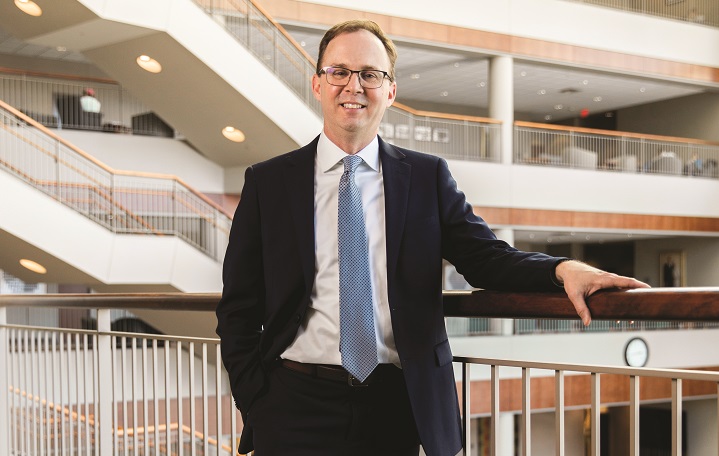
The University of St. Thomas School of Law is expanding its leadership in technology and legal education with the addition of Morgan Gray, a scholar at the forefront of artificial intelligence and the law. Gray, who joined the faculty this past year as an assistant professor, brings expertise in AI, specifically natural language processing and machine learning, case-based reasoning and computational models of legal argument, along with a passion for preparing law students for careers in a legal field being reshaped by technology.
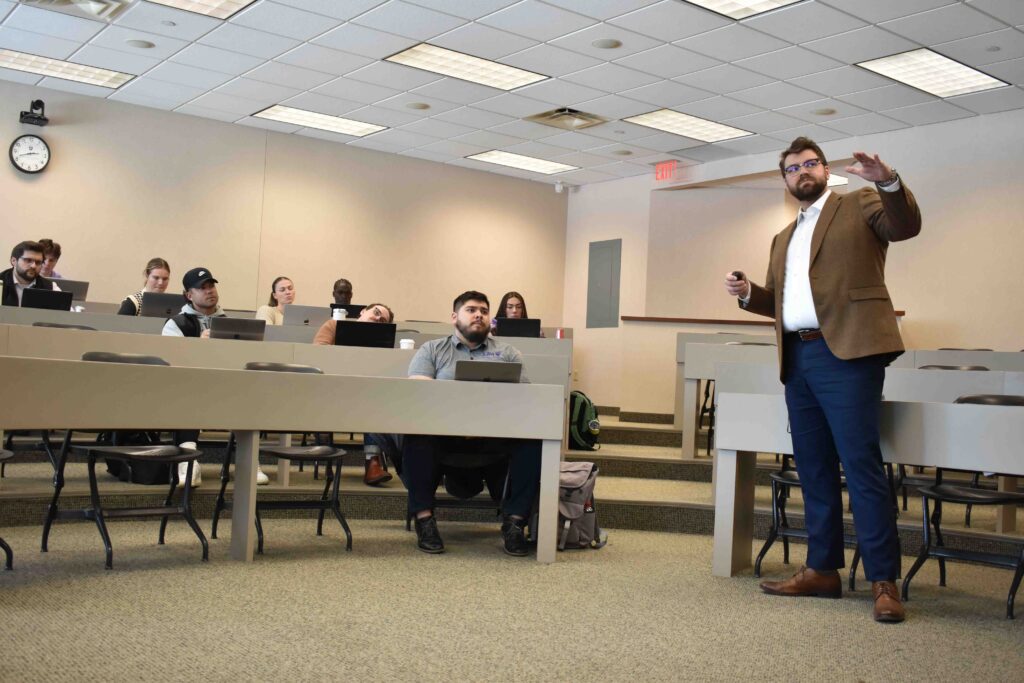
Artificial intelligence is already transforming key areas of legal practice, from research to evidence analysis, and its impact is only expected to grow.
“It is imperative that law schools add courses that promote at a minimum competency, but should extend to excellence in AI,” Gray said. “Law schools should be ground zero for not only educating students, but legal communities on the merits of implementing and using AI and how to do so effectively, ethically and safely. The deepest risk is failing to engage with AI at all.”
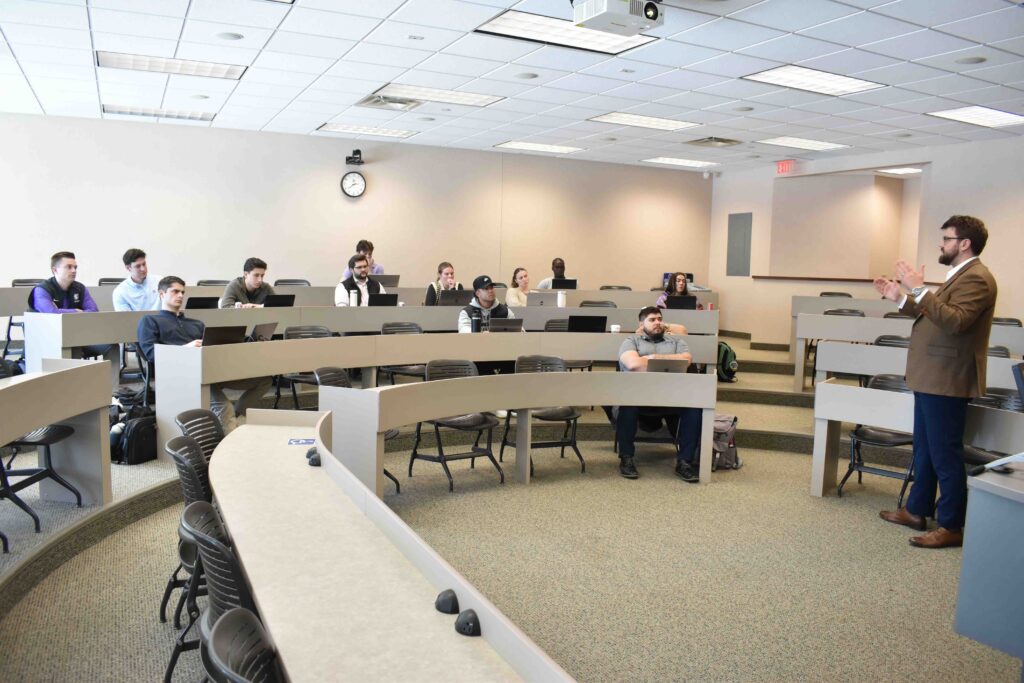
This spring, Gray introduced a new course to the law school, Natural Language Lawyering. The class introduces students to Natural Language Processing (NLP), the branch of AI that uses computing to understand and interpret human language, skills vital in areas like legal writing and document analysis. While many law schools now offer courses on AI and the law, St. Thomas is believed to be unique in having students engage directly with the underlying architecture of large language models.
In Gray’s course, students examine how systems represent, process and generate legal text, including the embedding structures, transformer architectures and generation techniques that shape model behavior. Rather than treating AI as a black box, the course prepares future lawyers to understand, integrate, evaluate and supervise the systems increasingly influencing legal practice.
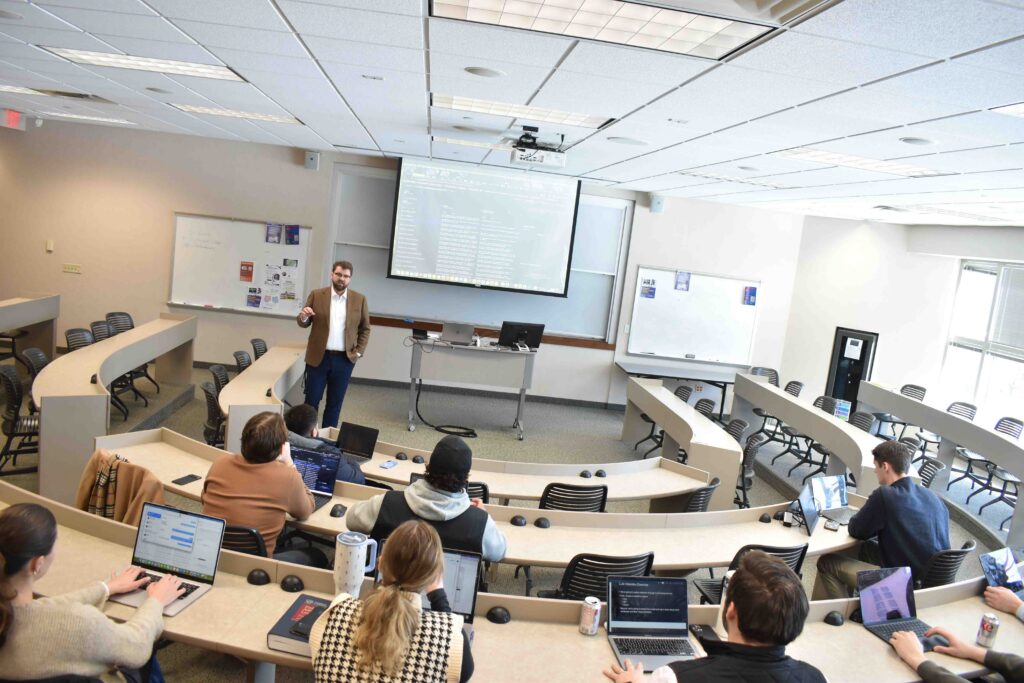
“The main idea of the course is to develop a substantial understanding of NLP methods and how they’ve been and will be applied in law,” Gray said. “This enables students to engage with techniques and problems in practice.”
Next fall, Gray will teach Coding for Lawyers, a class first taught by Professor Wulf Kaal in 2018. The course teaches law students the Python programming language, helping them approach legal problems as data challenges.
Gray's academic research and scholarship will concentrate on artificial intelligence in law, with a particular focus on case-based reasoning and its applications to argument generation, analysis and evaluation; outcome prediction; and legal text analytics.
Gray is completing his Ph.D. in Intelligent Systems through the University of Pittsburgh. He earned his J.D. at the Duquesne University Thomas R. Kline School of Law, also in Pittsburgh, where he has taught as an adjunct professor since 2022.
“I have always felt a vocation to teaching and thoroughly enjoy it,” Gray said. “I think my favorite moment in teaching is when a student who has grappled with a question, topic or assignment for some time finally comprehends what they’ve been struggling with. Possibly even more enjoyable is when a student dives deep into a topic that they do not understand, embracing difficult learning. I never tire of encouraging learning and watching it happen.”
Gray said he was interested in teaching at St. Thomas Law for numerous reasons.
“I was attracted to St. Thomas’ commitment to excellence in scholarship and its mission for the common good,” Gray said. “My pursuit of research in AI and law also felt welcomed by the St. Thomas community.”
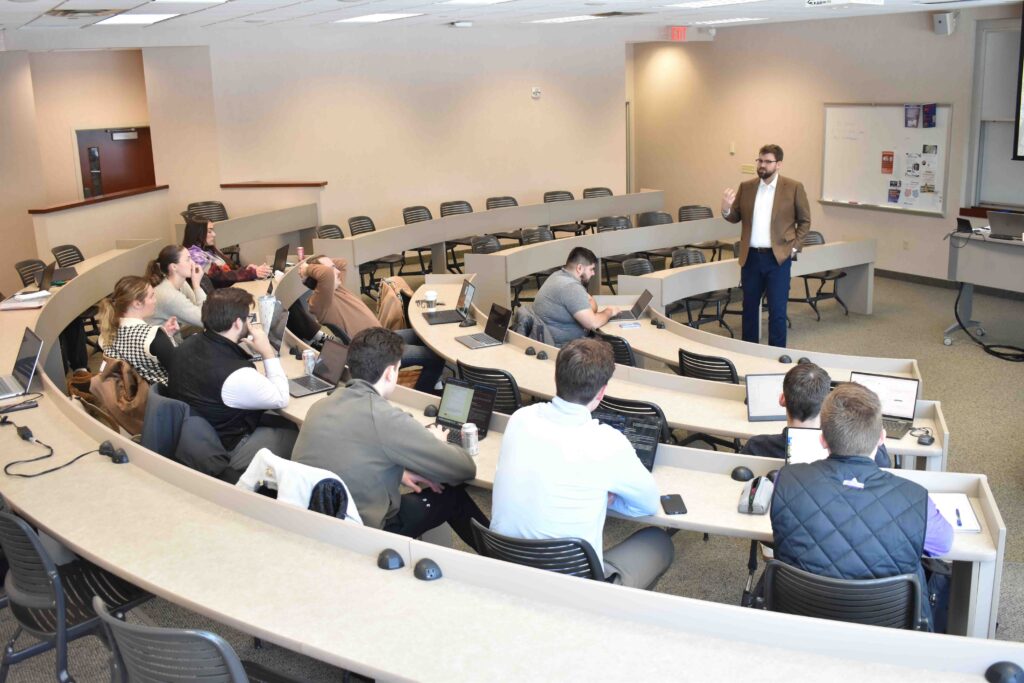
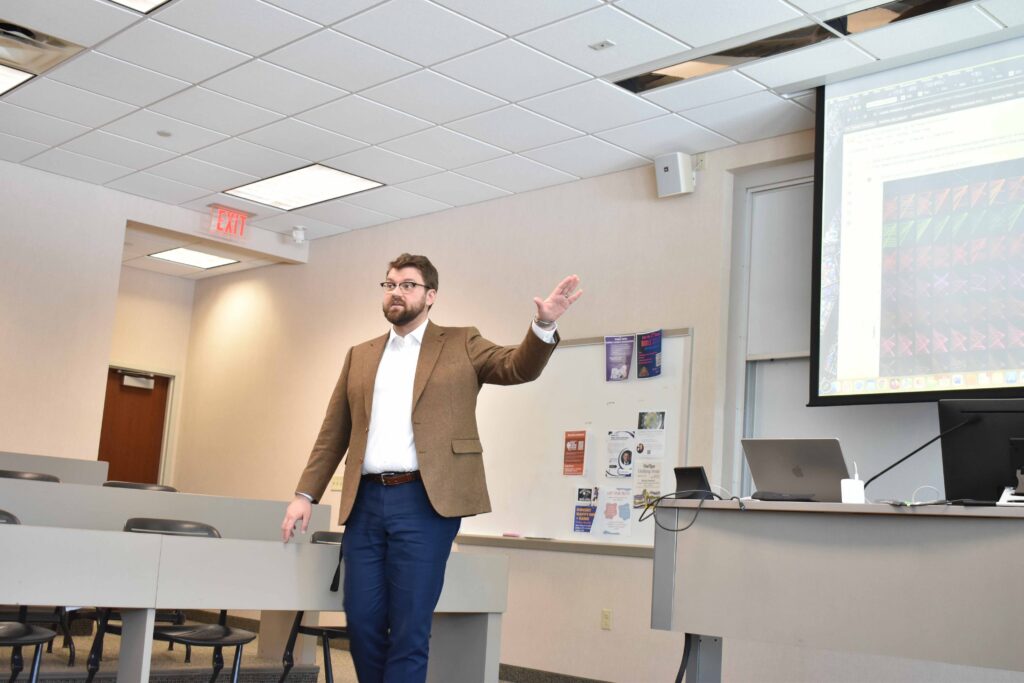
He also believes strongly in mentorship, which is a distinctive aspect of a St. Thomas legal education.
“I have been very fortunate to have stellar mentors,” Gray said. “My experiences in law school, clerking for a judge and in the sciences have shown me the value of a good mentor and how much one person who takes an interest in what you’re doing can completely change the trajectory of your career by a significant degree. I enthusiastically look forward to passing that on.”
Though his professional passions are focused on technology, outside the classroom Gray makes it a point to pursue non technology based activities like woodworking and fly fishing.
“I’ve been told about the lakes, but I look forward to focusing on what I’m dubbing the ‘better water’ in Minnesota and finding the best streams,” Gray said jokingly.