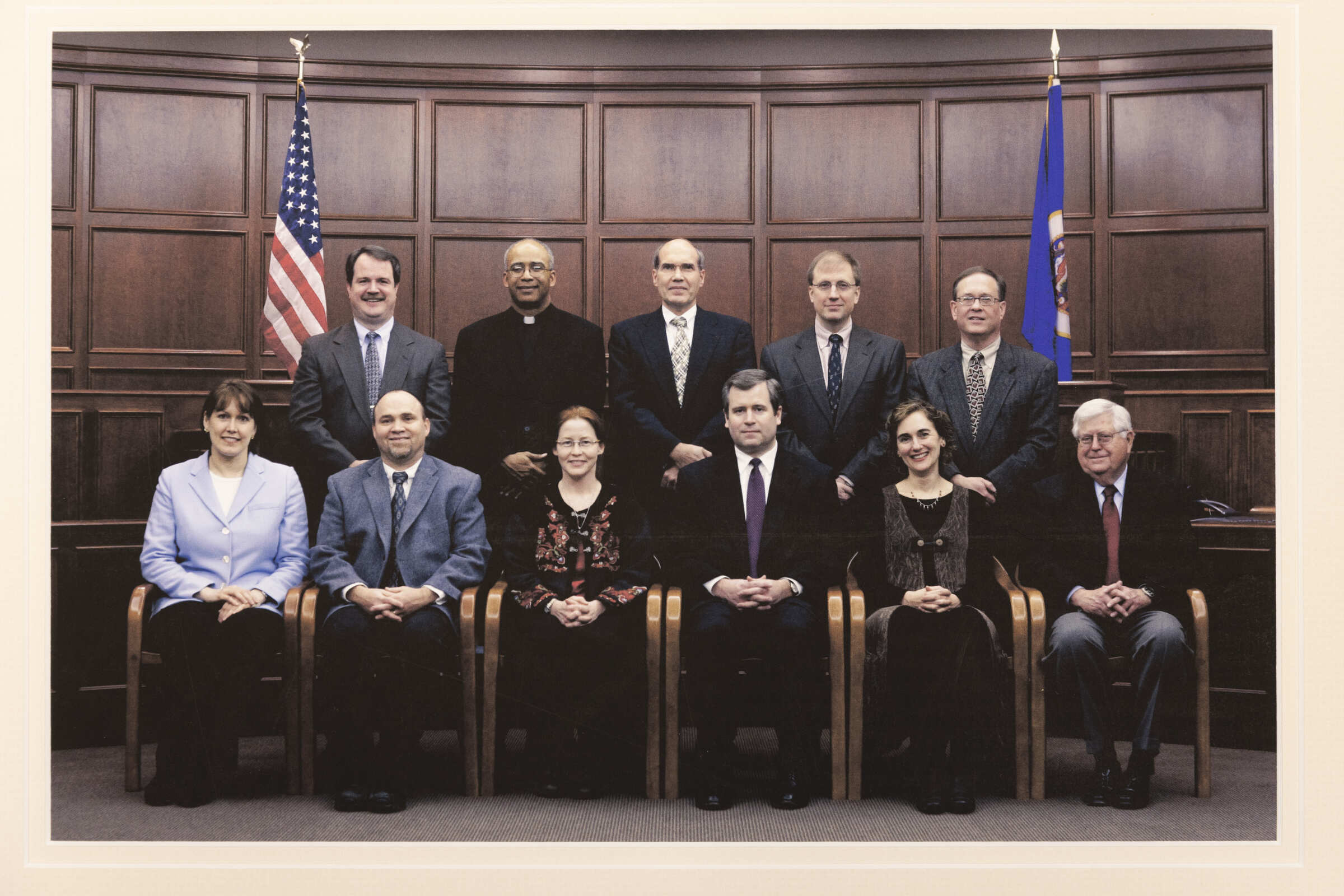
On Aug. 20, 2001, the University of St. Thomas School of Law opened its doors and with them, a long-awaited chapter in the university’s history. The inaugural class of 120 law students and 10 faculty members marked the culmination of decades of vision and hope to bring legal education back to St. Thomas.

The story of the School of Law at St. Thomas began long before the doors opened 25 years ago. In 1923, the College of St. Thomas launched its first law school. But the program’s run was brief. After just 10 years and 69 graduates, the school closed in 1933, unable to withstand the financial strain of the Great Depression.
But the idea of a law school at St. Thomas never truly disappeared. As early as 1945, conversations about reopening a law school resurfaced. The vision gained momentum during the presidency of Monsignor Terrence Murphy in the 1980s as the school positioned itself as an urban university. While Murphy was unable to see the idea through to fruition, he passed the torch to Father Dennis Dease when he became president in 1991. Dease initially explored a partnership with William Mitchell College of Law, but after two years of discussion, unresolved governance and decision-making issues brought the effort to a close.
Designing a Law School Unlike Any Other
The St. Thomas Board of Trustees formed an advisory group to study the feasibility of launching a new law school in 1998. The group’s conclusion was that a St. Thomas law school could succeed but only if it offered something distinct. And that distinction would be a curriculum that integrated rigorous legal training with a deep commitment to morality and social justice.
As Dease observed at the time, “No law school in Minnesota exists with an explicit mission to educate students and examine contemporary issues within the Catholic intellectual tradition and with an emphasis on legal assistance to the disadvantaged.”
The board agreed with the advisory group’s assessment and formally approved the creation of a School of Law on May 14, 1999.
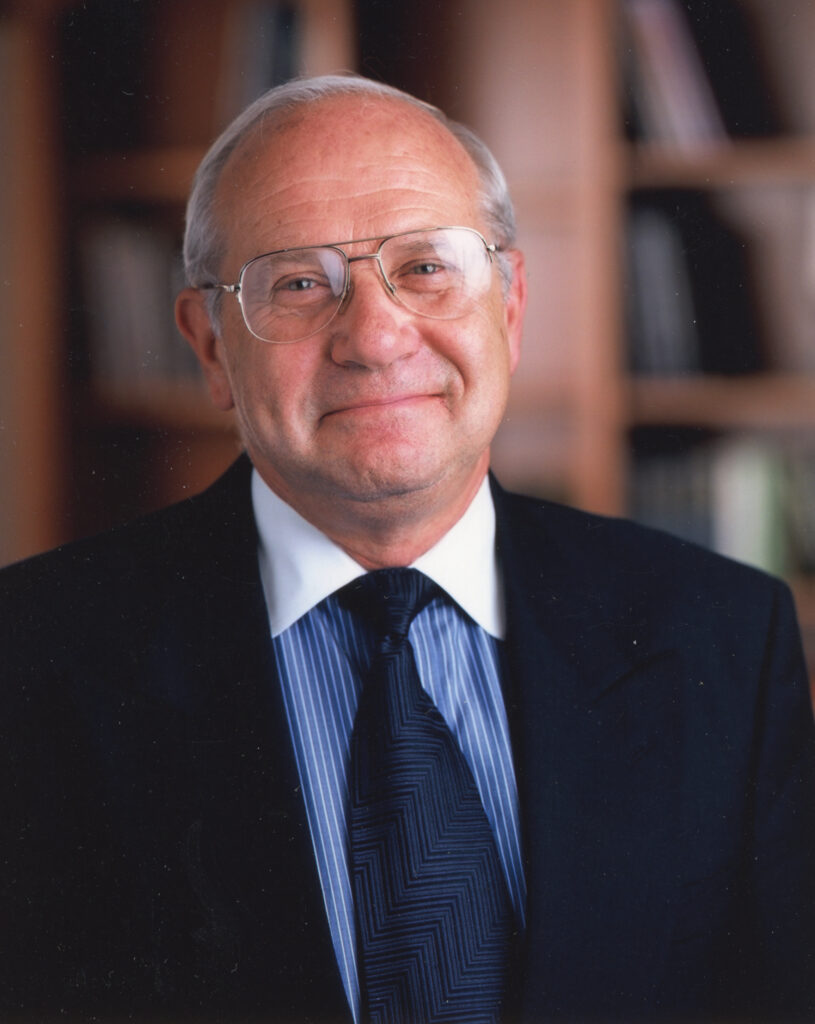
To lead the effort, St. Thomas recruited David Link, former dean of the University of Notre Dame Law School. Link assembled a team of administrators and faculty to design a curriculum grounded in faith and service. As a part of this new curriculum, students were required to complete 50 hours of public service to graduate. Additionally, a robust mentorship program was established to pair each student with a practicing attorney to bridge classroom learning with real-world practice.
The facilities for the School of Law began modestly with classes held during the first two years in Terrence Murphy Hall on the Minneapolis campus. In July 2003, a major milestone was reached with the completion of School of Law building and the school’s move into their new home. For the first time, law school faculty and students had a dedicated space to learn, study, and socialize together.

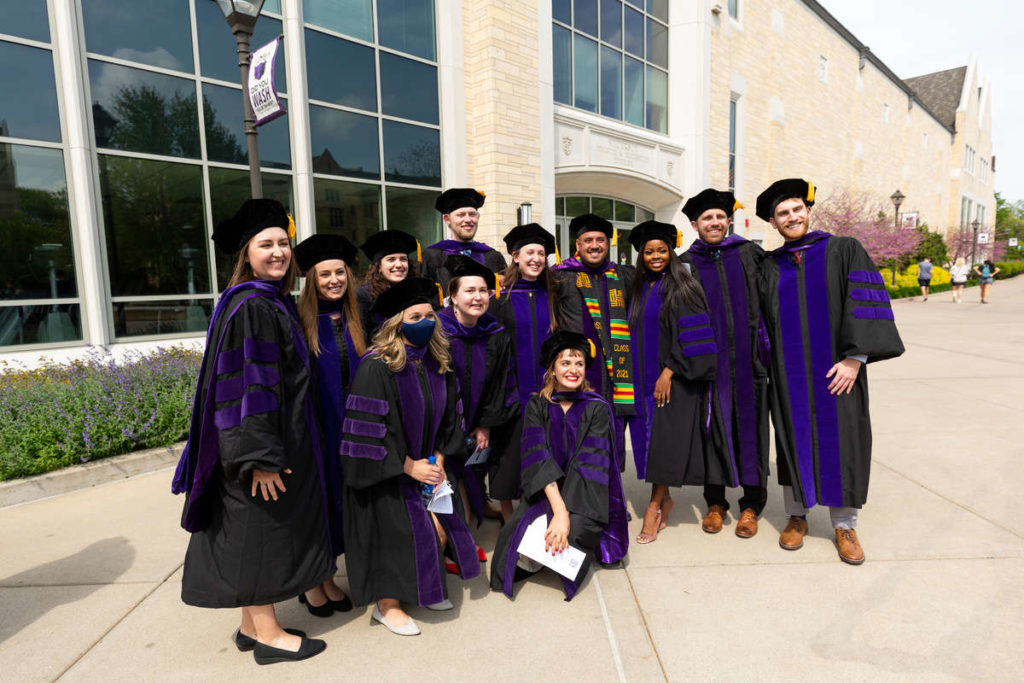
The summer of 2003 brought another major milestone for the law school, provisional accreditation from the American Bar Association (ABA). This achievement was meaningful, especially for the 109 members of the Class of 2004, as it ensured that these first graduates of the law school would be eligible to sit for the bar exam.

Engaging the Nation's Legal and Civic Leaders
In the ensuing 25 years, the St. Thomas School of Law has built a national reputation. It even welcomed leading voices who came to campus to engage with students and faculty.
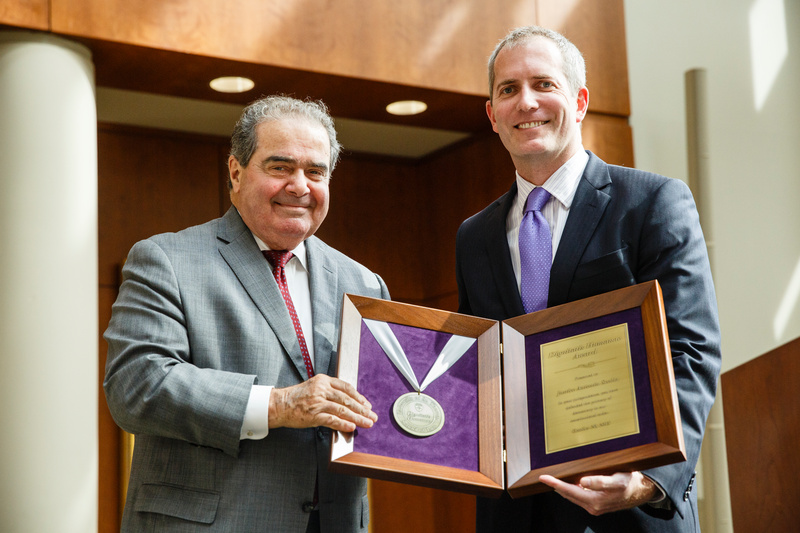
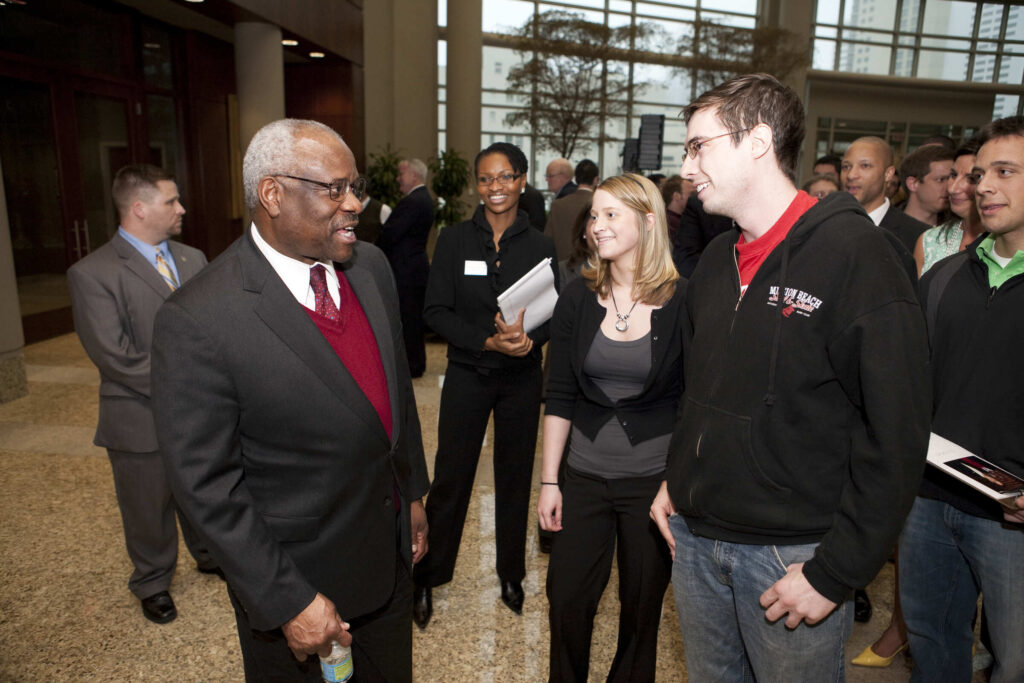
U.S. Supreme Court Justices Antonin Scalia and Clarence Thomas both spoke at St. Thomas, underscoring the school’s growing national profile. Scalia visited campus in 2006 and again in 2015, where he spoke candidly with students about constitutional interpretation and praised the law school’s environment for fostering thoughtful, values-based debate. Thomas addressed the St. Thomas community in 2010, engaging students on the importance of principle, perseverance, and independent thought in the practice of law.
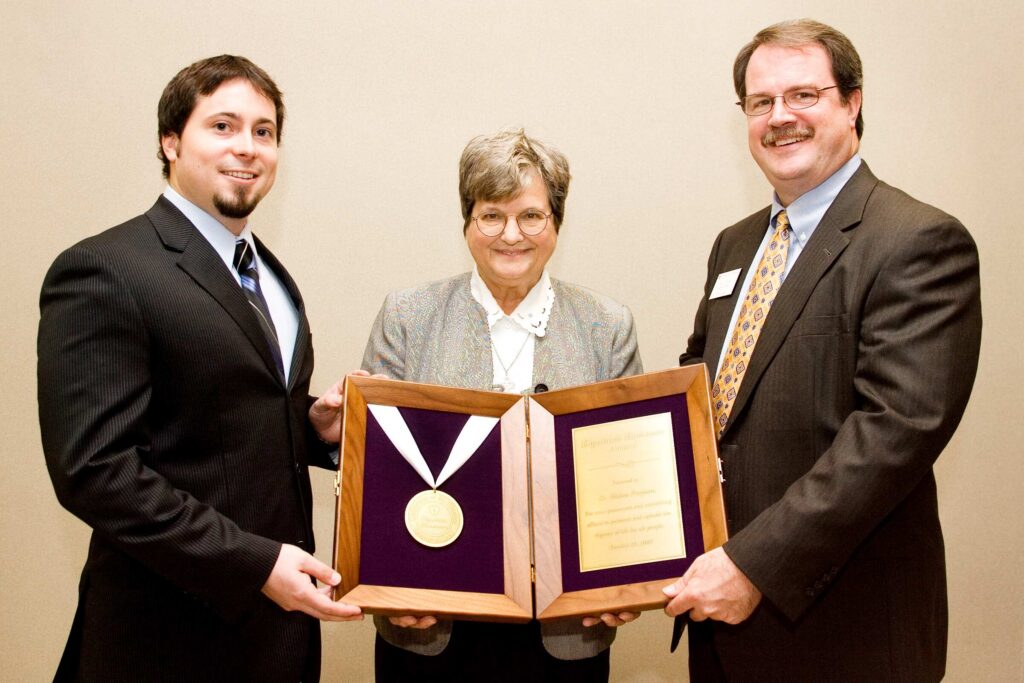
The school also recognized leaders whose work speaks to human dignity and moral responsibility beyond the courtroom. In 2007, Sister Helen Prejean, author and longtime advocate against the death penalty, spoke at St. Thomas and received the School of Law’s Dignitatis Humanae Award.
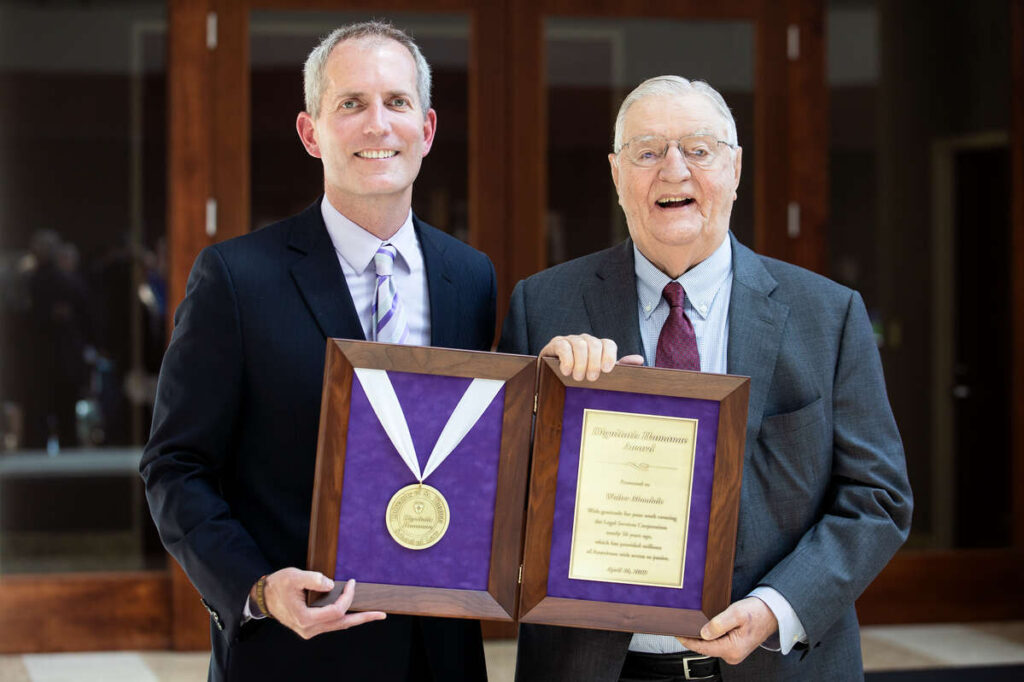
In 2019, former Vice President Walter Mondale visited St. Thomas, and also received the Dignitatis Humanae Award, recognizing his lifetime of public service and reinforcing the school’s emphasis on ethical leadership.
That influence has also been felt within the university itself. Rob Vischer, who joined the School of Law as early faculty, later serving as dean, is now president of the University of St. Thomas.
Today, the School of Law stands among the top 100 law schools in the country and is consistently recognized in the top 10 for both best value and best practical training.
Together, these milestones affirm the founding belief that a law school rooted in faith and social justice can succeed, and make a lasting impact.