The Catholic Studies MA program (CSMA) is celebrating 25 years of amazing growth, both in terms of the program’s scope and number of students. Recent college graduates, mid-career folks, and retirees find their way to this transformative program through a variety of paths, but in the program they all find a new depth of integration of their learning with their faith and all of life.
Under the leadership of Dr. Mary Reichardt, the first program director, CSMA was developed as an opportunity for those who did not receive a BA in Catholic Studies, as well as a response to a call for deeper, more mature reflection for anyone at a graduate level.
It is that integration for adult learners of every age that sets the program apart from a one-discipline humanities graduate program on the one hand or a lay theology or apologetics program on the other. Catholic Studies brings many disciplines together in each class: theology, philosophy, history, literature, science and the arts. It is intentionally not a preprofessional credential for a given specialization but rather teaches how to think and analyze – skills that bring about growth in people’s lives through the discussion-based classes.
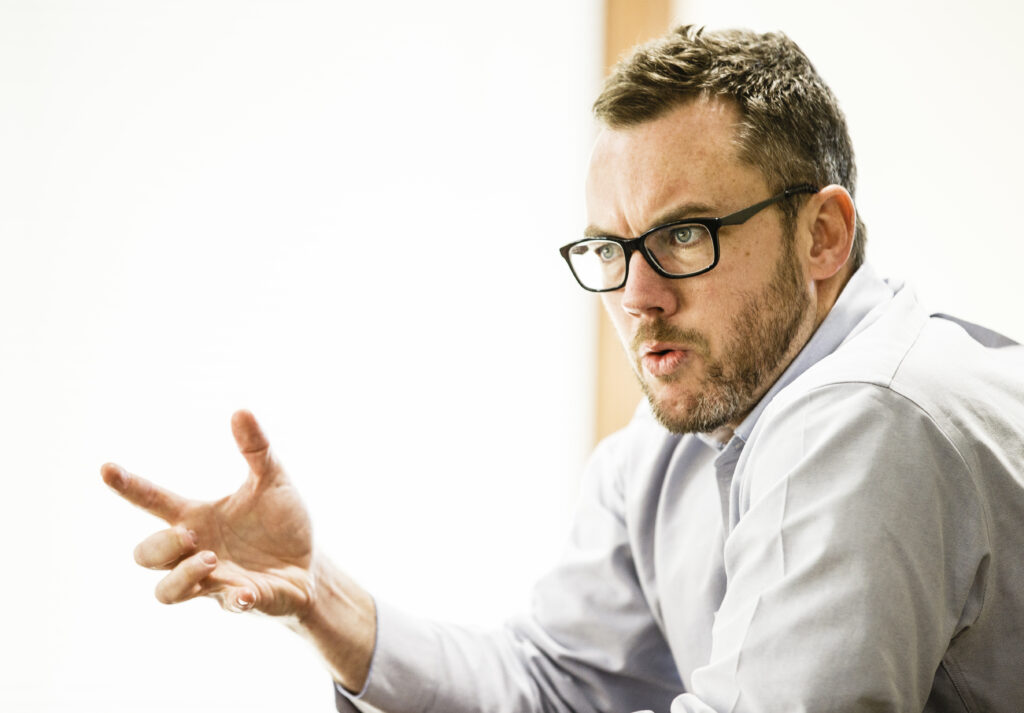
“The CSMA incorporates everything,” said Dr. Billy Junker, CSMA program director. “It takes on everything: Catholic and secular authors, the best of culture so far and the yearning for transformation of civilization through the study of the impact of the Incarnation.”
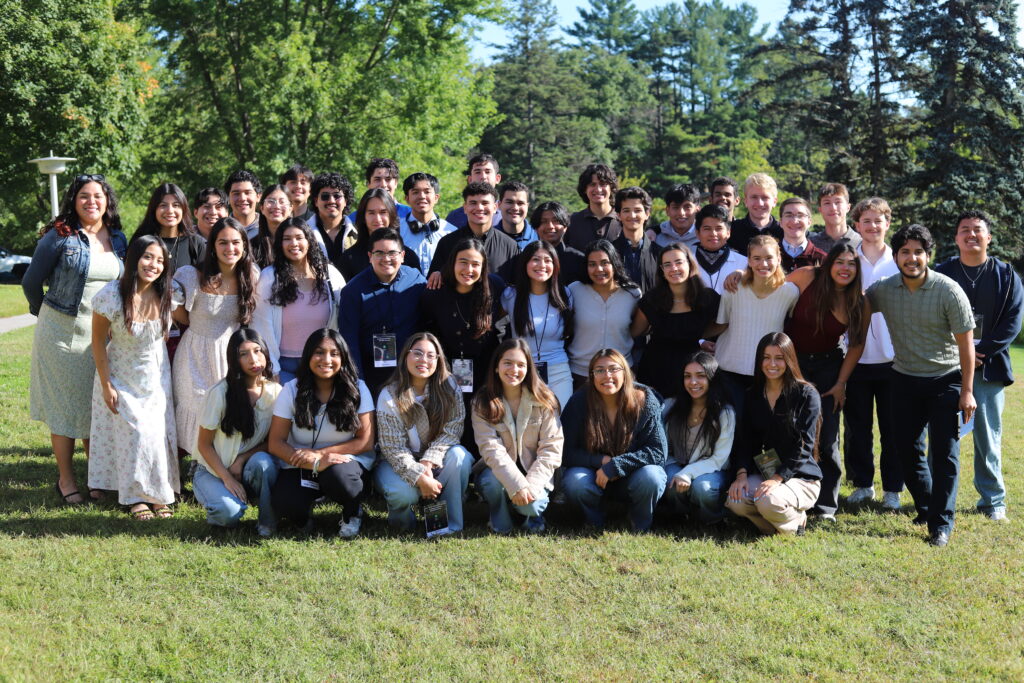
In fall 2025 we have 131 students enrolled – quite an increase from our first class of seven in 2001. Some have come for personal enrichment, and some are using it for professional development or a springboard toward further graduate studies. They all have a place in the program.
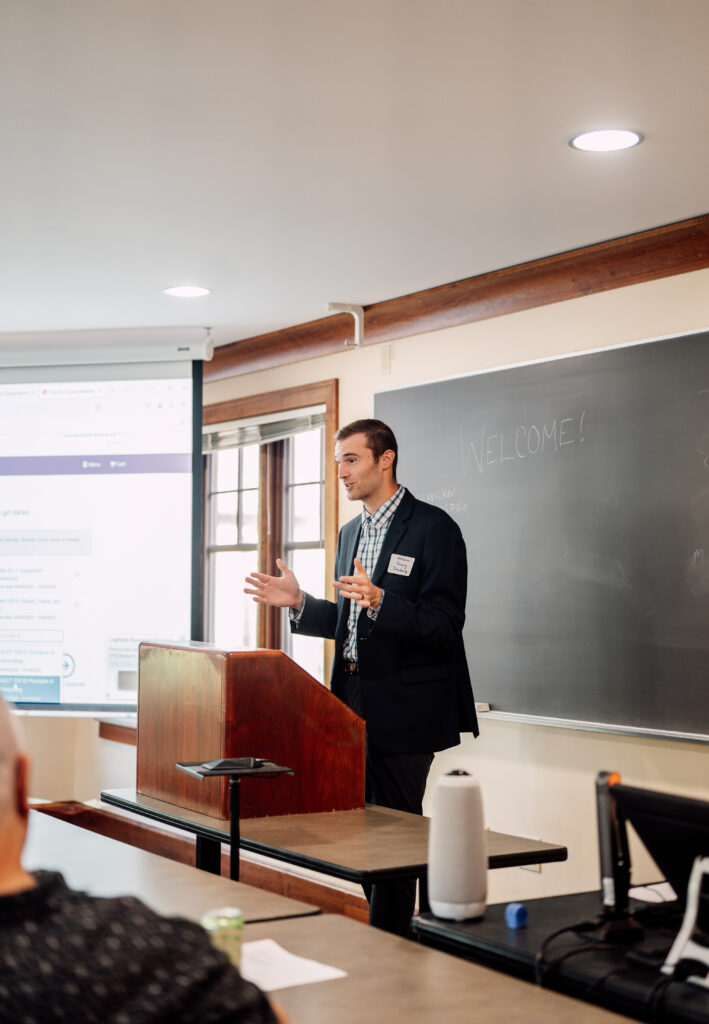
Second-year CSMA student Danny Dalenberg ’26 CSMA has developed an interest in a Catholic approach to culture and politics and is currently taking Money, Power and God with Monsignor Martin Schlag. “The class connects to the whole CSMA program,” he said. “We see that God works through the political order to bring about salvation to those in particular times and places.”
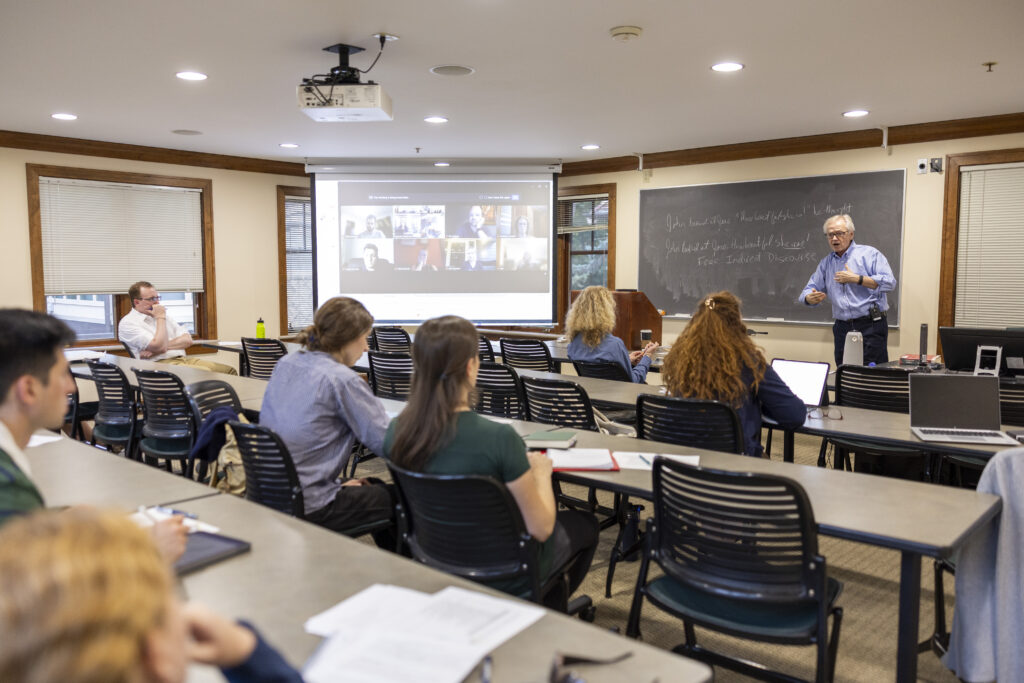
In 2000, all classes were taught in person but since 2018, online options have been available and today, some students finish the program completely online, some are in person, while many take the opportunity for a mixture of both. However they participate, there is no distinction between online and in class – each class is based on real human interaction and in-depth discussion. Our furthest flung students are in the UK and Uganda, who make a heroic effort to participate, considering the time difference.
One of the areas of extraordinary growth has been with Catholic school teachers. With funding from the Murray Institute, a benefits-eligible teacher from a Catholic school in the Archdiocese of Saint Paul and Minneapolis can pursue one of our graduate programs for free. Currently there are more than 40 teachers using their Murray scholarship awards toward a Master of Arts in Catholic Studies, a Graduate Certificate in Mission & Culture in Catholic Education, or a Two-Course Study in Catholic Education.
“All of the Murray students,” said Junker, “find intellectual stimulation and models that refresh their own teaching.”
A further innovation within CSMA is the creation of the Mission and Culture Fellows in Catholic Education program, a response to the need for more teachers in Catholic schools, especially those who are mission-driven and well-formed. Program Coordinator Sarah DeCock ’12, ’23 CSMA said that the program allows aspiring teachers “to be formed in the Catholic Intellectual Tradition in CSMA classes while also spending time in the classroom, learning the practicals of running a class.” Fellows often say they began the year afraid to be up in front of a classroom and ended feeling ready and excited to have their own classroom, whether it be lesson planning, classroom management, or different teaching techniques.” The community offered through their training site school, CSMA classes, as well as their Fellows cohort boosts their practical and philosophical understanding of Catholic education, which can lead to fruitful careers in Catholic schools.

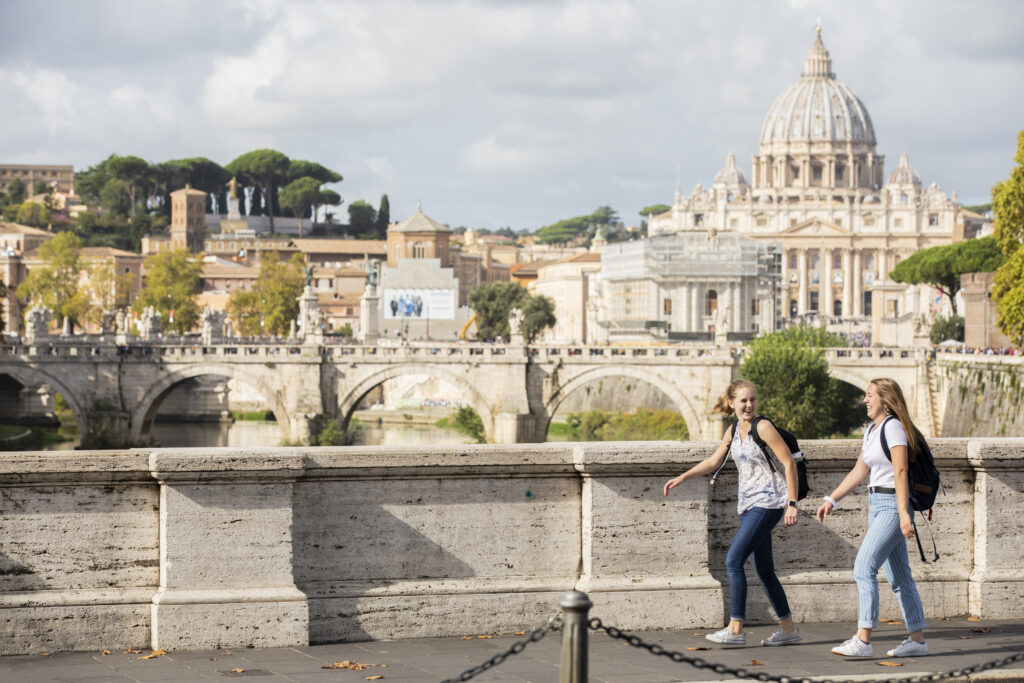
Another growing feature of the CSMA program has been adding summer courses that are taught in Rome. In 2024, Dr. Erika Kidd taught Mary in Rome, a course that incorporated readings with art depictions of Our Lady in museums and churches across the Eternal City. Students loved the onsite learning and asked for more opportunities like this and so a summer 2026 class called The Christian Transformation of Pagan Rome will be taught in Rome by Dr. Junker and Father Austin Litke ’04, OP.
“The Incarnation,” said Junker, “is the basis for which and through which we integrate our learning and community together. The variety of our students – whether online or in person, whether in their 20s or 70s, whether they take the classes for fun or aspire to a PhD – find that the style of the program enables their integration of faith and life, their understanding of their giftings and work and their horizons broadened.”
Scan the QR code to watch the new CSMA video.
This story is featured in the fall 2025 issue of Lumen.