As the nation’s electric grid faces aging infrastructure, cybersecurity threats and growing power demands, the University of St. Thomas has expanded its Center for Microgrid Research (CMR) to study how communities, military installations and businesses can keep electricity flowing when the larger grid is strained or disrupted.
“If the grid goes down, or something really bad happens, like a natural disaster or a cybersecurity attack on infrastructure, you need to keep the lights on,” U.S. Rep. Betty McCollum said. “You need to keep the drinking water safe.”
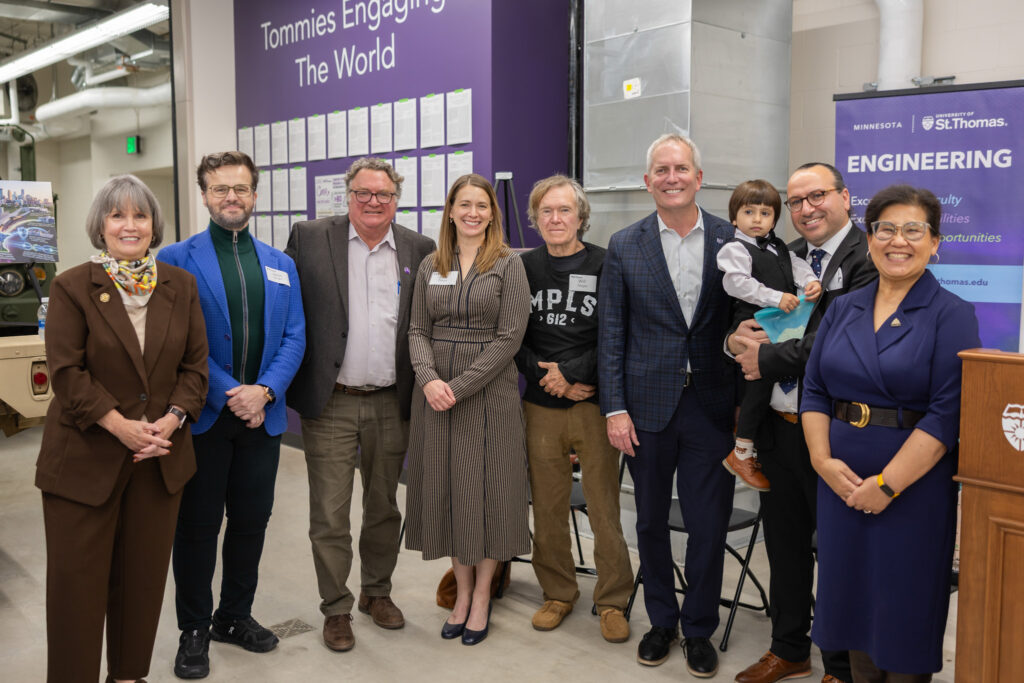
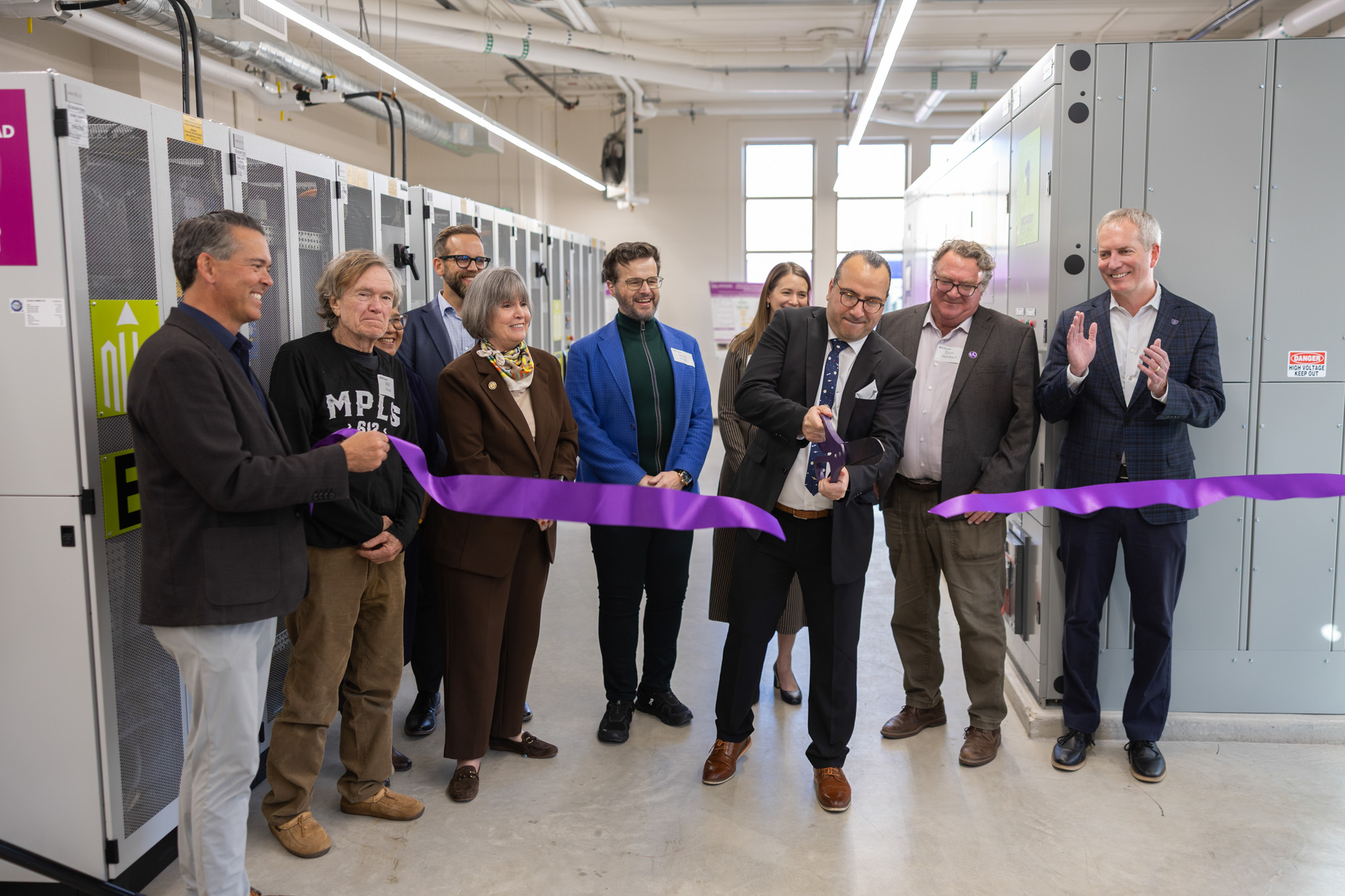
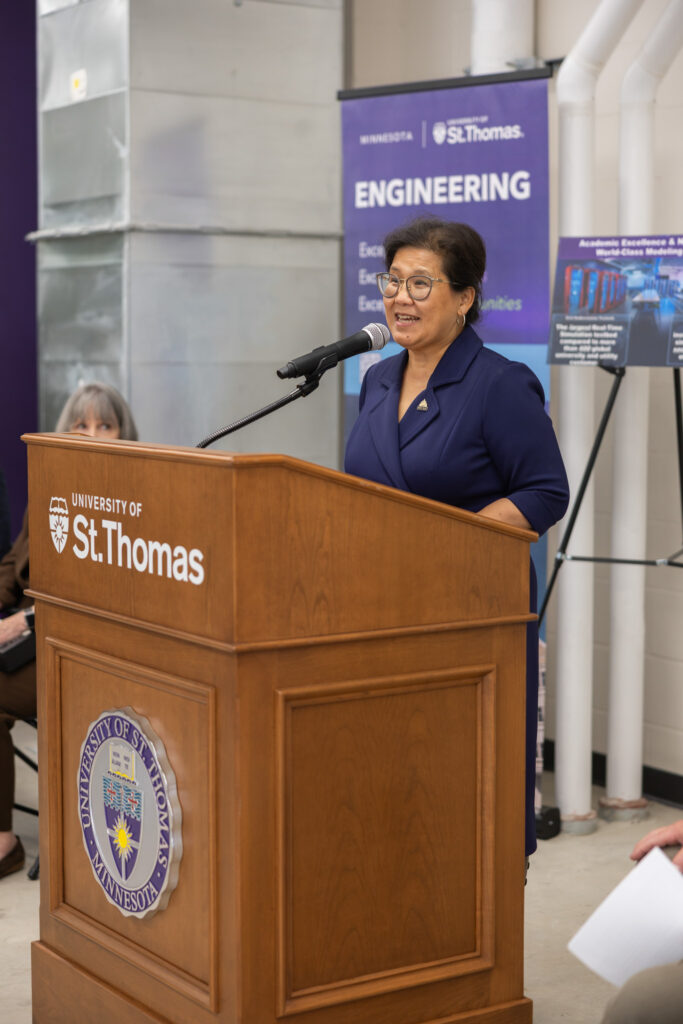
McCollum was among those who celebrated the opening of the center’s 6,000-square-foot expansion.
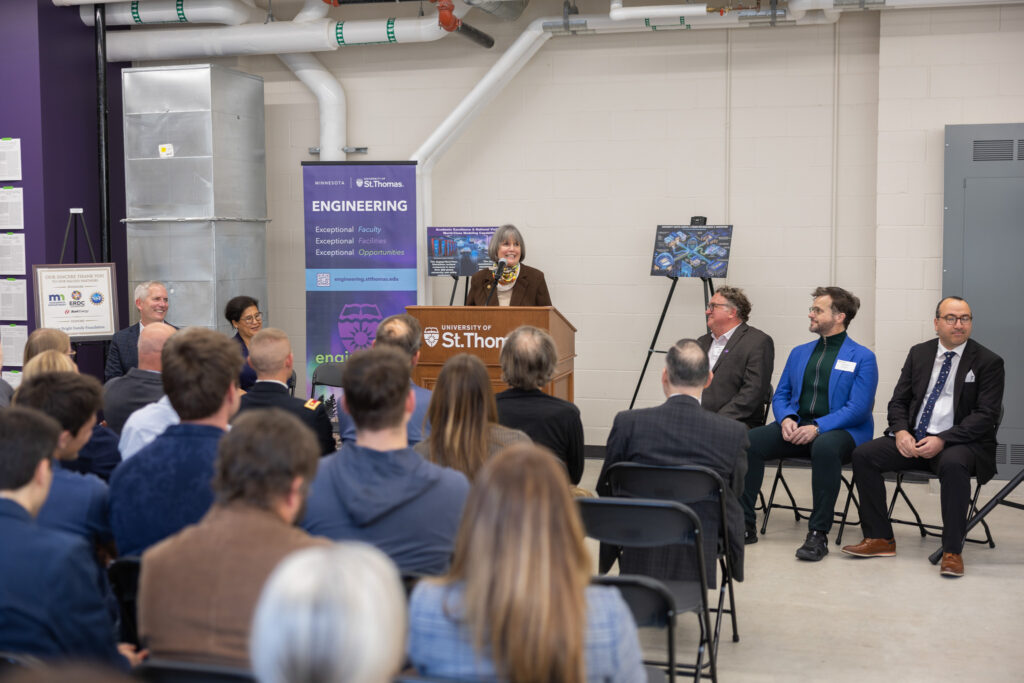
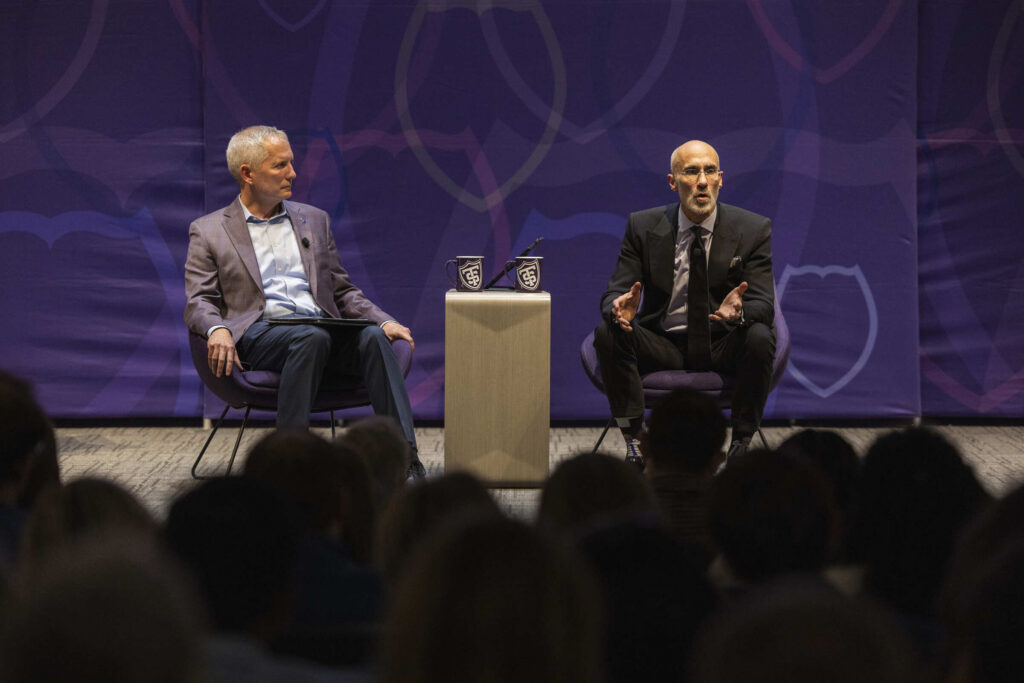
“St. Thomas should not look the same today as it did 10 years ago, 25 years ago, 100 years ago, because the needs of the world are changing,” President Rob Vischer said at the ribbon-cutting ceremony on Oct. 21.
Up from the basement
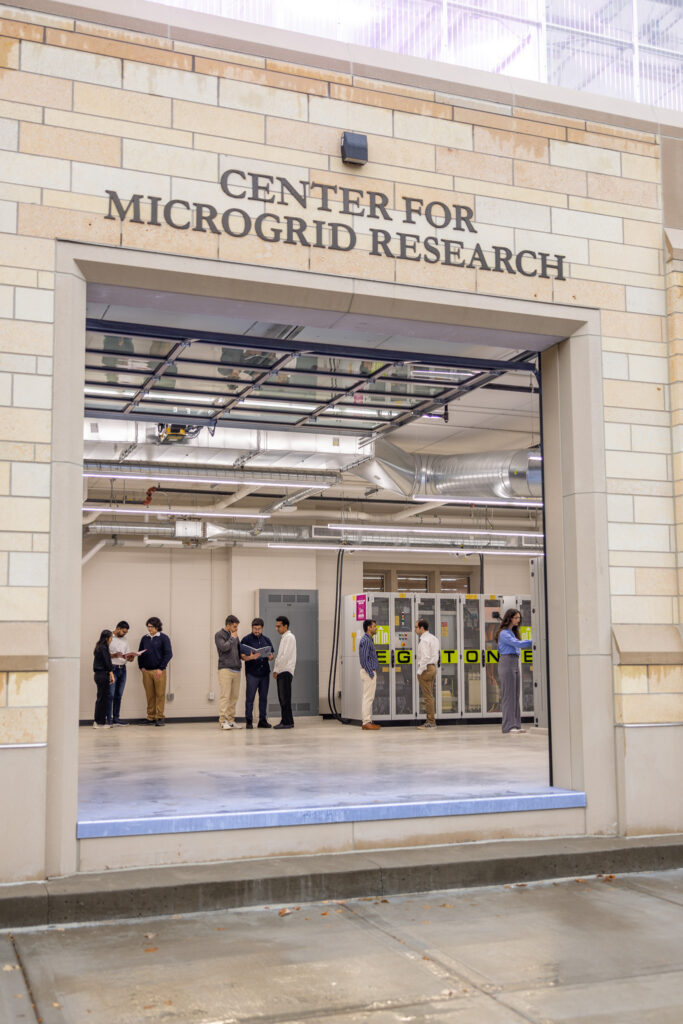
The Center for Microgrid Research started in the basement of what is now the Engineering Design Center with two students, a desk pulled from the university recycling center and a small microgrid system they were working to get fully operational.
Today, Mahmoud Kabalan, Bright.Green Director of the Center for Microgrid Research and an associate professor of electrical engineering in the College of Engineering, leads a team of about 25 researchers and students. The center’s electrical systems have a combined capacity of roughly 3 megawatts, enough to power an estimated 3,000 to 5,000 homes.
“This building that we are in today will usher in a new kind of power engineering research, education and workforce training,” Kabalan said.
Under Kabalan’s leadership, the center has secured more than $35 million in funding from sources including the National Science Foundation, Minnesota Department of Commerce and U.S. Army Engineer Research and Development Center. State and federal investments, university support and philanthropy, including support from electrical engineer and entrepreneur Jason Bright, helped make the expansion possible.
“The idea behind a Center for Microgrid Research is to help the nation modernize its electrical grid, to make it more resilient, more robust,” College of Engineering Dean Don Weinkauf said.
The expanded facility moves research beyond computer models into full-scale testing. Its first floor can support up to 45,000 pounds, accommodating electric buses and container-sized grid systems. An outdoor equipment yard includes a grid-level battery energy storage system and load bank, with additional power equipment in the basement.
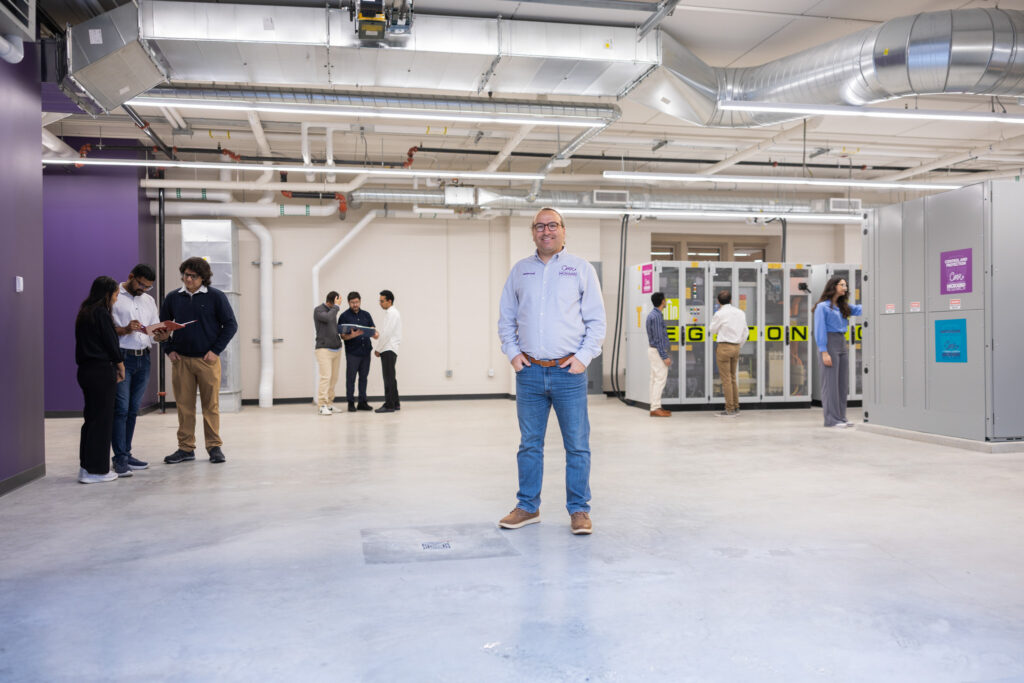
The facility also allows researchers to test how energy technologies from different companies can work together, including electric vehicles, battery storage, fuel cells, solar arrays and generators.
“How do you get products from different companies and make them work together?” Kabalan said. “That is the trillion-dollar question.
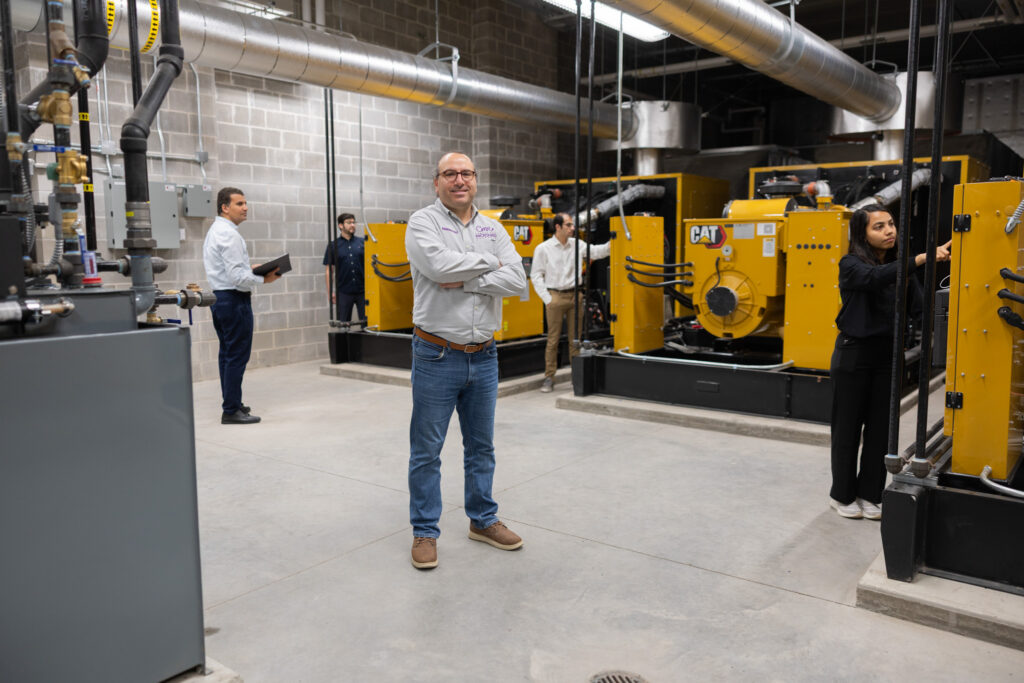
(Brandon Woller '17 / University of St. Thomas)
Serving national power demands
St. Thomas serves as the lead organization in an applied research partnership with the U.S. Army that also involves Virginia Tech, North Carolina State University, MIT Lincoln Laboratory, Cal Poly and Texas A&M. The work supports the Army’s goal of making every installation a microgrid by 2035 while moving emerging technologies toward real-world applications.
Kabalan said the work is “advancing our nation’s research agenda and training its future workforce.”
The research also has civilian applications. Local governments and nonprofit organizations seek guidance from the center, while growing electricity demand from artificial intelligence and data centers is creating new questions about how power is generated and distributed.
McCollum described the expansion as “a big step toward greater energy security and workforce here in Minnesota.”
St. Paul Mayor Kaohly Her, who helped carry state funding for the project while serving in the Minnesota House of Representatives, also pointed to its workforce potential.
“As a city, we need to grow the businesses that rely on this energy,” Her said. “Then our ability to foster those businesses and to grow here becomes all the more viable for us.”
Vischer said the center reflects the university’s larger responsibility to put its expertise to work on changing societal needs.
“If we want to always be discerning how our expertise, our resources, our traditions, our mission connect with the needs of the world,” Vischer said, “we’re going to have initiatives like the Center for Microgrid Research.”