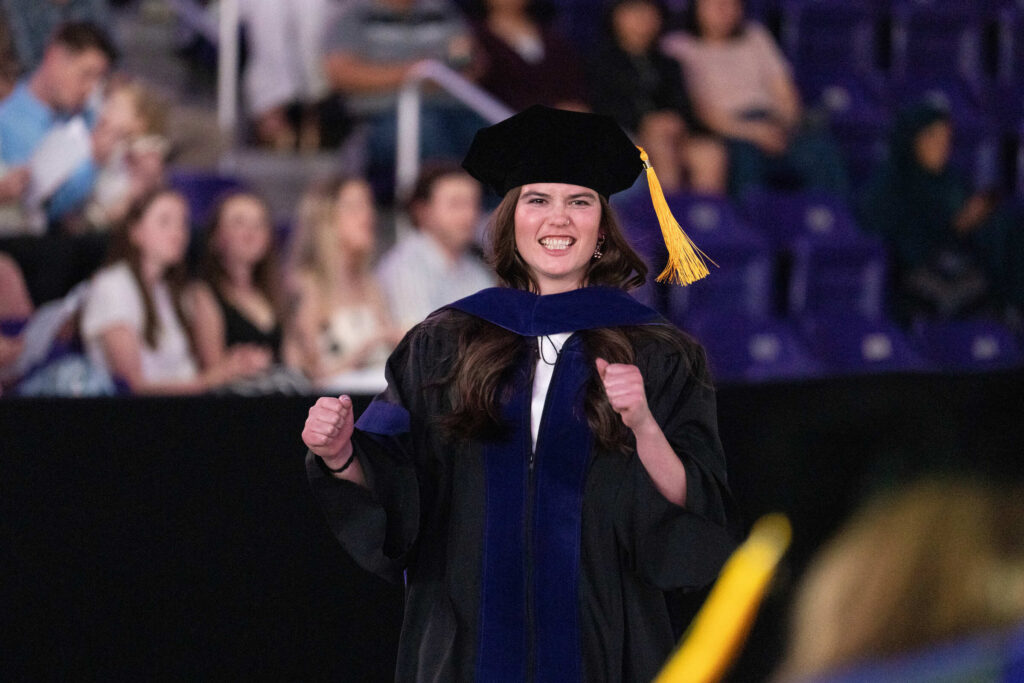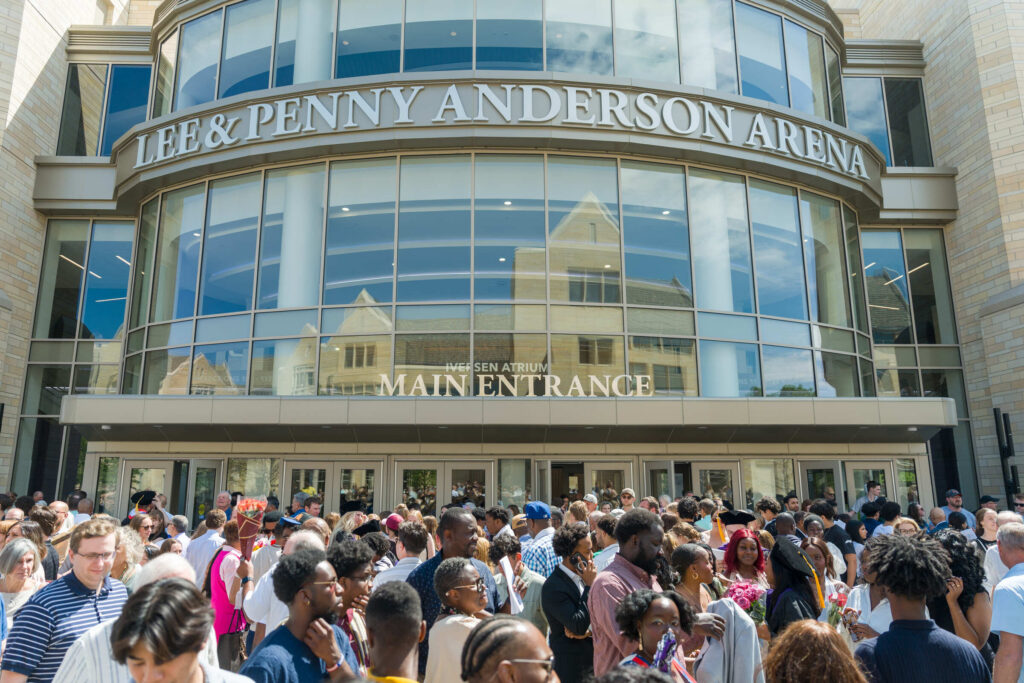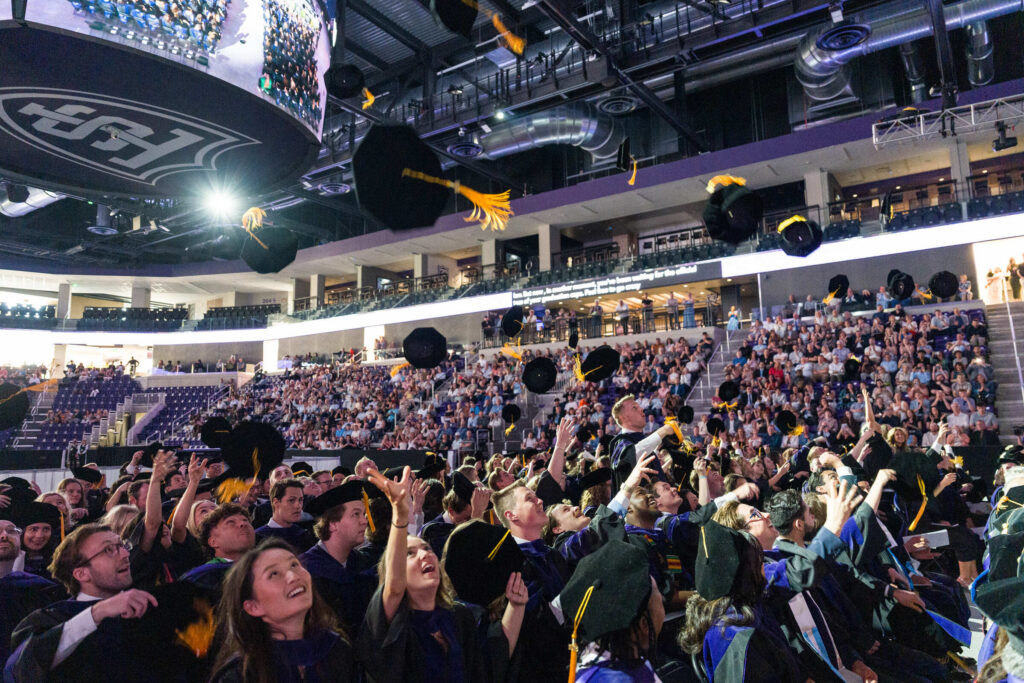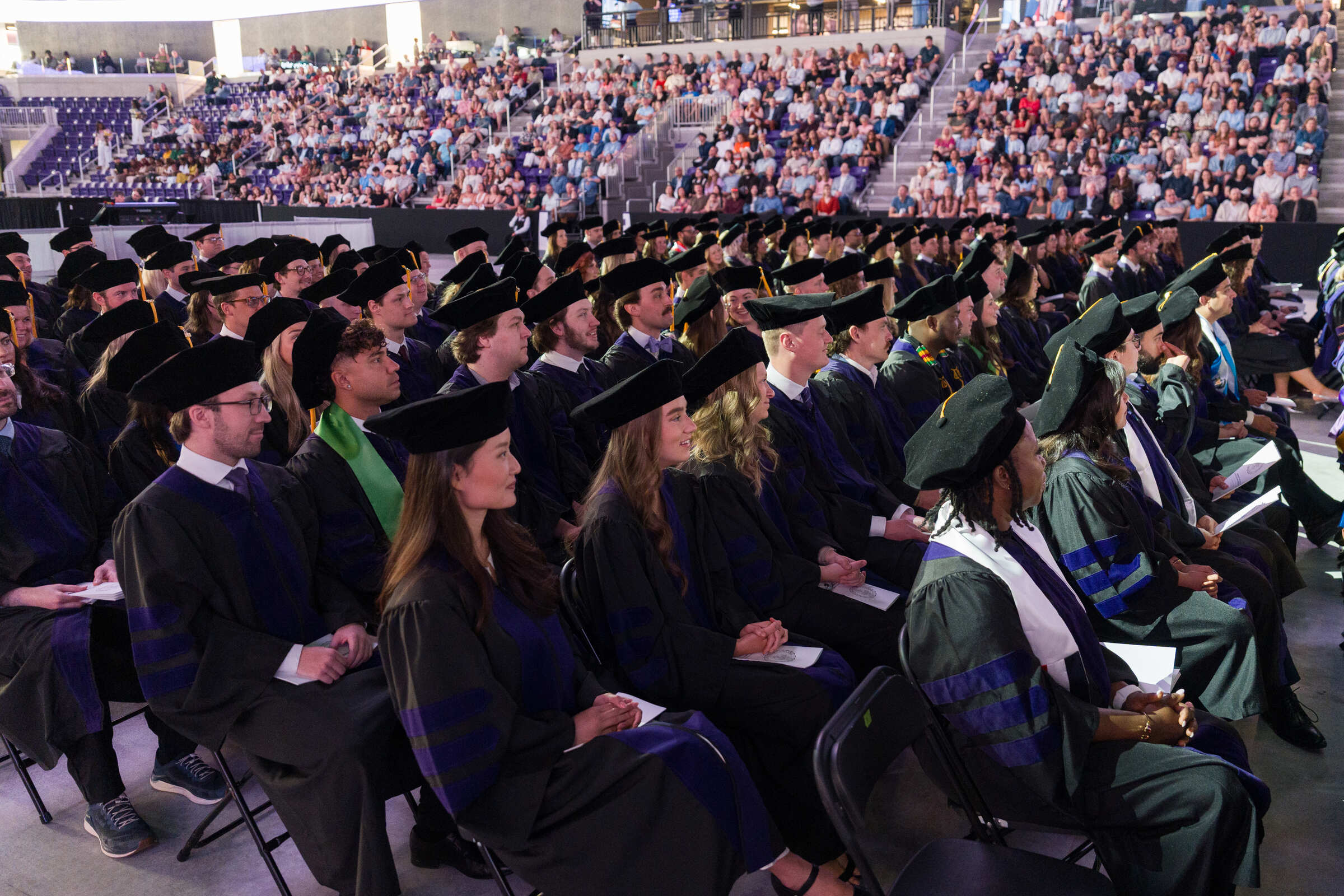
The University of St. Thomas School of Law conferred degrees to 172 students on May 16. Among them, 162 students earned their Juris Doctor (J.D.), six earned an LL.M. in U.S. law and four earned a master’s degree in organizational ethics and compliance.

Professor David Grenardo, who was elected professor of the year by the Class of 2026, hooded the graduates. University of St. Thomas President Robert Vischer conferred the degrees.
In his opening remarks, Dean Daniel Kelly encouraged the Class of 2026 to memorialize the day.
"Today is your day. Today is a day to celebrate," he said. "It is a day of joy, a day to think back about your time at the law school, and a day to recall all the hard work. It is a day to dream big about the future. You are together as a class, in your caps and gowns, with loved ones surrounding you – this moment is one to savor. We honor and congratulate our graduates."
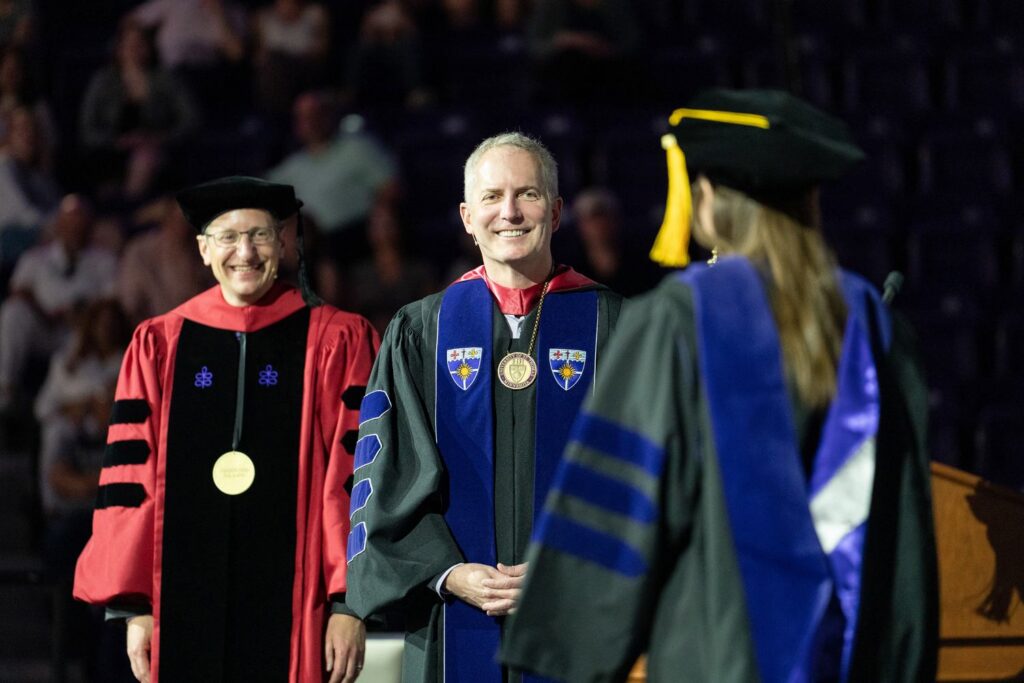
Keynote speaker Chief U.S. District Judge Patrick J. Schiltz
Patrick J. Schiltz, chief judge, United States District Court for the District of Minnesota, gave the keynote address.

A Duluth, Minnesota, native, Schiltz is a graduate of the College of St. Scholastica and Harvard Law School. After serving as a law clerk to U.S. Supreme Court Justice Antonin Scalia in Washington, D.C., Schiltz practiced law for eight years at what was then the Minnesota firm Faegre & Benson. He left practice in 1995 to join the faculty of the University of Notre Dame Law School.
Schiltz served as the founding associate dean of St. Thomas Law from 2000 until 2003, when he was named to the school’s St. Thomas More Chair in Law and became a teaching faculty member. During his tenure as associate dean, Schiltz established foundational programs, policies and procedures needed for the new law school – from admissions, to academics, to the construction of the school’s building. He was nominated for a federal judgeship by President George W. Bush in 2005.
Schiltz started his commencement remarks by sharing how proud he continues to be of St. Thomas Law, particularly its students and graduates.
“I am regularly told by judges and by attorneys how impressed they are with St. Thomas grads,” he said. “They talk about how smart you are, and how well trained you are, and how enthusiastic you are, but when I'm at receptions, or I'm at events like this, and people, lawyers and judges, talk to me about St. Thomas grads, they almost always say the same thing about the grad they're talking about. She's such a great person. She's just a great human being. Thank you for making me so proud.”
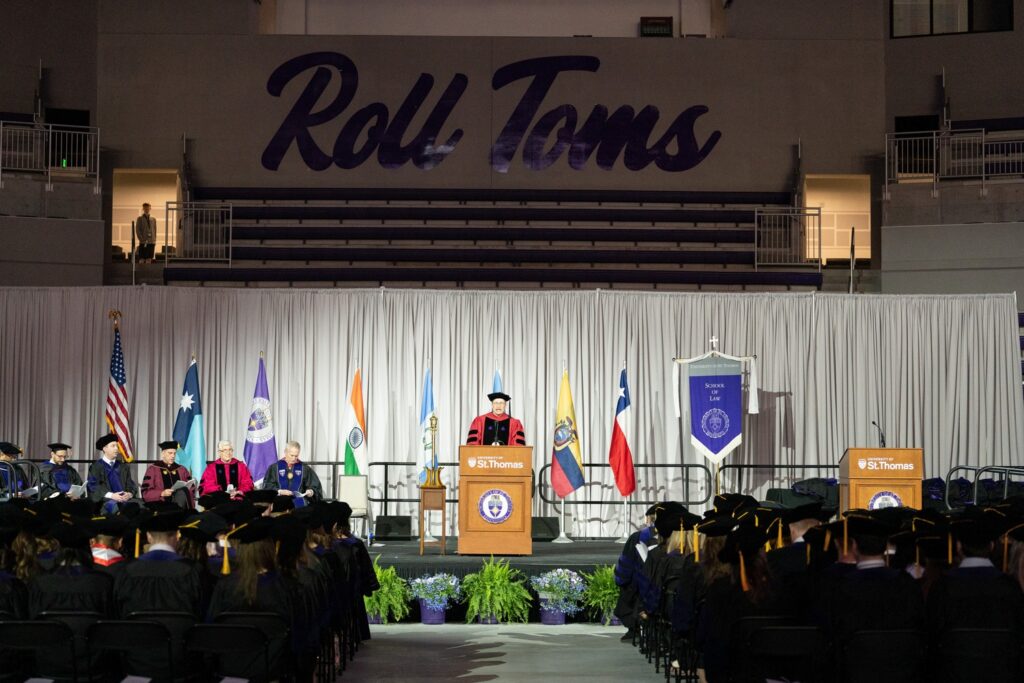
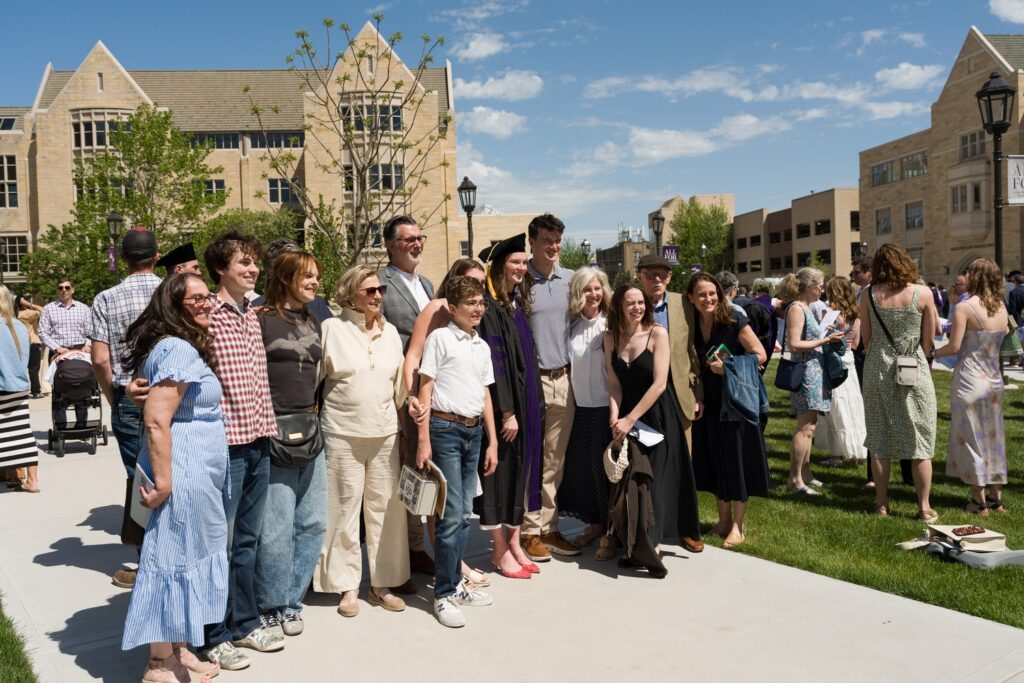

Schiltz went on to recount the many times that he made career and personal choices that others advised him not to. He encouraged the graduates to stay true to themselves in their decision-making, pursue their passions, avoid peer pressure and to not live their lives to impress, please or compete with other people.
"Because I was willing to make decisions that everyone else thought were nuts, because I made decisions based on my own values rather than the values of other people, I have had a wonderful career in the law,” he said. “I have met so many great people. I have had so many opportunities to make a difference in the life of others ... there is nothing more satisfying than delivering justice. It's an unbelievable opportunity, and none of this would have been possible if I had done what everybody else thought I should do.”
Class speaker Jacob Fate
This year’s elected student speaker was Jacob Fate.
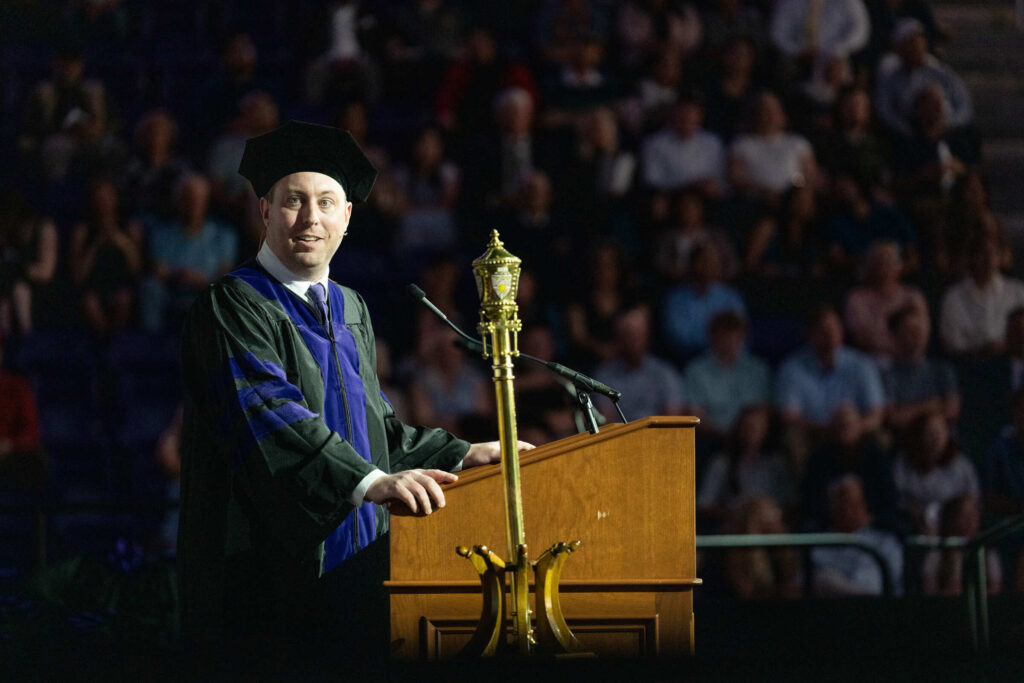
He earned his bachelor’s degree from Bemidji State University and graduated magna cum laude from the School of Law. As a law student, Fate worked in the Federal Commutations Clinic and completed a fellowship with Neighborhood Justice Center, a nonprofit public defense corporation based in St. Paul that offers low- or no-cost legal support and representation.
Prior to law school, Fate worked as a legal assistant in the Hennepin County Public Defender’s office, which influenced his decision to attend law school. He will rejoin the office as an assistant public defender after taking the bar exam.
In his commencement remarks, Fate called on his classmates to be attorneys who take the time to listen to their clients in order to better advocate for them.
“What separates the great lawyers from the rest is their willingness to really listen to a client, so they can tell a compelling story,” he said. “Not just a winning theory of the case, their client’s story.”
Fate went on to explain that for many clients, justice is more than a judge’s ruling.
“It's true that the basic service we will provide is access. In a system designed to exclude, you will use your knowledge of the law to unlock the doors to potential justice,” he said. “But for most clients, for all but the most sophisticated corporate or government clients, what they really want is to be heard. To most people, having their day in court isn't winning on a 12(b)(6) motion. Justice is feeling like someone looked at them like a real person and listened to their story.”
Treating clients with care and respect, Fate said, “will help you meet your professional responsibility to zealously advocate, yes. Just as importantly, you will be honoring your St. Thomas legal education by respecting the inherent dignity of every person and treating them with compassion, then you will have a chance to be a great lawyer."