The University of St. Thomas archives hold fascinating materials that offer a window into the history and evolving story of campus life, academics, and community. These collections preserve the moments, both monumental and everyday, that have shaped the university’s identity. University Archivist Ann Kenne shares 10 of her favorite items from the collections.
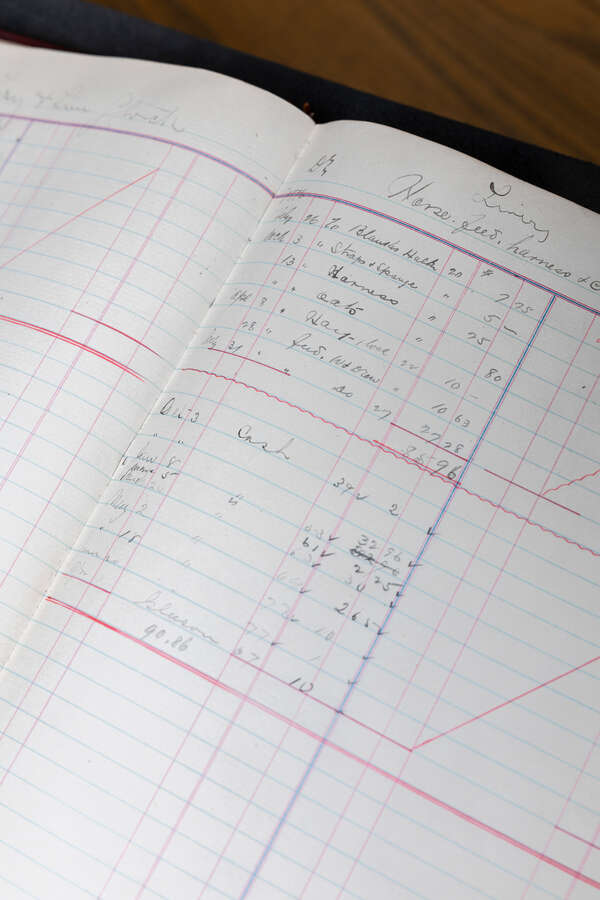
General ledger, 1885-87
As one of the few surviving original documents from the university’s earliest years, this ledger offers a view into the day-to-day operations of the fledgling St. Thomas Aquinas Seminary. In addition to routine expenses, like feed and hay for the horses, the ledger records the names of the original faculty and students and offers early evidence of the first women employed by the school.
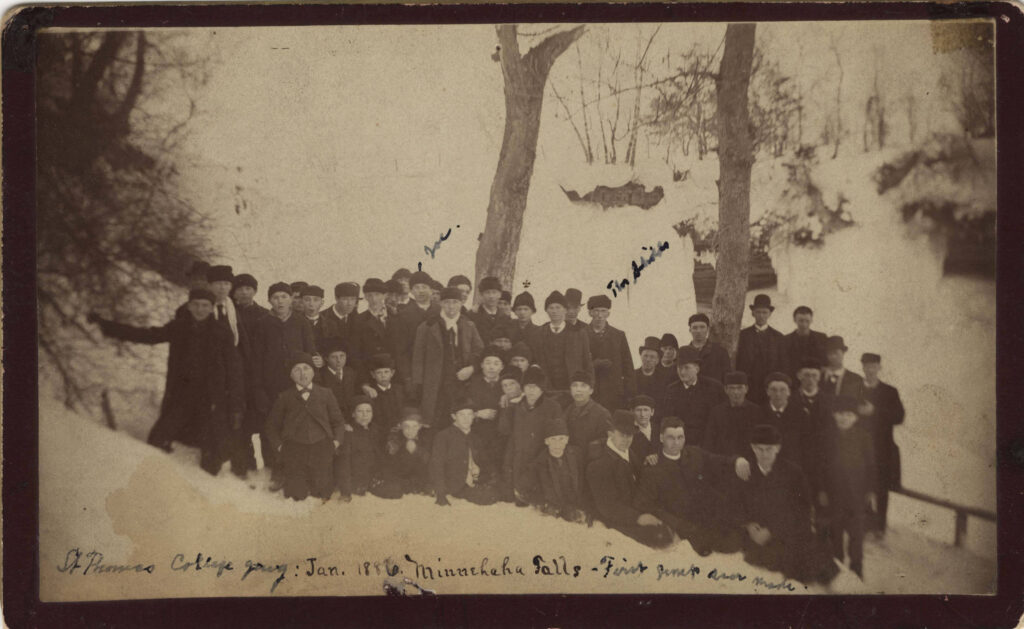
Photograph of “The St. Thomas Gang”
This photograph taken in January 1886 offers a peek into the lives of the first St. Thomas students. Taken during a field trip to Minnehaha Falls, the image features the student body and faculty from St. Thomas Aquinas Seminary posing in front of the frozen falls. The wide age range of students in the photo reflects the diversity of the programs at St. Thomas at the time, which served high school students, college students, and seminarians.
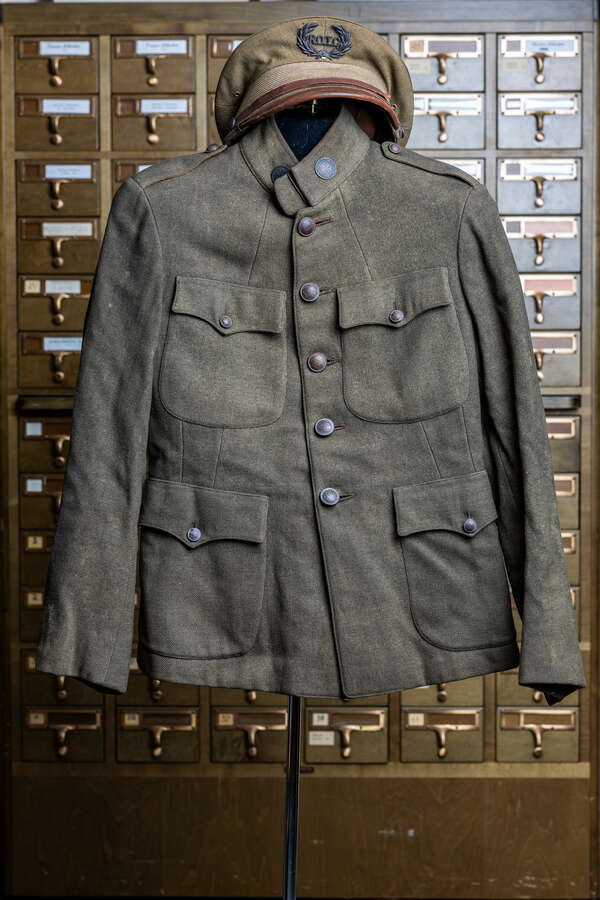
Student Army Training Corps uniform
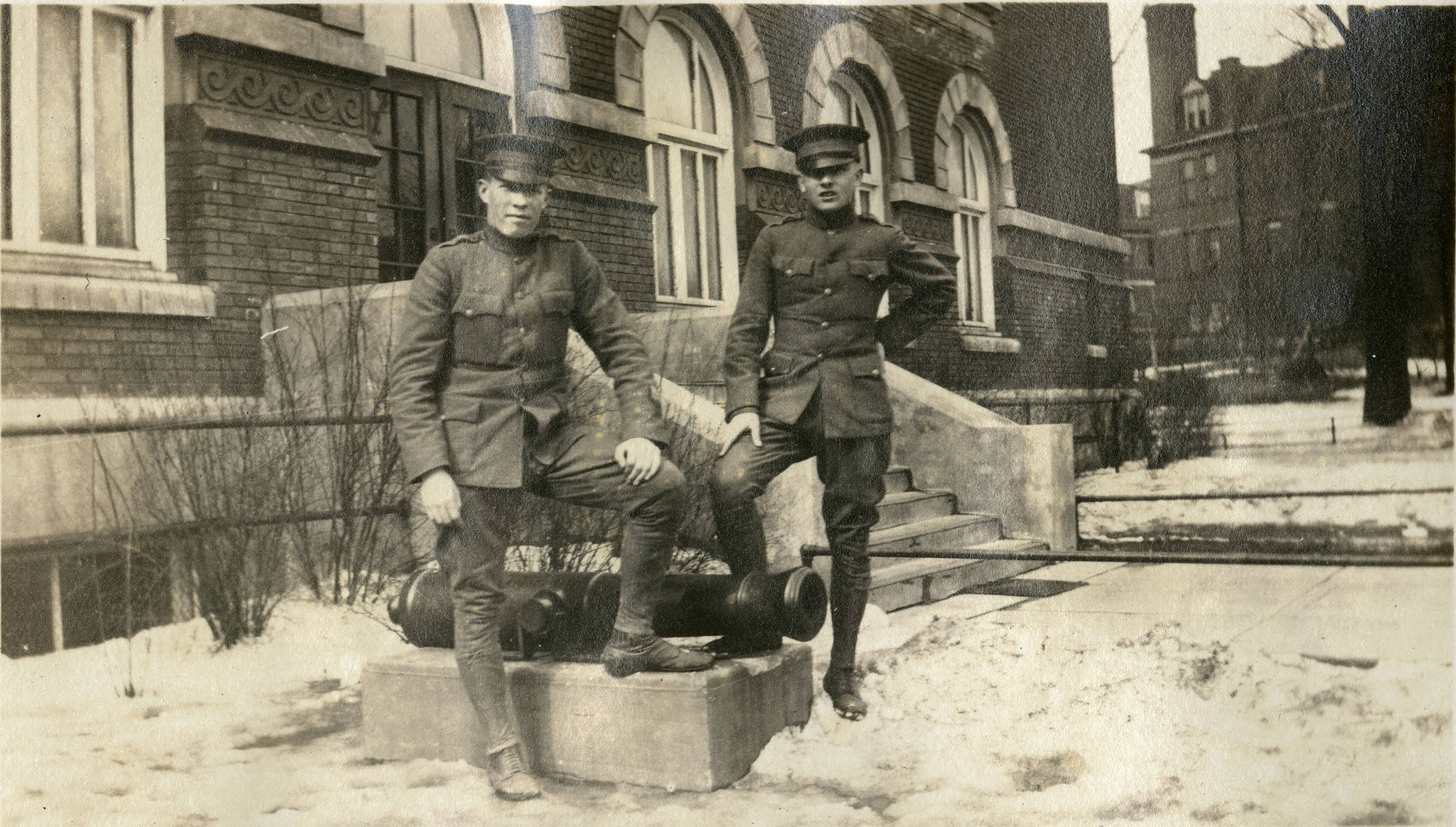
A uniform worn by a member of the College of St. Thomas Student Army Training Corps (SATC) represents a lesser-known chapter in the university’s history. During World War I, many members of the all-male student body left school to join the armed forces, causing a sharp decline in enrollment and financial strain on the institution. In response, the college hosted a unit of the SATC, a national program launched by the U.S. War Department to quickly train officer candidates and provide technical instruction. The first recruits arrived on campus in early October 1918, but their service was short-lived. Following the armistice in November 1918, the St. Thomas unit was officially demobilized.
Victor O’Malley’s scrapbook
Victor O’Malley attended the St. Thomas Military Academy from 1918 to 1920, and his scrapbook offers a unique window into student life at St. Thomas during that era. Filled with programs, playbills, ticket stubs, photographs, and other memorabilia, the scrapbook gives a look at the social life of students, both on and off campus, during that time.
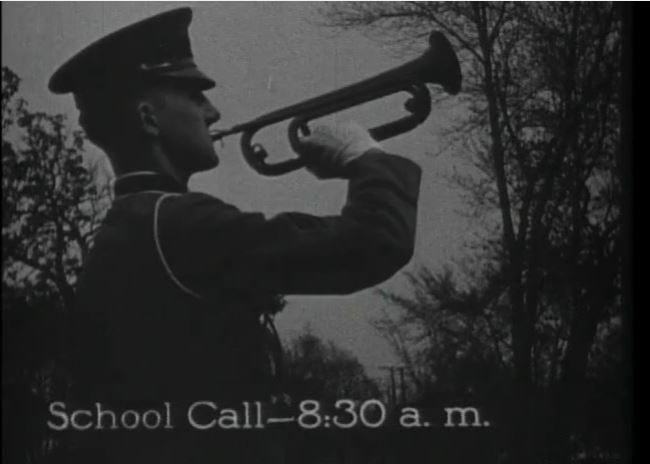
“A Day at St. Thomas”
In the summer of 1924, the College of St. Thomas teamed up with the Mills-Bell Motion Picture Company of St. Paul, Minnesota, to create a silent promotional film titled “A Day at St. Thomas.” Designed to boost enrollment at the St. Thomas Military Academy, the film offered a visual introduction to campus and student life. The film follows two students as they go about their day on campus. Viewers are treated to scenes inside student rooms in Ireland Hall, along with exterior and interior shots of the Chapel of St. Thomas Aquinas. The film also shows the dining hall, infirmary, classrooms, laboratories, and the library, capturing both the academic and daily life of students during that era.

Floor plan of the Arts Building
The university archives hold an extensive collection of architectural plans and drawings that document both the physical growth of the St. Thomas campuses and the academic programs once housed in these spaces. One particularly interesting set of plans offers rare insight into the original St. Thomas Law School (1923-33). The 1930 floor plans for the Arts Building (later repurposed as the St. Thomas Military Academy and demolished in 1965) reveal the location of the law school’s classrooms and reading room, details not found elsewhere in the limited surviving records for the program.
Monsignor Robert Probst’s photograph album
The photograph album compiled by seminarian Robert Probst offers a rare peek into seminary life from 1939 to 1945. Probst’s album offers more than the typical formal group portraits. It features candid snapshots of faculty and classmates (including two future St. Thomas presidents, James Shannon and Terrence Murphy), scenes from seminary rituals and celebrations and images of the seminary’s buildings. Together, these photographs paint a vivid portrait of seminary life during that era.

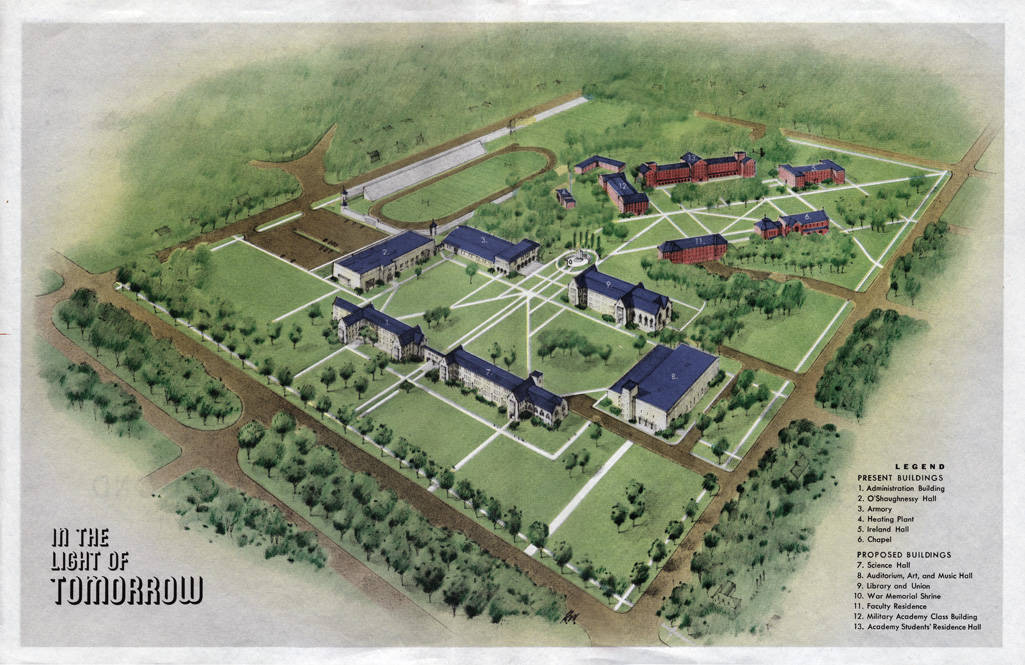
“In the Light of Tomorrow” brochure
One of the first major fundraising campaigns at St. Thomas began in 1945, as World War II came to a close. Aimed primarily at expanding and improving campus facilities, the campaign’s fundraising brochure included the school’s first full-color campus plan. The plan outlined a vision for campus with academic buildings on the lower quad constructed using yellow Kasota stone, while residence halls on the upper quad would feature red brick. This design scheme continues to shape the look and feel of campus today.
University of St. Thomas banner flown at the North Pole
In 1995, renowned polar explorer and University of St. Thomas alumnus Will Steger embarked on an ambitious expedition with fellow members of the International Arctic Project. Their goal was to become the first to cross the Arctic by dog sled in a single season. During the journey, Steger carried a University of St. Thomas banner with him. To mark the halfway point of the expedition, the banner was unfurled at the North Pole on April 23. After the journey, Steger returned the signed banner to the university, where it remains a distinctive piece of St. Thomas history.

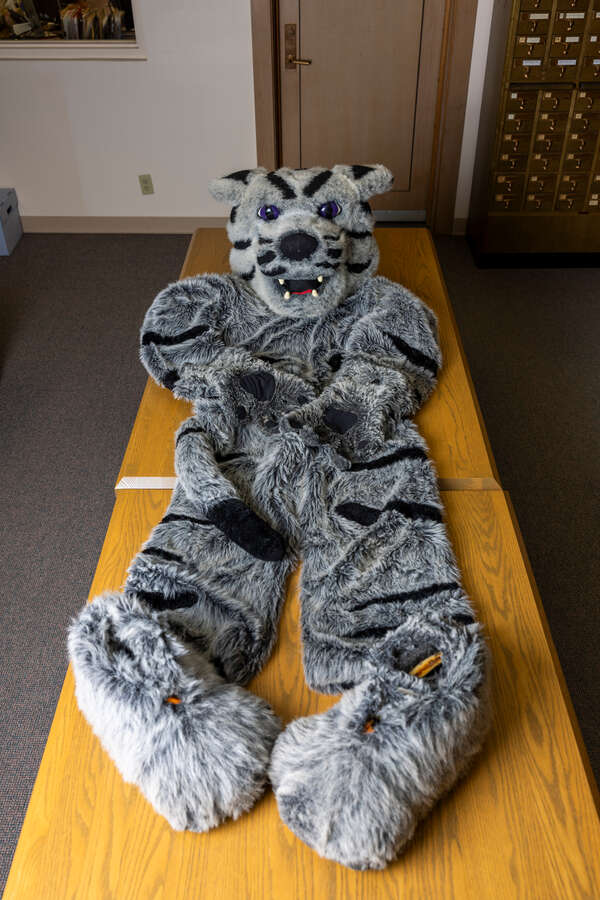
Tommie mascot costume
A relatively new addition to the university archives is the recently retired Tommie mascot costume, used from the early 2010s through 2024. The St. Thomas mascot tradition began in the mid-1950s with Tommy Tiger, who rallied school spirit at games and events. The mascot was discontinued in the early 1970s but returned in the mid-1980s as the reimagined, species-ambiguous Tommie. The recently retired costume represents the fourth version of a St. Thomas mascot.
More Tales from the Archives
-
Tales from the Archives: St. Thomas Aquinas in Campus Art
Faith and Mission -
-
-
Tales from the Archives: St. Thomas’ Selma Connection
Social Justice