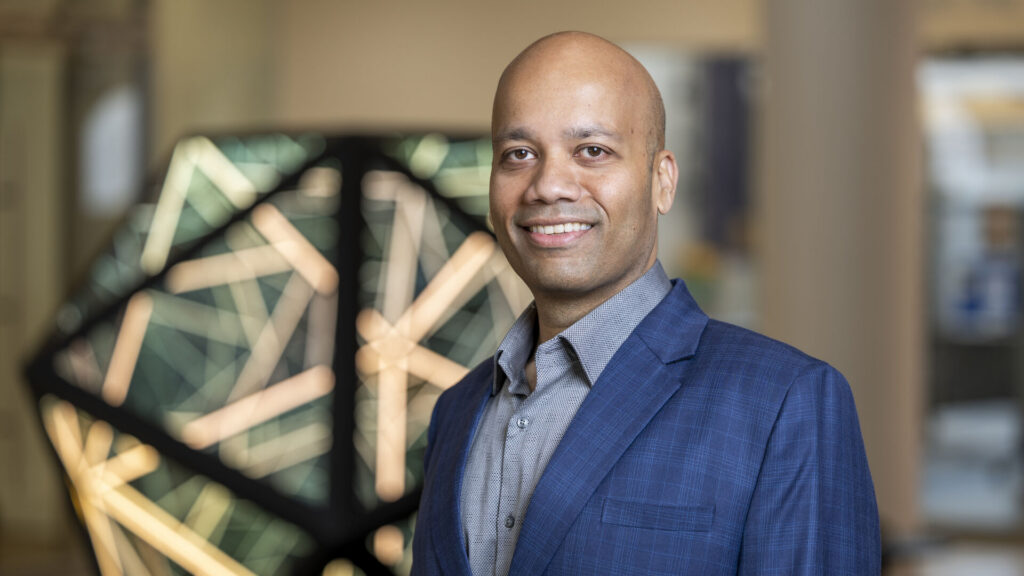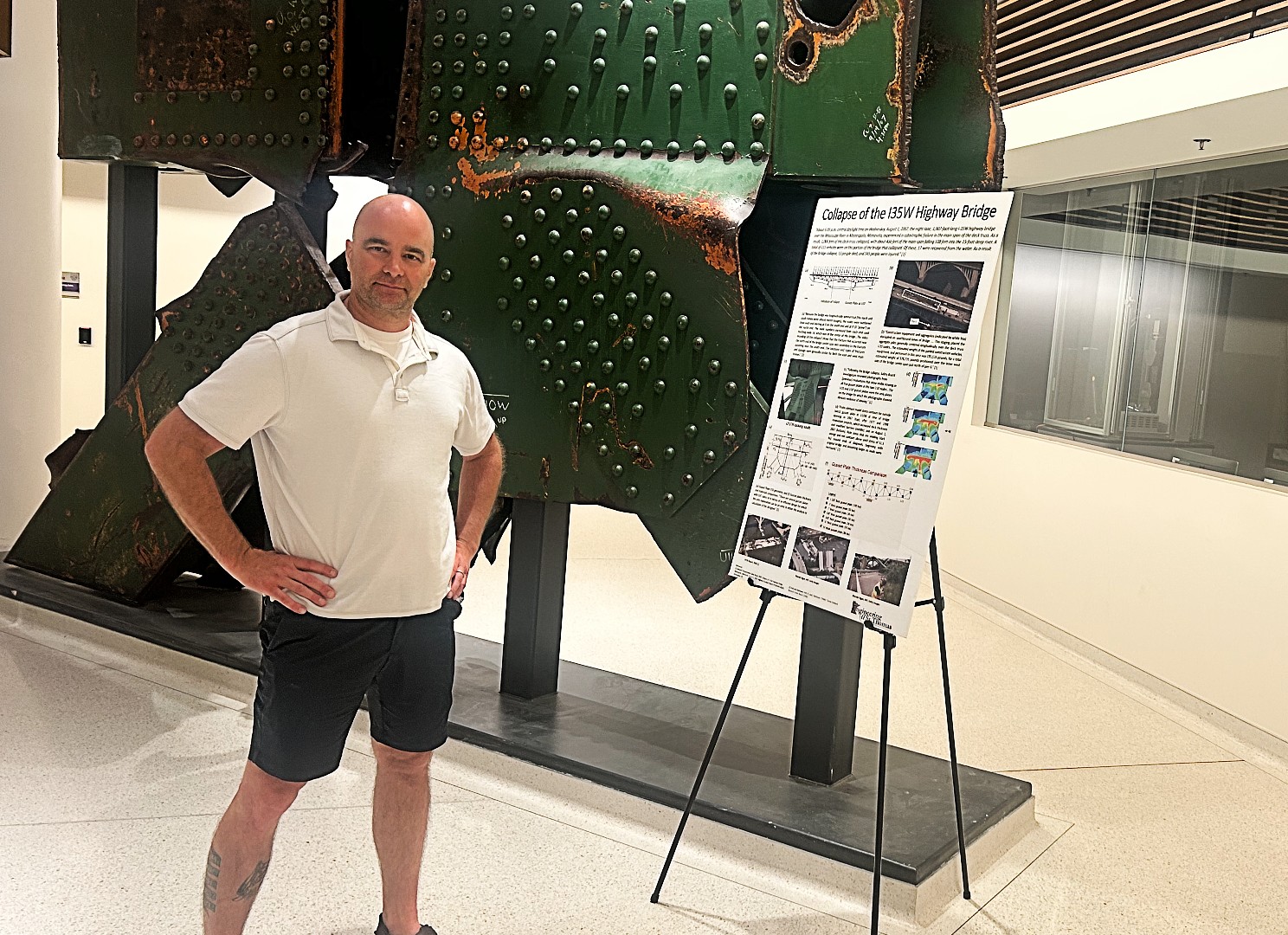
As Minnesota marks 18 years since the I-35W bridge collapsed in August 2007, a new study led by University of St. Thomas Professor John Abraham shows how artificial intelligence (AI) could help engineers prevent similar tragedies in the future.
The study, co-authored with researchers in Iran - which is among the top five countries in the world in dam construction - was published in the journal Multiscale and Multidisciplinary Modeling, Experiments and Design. Their research demonstrates how AI can help engineers make smarter choices from the very beginning of a project.
“We use artificial intelligence to design waterways, from culverts to dams to bridges,” said Abraham, a mechanical engineering professor in the School of Engineering. “AI runs through the different options and comes up with the best design for the entire system, balancing cost and safety. Think of it as an optimization tool.”
Using computer models, Abraham and an international team of researchers trained AI to analyze thousands of different designs and identify which designs and materials would best reduce the stress of rushing water on structures.
“As you drive over a bridge, look at a dam, or view a waterway, they look stable but underneath the ground they can be unstable,” Abraham said, “We use artificial intelligence to try and figure out what are the best materials to use.”
A large piece of steel from the fallen I-35W bridge that is housed on the lower level of St. Thomas’ Schoenecker Center serves as a reminder that these big structures can fail. Standing by it, Abraham notes that AI can also be used after construction to monitor structures and detect problems before they become dangerous.
“Thinking about the I-35W bridge, there are two ways we could use AI,” he said. “You can use it in the initial design, such as AI can help you determine how thick the gusset plates should be and what materials they should be made of. More importantly. AI can monitor a structure over its lifetime. It can identify an error or a problem before it would be apparent to a human. Those two ways are powerful techniques that AI can make our lives, our buildings and communities safer.”