What is the true measure of a college education in the 21st century? For some, the answer is job titles and starting salaries.
While helping students discover what they will do professionally matters, leaders at the University of St. Thomas argue that’s not enough. The university’s newest five-year strategic plan, St. Thomas 2030, adds another requirement: helping students discover who they are called to be.
And in an era shaped by artificial intelligence and rapid workforce disruption, that distinction may be more important than ever.
“If a university just has the approach of, ‘We need to fill the minds of our students with the technical skills they need to get a job …’ Is that important? Yes, of course, that’s important. If you don’t have an economic ROI on what you’re offering to your students, you’re in serious trouble,” said St. Thomas President Rob Vischer.

St. Thomas certainly has proof of that ROI: survey data from the Class of 2025, for instance, shows 98 percent of respondents reported a positive career outcome within six months of graduation.
Still, Vischer notes, “that cannot be the extent of the aspiration.”
And that philosophy greatly shapes the university’s next chapter.
Approved by the Board of Trustees, St. Thomas 2030 outlines how the university will strengthen student success, expand its national reach and embed an entrepreneurial mindset across campus — all while deepening its commitment to whole-person education. At a time when families nationwide are questioning the value of a college degree, the plan emphasizes strong academic preparation, meaningful career pathways and real-world experience. It also, however, reaffirms the university’s Catholic mission to form ethical leaders guided by purpose and service.
“We’ve always emphasized formation of the whole person,” Vischer said, “but that mission has never been more urgent.”
Priority 1: Centering Student Success
The distinctive elements of a St. Thomas education – such as personal attention and experiential learning – are only possible if students can gain access in the first place. As such, the first priority of St. Thomas 2030 – keeping student success at the center of every institutional decision – carries a sharp focus on scholarships and retention. This is why the plan calls for scholarships to remain the university’s top fundraising priority over the next five years. In addition to many major gifts from generous donors in recent years to expand student access, St. Thomas has already raised over $51 million for scholarships during the 2025-26 academic year alone.
While increasing access is a good first step, arriving on campus and registering for classes is only part of the journey. The next five years will also emphasize student retention. The university recently participated in the Higher Learning Commission’s (HLC) Student Success Academy and created a working group to identify key focus areas for advancing student success efforts.
Results have so far been promising. Despite challenging times, fall and spring persistence rates among sophomores, juniors and seniors are strong thanks to concerted efforts from faculty, the Office of Retention and Student Success and other campus partners.
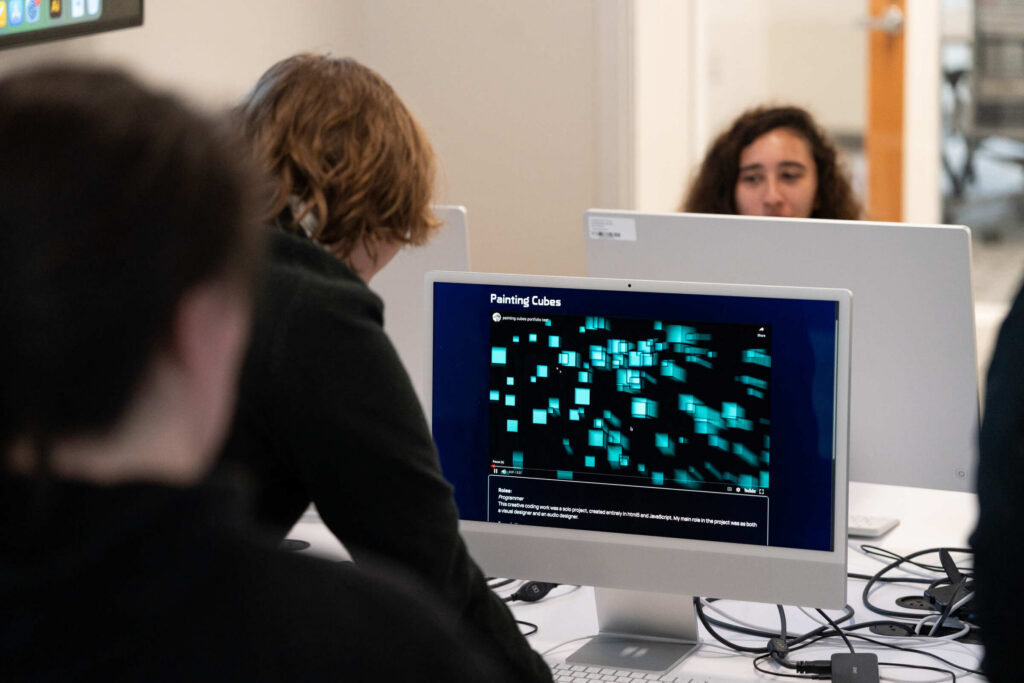
“This momentum highlights the importance of fully utilizing our systems, along with strong advising, coordinated outreach, and a shared commitment to student success,” said Director of Retention and Student Success Tonia Jones Peterson.
“When combined with our larger cohorts and strong first-time, first-year registration levels, the impact is clear: retention is one of the most powerful drivers of overall enrollment stability and growth.”
And of course, another powerful driver of retention is purpose. St. Thomas 2030 calls for providing more academic and co-curricular experiences for all students to develop skills of reflection, listening, discernment and storytelling. This initiative is meant to incorporate purpose and vocation exploration into the student journey.
Priority 2: Pressing Forward on National Aspirations
While the university has long enjoyed a strong statewide and regional reputation, St. Thomas 2030 calls for broadening its influence and visibility nationwide. Expanding national recognition ultimately benefits students by increasing the value and portability of their degrees.
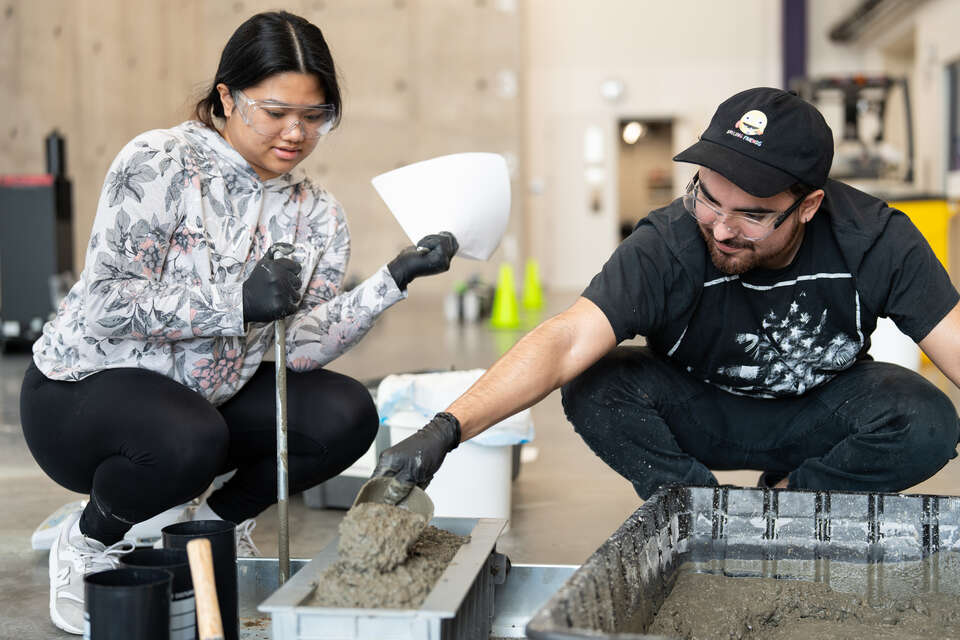
Achieving this goal means elevating the university’s presence in national conversations about higher education and innovation. It also includes growing the number of endowed faculty positions to attract and retain professors who are leaders in their fields. For students, that translates into mentorship from scholars and practitioners with national networks and real-world expertise. It also means expanding programs that stand out — from emerging academic disciplines to interdisciplinary collaborations that reflect the complexity of today’s workforce and society.
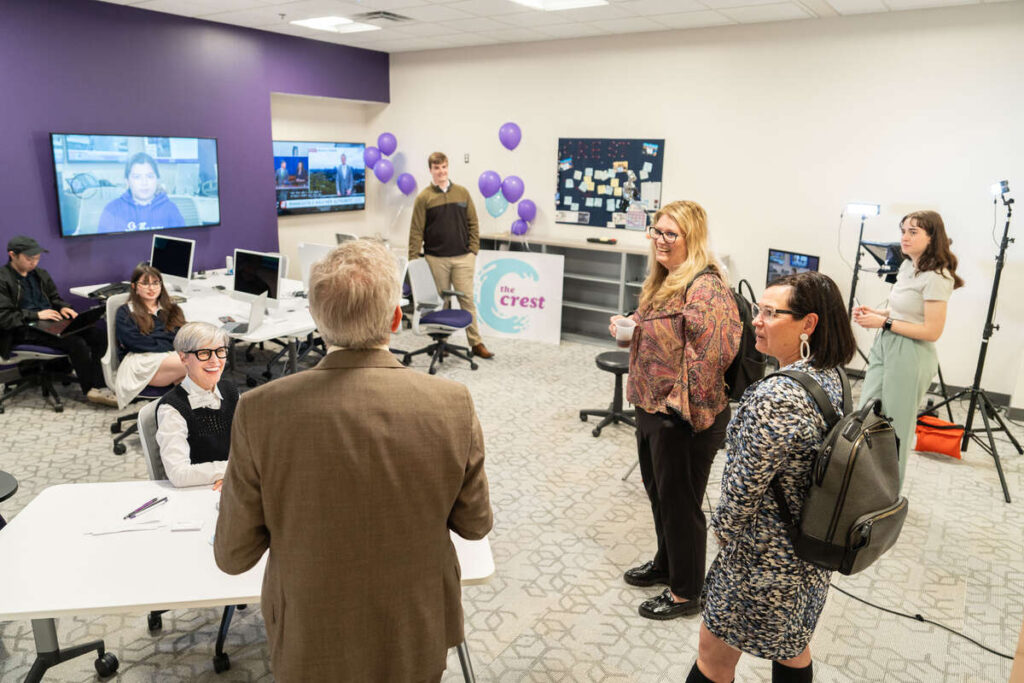
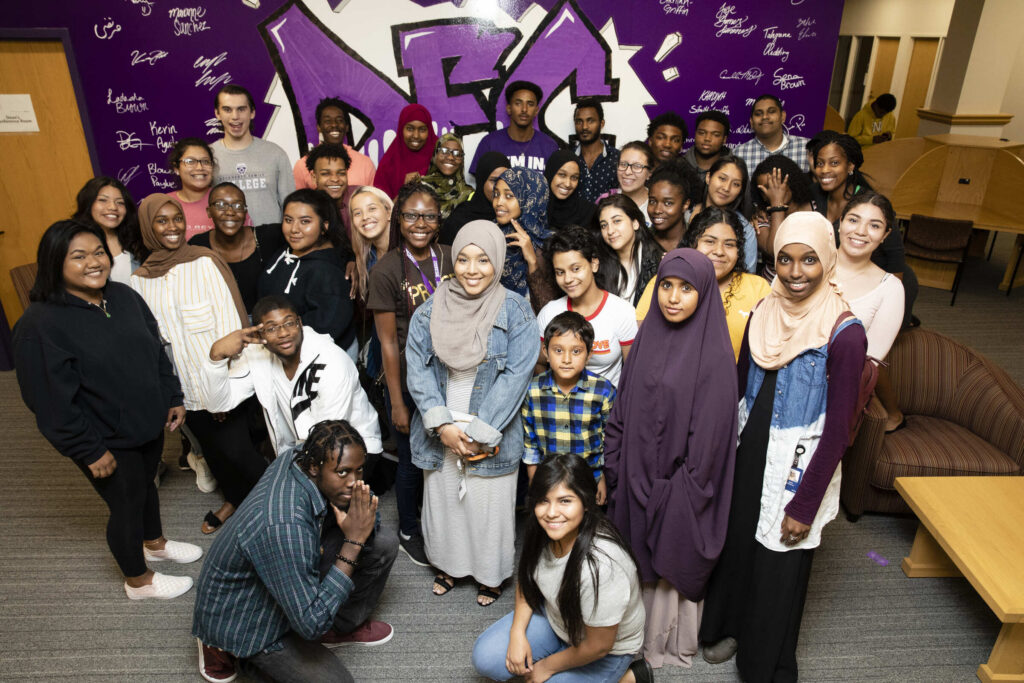
Pictured: Attendees check out the new space for The Crest
Examples of this can be seen across the university’s schools and colleges as they expand programs to meet rapidly evolving workforce needs. The Morrison Family College of Health, for instance, recently launched an online Master of Public Health program to help combat one of the nation’s most critical shortage of health care professionals. And the Susan S. Morrison School of Nursing designed a three-year Master of Science in Nursing option, allowing students who need flexibility to take a blend of in-person and online evening courses.
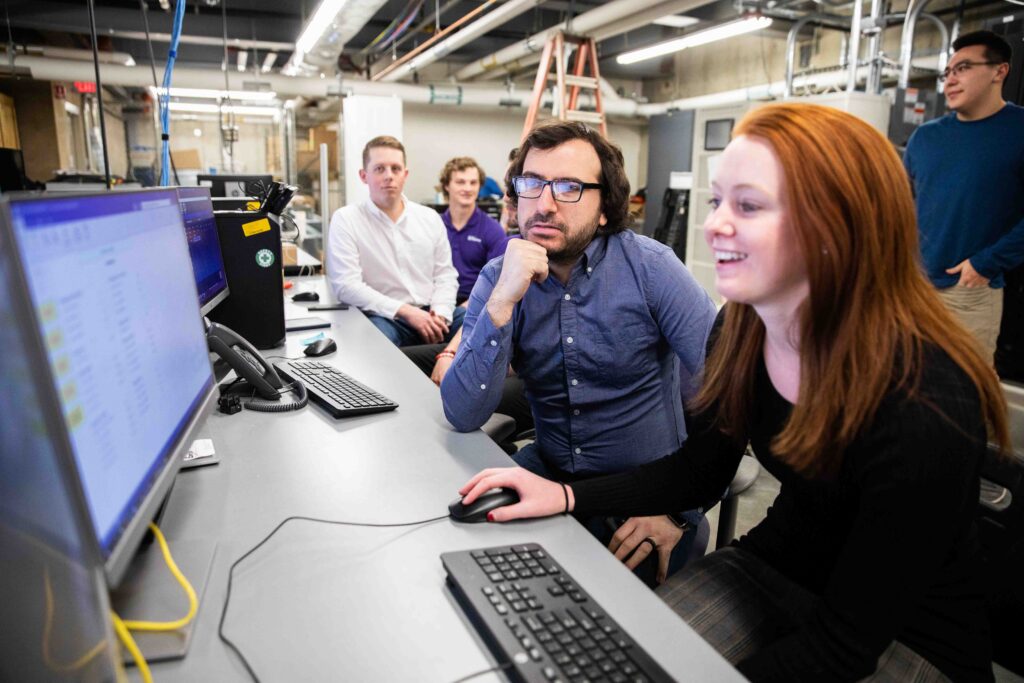
Additionally, the School of Engineering continues to attract national research partners with the goal of expanding opportunities for students. The Center for Microgrid Research, for instance, has garnered considerable private and government support; It remains one of fewer than five academic research centers of its kind in North America and the only one to offer access to both undergraduate and master’s level students.
Outside of academic programs, St. Thomas’ transition to NCAA Division I athletics represents one of the highest profile components of the strategy to achieve its national aspirations through increased visibility. This is because the visibility that comes with competing against teams from across the country provides a far greater name recognition for St. Thomas the institution. Conference championships, national broadcasts and facilities such as the Lee & Penny Anderson Arena are drawing new attention — and attracting student-athletes who contribute to a vibrant campus culture.



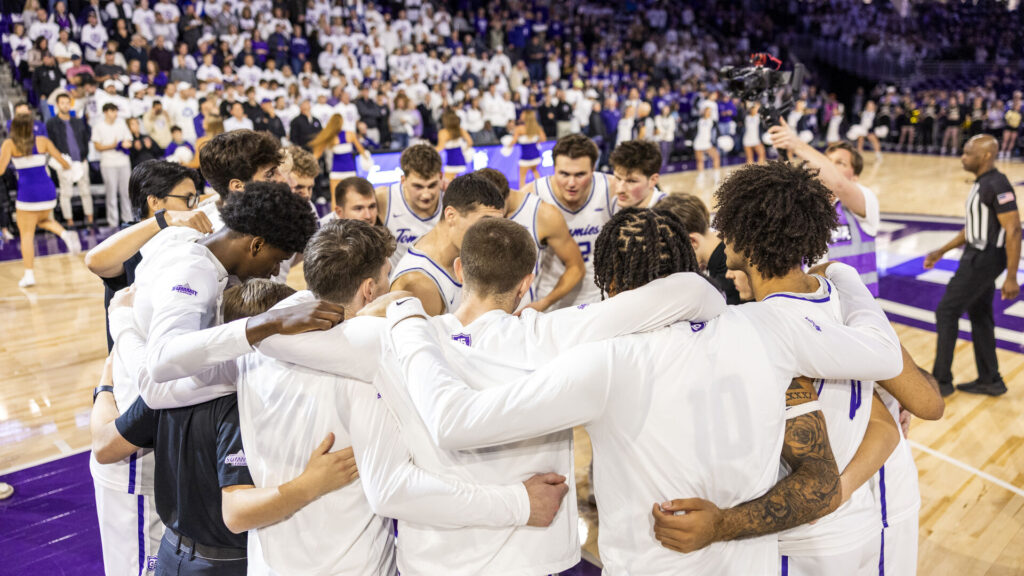
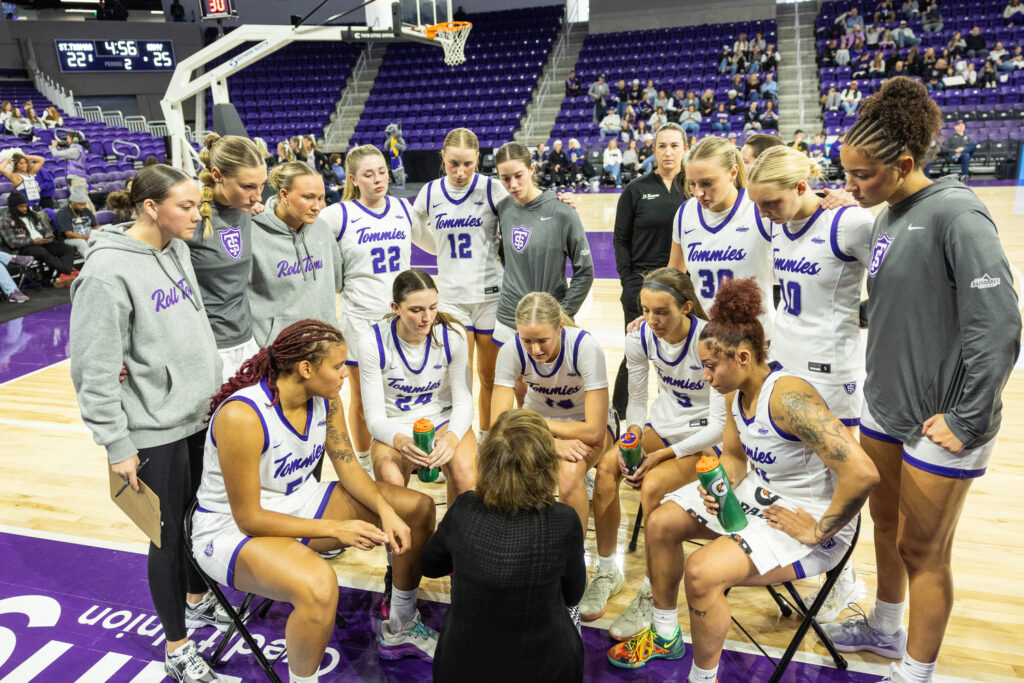
“This was never about just moving up to another division,” said Phil Esten, vice president and director of athletics. “It was about expanding opportunities for our student-athletes and elevating the entire university – academically, culturally, and nationally. And it was about how we could do this right.”
St. Thomas’ continued growth into its identity as a comprehensive national Catholic university will also be reflected as its campus becomes a more vibrant, energized destination for students, faculty, staff and visitors. This will entail partnering with the local community to foster a dynamic culture that builds pride and enhances the livability of the surrounding area.
Priority 3: Empowering Entrepreneurial Mindsets
An entrepreneurial spirit has fueled much of St. Thomas’ recent momentum — from launching new colleges to opening state-of-the-art academic facilities and transitioning to Division I athletics. St. Thomas 2030 calls for embedding that same mindset across the university to help prepare students for thriving in a world marked by uncertainty and change.
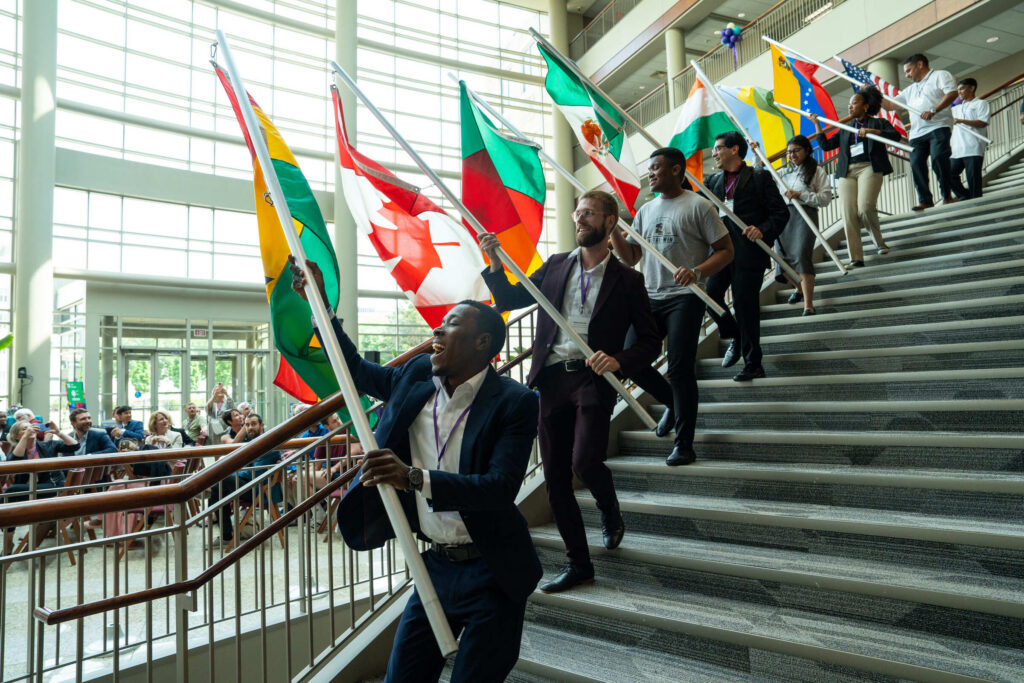
At the top of that list is preparing students to succeed in the emerging era of artificial intelligence; if artificial intelligence is reshaping entire industries, university leaders say St. Thomas intends to shape how its graduates respond. Through initiatives such as the Institute for AI for the Common Good, the university is exploring how emerging technologies can enhance learning while equipping students with the technical fluency and ethical grounding needed in an AI-driven world.
“We must collectively envision a collaborative and synergistic environment where AI literacy flourishes among faculty, staff and students while remaining grounded in ethical standards,” Executive Vice President and Provost Eddy Rojas said. “Looking around St. Thomas, seeing the creative work and innovative discussions already underway, I can see a campus where AI is thoughtfully integrated in teaching and learning without losing the academic brilliance and integrity we hold dear.
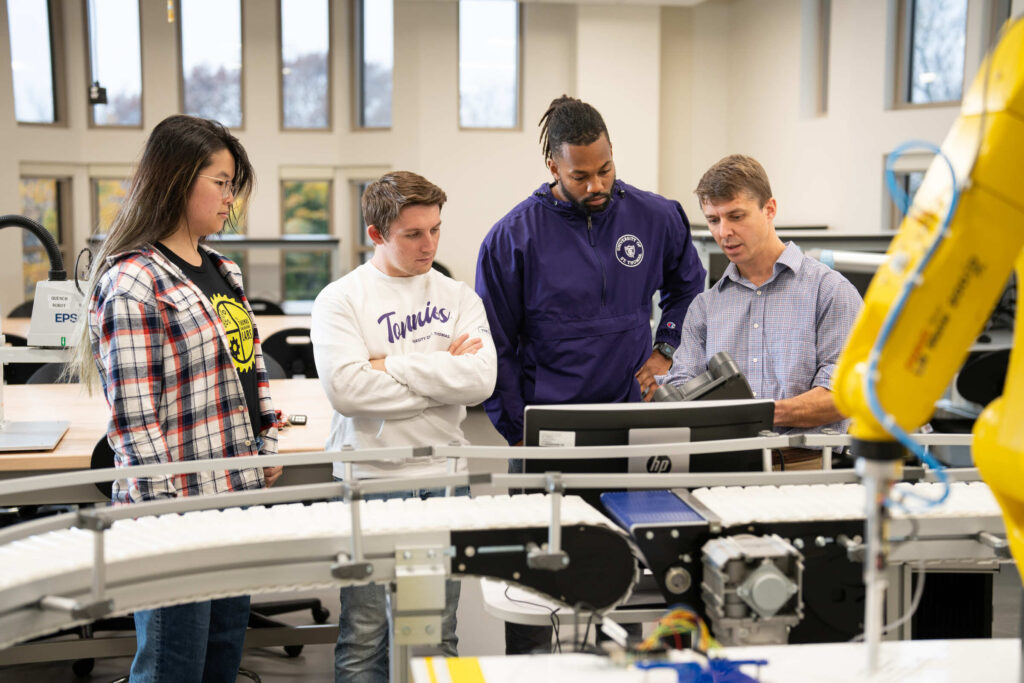
Despite a clear need to focus on technological innovation, St. Thomas 2030 also remains true to the university’s foundation of being rooted in human relationships. As such, the plan encourages faculty research that addresses societal challenges and supports interdisciplinary collaboration. Staff are empowered to identify mission-aligned improvements across campus operations through initiatives such as the Faculty & Staff Innovation Fellows program, which has selected proposals from 68 faculty and staff members to deliver on organization innovations for St. Thomas in the past three years.
Additionally, new academic offerings, including the STEM MBA and Master of Science in Artificial Intelligence, reflect the university’s adaptive approach. By pairing market-responsive programs with a strong ethical framework, St. Thomas aims to prepare graduates not only for emerging careers, but to help shape them.
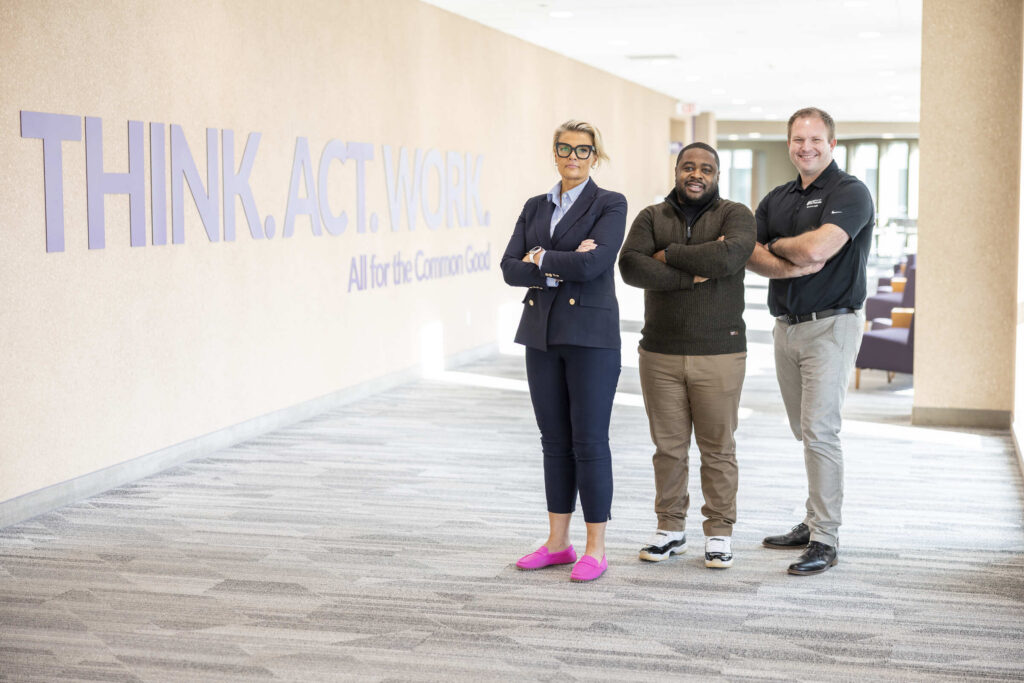
“Embracing innovation as both mindset and methodology will foster an intellectually vibrant community attracting increasing numbers of talented students and faculty,” Rojas said. “They, in turn, will reimagine processes and systems to be more adaptable, efficient and better able to meet the evolving needs of our world.”
Outcomes and Aspirations
National headlines have highlighted challenges facing new graduates in a shifting job market. At St. Thomas, recent data offer encouraging signs.
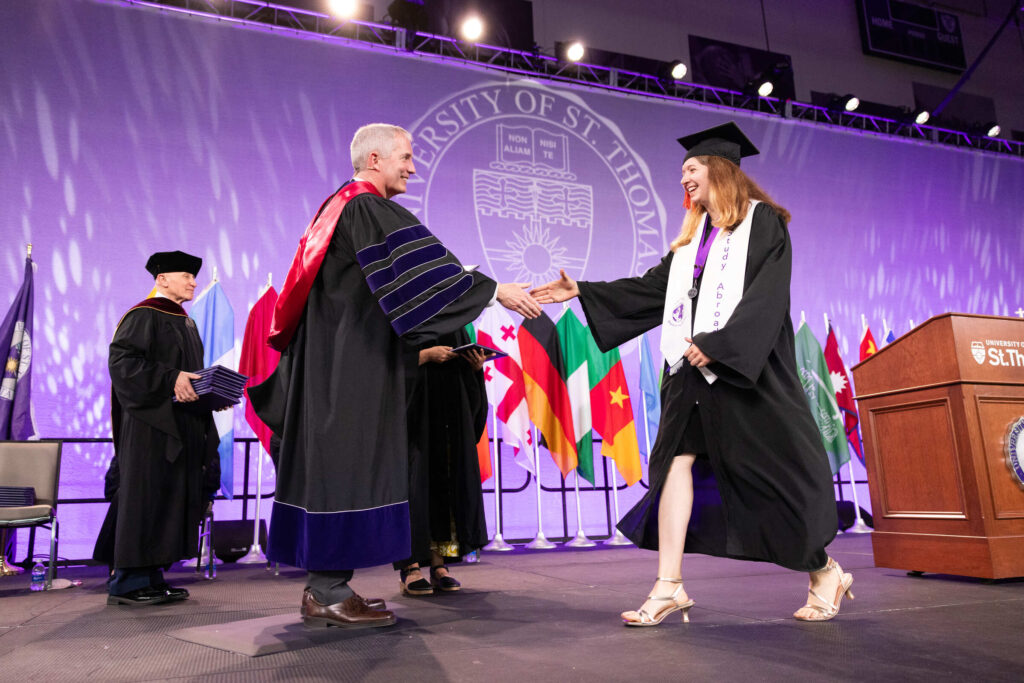
Among undergraduate respondents from the Class of 2025, data showed the median starting salary was $70,500, and nearly three-quarters of respondents reported connecting with an alumnus while enrolled. Graduate outcomes were similarly strong, with 99.6% reporting positive results within six months and average earnings increases approaching $20,000.
Again, Vischer cautions against reducing success to statistics alone.
“Employment outcomes will never represent the full extent of the aspirations we have for our students,” he wrote to faculty and staff in February. “We want to help them lead lives marked by a deep sense of purpose, virtuous character, a commitment to serving others, and meaningful relationships with God and neighbor.”
In the end, St. Thomas 2030 is not simply an institutional roadmap. It is a statement about what the university believes higher education should ultimately achieve — preparing graduates for meaningful work, purposeful lives and lasting impact.