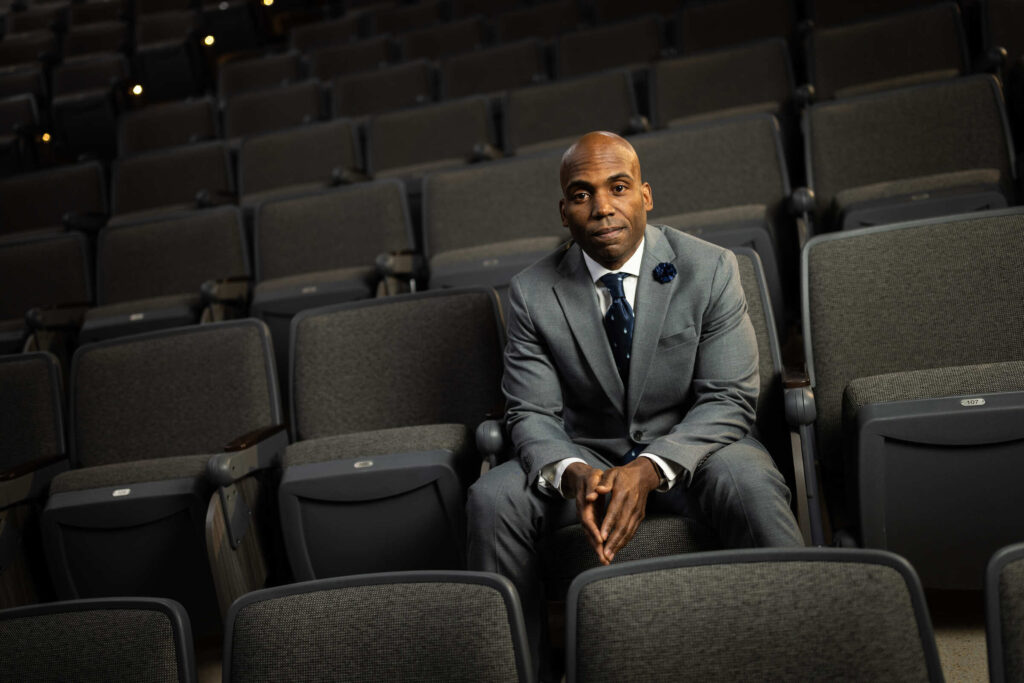
Audra Nuru, professor of communication and family studies at the University of St. Thomas, spoke with multiple outlets about how to handle politically charged conversations at Thanksgiving and create healthier dynamics at the holiday table. She offered guidance on preparing for difficult topics, recognizing emotional triggers and using respectful communication to maintain connection even when disagreements arise.
Nuru spoke with Vogue about preparing for emotionally charged gatherings, offering insights on how to anticipate sensitive topics, respond with compassion and set boundaries that protect one’s well-being during holiday conversations.

From the article:
Thanksgiving is almost upon us, and given that we’re fresh off one of the most contentious and politically charged seasons of our time, it’s probably not realistic to expect a holiday to be totally free of drama. ...
Vogue: How do you recommend preparing for an event or gathering that might include viewpoints you disagree with or find harmful?
Nuru: It’s true that those kinds of encounters can benefit from a bit of preparation. I like to think of it like packing for a trip to a new and unfamiliar place – you want to be prepared for the expected, but also pack with an open mind for the unexpected. So, before heading into that event, take some time to reflect on what topics might feel a bit sensitive for you, almost like checking the weather forecast, so you can pack accordingly. Remember, everyone is coming to the table with their own unique experiences and perspectives. Embrace those differences with curiosity and kindness. And of course, it’s always wise to set healthy boundaries – that’s like having a good map and a reliable guide to help you navigate any unfamiliar territory.
Vogue: Is there a subtle, useful way to redirect a political conversation that’s starting to feel upsetting?
Nuru: First and foremost, prioritize the relationship. Remember that the person you’re talking to matters more than proving a point. Ask yourself, “How can I express my views while still showing respect and valuing this person?” Part of showing respect is acknowledging that you may have different perspectives. If a conversation starts to feel a little uncomfortable, try gently saying something like, “I hear you, and I hold a different perspective.” This lets the other person know you’re listening and that their views matter, even if you don’t agree.
She later joined CBS Radio Los Angeles’ KNX Morning with hosts Mike Simpson and Margret Carrero to discuss practical ways families can navigate polarizing topics, recognize when discussions are becoming unproductive and shift toward dialogue that preserves relationships.

From the conversation:
Simpson: You said the unexpected can happen, and often does. Some people will try and head that off just at the outset. You know, let’s send out the text to everybody who’s coming individually the night before and be like, listen, tomorrow, we’re not doing politics. We’re not doing religion. Does that work? Or does that put it in the mind, like, oh, you know what? Maybe I will say something.
Nuru: Sometimes it does work, but sometimes you have those people show up who they are. They just happen to get into these arguments right there at the table, and when two relatives are in the middle of a political argument, the most helpful thing that you can do is interrupt the pace, not the people. So research shows that family arguments escalate because of the rapid back and forth. The momentum takes over in ways that the original comment never would have on its own. So one option is to just name what’s happening without blaming anyone. Families really often respond better to that calm interruption that acknowledges the moment without shaming anyone for having the strong feelings.
So you can shift things with something small and practical. You can ask someone to help you with something in another room. It’s interrupting that back and forth without calling anyone out. And those small redirects work because they give people a way out that lets everyone save face instead of feeling called out or corrected.
And the goal isn’t to make them agree. Holiday arguments almost never get resolved in the moment. What they need is a reset so the whole day doesn’t get swallowed by one conversation. You’re not trying to referee. You’re just helping the room find its footing again so everyone can get back to the day that you hope to have.