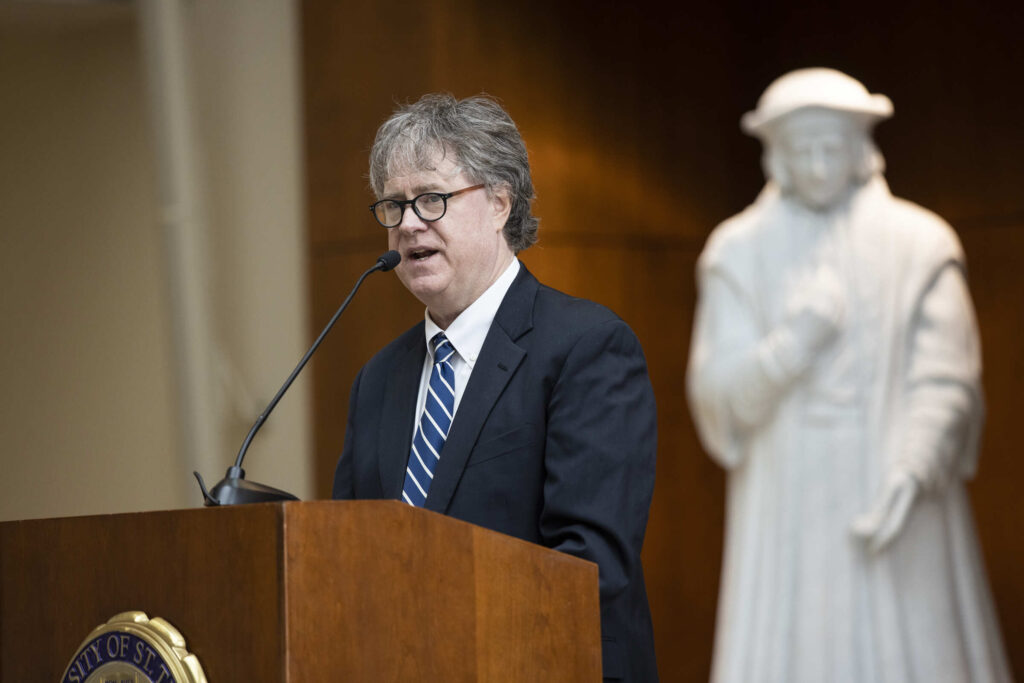
Hank Shea, senior distinguished fellow at the University of St. Thomas School of Law and a fellow with the Holloran Center and the Initiative on Restorative Justice and Healing, co-authored a Minnesota Star Tribune commentary about the U.S. Department of Justice’s investigation into Minnesota officials who have publicly opposed federal immigration enforcement.

From the Op-Ed:
On Jan. 20, news broke of a Department of Justice (DOJ) investigation purportedly exploring whether elected Minnesota officials obstructed or impeded federal law enforcement officers conducting aggressive and sweeping immigration raids in the Minneapolis-St. Paul area. As federal prosecutors who spent decades enforcing federal law here in Minnesota, we believe these intimidation tactics are corrupt and improper, a profound misuse of the justice system.
The targeted officials, including Gov. Tim Walz, Minneapolis Mayor Jacob Frey, Minnesota Attorney General Keith Ellison, St. Paul Mayor Kaohly Her and Hennepin County prosecutor Mary Moriarty, share a common nexus: They publicly opposed the illegal tactics of federal immigration agents and denounced the tragic shooting of Renee Good by Immigration and Customs Enforcement (ICE).
The federal investigation purportedly relies on a law that prohibits conspiracies to use “force, intimidation, or threat” to prevent federal officers from discharging their duties. However, no public evidence indicates that any of these officials violated that law. What’s more, the investigation appears to be based on actions or statements that fit squarely within our Constitution’s First Amendment protections.
Let’s be clear: Publicly opposing federal policy does not violate the law. The First Amendment provides its strongest protection to “core political speech,” which includes the right of elected officials to criticize government policy and advocate for their constituents. The types of speech that can be criminalized as “force, intimidation, or threat” are generally limited to incitement of immediate unlawful action, true threats of force, violence or other harmful action, and false statements that amount to defamation. The statements and actions at issue here — expressions of opinion, correct statements about the law and allegations in legal proceedings — aren’t any of those things.