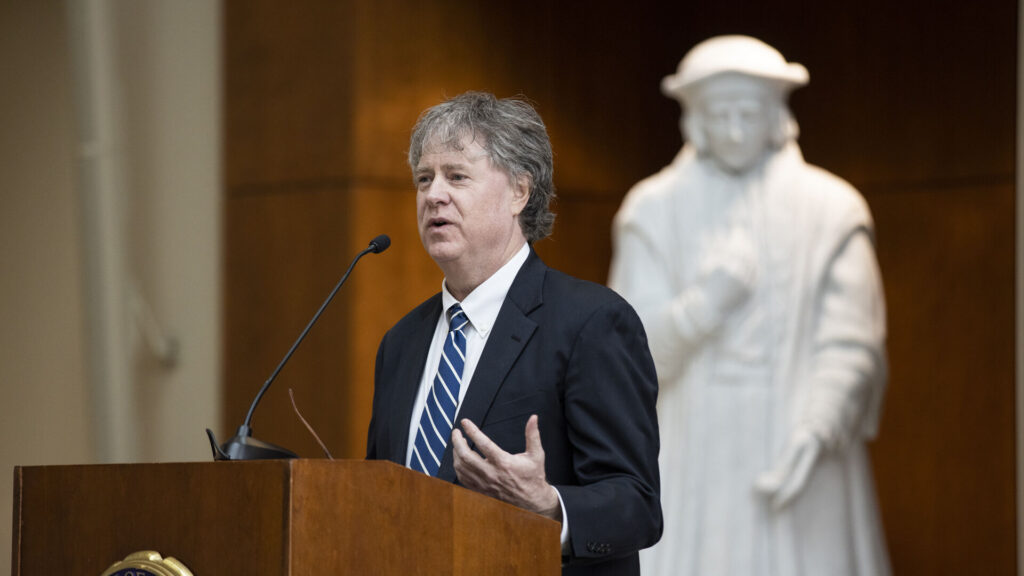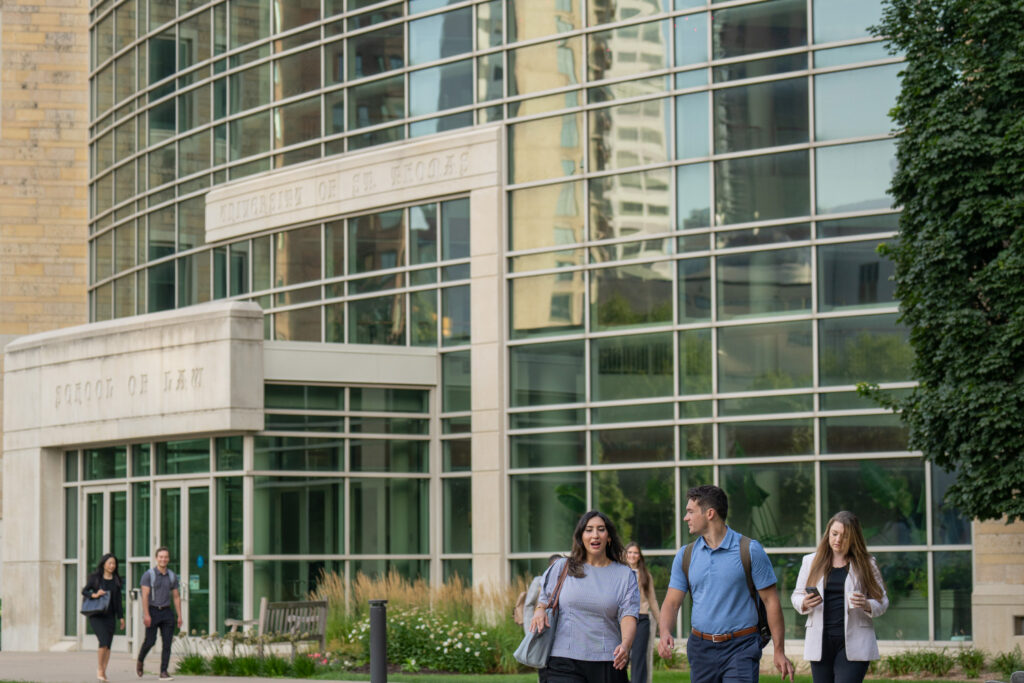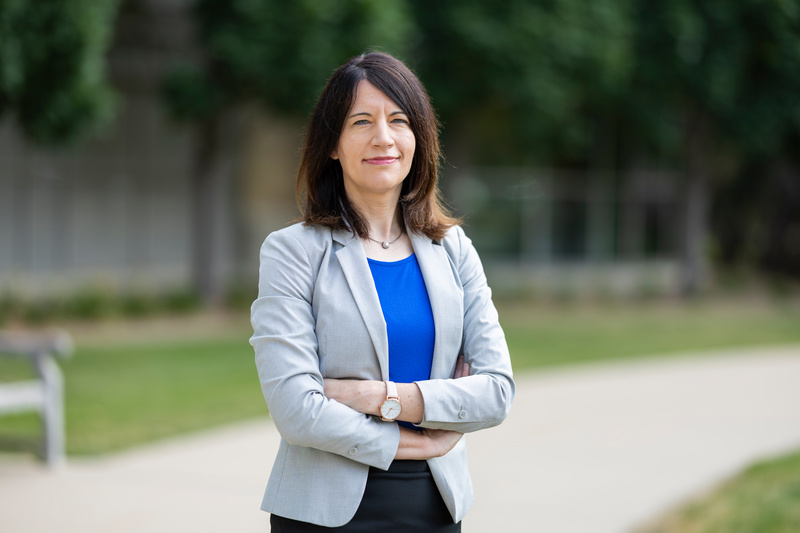
Rachel Moran, professor at the University of St. Thomas School of Law, has been featured across multiple national and local outlets analyzing the legal implications of intensified ICE activity in Minnesota. Moran discussed a federal judge’s order limiting ICE’s response to peaceful protesters, the enforcement and consequences of potential violations, and broader federal state tensions during appearances on KSTP, WCCO Radio’s “The Morning News with Vineeta Sawkar” and CNN’s “One Thing” podcast, providing legal context on protest rights, federal authority and accountability as scrutiny of ICE operations continues.
From CNN “One Thing”:
David Rind: The past few days have raised serious questions about just how far the Trump administration is willing to go to tamp down dissent over its sweeping immigration crackdown.
We’re getting signs the American people don’t love the answer so far. A recent CNN poll shows that half of Americans think ICE is making U.S. cities less safe, not safer. By a 10-point margin, 47 to 37%, Americans say they are more concerned about crackdowns on those protesting deportations than about the protests themselves getting out of hand.
So what does the law actually say about these tactics, where protesters are allowed to go, and what this means for other cities?
Rachel Moran is a law professor at the University of St Thomas in Minneapolis. Rachel, we’ve been talking a lot about what’s been going on in Minneapolis, especially as it relates to protests around immigration enforcement and how protesters are interacting with federal law enforcement. On Friday night, a federal judge issued a preliminary injunction after the ACLU filed a lawsuit claiming immigration agents violated U.S. citizens’ constitutional rights. Can you tell me what the ruling said?
Rachel Moran: In a lot of ways, the ruling was pretty basic. Essentially, it said that immigration agents can’t do things they’re already not allowed to do, but have been doing. That includes retaliating against protesters, using force when it’s not appropriate, using chemical munitions when they’re not justified, and retaliating against people who follow them in their cars.
It basically says you need to respect First Amendment rights. That was already the law, but now there’s a court order saying so.
Rind: That all sounds pretty reasonable. DHS has said it has followed these guidelines already, but we’ve seen videos where that doesn’t seem to be the case. So what does this ruling actually accomplish, if anything?
Moran: What it accomplishes is that those same lawyers can now go back to court with specific evidence of violations and ask that DHS be held in contempt or that additional restrictions be put in place. It’s helpful to have a court order where a judge says, yes, I’ve seen enough evidence to support the idea that agents are violating the law, and now they can be held accountable if it happens again.
Rind: I know the ruling says agents are not supposed to do these things against peaceful protesters. How do you define peaceful protesters, and is that different from what the Trump administration’s definition appears to be?
Moran: That’s where things always get messy. What does peaceful mean? What does interference or obstruction mean? Historically, law enforcement agencies tend to interpret those terms very differently than courts do, often in ways that infringe on First Amendment protections. It’s common for agencies to believe someone is interfering when they’re not, for example by recording, getting close, or following in a car.
Rind: Talk to me about recording. You see someone maybe 10 feet away from a group of agents with their phone out, and an agent says, you’re interfering. How do they arrive at that conclusion?
Moran: I don’t think there’s even a good faith way to interpret that. There are agents who either don’t know the law or are acting in bad faith, or both. We’ve seen videos of agents knocking phones out of people’s hands, yelling at them, threatening arrest, and even making arrests in situations where there’s no plausible argument that someone is physically interfering with operations.

From WCCO Radio:
Vineeta Sawkar: Every day we get a new bit of news, and yesterday the big news was significant. There was a lot of it. A lot of news conferences and a lot to sort through.
The Department of Justice issued subpoenas to Gov. Tim Walz, Attorney General Keith Ellison, Minneapolis Mayor Jacob Frey, and St. Paul Mayor Kaohly Her. What exactly is this? It is unprecedented. What does it mean, and does this case have any legs?
We wanted some legal analysis. Joining us now is Rachel Moran, professor and Robins Kaplan Director of Clinical Education at the University of St Thomas School of Law.
Professor Moran, thank you so much for joining us. First of all, what was your initial reaction to the subpoenas issued yesterday?
Moran: The subpoenas are shocking in some ways and not shocking in others. You mentioned that they are unprecedented, but what we are seeing from the Trump administration, particularly from the Department of Justice, is a pattern of overt political prosecutions against people the president considers his enemies.
So it is not totally surprising to me that they are now going after Minnesota politicians who are standing up to his immigration enforcement actions.
Sawkar: One of the things our political analyst Blois Olson talked about during the 6 o’clock hour was that these subpoenas were issued to the offices of the governor, attorney general, and the mayors, not to them personally.
The allegation is that they used their offices to inhibit or hamper ICE operations. How is that different, and does that give this more legal footing?
Moran: It probably does not give it more legs. We do not yet know what information the state may provide, if any, and they may decide to contest the subpoenas altogether.
What we have heard publicly from the Department of Justice is criticism of those particular officials. It is not surprising they are trying to argue that these officials used their positions of power to impede or obstruct enforcement actions.
That said, I still cannot identify any plausible criminal charges that could realistically be filed based on what has been described publicly.

From KSTP:
Protesters outside the federal Whipple Building are reacting to a new court order that places limits on how ICE can respond during Operation Metro Surge.
The injunction, issued Jan. 16, restricts federal agents from using force or detaining peaceful protesters without legal grounds.
The ruling comes after weeks of tense encounters between ICE agents and demonstrators in the Twin Cities. ...
Who enforces the judge’s order?
“Judge Menendez, the same judge who issued the order, would be responsible for enforcement issues related to the order,” said Rachel Moran, a law professor at the University of St. Thomas.
What happens if it’s violated?
“The court has the authority to find someone in contempt for willful violations of an order. Sometimes that is the person in charge,” Moran said. “So that might not be an individual agent.”