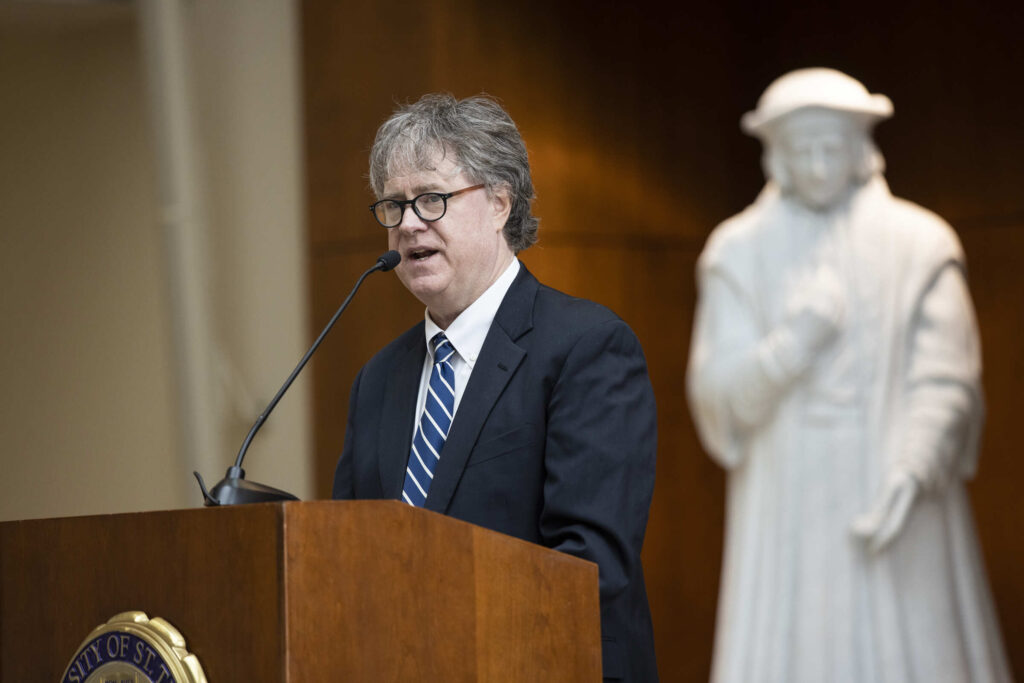
Rachel Moran, professor at the University of St. Thomas School of Law, spoke with MPR News about the recent arrests of Minnesotans accused of impeding Immigration and Customs Enforcement and Border Patrol officers. Moran explained that to obtain a conviction, the government must prove a person acted forcibly, noting that observing, recording or verbally objecting to officers is protected under the First Amendment. She also raised concerns about felony charges that are later reduced to misdemeanors, underscoring the legal and constitutional questions surrounding the enforcement actions.

From the article:
What legally counts as impeding?
So if I’m standing on the sidewalk observing, recording, even screaming – those things are certainly not forcible. We have seen examples where agents have retaliated, have knocked phones out of people’s hands, but that’s not appropriate. That’s illegal action on the part of the agent. So where it becomes a closer call is if you’re doing something like using a vehicle to try to block someone in where there’s no actual physical contact, but maybe you’re arguably using force to try to prevent them from accessing a certain space or leaving a certain space. That’s where it becomes a closer call. I still don’t know that that would meet the element of force, but it gets harder to distinguish in those kind of instances.
What threshold would you tell someone definitely not to cross to avoid being arrested or charged with any type of crime?
If someone wants to make sure they’re on the side of what’s protected, they’re not engaged in criminal activity, then they don’t want to touch the officer. They don’t want to touch the officer’s vehicle. They don’t want to do anything that physically prevents the officer from moving or carrying out their duties. But being fairly close, recording, whistling, that is not impeding. The agents might feel like it is because it makes their job harder. But if you’re not physically impeding them, you are not engaged in obstruction.