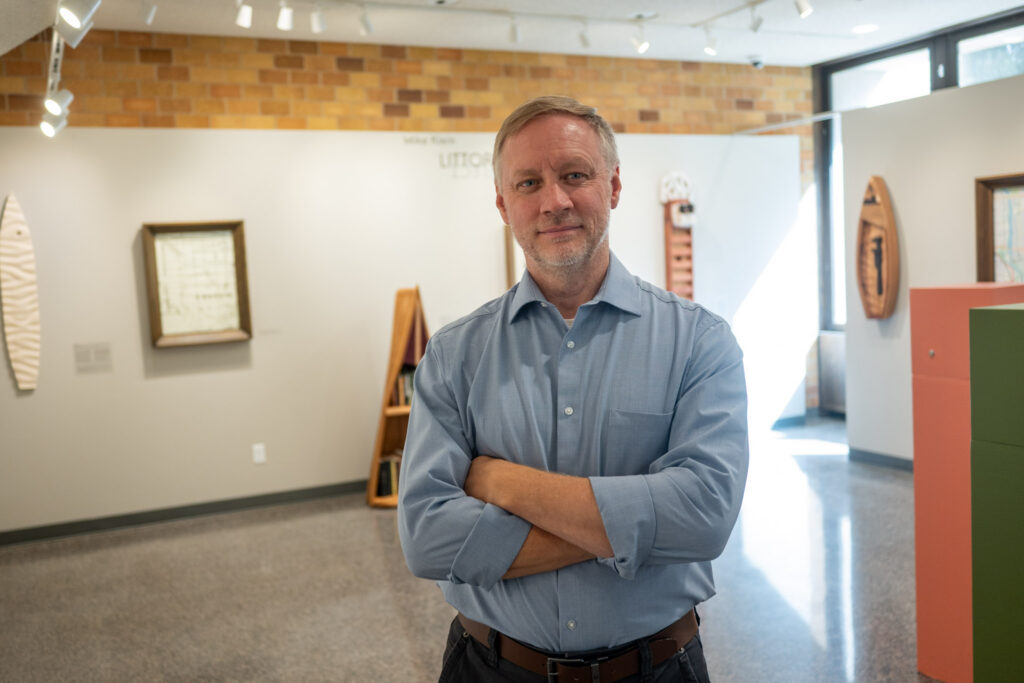
In the fall of 2024, Professor Mark Osler invited a group of guests to speak to his students in the University of St. Thomas School of Law Commutations Clinic. The clinic assists those who are or were formerly incarcerated prepare petitions for federal clemency. He wanted his students to hear from the family and friends of a man who had recently been denied by Minnesota’s Pardon Board.

“I have people in to advocate for individual cases because I really want the students to see that dynamic – how important it is for someone in prison to have an advocate on the outside,” Osler said. “The larger point is about human dignity, however – we respect that by offering our time and care.”
Among the details the group shared during the class session, and one of the reasons the pardon board denied the man’s petition, was that there was no record he had ever apologized to the victim’s family for his actions, even though he said he wrote four apology letters over the past two decades and has demonstrated that he has been rehabilitated.
This detail was a small part of the meeting, but one students discussed afterward as a class. They questioned how the man’s chances for a pardon could have been improved if the apology letters had been properly filed by the Minnesota Department of Corrections and wanted to know why the family was never notified about the correspondence.
“An apology letter can be important for everyone involved,” Osler said. “For victims, it represents an acceptance of responsibility for the crime – and sometimes they are hearing that for the first time. For the letter writer, it can be an important step toward reconciliation and a deeper understanding of the harm they caused and even a source of hope that there can be forgiveness.”
The students learned through some initial research that, while there is an established system for other notifications, there was no mechanism within the corrections system through which a victim or victim’s family would be notified about a letter of apology – which motivated them to take action.
Then 2L Blair Kirby volunteered to take the lead on the project, and to conduct research and draft sample legislation that could be sent to lawmakers. They aimed to propose an amendment to Minnesota’s Victims’ Rights statute to include the ability for victims or victim’s families to opt in to receive a notification if an apology letter is submitted by an offender.
“We saw the detrimental impact the absence of the policy had on families,” Kirby said. “As a clinic that advocates for restorative justice and reconciliation, we had to do what we could to fill the gap in the system.”
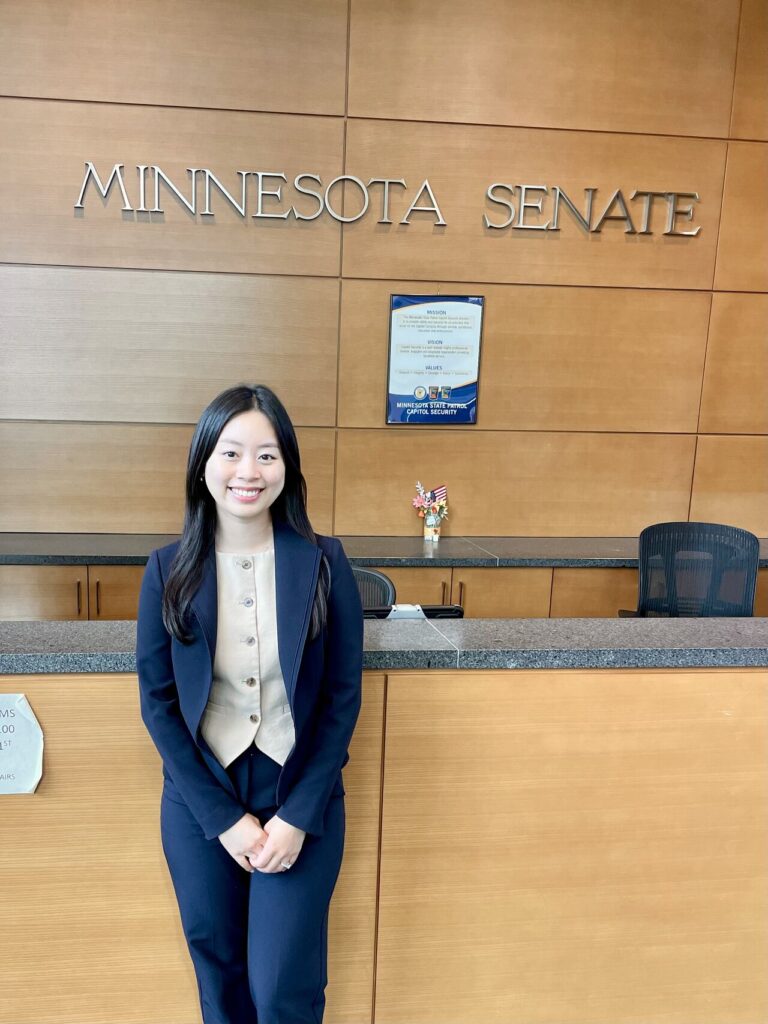
Once a bill was drafted, it was sent to Minnesota Sen. Clare Oumou Verbeten, who agreed to be its sponsor. The legislation was introduced in the Minnesota Senate and the House of Representatives, sponsored by Reps. Cedrick Frazier and Jessica Hanson, and referred to committees in February 2025. Minnesota Sen. Bobby Joe Champion was added as a sponsor of the bill in March.
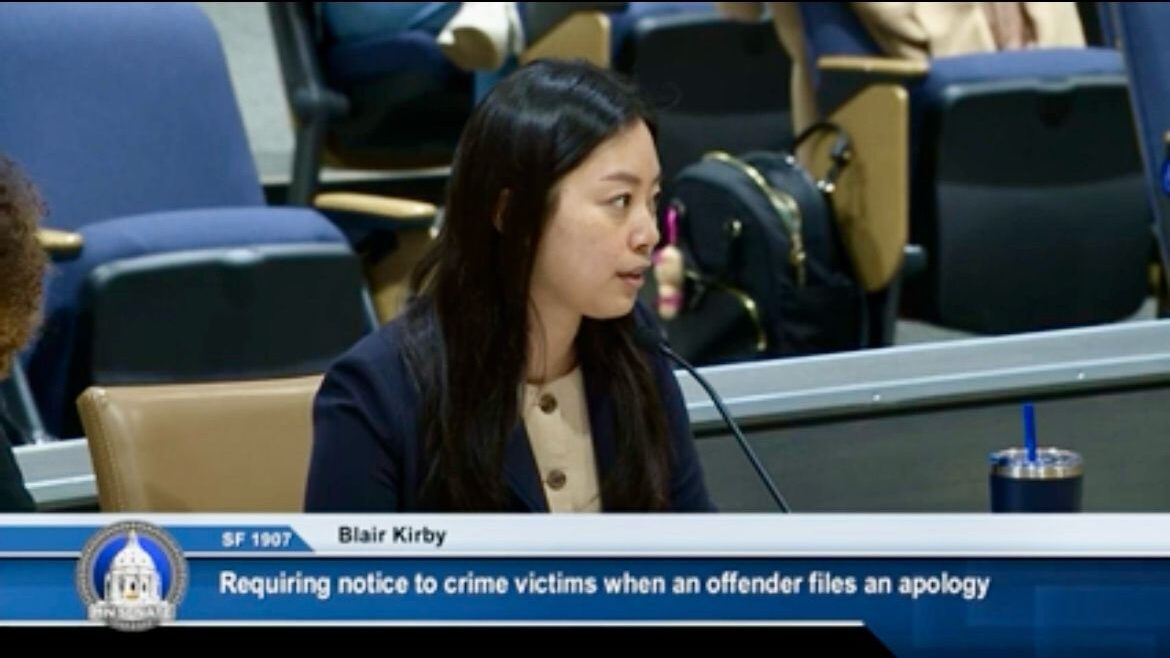
Also in March, Kirby testified on behalf of the bill before the Senate Judiciary and Public Safety Committee.
“When I testified before the senators, I felt genuinely heard and respected by them,” Kirby said. “I was able to speak from my passion to remove this significant barrier to healing and reconciliation.”
When Kirby heard the apology letter notification bill was passed this spring, she says she was very pleased.
“It was a dream come true,” she said. “I discovered that I wanted to be a lawyer as student government president at Macalester (College), after seeing the positive impact that can be made through a legislative process. I am hopeful that our bill about apology letters will make a huge difference.”
Osler is hopeful that his students will learn an even broader message by having gone through the process.
“The important takeaway is that change IS possible,” he said. “The important thing is putting the idea in play and explaining why it makes sense. Legislation is sometimes viewed as simply the product of special interests, but I am struck by how often it is not.”