Editor Sally Fitzgerald once wrote that Flannery O’Connor not only developed what Jacques Maritain called a “habit of art” in her writing, but she developed a “habit of being” by “living in accordance with her formative beliefs.”
With God’s help, Catholic Studies at the University of St. Thomas seeks to pass on more than a field of knowledge. It helps students develop a lifelong habit of being, an interior disposition that increasingly reflects God as the center around which all knowledge revolves.
We recently checked in with a variety of our alumni – lay, religious and ordained – to see how that habit of being began to sprout here at Catholic Studies and in what ways it has borne fruit.
LISA JASKOWIAK MUHICH ’19
Actuarial Science and Catholic Studies
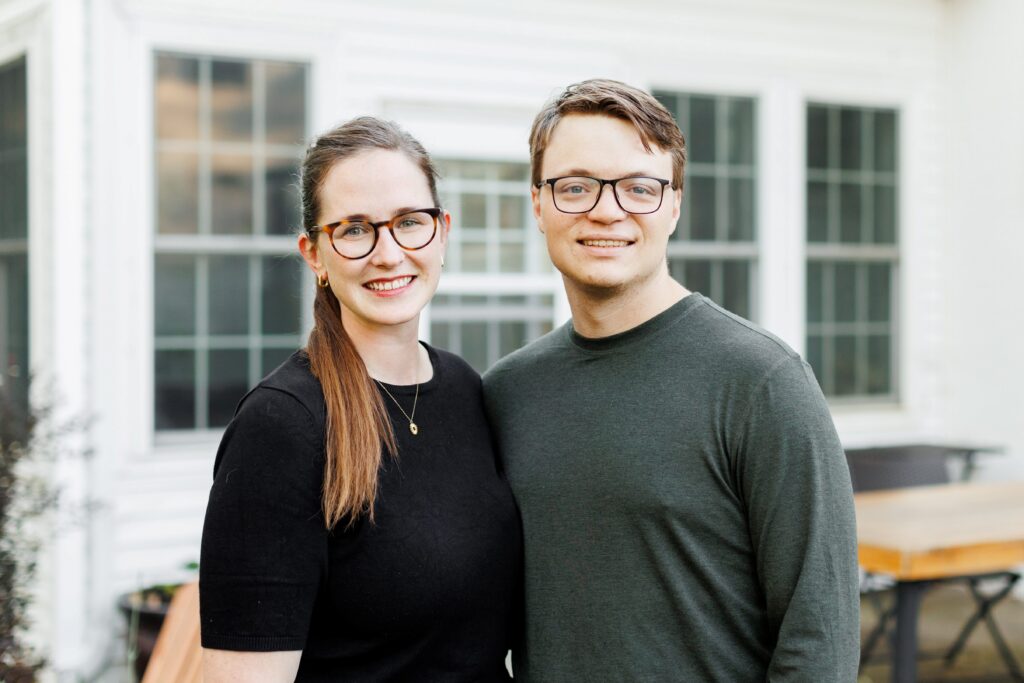
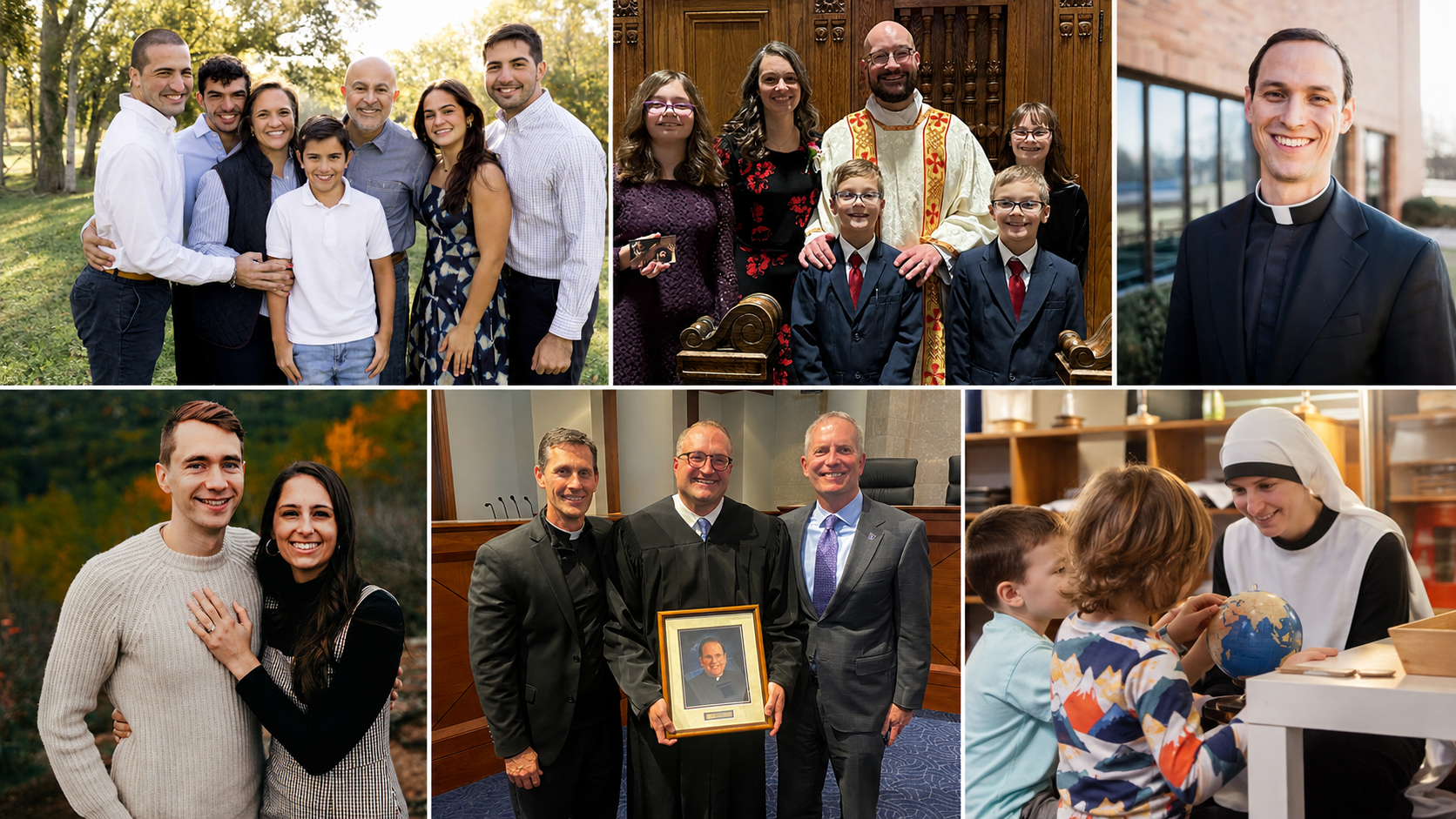
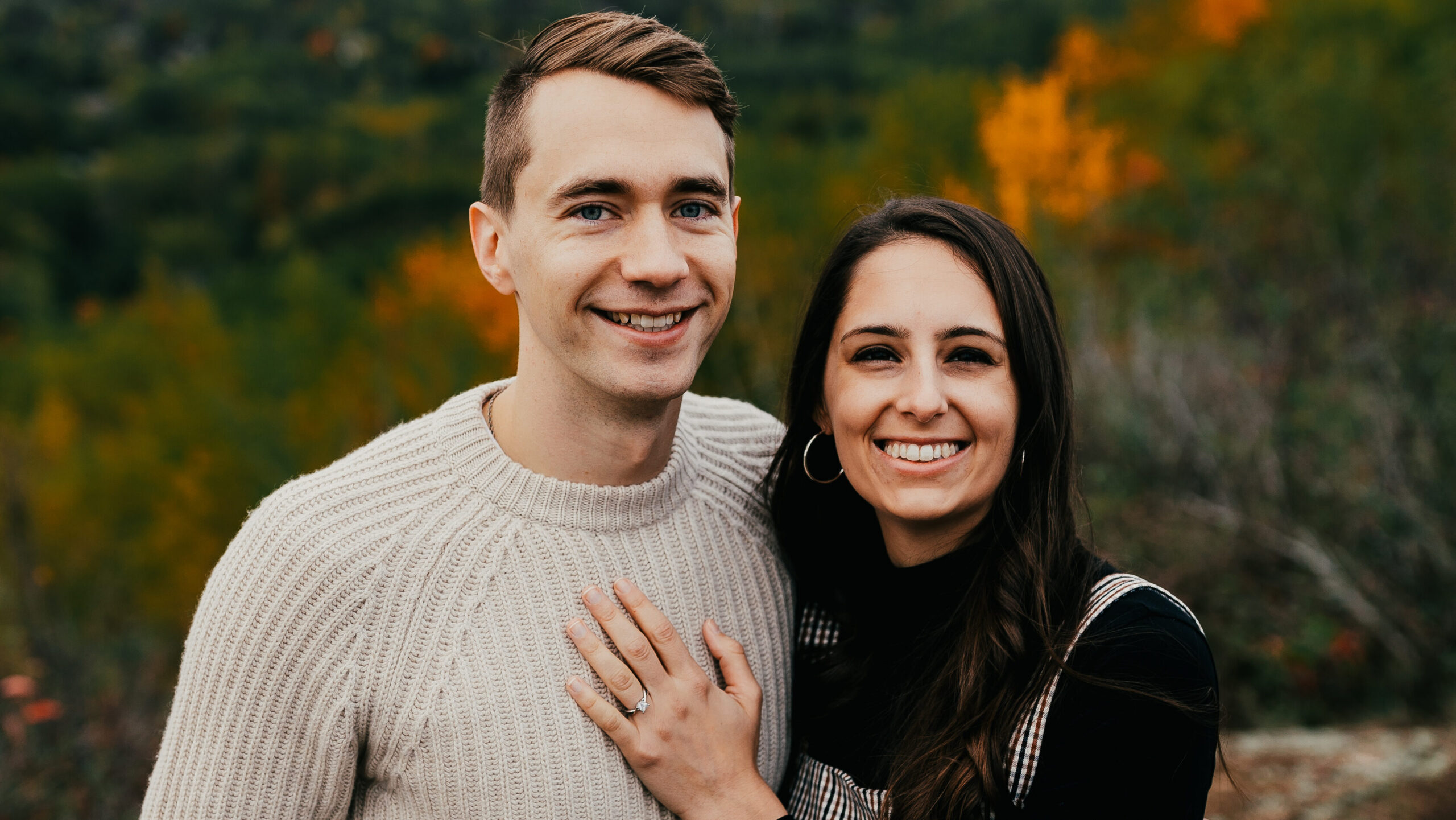
Pictured with her husband, Matt
Predictive Modeling Supervisor (Actuary) at Intact Insurance Company, Plymouth, Minnesota
Q: What was your most memorable Catholic Studies class?
A: It’s hard to choose just one, but I’ll go with Dr. Boyle’s class in Rome in which we read St. Augustine’s City of God and Virgil’s Aeneid. Both texts are deeply intertwined with the city, so it was a privilege to dive into them in Rome with Dr. Boyle’s guidance.
Q: What about your experience of the Catholic Studies community?
A: I had a lot of friends in Catholic Studies, and it was incredible to hear what they were learning in class. I went to a public school, so the Catholic intellectual tradition was new, and I soaked up as much as I could. I went to an info session about the Rome program just for the pizza. I thought, “I can’t go overseas for a few months! Wait, I want to do this!”
Overall, Catholic Studies allowed me to balance the math side of my brain with philosophy, theology, etc. For my summa presentation, I talked about how Catholic social teaching applies to insurance.
Q: How has Catholic Studies affected your life today?
A: Being in the business world, we don’t often think about being a missionary, but it’s a place where the Lord is needed. Being a light is a privilege and a gift. On even a basic level, it’s in the ethics and professionalism that I can bring to my work, how I interact with my co-workers, and how I manage people.
Recognizing the dignity of each human person is important. My principles and how they inform my worldview matter. For instance, improving algorithms so people get a fair price impacts how I look at a problem in front of me. And my husband and I are expecting our first child in June, so my formation takes on a whole new meaning.
JUDGE JOHN SANDY ’07
Philosophy and Catholic Studies
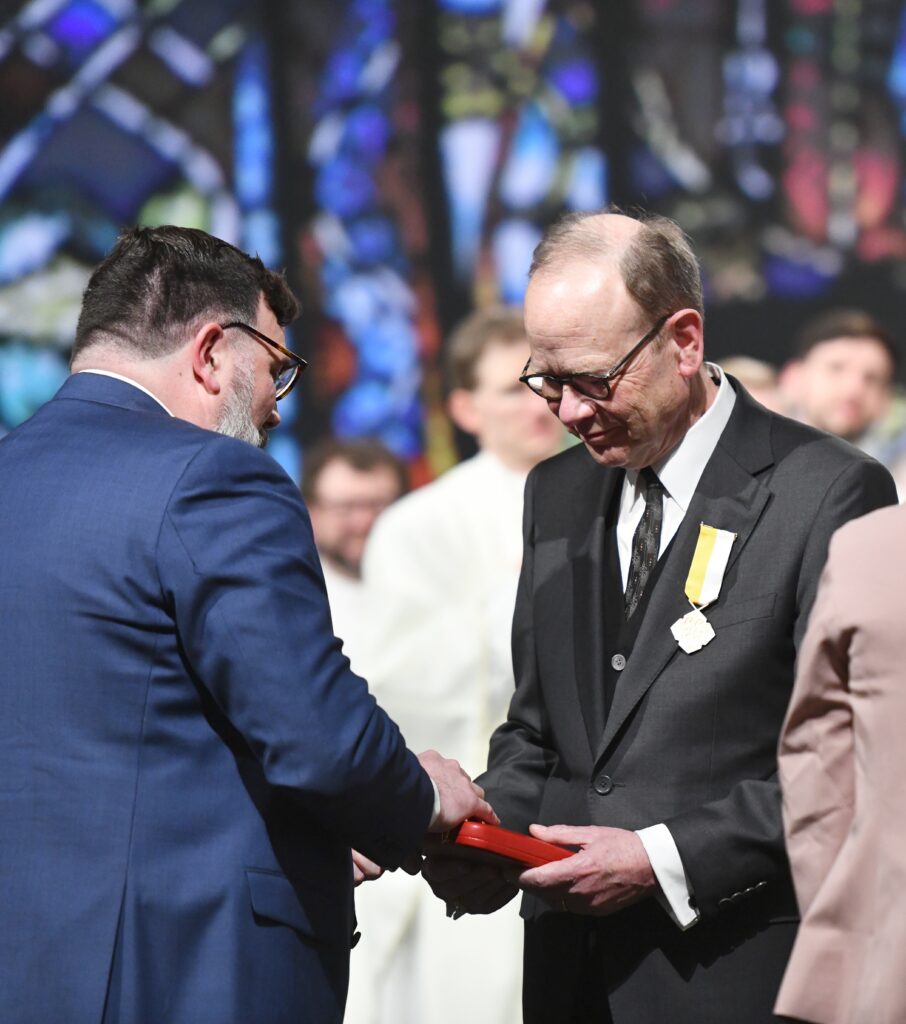
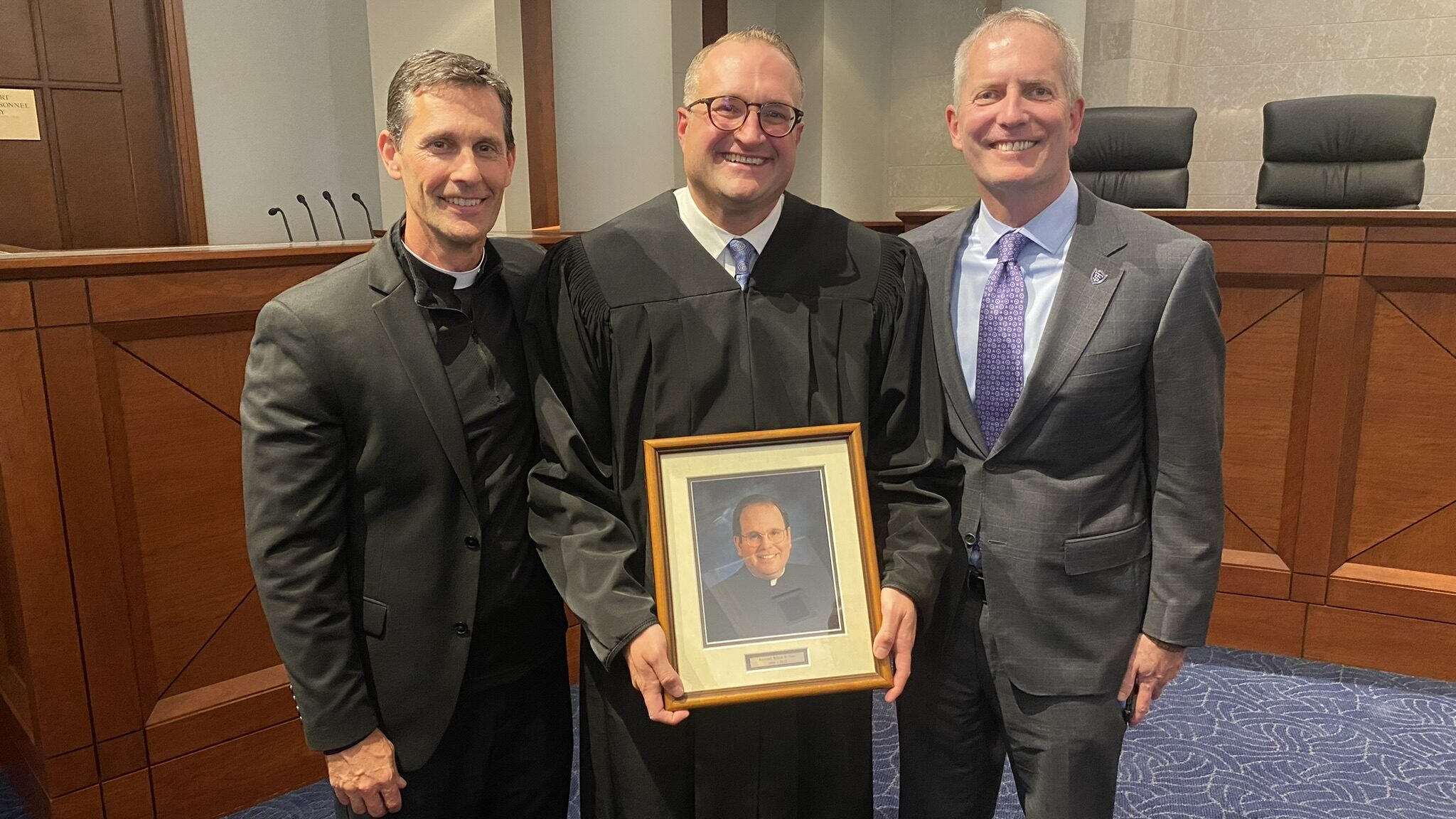
Pictured with Father John Kelly, rector of Saint John Vianney College Seminary, and Rob Vischer, president of the University of St. Thomas
Iowa Court of Appeals
Q: What was your most memorable Catholic Studies class?
A: Dante’s Divine Comedy with Dr. Mary Reichardt. Dante did not treat right and wrong as “vibes.” He built an entire cosmos ordered around justice. Sin has weight and consequences are real.
For someone who now lives in the world of law and judgment, that architecture resonated with me. And yet, mercy still breaks in. Virgil guides Dante through Hell. Beatrice leads him to Heaven. Descent before ascent. You walk through disorder to reach order. Purification is possible. That’s a profoundly hopeful vision – especially when I have a front-row seat to so much brokenness.
Q: What about your experience of the Catholic Studies community?
A: I studied in Rome in 2005 and 2006. I served Mass for Pope Benedict XVI and walked part of the Camino de Compostela. I was surrounded by the grandeur of the Church – ancient basilicas, saints in stone, the visible weight of two thousand years of faith. It was overwhelming in the best way.
Q: How has Catholic Studies affected your life today?
A: I serve as a judge on the Iowa Court of Appeals. In addition, I teach judges from across the country at the National Computer Forensics Institute (NCFI) in Birmingham, Alabama, on search and seizure law relative to emerging technology. And I try – imperfectly but intentionally – to be a faithful husband and father of four children.
Life is full, but Catholic Studies still shapes almost everything I do. I don’t approach law, culture or public life as isolated compartments. Catholic Studies trained me to ask not just what is legal, but what is true, what is just, and what does this say about the human person? That habit of synthesis has stayed with me.
CAMILA MALTA ’01
Business and Catholic Studies
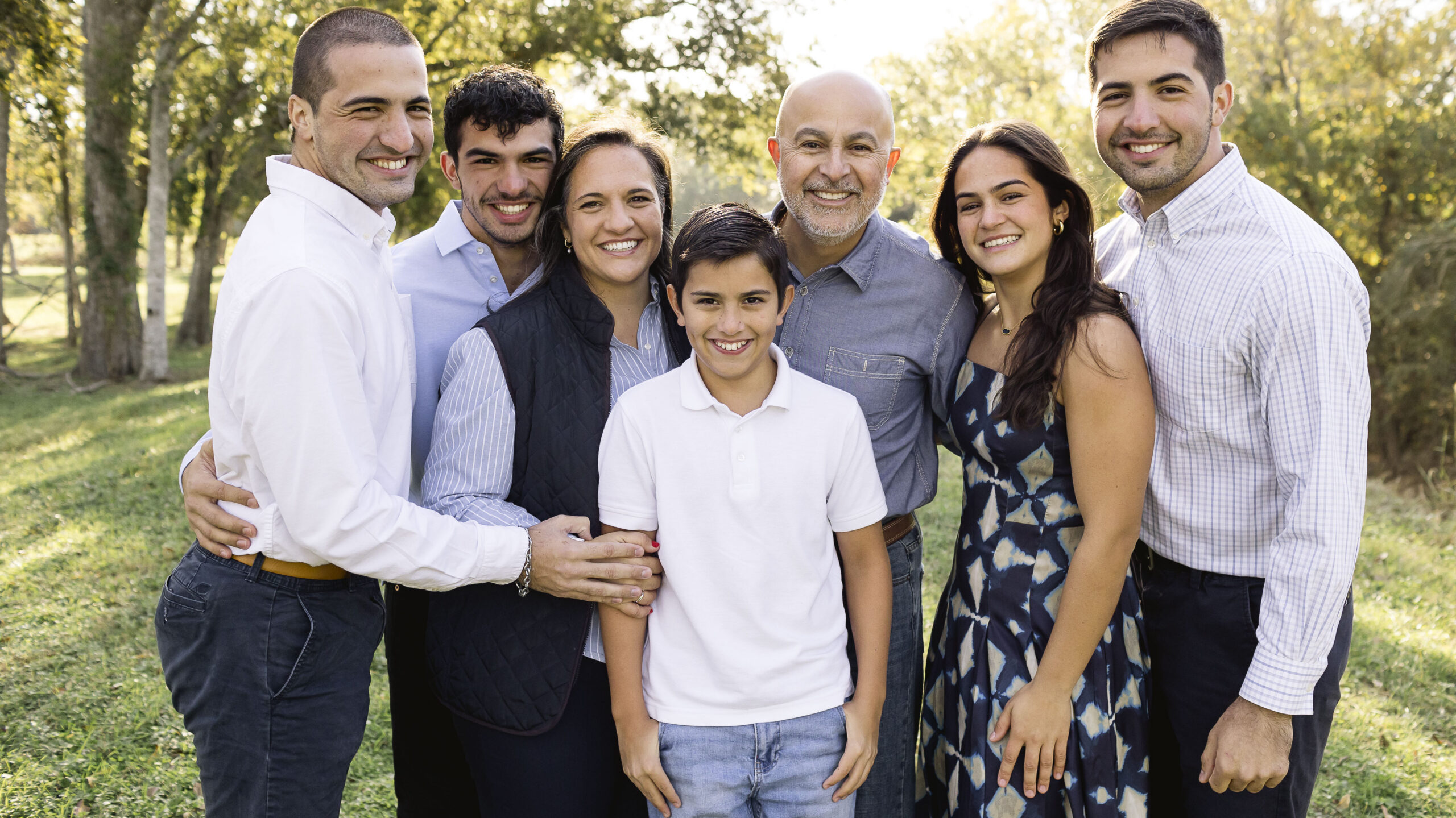
Pictured with her family
Katy, Texas
Q: What was your most memorable Catholic Studies class?
A: I loved Dr. Boyle’s Guardini class and reading Joseph Pieper with Dr. Naughton, but the Catholic literature class I took with Dr. Mary Reichardt really sums up what I learned in Catholic Studies. She instilled a sense of boldness in reading widely, to not be afraid to read challenging literature but to apply a rational perspective, to form a critique of culture that nonetheless focuses on what is good.
Q: What about your experience of the Catholic Studies community?
A: I was a recent revert to the faith, and it was in Catholic Studies where I discovered that I really could ask anything and find that the Church was interested in these questions too and had answers that were often bigger and more universal than I imagined. What did it mean to be Catholic, a member of a living body of Christ? There’s room for you and you and you!
Q: How has Catholic Studies affected your life today?
A: I still love to ponder what is good, true and beautiful – because the joy of that is contagious. I share that in teaching OCIA and have shared that with my children. In fact, I have talked so much about Catholic Studies that my daughter, Paula ’29, is now a freshman and loves her professors.
SISTER ANGELICA (KATIE WRATKOWSKI) ’18, ’27 CSMA
Catholic Studies, English and Spanish
Handmaid of the Heart of Jesus, serving at Nativity of Our Lord, St. Paul, Minnesota
Q: What was your most memorable Catholic Studies class?
A: They are all memorable! As a CSMA student, I took Dr. Boyle’s Thomas More class, the last class I took before I joined the Handmaids of the Heart of Jesus. Through the course, I met a new friend in More. I was moved by his heroic virtue in the face of suffering in Dialogue of Comfort Against Tribulation, and it was a source of encouragement for me as I began my vocation.
Q: What about your experience of the Catholic Studies community?
A: My time in Catholic Studies was very memorable, the Rome semester in particular. It was a time of profound spiritual enrichment in the heart of the Church. I walked the streets of Rome with God as my intimate companion. I also enjoyed how our professors took our classes to the streets, churches and museums.
Such incarnational learning alongside an intentional community was deeply formative, and I understood the impact of Catholicism on culture in a way I may not have otherwise. I was also a devoted participant in the Catholic Studies Talent Show. One year I organized a group of friends to perform “The Bobblehead Saints” with an encore performance our senior year. It was pure delight for us to hear the crowd howling with laughter!
Q: How has Catholic Studies affected your life today?
A: Looking back, I see how my heart and mind were, and continue to be, gradually transformed. My vision of life grew into a sacramental worldview, with a deeper appreciation of God’s providential care guiding human history. My eyes were opened to see truth in places I did not expect it, and my heart was softened to receive others with more mercy.
FATHER TIM WRATKOWSKI ’13
Philosophy and Catholic Studies
Pastor of Holy Name of Jesus Catholic Church, Medina, Minnesota
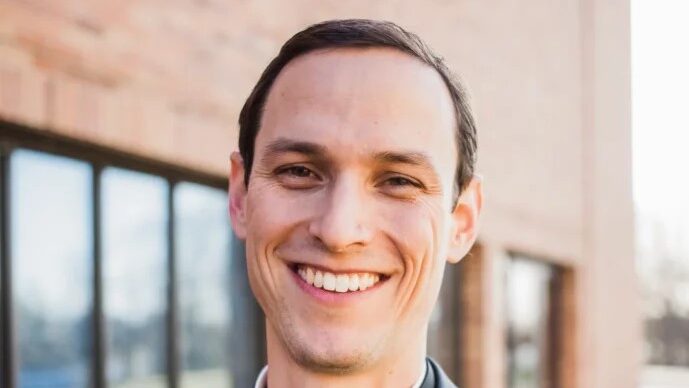
Q: What was your most memorable Catholic Studies class?
A: The Catholic Vision with Dr. Billy Junker. It is where everything came together: creation and redemption, from the most mundane to the most sacred. We read The City of God and King Lear, watched “The Tree of Life” and “The Gospel of John.” Dr. Junker was like a method actor of teaching – working out in real time the drama of truth.
Q: What about your experience of the Catholic Studies community?
A: Rome in the spring of 2012 with Dr. Boyle was transformative. He modeled letting Rome be our classroom and fostered a sense of community. We read The Betrothed and Cicero and went to a series of talks by Pope Benedict XVI.
But more than the content, it was the time spent talking on the terrace, the discovery of the truth together, the mutual enrichment, the gift we were to each other.
Q: How has Catholic Studies affected your life today?
A: I am still in contact with Catholic Studies friends through occasional social events, like a series of wine tastings with Dr. Boyle, and emails about important life events. We still feel “together.”
Another lasting gift has been the vision of life as something rich and fulfilling. Nothing is fragmented. I try to share this with my flock – to integrate their life with Christ and live the Lord’s invitation to love.
DEACON JOHN ROGERS ’10 CSMA
Serving at Holy Spirit Catholic Church and Vice President of Catholic Services, Prenger Solutions, St. Paul, Minnesota
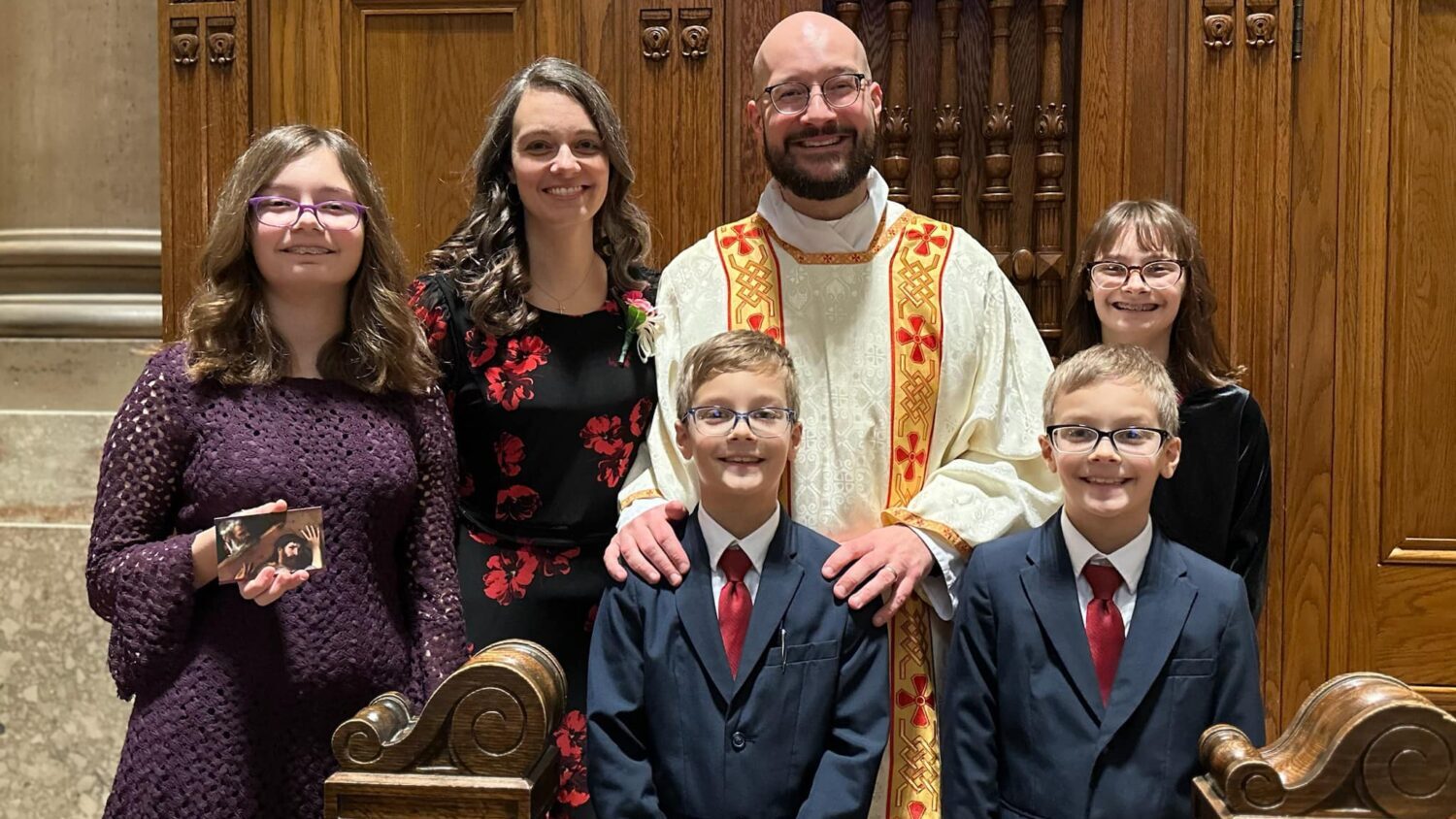
Q: What was your most memorable Catholic Studies class?
A: City of God with Dr. Paul Wojda. We actually finished it! It was around the 2008 elections, so it was very relevant as we discussed the political and social implications of the book. Also, Literature and Theological Aesthetics with Michael Jordan and Liz Kelly. It helped me think in new ways.
Q: How has Catholic Studies affected your life today?
A: I loved the diversity of life experiences in the classroom. It was my first time in class with people who were older, working, retired or clergy. I suddenly had things and thoughts in common with them, similar experiences, and similar books that shaped us.
Q: What would you say to a high school student thinking of St. Thomas?
A: Catholic Studies is the best way to understand the way the Church and world connect. It teaches you to use practical, philosophical, literary, and spiritual wisdom to understand complex situations more deeply – like the situations we are discussing right now at my work.
This story is featured in the summer 2026 issue of Lumen.