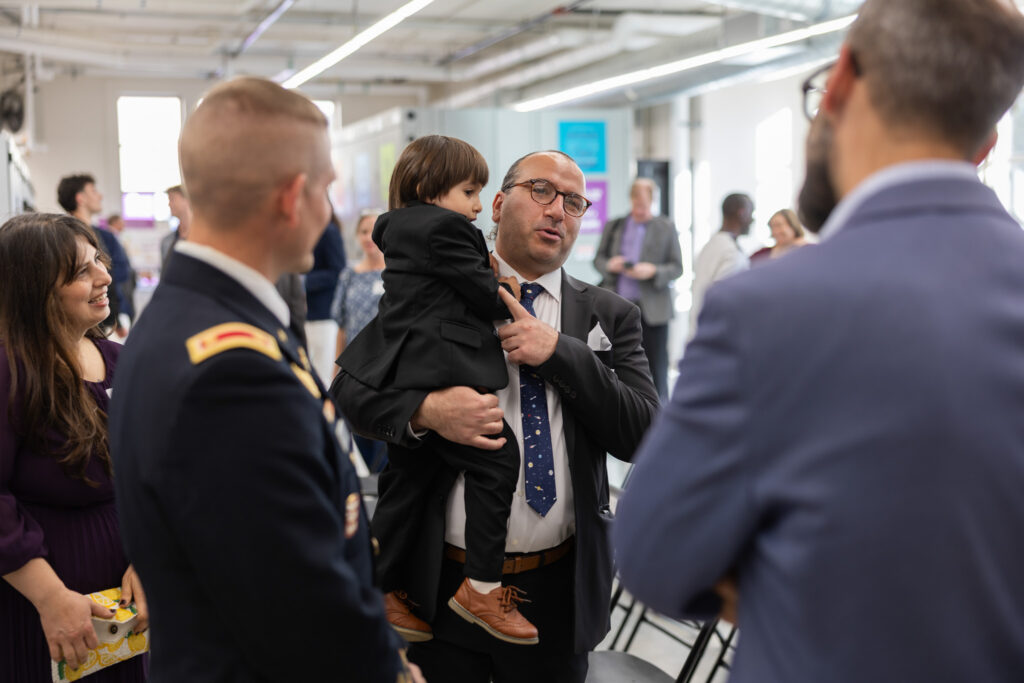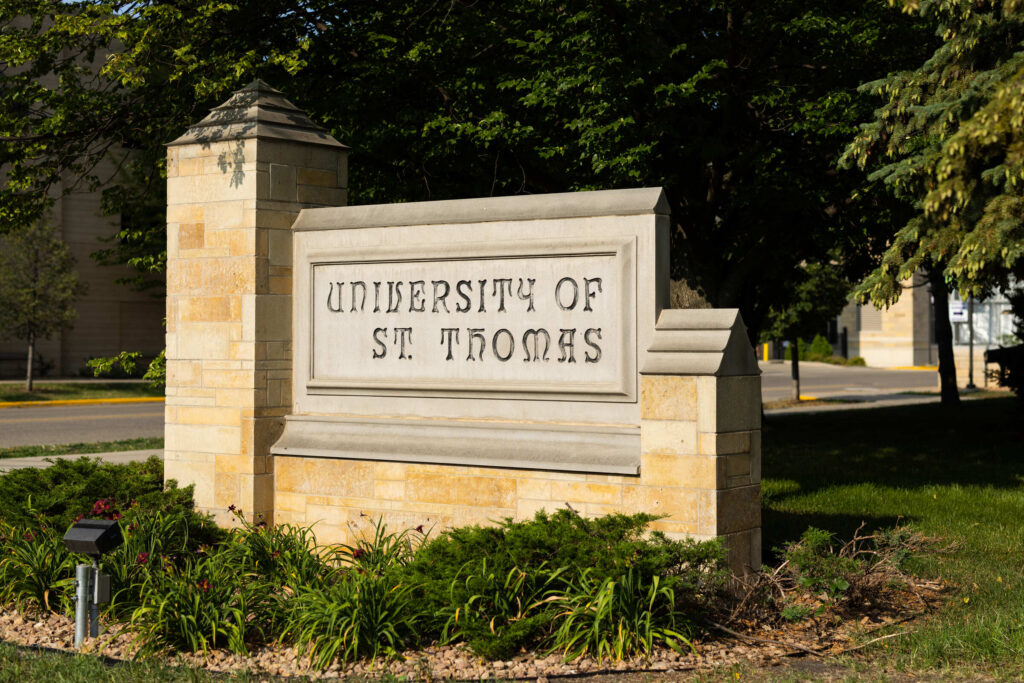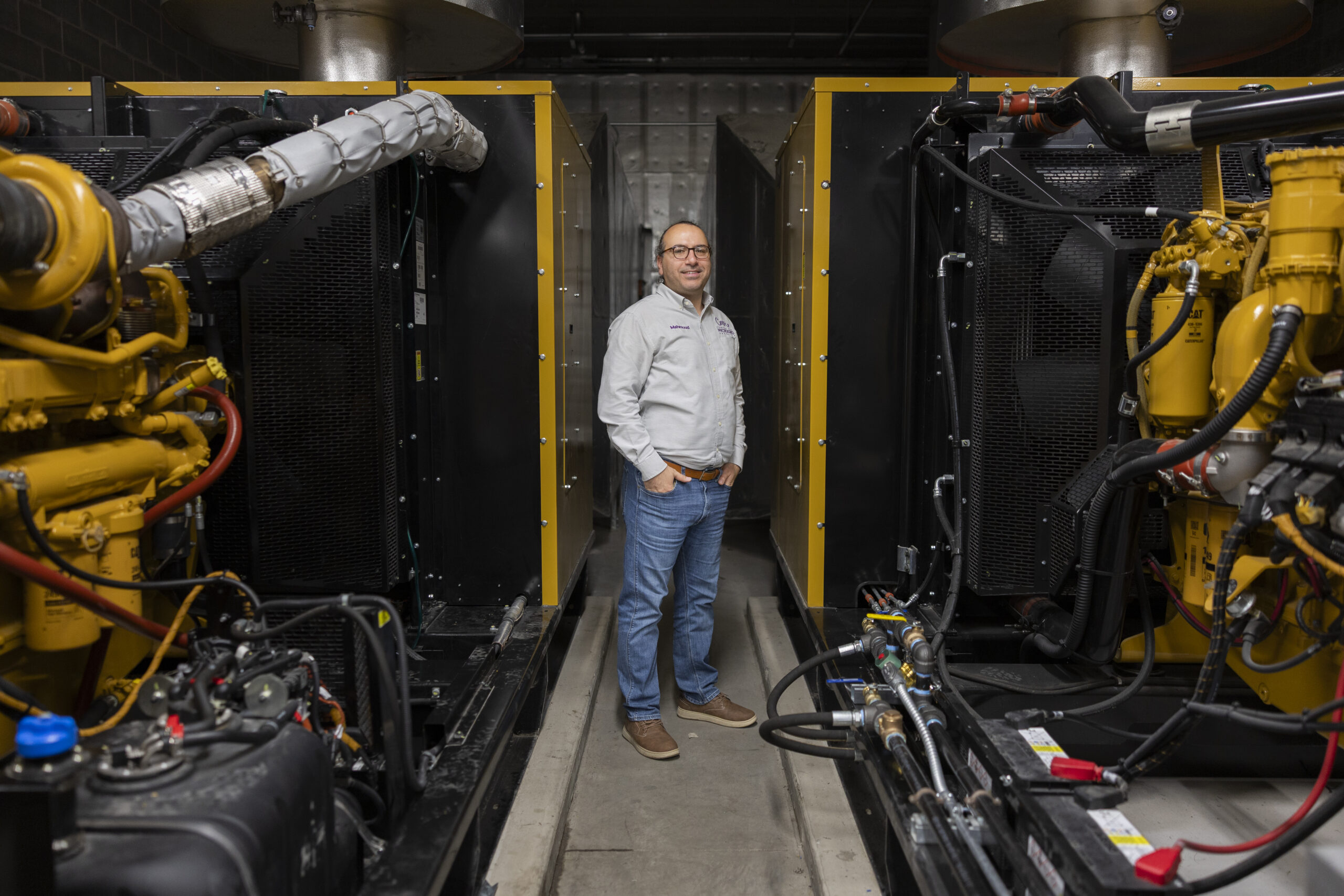
Dr. Mahmoud Kabalan grew up in Lebanon, where power outages were a regular part of his childhood. Today, he's the Bright.Green Director of the University of St. Thomas Center for Microgrid Research, whose systems have enough capacity to power an estimated 3,000 to 5,000 homes.
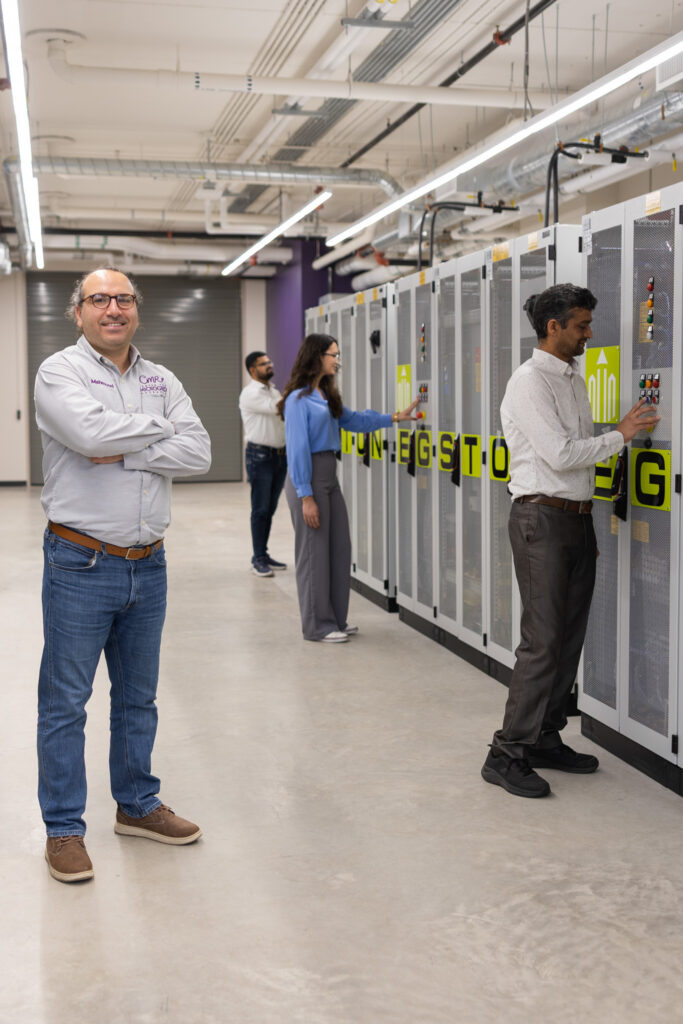
(Brandon Woller '17 / University of St. Thomas)
Under Kabalan’s leadership, the center has grown significantly; recently celebrating the opening of a 6,000-square foot expansion. The associate professor of electrical engineering helped secure more than $35 million in funding from sources that include the National Science Foundation, Minnesota Department of Commerce and U.S. Army Engineer Research and Development Center.
Engineering runs in Kabalan’s family. His parents and two siblings are engineers. Kabalan, however, has made teaching engineering central to his career. Through the center, he supports students by providing access to professional-grade equipment and hands-on learning experiences.
“Teaching is a big part of who I am and my belief system,” said Kabalan, who joined the College of Engineering faculty in 2017. “I love taking someone that's really unsure about who or what they can become ... and helping them achieve their greatest potential."
Graduate research assistant Hanadi Haroun is one of those students. Haroun, who earned a master’s degree in mechanical engineering in Lebanon before coming to St. Thomas, said Kabalan “saw something in me that I probably didn’t myself.”
“He is also the reason why we wake up every morning and are excited to come here and do research,” said Haroun, who’s currently pursuing a second master’s degree in electrical and computer engineering. “He’s the true definition of a leader.”
At the research center, students develop models and conduct experiments aimed at addressing global energy challenges. Kabalan, who has served as a research mentor to nearly 60 undergraduate and graduate students, sees those projects as opportunities for students to discover their potential.
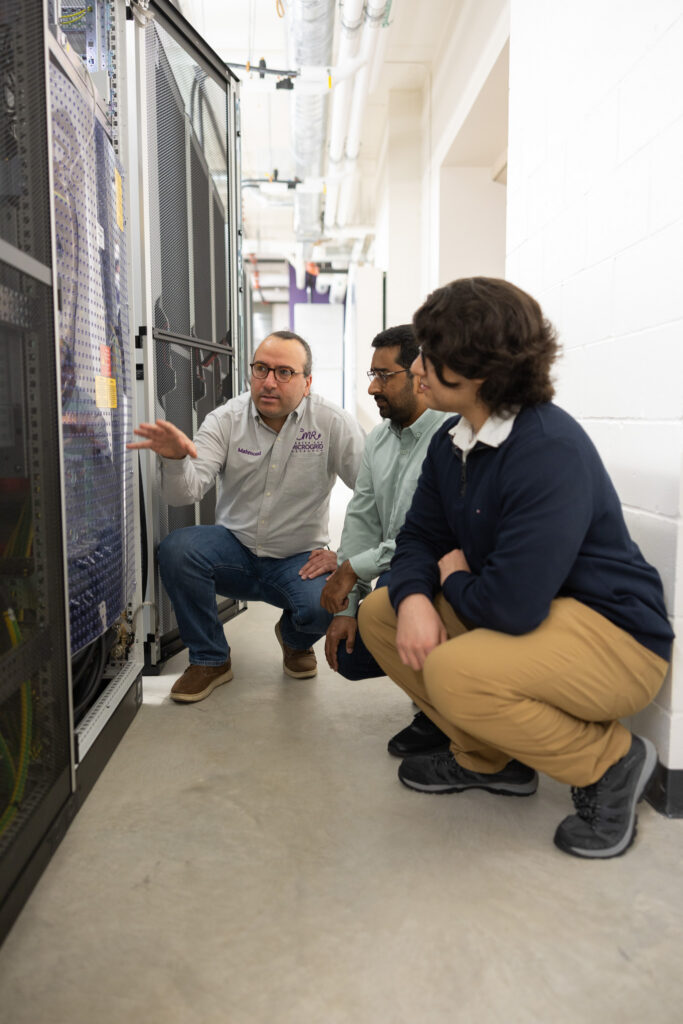
“We challenge them, we mentor them, we guide them,” Kabalan said. “We’ve been successful with 18-year-olds, 19-year-olds doing some work that historically should be done by an engineer that has five to 10 years of experience.”
Center benefactor Jason Bright, an electrical engineer and entrepreneur, noted Kabalan’s enthusiasm for putting simulations and visualization tools in the hands of students.
“He is super excited about the educational experience,” Bright said. “To give people like Mahmoud the tools that he can use to educate and to bring students to the cutting edge [is] crucial. Faculty are the conduit through which the students can discover the greater world of innovation.”
Haroun said Kabalan gives students room to bring their own creativity to a task while also helping them look at difficult problems differently. She remembers becoming overwhelmed by a project that wasn’t working for her.
“He told me, ‘Simplify it,’” she said. “Zoom out and look at it from another perspective ... and then come back, refresh your mind and then think about it.”
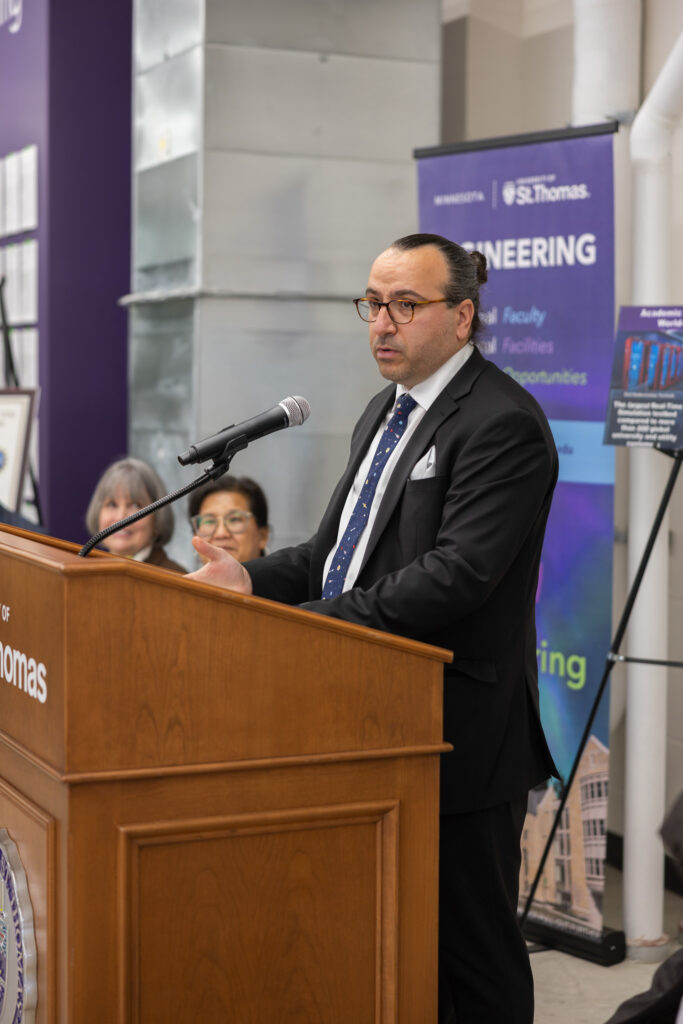
Kabalan’s emphasis on perspective extends beyond how he mentors students. In 2012, he spent about nine months in the Philippines with a friend trying to launch a financially self-sustaining social enterprise using small-scale hydroelectric power in rural communities. Part of that work involved visiting electrification projects that had failed.
“A solution got parachuted in. It worked for six months. One piece broke down. No one knows how to fix it,” said Kabalan, who is the 2025 inaugural recipient of the St. Thomas Provost’s Emerging Scholar Award and received an NSF Career Award, the first in the College of Engineering’s history. “When you tackle a problem that involves people, you have to stay humble.”
The Philippines experience reinforced for him the importance of understanding the people a solution is intended to serve. It is why he keeps people in the forefront when it comes to engineering.
“Equations are easy. Humans are hard,” Kabalan said. “There is no one size fits all.”
The development of students to engineers is even more critical in this era, due to the rise of artificial intelligence.
“AI may increasingly be able to solve equations and technical problems,” Kabalan said, “but educating future engineers also depends on connection, mentorship and understanding how individual students learn.”
Despite everything he has helped build at the Center for Microgrid Research, Kabalan measures his success differently.
“I built a lot of spectacular stuff that really goes beyond my wildest dreams, but it doesn’t come close to hiring a student and then seeing them grow," Kabalan said. "It’s a constant amazement of what the human mind and spirit can do if we give that person enough opportunity and the environment to flourish and grow.”