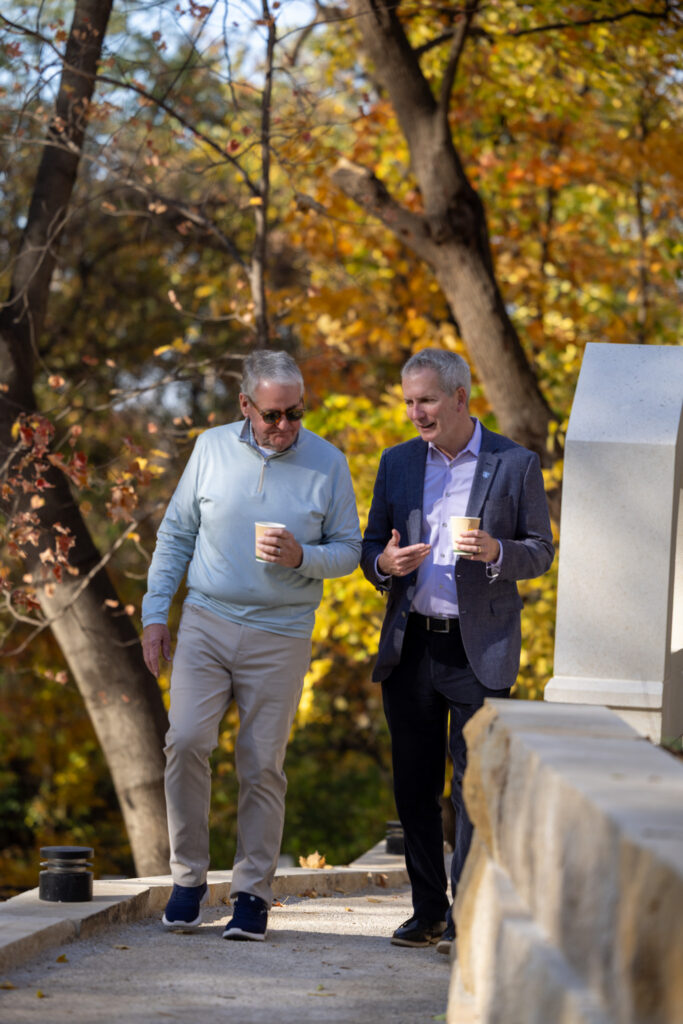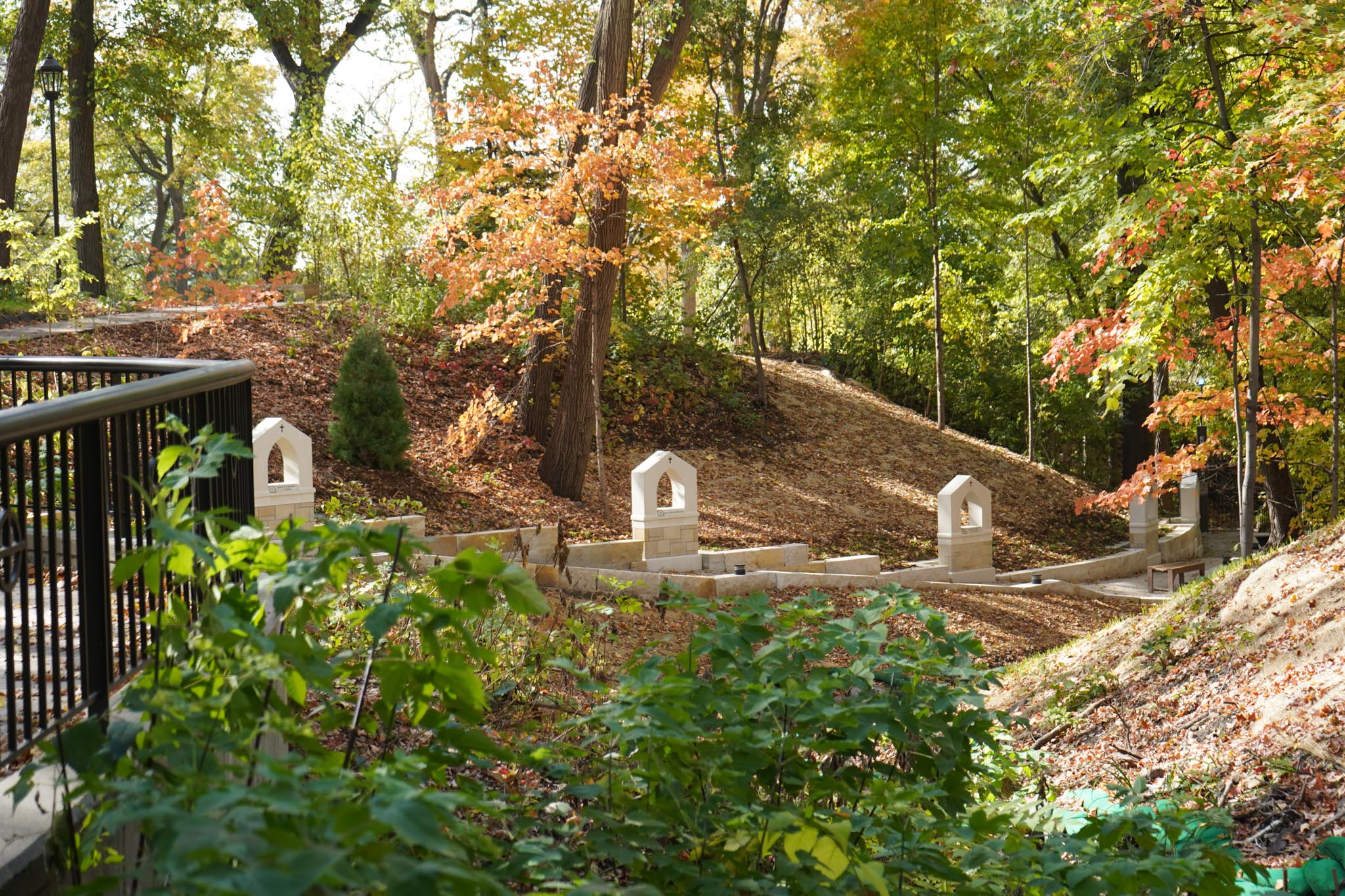
A winding path now forms a loop through the Grotto on the University of St. Thomas south campus, passing new Stations of the Cross, native plantings and stone steps beneath a canopy of trees.
This fall, St. Thomas and The Saint Paul Seminary completed a major restoration of the historic space, repairing an aging landscape while creating new ways for students and community members to experience it through art, nature, learning and faith.
“The Grotto is a very beautiful place that invites a quiet retreat,” said Joe Plante ’86, associate vice president for principal and leadership gifts, who helped raise funds for a previous restoration in the 1990s and again for the current project. “It’s a lovely oasis on our urban campus and provides a unique setting for prayer and reflection.”
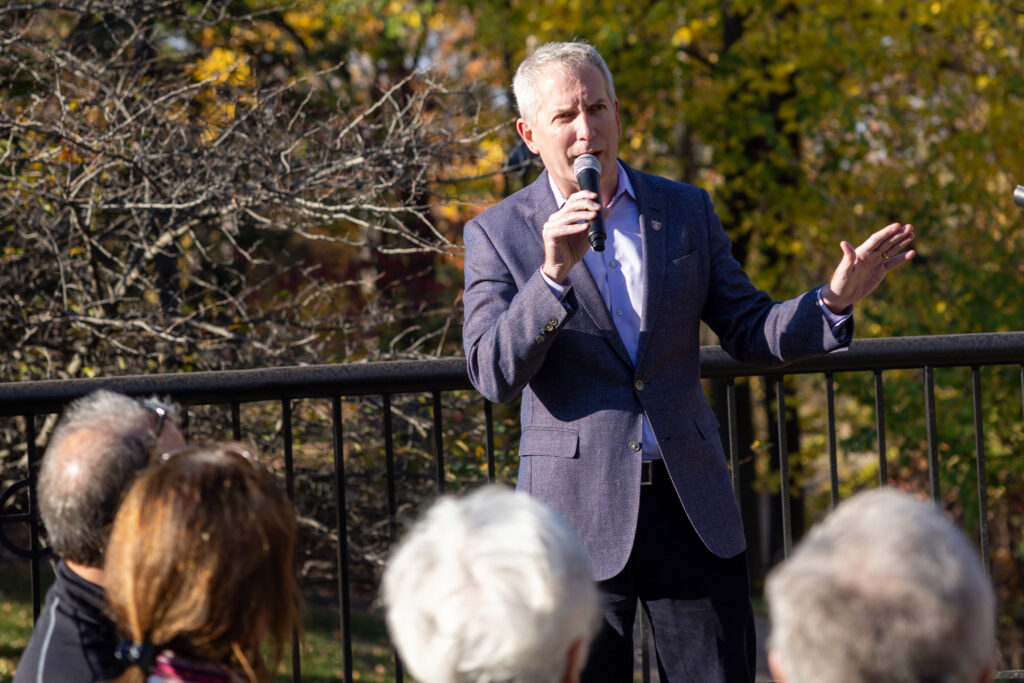
“As our world becomes more captive to screen time and the relentless quest for productivity, the Grotto is a reminder that we are called by a still small voice to something greater,” President Rob Vischer said. “It is critically important to preserve places like this for future generations.”
Preserving the Grotto
The restoration addresses years of deteriorating slopes, invasive species that had taken hold and a water feature incorporated into the 1990s design that had damaged the walking path.
New aggregate pathways, regraded slopes, native plantings and retaining walls help stabilize the landscape. A second bridge across the stream allows the path to form a loop through the Grotto, while the new Stations of the Cross create a devotional route. Clearing portions of the landscape also opened views between the Grotto and campus while preserving its secluded setting.
During construction, the project team shifted part of the trail farther up the north hillside.
“Not only did this allow us to keep some of the existing trees and address the slope challenges, but it provides a higher vantage point and some different visual perspectives for anyone walking the trail,” said John Silva, director of construction.
The Grotto’s history stretches back more than a century. Seminarians began creating the Marian shrine in the wooded ravine in the 1910s, and it was dedicated in 1919. Stations of the Cross were later added, and the Seminary and St. Thomas undertook another significant restoration in the early 1990s.
“This is a special, sacred space which connects the generations and is an enduring part of our history,” Plante said. “Its serene beauty invites the visitor to pause, reflect, and consider the grace extended by faith and through the intercession of Mary. The Grotto’s invitation is as meaningful as ever.”
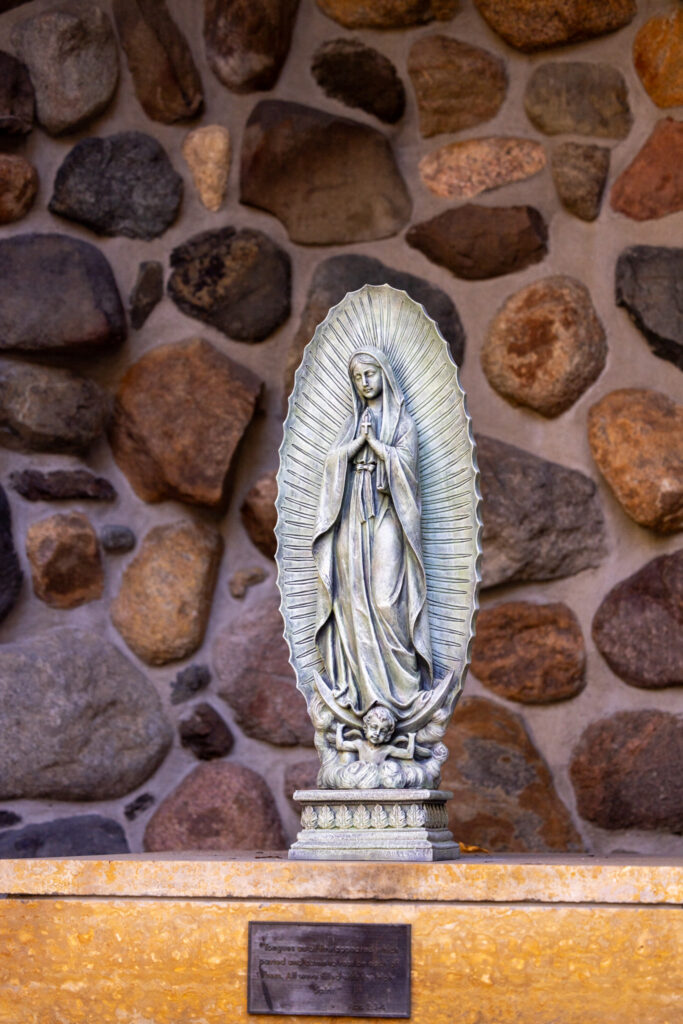
More work remains. Bronze artwork for the Stations of the Cross and a new statue of Our Lady of Guadalupe are scheduled to be installed before fall semester 2027. The stations are designed as small shrine-like structures lining the path, with sculptural scenes set into arched openings.
“I hope successive generations will consider how they might also be good stewards of this sacred place, preserving and enhancing the Grotto for generations to come,” Plante said.
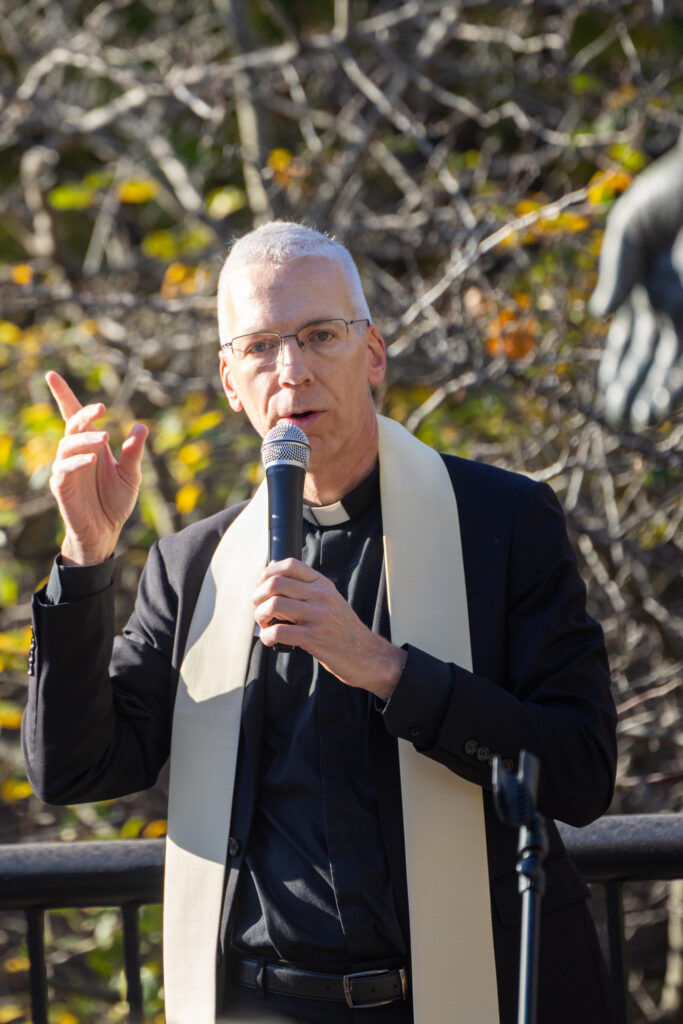
“My desire is for it to be a place of encounter with the living God, a place of deep prayer, not only for the seminarians, but also for the students, faculty, and our friends and neighbors,” said Father Joseph Taphorn, rector of The Saint Paul Seminary and vice president for the School of Divinity.
Learning from the landscape
The Grotto will also serve as an outdoor classroom, giving Tommies and other visitors new ways to learn from the site and reflect on its spiritual significance.
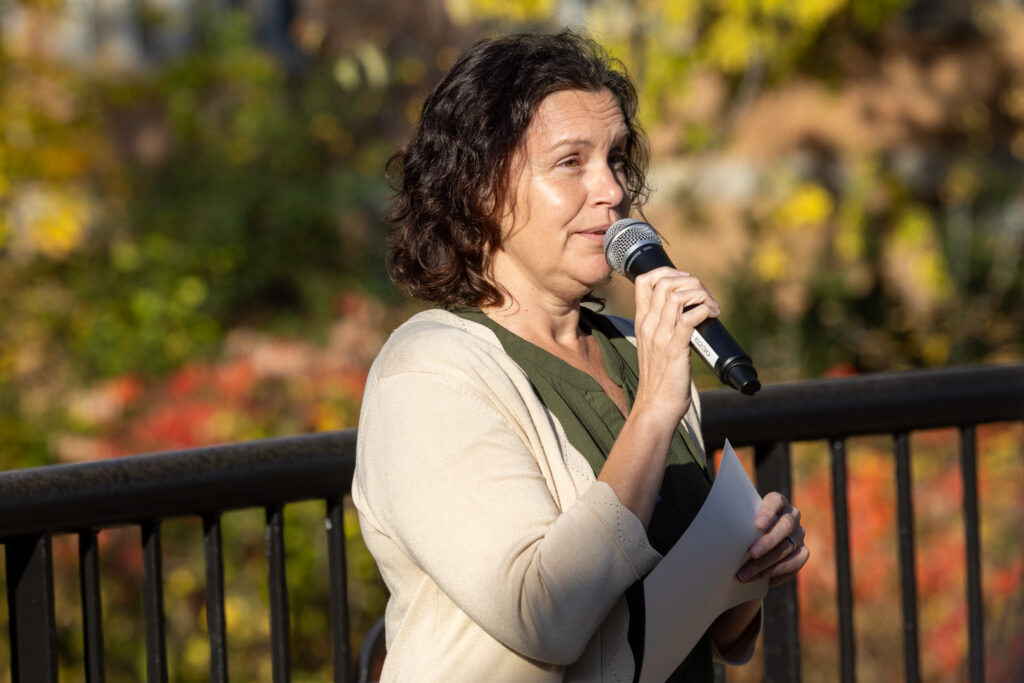
“By bringing students into the landscape itself, the Grotto offers opportunities to connect academic inquiry with lived experience,” said Maria Dahmus, director of the Office of Sustainability Initiatives. “We are developing experiences that invite the community to explore the Grotto’s ecology, geology and history while also engaging deeper questions of meaning, vocation and purpose.”
Visitors can scan a QR code at the Grotto to access a webpage with information about the site’s history and religious meaning, along with self-guided experiences focused on its ecology, geology and natural history.
“Future workshops will also explore the Grotto’s restoration to inspire reflection on themes of perseverance, stewardship and care for community,” Dahmus said.
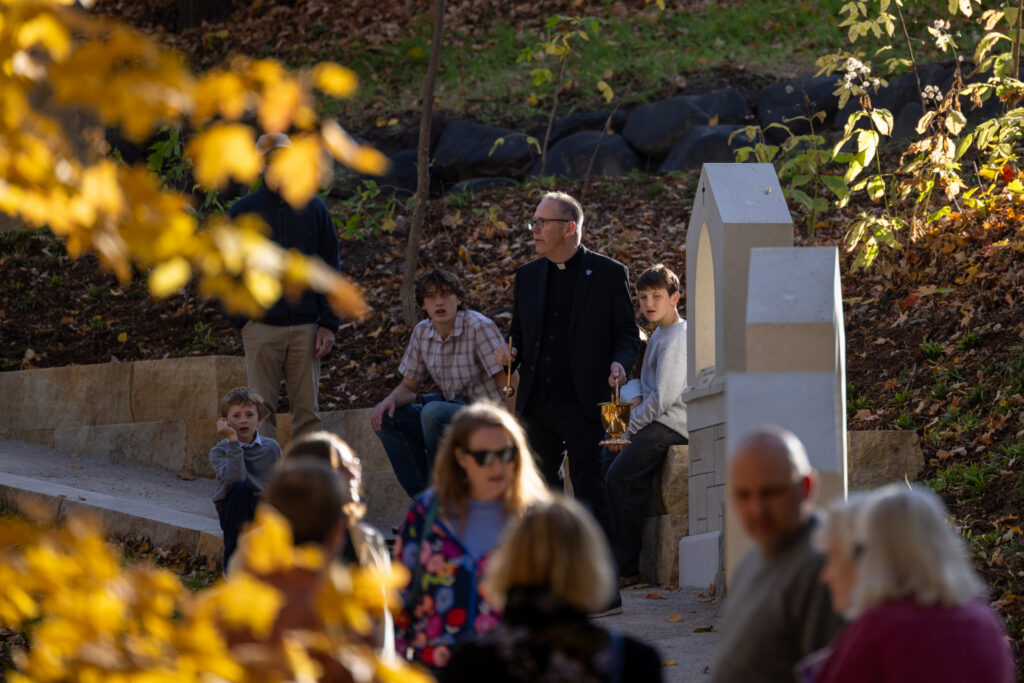
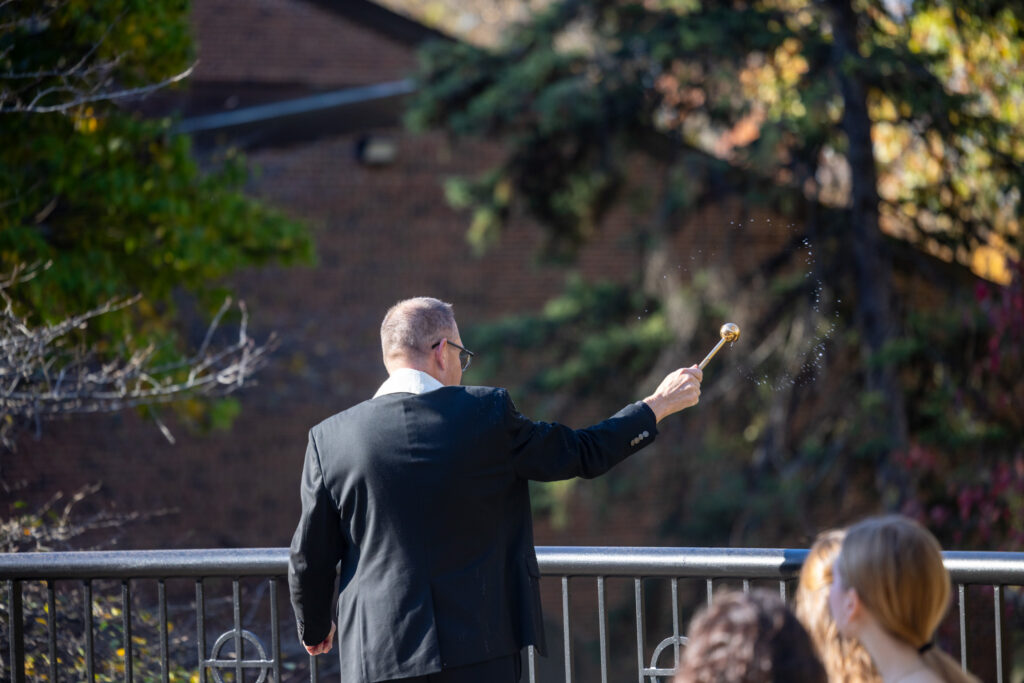
At the Oct. 24 celebration, Dahmus described the broader vision for the space: “Because of your generosity, this special space has been restored as a place of prayer and reflection and as a place of learning and discovery, where the landscape itself is a teacher and the Grotto is a living classroom.”