Standing inside a Uniqlo store in Tokyo, Melissa Rose '27 MBA watched shoppers place baskets of clothing into a self-checkout station. Without scanning a single barcode, every item was instantly identified and totaled in seconds.
"What struck me wasn't just the technology itself, but how thoughtfully it was designed around the user experience," said Rose, a mechanical design engineer at Medtronic who designs medical devices used in cardiovascular surgery. "The technology removed friction from the process and made the experience feel effortless."
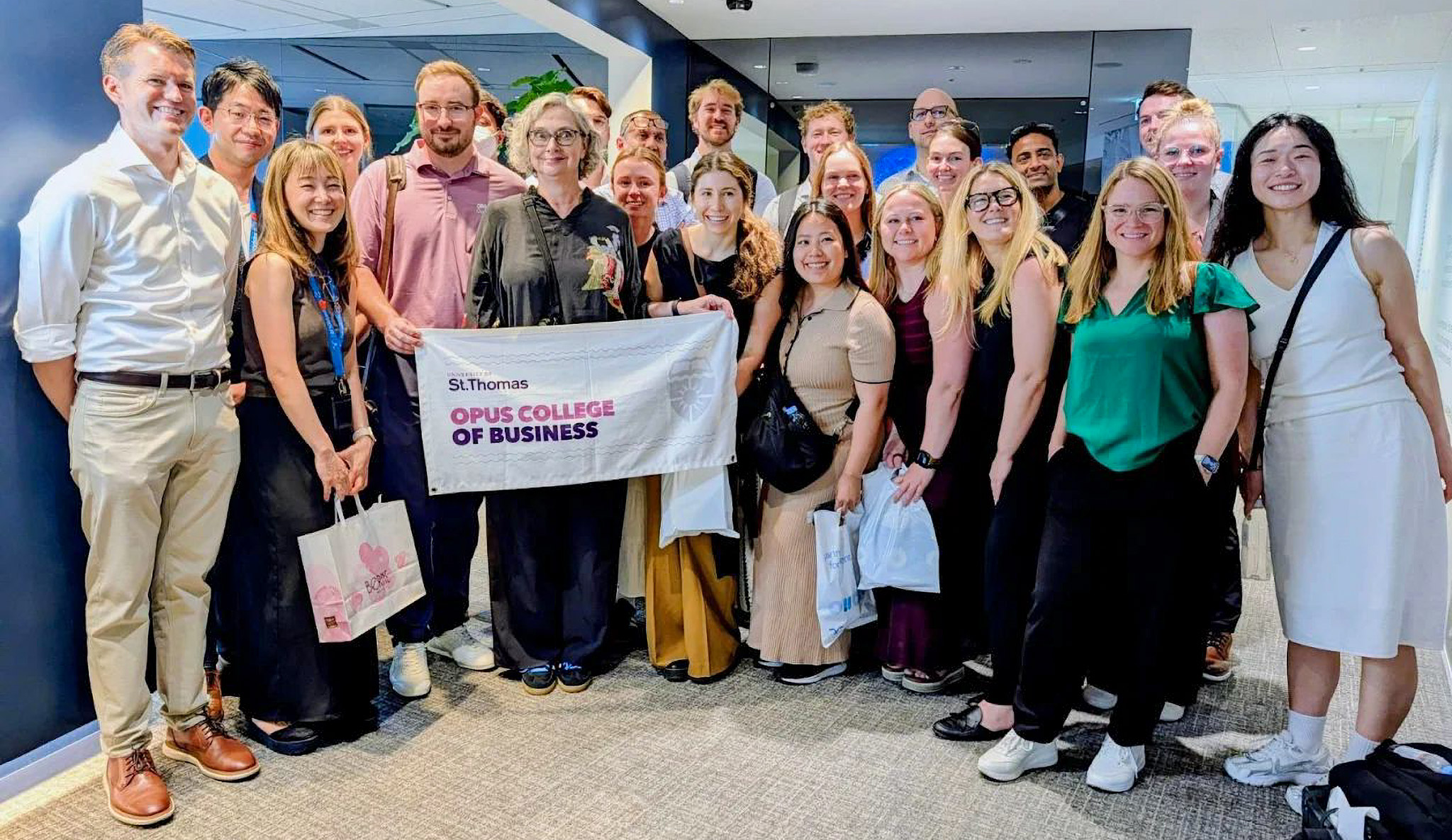
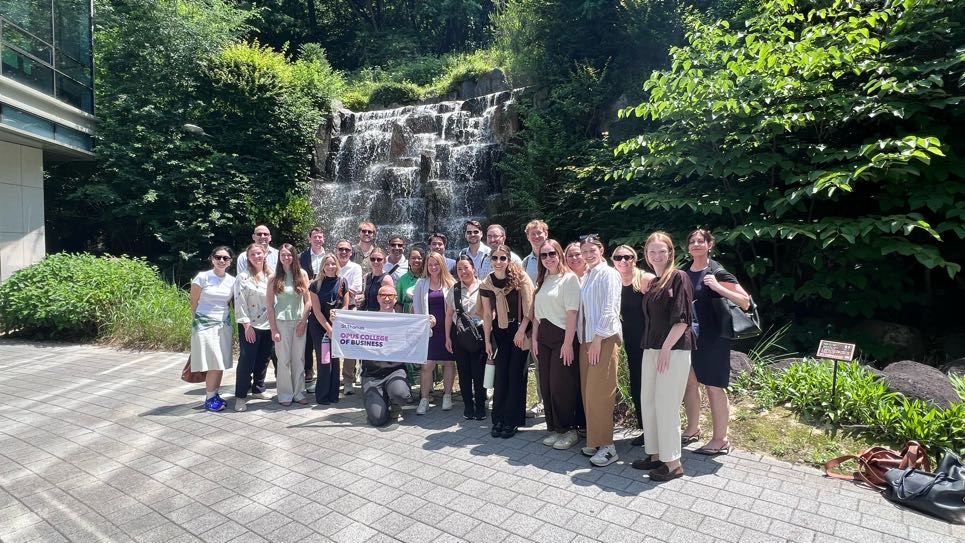
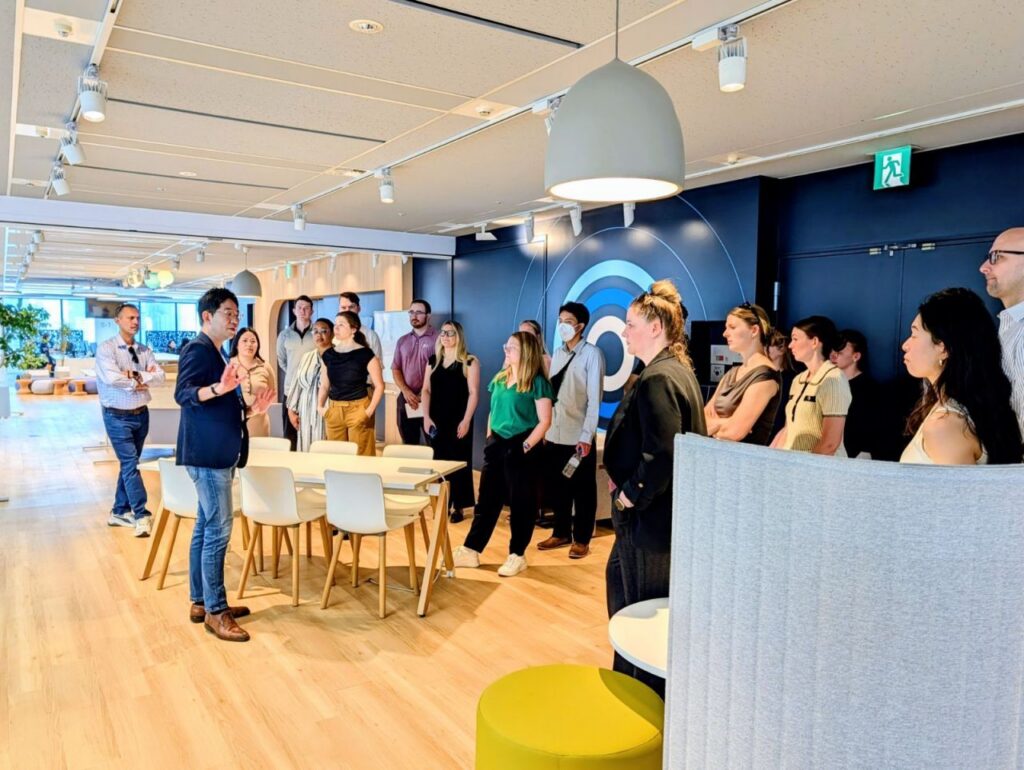
Rose was one of 28 graduate business students who spent eight days in South Korea and Japan as part of BUID 714: Bold Futures – Digital Transformation in Asia, a graduate study abroad course through the Opus College of Business.
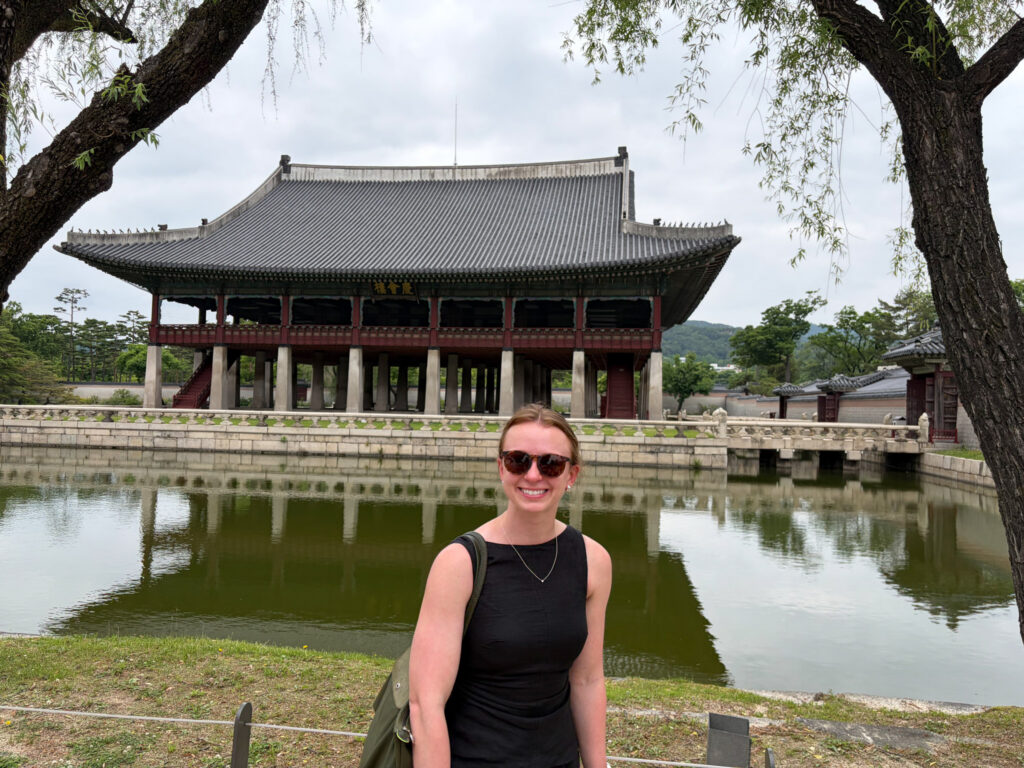
Across Seoul and Tokyo, University of St. Thomas students learned how the most effective technology fits naturally into people’s lives, improving their overall experience or quality of life. The lessons are applicable to a variety of industries.
“As I continue my career in healthcare innovation,” Rose said, “I want to think more intentionally about change management and designing solutions that fit naturally into existing workflows.”
Learning digital transformation firsthand
Co-designed by Professor Lisa Abendroth and Meghan Kober, senior vice president of Ventures & Strategic Partnerships at U.S. Bank, the course reflects the Opus Professor + Professional (Prof+Prof) approach, pairing academic expertise with industry experience. Students went behind the scenes with companies, entrepreneurs and business leaders across Seoul and Tokyo, where new technology is changing everything from how people shop and commute to how companies work.
Rather than studying digital transformation as an abstract concept, students saw it operating inside major companies, startup accelerators, universities, construction sites, retail environments, digital platforms, and the everyday systems of two global cities.
"My goal was to give students an accelerated path into ideas that had taken me years to encounter across different roles, industries and experiences,” Kober said.
Student teams each developed a "Big Question" and a hypothesis to investigate throughout the trip. They tested those ideas through company visits, conversations with business leaders, research, and everyday observations across Seoul and Tokyo. Each encounter became a different case study in how leadership, culture and strategy influence innovation.
The students shared the same itinerary, but not always the same takeaways. Rose saw a case study in human-centered design. Her classmates came away thinking about AI's role alongside people, how organizational culture affects transformation, and how a global perspective can inform business strategy.
AI as a partner, not a replacement
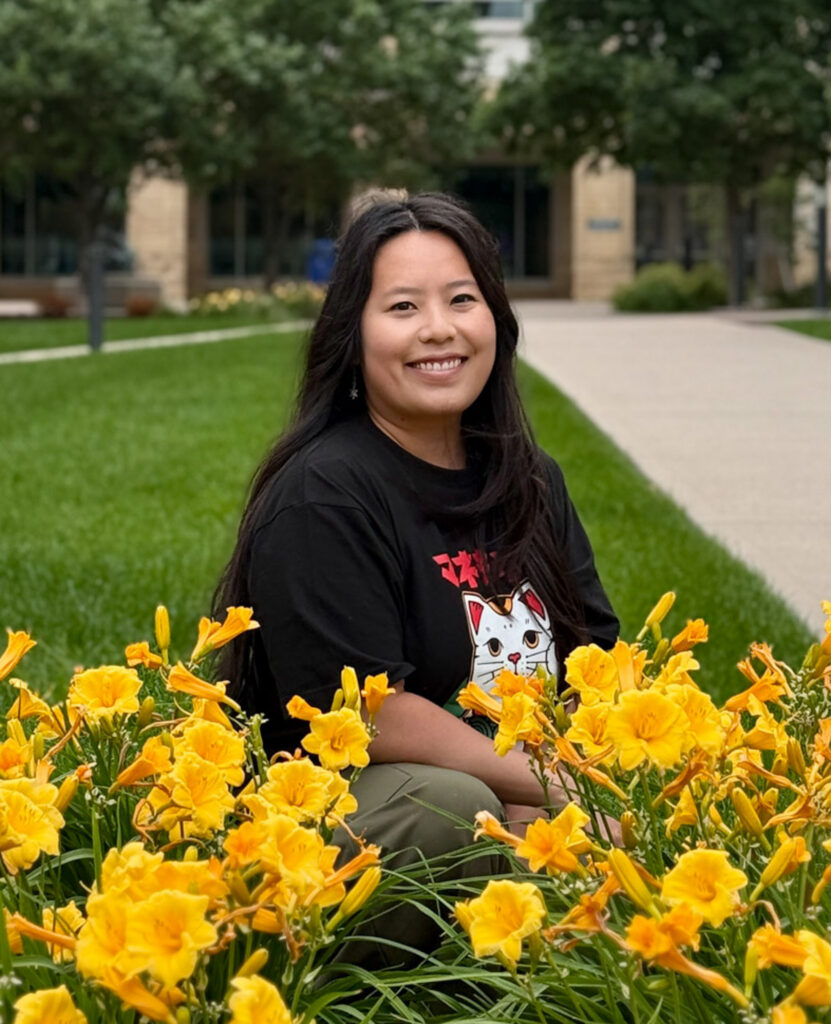
As a HR compensation consultant at Ameriprise, Kangyoua Thao '28 MBA wanted to understand how organizations stay innovative as populations age and workforces shrink.
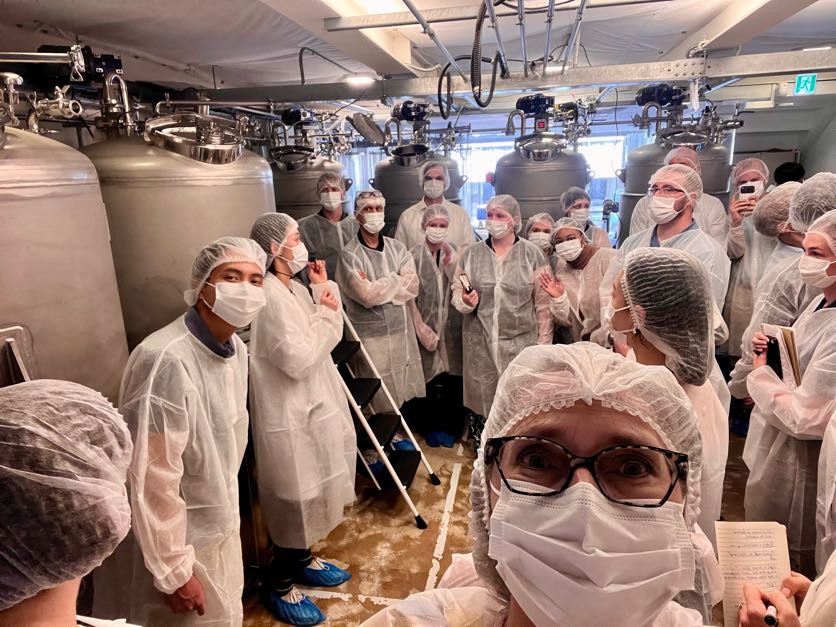
At Chunpoong Makgeolli Brewery in South Korea, she learned how the founder spent years learning from aging master brewers and earning their trust before they shared their recipes and techniques. The company then used AI-assisted technology to replicate the centuries-old brewing process, helping preserve tradition and keep the culture alive.
"It was a perfect example of how AI can be used to increase efficiency and solve problems caused by an aging population," she said. "There are a lot of people retiring. How do you preserve that knowledge? AI can help, but you still need people."
Culture determines whether transformation succeeds
As an account coordinator in client services for CanteenOne, Max Nyrop '27 MBA works with corporate clients that increasingly expect product innovation and data transparency.
"I found that a lot of my client services and previous HR experience focused me on the human and cultural elements of digital transformation," he said. "It helped shift my focus away from the technology itself, towards what the impacts of said technologies are."
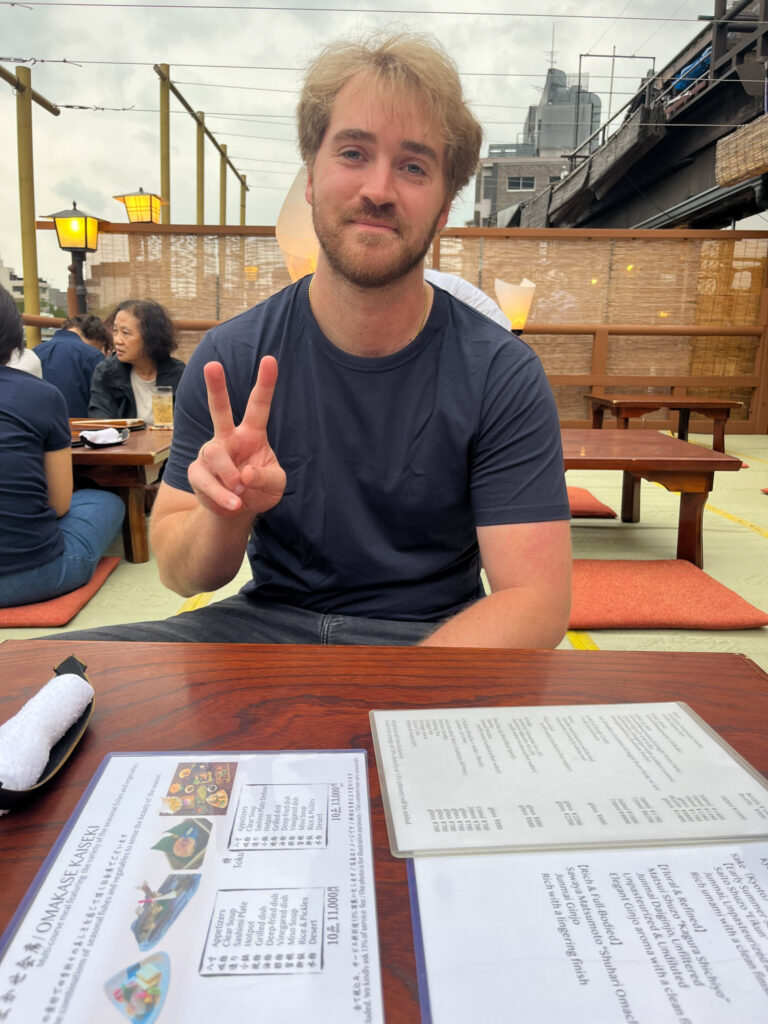
One of his biggest takeaways was how much organizational culture matters to the success of digital transformation.
“No matter how brilliant a technological solution is, it won’t have a meaningful impact without the buy-in and understanding of employees and stakeholders,” he said.
Business leaders also stressed the importance of clean, accurate data before implementing new technologies.
"A common theme was how important it is to have clean and accurate databases prior to initiating any transformations or implementing new technologies," said Nyrop. “I believe our company has recently done a great job of emphasizing data clean-up before we explore what’s next for our software platforms.”
Global perspective shapes better strategy
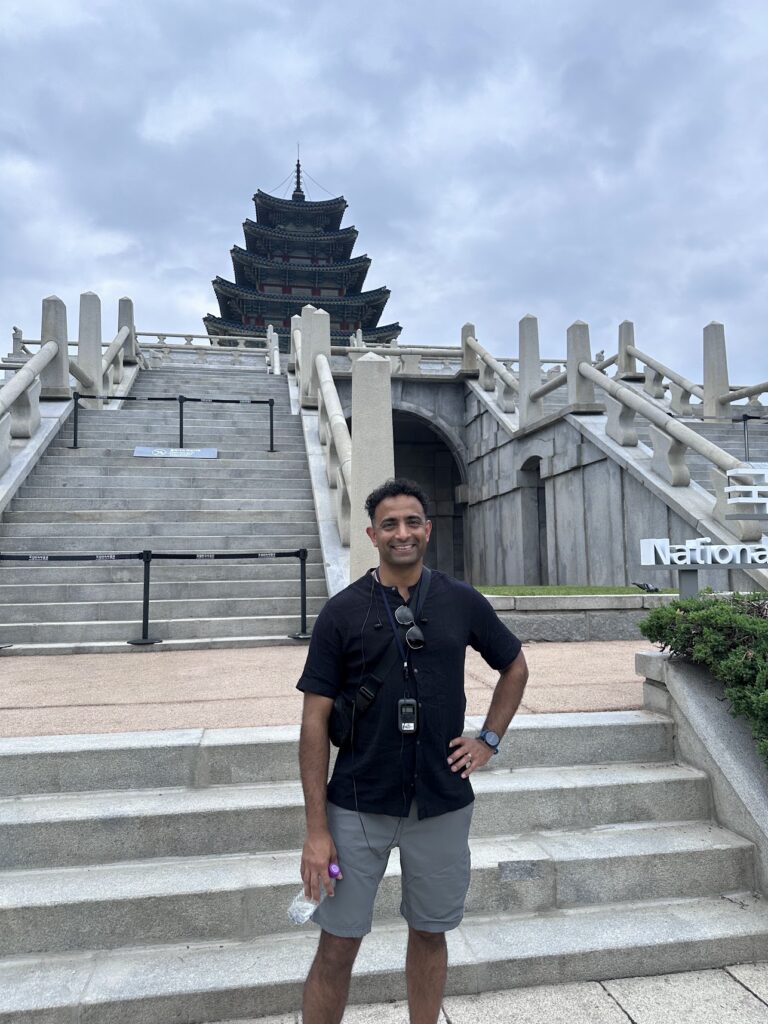
Leading digital strategy at UnitedHealthcare, Ketan Kulkarni was interested in how organizations use technology without losing the human side of the experience. One of the most interesting comparisons wasn't between companies. It was between countries.
"Being in healthcare, I was most interested in how South Korea and Japan include their culture and human touch as part of their digital innovation," he said.
Across the trip, he noticed two distinct approaches. South Korea emphasized rapid growth and helping startups expand globally. Japan placed greater emphasis on craftsmanship, quality and long-term continuity.
"They aren't just preserving their heritage while adopting emerging technology," Kulkarni said. "Their culture is very much the fuel and DNA of their strategy."
He sees value in both approaches: Seoul’s ambition to scale and Tokyo’s focus on quality. “My goal is to bring these global insights back to my work - ensuring that as we scale digital healthcare, we remain culturally sensitive and truly accessible for everyone.”
Evaluating preconceived theories
Back in Minnesota, the conversations continued. Students compared notes, shared what had surprised them on LinkedIn (links to best posts) and reflected on the questions they had set out to explore at the start of the course.
For Kober, the value wasn't that students returned with one conclusion about AI or digital transformation. It was seeing them test their assumptions, change their thinking when the evidence challenged them and leave asking better questions.
"Reflection and integration are where transformation happens," she said. "The most rewarding part was watching students arrive with assumptions and leave with new perspectives and better questions."