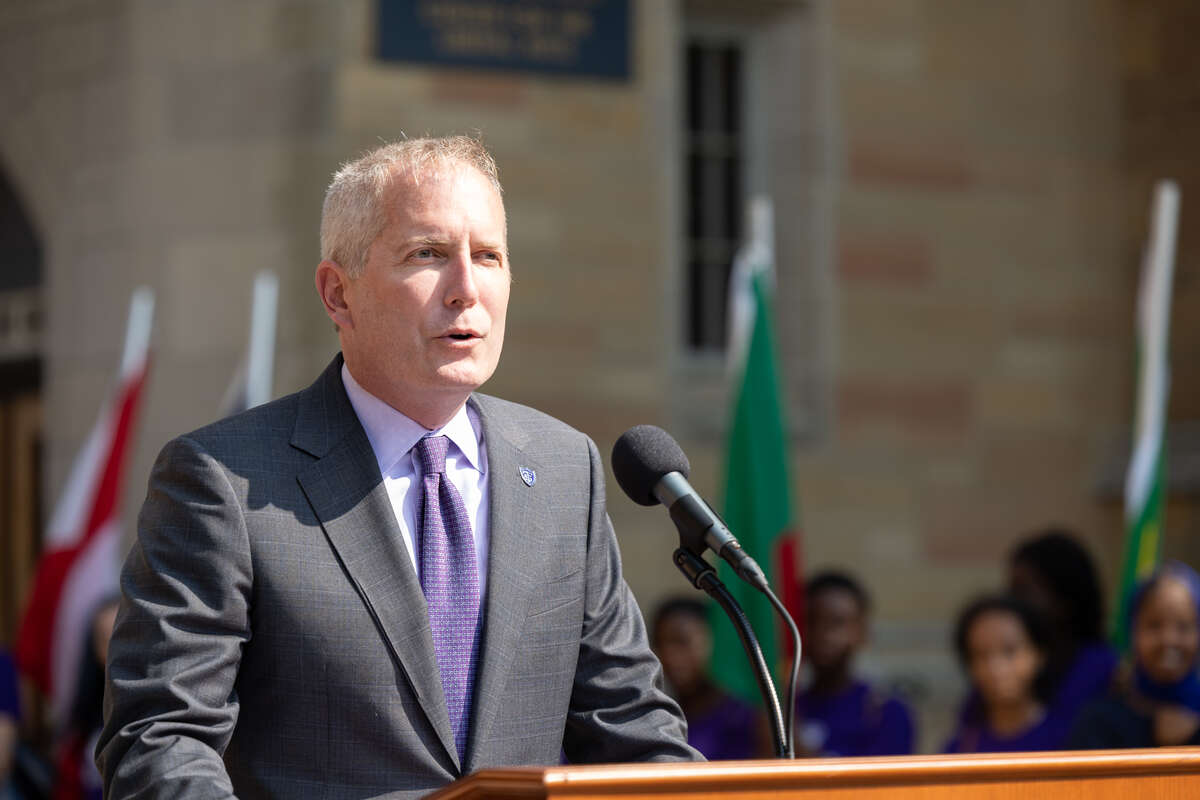
University of St. Thomas President Rob Vischer recently wrote an op-ed for the Minnesota Star Tribune stating that while teaching AI skills is important, forming character is more important.
From the story:

Regardless of your views on artificial intelligence – love it, hate it, intrigued or terrified by it – there’s no denying it’s here and not going away. In higher ed, many universities are rethinking their curricula to teach students the skills they need to develop AI competence.
But this isn’t the most urgent work that must happen. Aside from teaching them technical skills, universities must also take seriously our responsibility to cultivate students’ character so they can use those skills wisely.
In fact, at 78%, integrity topped the list of qualities business leaders who utilize AI say will matter most in the age of artificial intelligence, according to a survey conducted by University of Southern California professor Peter Cardon. Following closely were other traits related to character, including vision, the ability to inspire others, motivation and drive. Cardon noted a widespread recognition that the future workplace will require “high moral values and interpersonal trust.”
And character can be taught. “It’s a learned capacity to live by your principles. … [It] is your capacity to prioritize your values over your instincts,” explains University of Pennsylvania professor Adam Grant in his insightful new book Hidden Potential: The Science of Achieving Greater Things. ...
As a Catholic university, the University of St. Thomas has been caring about character for 140 years, and we emerge from a tradition that has kept the virtues front and center for millennia. With support from the Lilly Foundation, we’re launching an initiative to ensure that every St. Thomas undergrad understands the relevance of the cardinal virtues (justice, courage, prudence and temperance) to a life well-lived. Another campus program brings multiple disciplines together for conversations that help students develop a deeper appreciation for beauty, truth and goodness. And a universitywide focus on vocation equips students to discern how their gifts and values connect with the needs of the world.