When people talk about artificial intelligence (AI), they often have the same concerns: Will technology replace human interaction? Will students stop thinking for themselves? What happens when machines become smarter than we are?
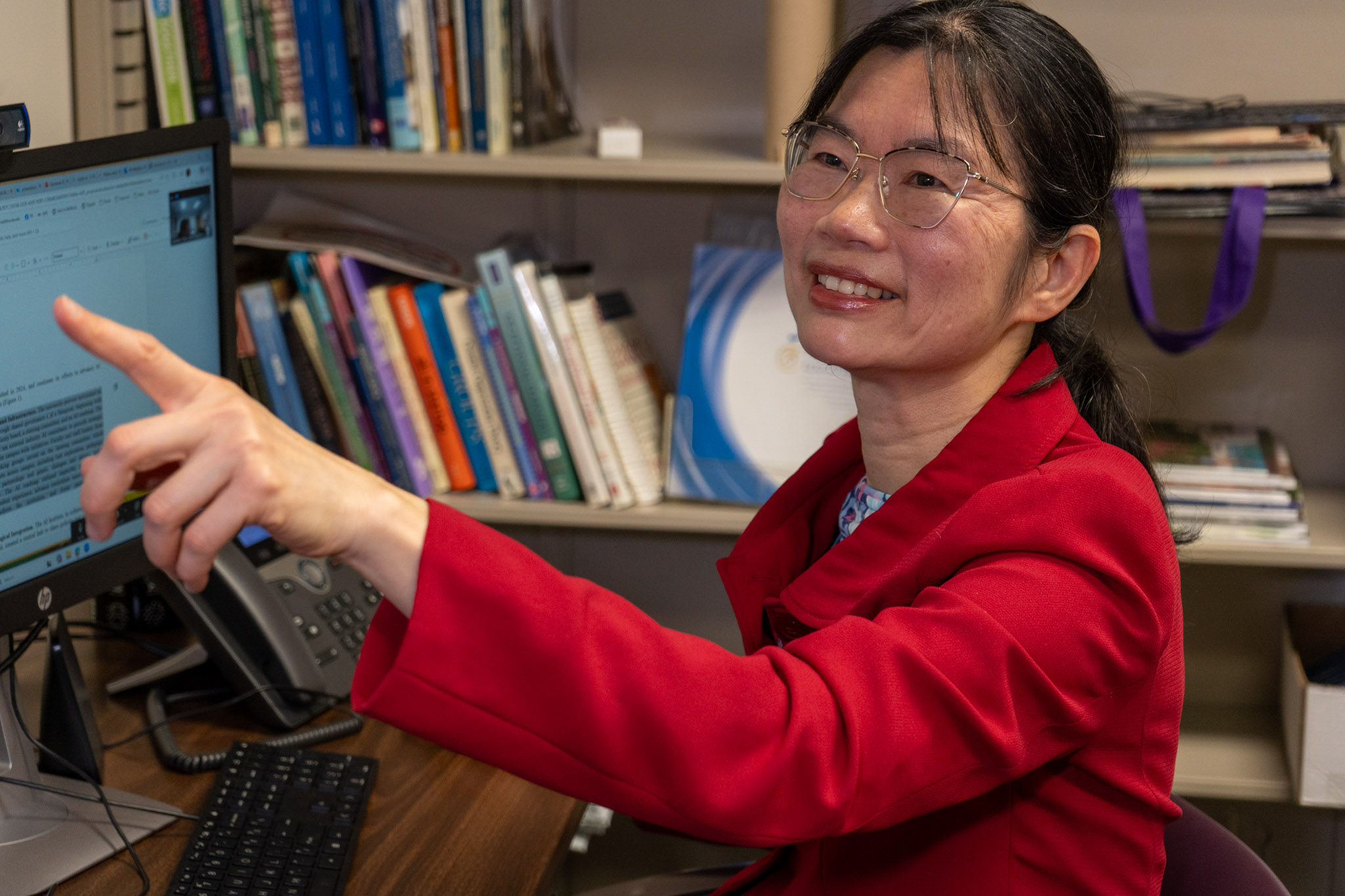
Those questions are familiar to Dr. Chientzu Candace Chou. As a learning technology expert and professor in the School of Education at the University of St. Thomas, she's spent three decades helping educators and students navigate moments of technological disruption.
In the 1990s, she heard fears as the internet and email transformed how people communicated. More recently, she heard them about online learning. Today, she hears them about AI.
“The technology changes, but the concerns are often very similar,” said Chou, who also serves as the director of the Doctor of Educational Leadership and Learning program at St. Thomas and co-director of the university's new Master's Degree in Collaborative Intelligence.
While the tools have evolved dramatically, her approach has remained remarkably consistent: Focus first on people and use the technology as a tool.
“People don’t have to be afraid of AI,” Chou said. “It’s here with us, but how we shape the change is very important.”
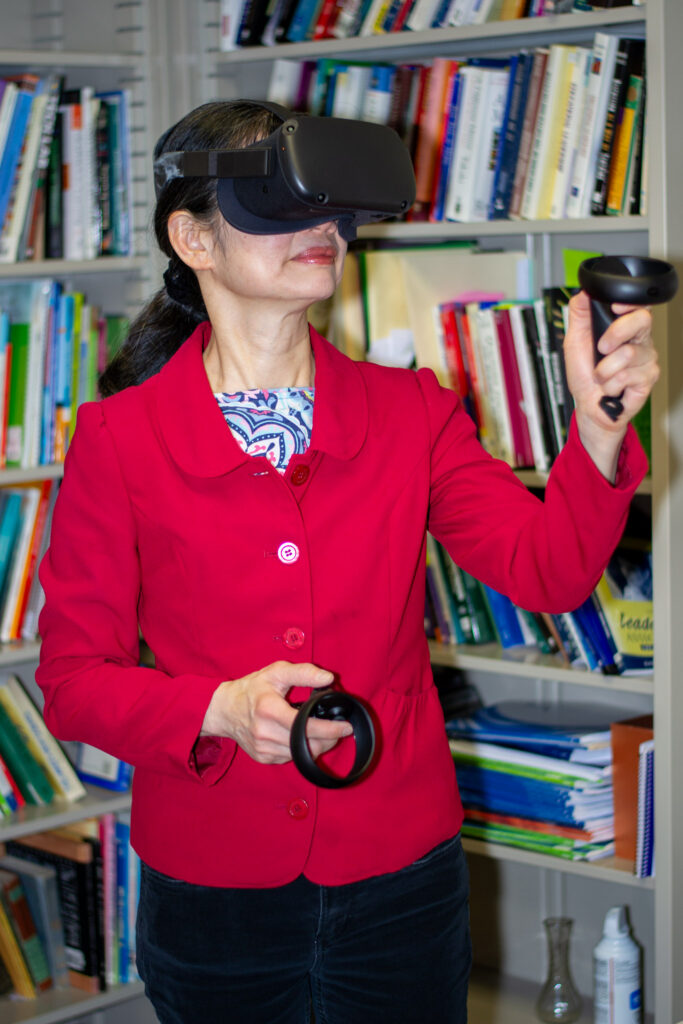
That philosophy is exemplified in a research study in which she explores Tommies’ perceptions of using both virtual reality (VR) and AI to improve understanding of diversity, equity and inclusion. Participants wore a VR headset and experienced interactions through various real-life scenarios created by curriculum experts at BodySwaps, a soft skills development platform.
Rather than reading about bias or discussing it in a workshop, users encounter it through a series of immersive exercises and quizzes designed to foster empathy and human understanding. AI analyzes user responses and generates feedback that helps participants process what they witnessed.
“Many people find that going through this learning module using VR gives them agency to recognize microaggressions and disruptions,” Chou said.
The goal is to foster empathy while gaining knowledge and skills in the relevant fields.
“It has always been my interest to help people see how technology can strengthen and dignify human relationships and address common goods,” Chou said.
That perspective has shaped both her scholarship and her mentorship.
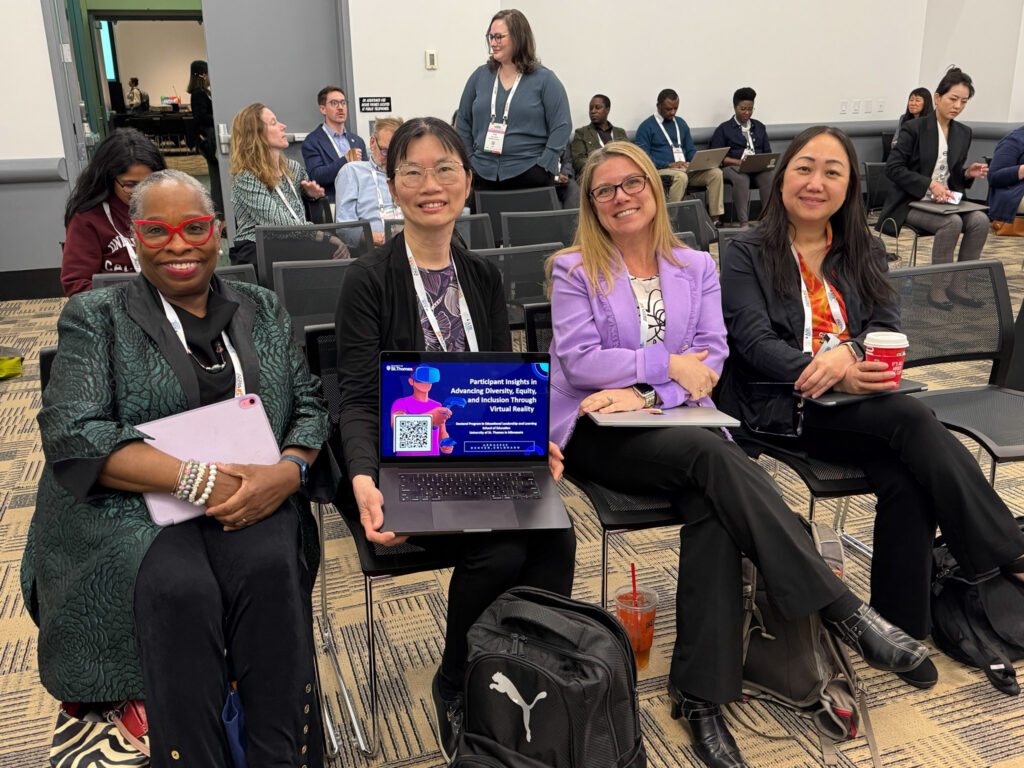
“She brings sincerity and humility to interactions, as well as humor and intelligence,” said Stephanie Nordstog ’97 ’26 EdD, an adjunct faculty member in the Department of Educational Leadership at St. Thomas who has worked with Chou on research projects and presented with her at a conference. “I count her among my great mentors. I appreciate her as a critical and creative thinker who holds high standards and wants everyone to succeed.”
Nouf Alshareef ’26 MA, a co-author on Chou’s conference paper "Participant Insights on Advancing Diversity, Equity, and Inclusion through Virtual Reality," developed a relationship with Chou during her first semester at St. Thomas when Chou invited her to STELAR. Chou’s collaborations with colleagues and students alike have led to both national and international conference opportunities as well as publication. Alshareef called Chou her “role model” and recalls how Chou took time out of her trip in Philadelphia to show up for her conference presentation.
“She’s incredibly generous with her time and expertise,” said Jayne Sommers, chair of the Department of Educational Leadership. “When we're working together as a department on projects, she's very thorough in her consideration of all possibilities and opportunities to ensure inclusive engagement for students, faculty and staff.”
That commitment to understanding people and the world began in Chou’s childhood in Taiwan, where she obtained her undergraduate degree in English and American Literature. Today, Chou sets a goal to read at least one novel, either in Chinese or English, each month. She seeks out critically acclaimed films from around the world and is continually drawn to stories that reveal how people experience life differently.
“Reading and watching films open a gateway to people from different worlds across time, letting us live briefly inside lives very different from our own,” she said.
Her interest in people eventually intersected with a growing interest in technology. At first, she considered returning to Taiwan, but through her doctoral work, she partnered with K-12 educators to help them integrate technology into their classrooms.
“I discovered that I was good with technology,” she said.
That realization led her to St. Thomas in 2002.
During her interview, Chou recalls a dean noticing the unusual combination of experiences on her résumé, including communication, information studies and technology. Rather than viewing those interests as separate, university leaders saw them as complementary.
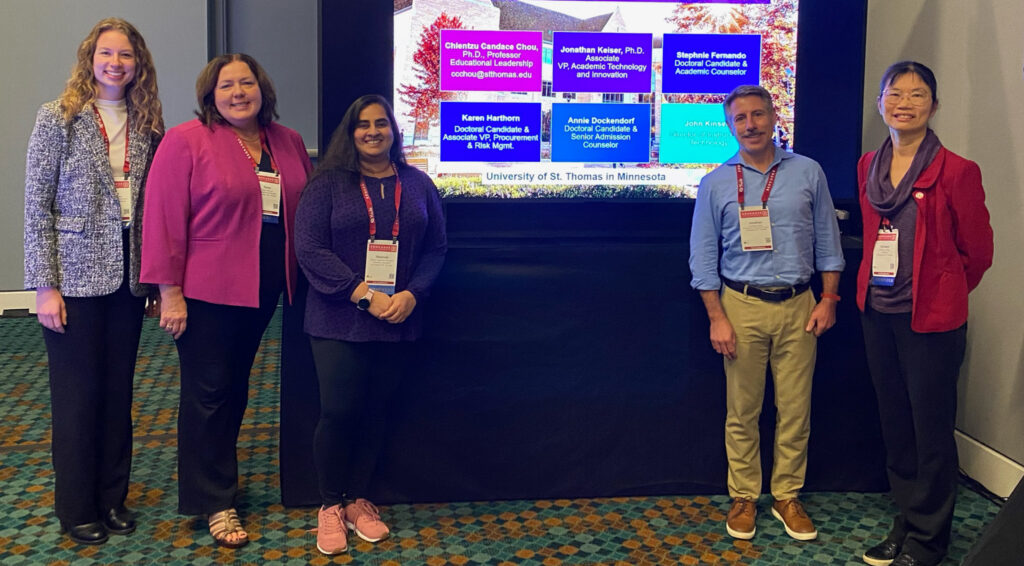
“It has always been my understanding that faculty members are welcome to bring interdisciplinary approaches to teaching,” Chou said.
She collaborates with faculty members and doctoral scholars throughout the university on research projects and grants, and she enjoys mentoring junior colleagues as they build their own careers. Chou demonstrated to colleagues how to use AI tools in their daily workflow during a School of Education meeting to make them more efficient.
“Let's advance our careers together,” Chou said. “Let's make something concrete. That's my philosophy.”
For someone who has spent decades working on the front edge of technological change, Chou remains remarkably consistent about what matters most.
“Candace has an extraordinary ability to see possibilities where others see challenges,” said Dr. Amy F. Smith, dean of the School of Education. “Her relentless curiosity, exceptional work ethic and commitment to innovation have positioned her at the forefront of educational technology, but what makes her work truly distinctive is that she never loses sight of the people her innovations are meant to serve."