One way many people use artificial intelligence is also the least useful: Ask it to write something – a speech, a term paper or a corporate statement – and copy-paste whatever the chatbot kicks back into your document without much review.
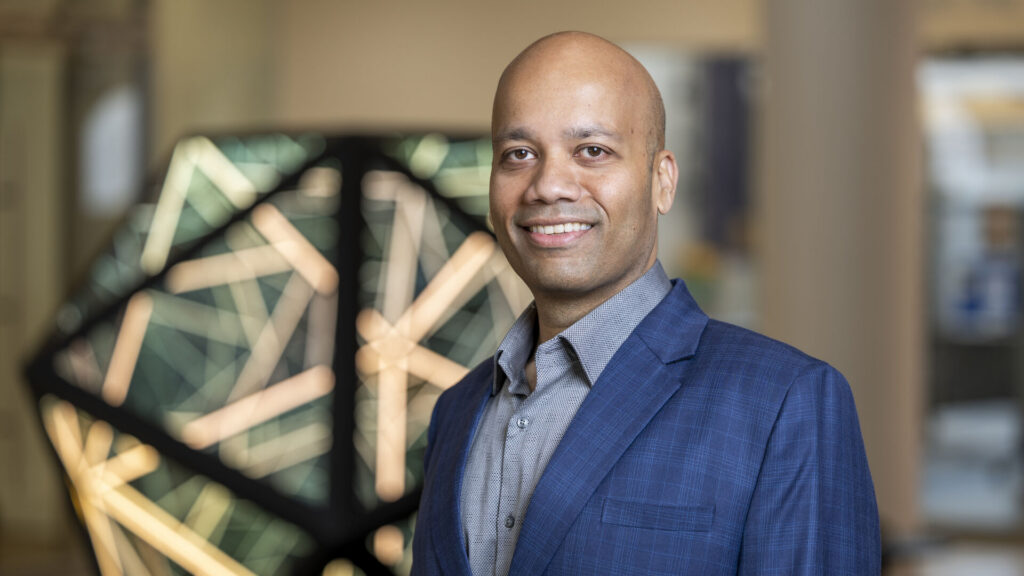
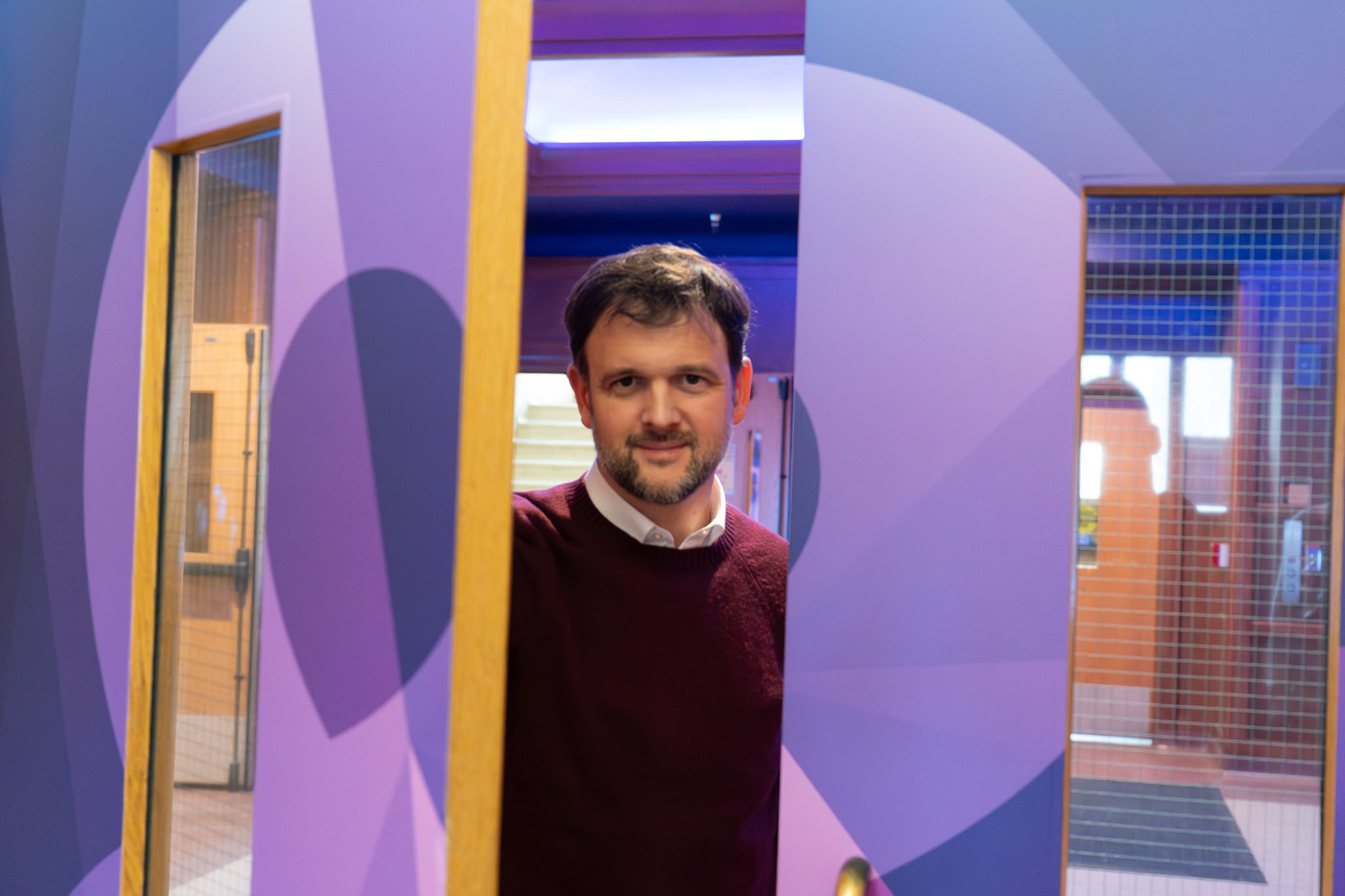
“You learn nothing,” said Tom Feeney, associate professor of philosophy in the College of Arts and Sciences at the University of St. Thomas. “If you use it in a way that you're not thinking critically, you don’t profit.”
Feeney, who also serves as the director of the Master of Arts in Artificial Intelligence Leadership (MAIL) Program at St. Thomas, is doing his part to shape how St. Thomas prepares students for a future where AI is not optional, but neither is human judgment.
The MAIL program, which launched in fall 2025 and consists of 10 asynchronous online courses, is designed to help students understand how to lead AI initiatives ethically and effectively.
The interdisciplinary degree, which targets professionals seeking to integrate artificial intelligence in their workplaces, is intentionally designed as a Master of Arts and not as a Master of Science. That distinction matters, Feeney said.
Rather than training students to build AI systems, the MAIL program helps them understand the technology’s wider impact by bringing together disciplines across the university. From ethics and history to business and law, the courses are taught by faculty across the College of Arts and Sciences, Opus College of Business, and the School of Law.
The real risk isn’t the technology
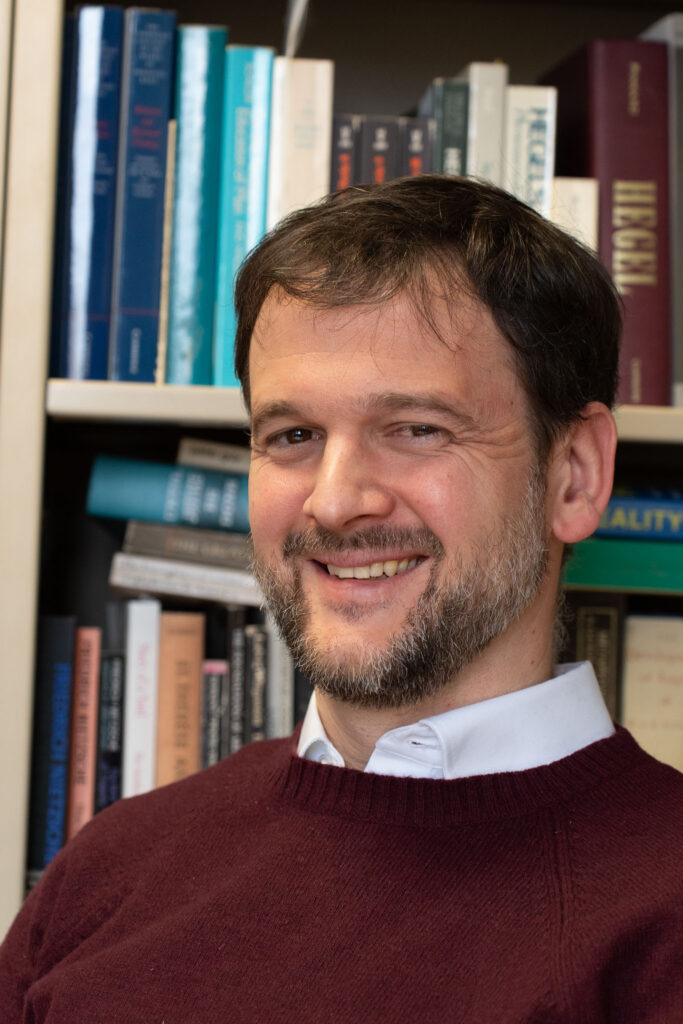
Feeney became interested in artificial intelligence as far back as 2017, and he was reading philosopher Nick Bostrom’s Superintelligence: Paths, Dangers, Strategies when ChatGPT launched in 2022. Bostrom argued that AI will become an existential threat for humanity, but Feeney saw more immediate dangers.
“The failure mode with artificial intelligence is just turning over your agency and your creativity to it,” Feeney said. “Using it to its fullest potential means mastering it to deepen your knowledge and capabilities.”
In his AI Ethics course, Feeney teaches students to use AI as a critic, as a tool that can challenge their arguments, expose weak points and sharpen their ideas. For example, a student might ask the AI tool to identify unstated premises in an argument or identify passages that might be misread.
The students complete a multi-part paper analyzing a technology through the lens of risk, virtue and real-world consequences. The work unfolds in stages, with discussion, feedback and revision built in.
Through the layered essay, it becomes clear if the students are really engaged.
“Do they understand what they wrote? Can they talk about it?” Feeney said.
Feeney encourages students to use AI as a tool for refinement rather than substitution.
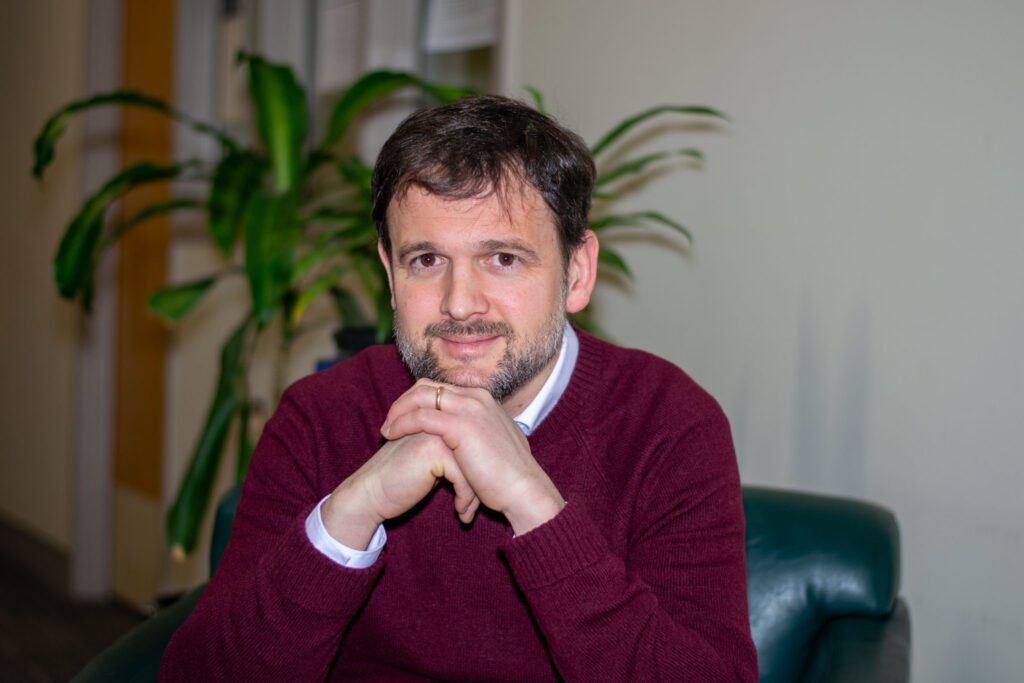
“AI is very powerful as a critic,” he said. “If you set it up to give you suggestions and point out weaknesses, you can get feedback on a loop that’s much tighter than you can with other people. The technology can complement, but must not replace, our friends, teachers and mentors.”
By writing in their own voice first and then using AI to challenge their thinking, students can engage more deeply with their work. They learn to ask AI the right questions, and then they can receive timely and often very useful feedback.

(Brandon Woller '17 / University of St. Thomas)
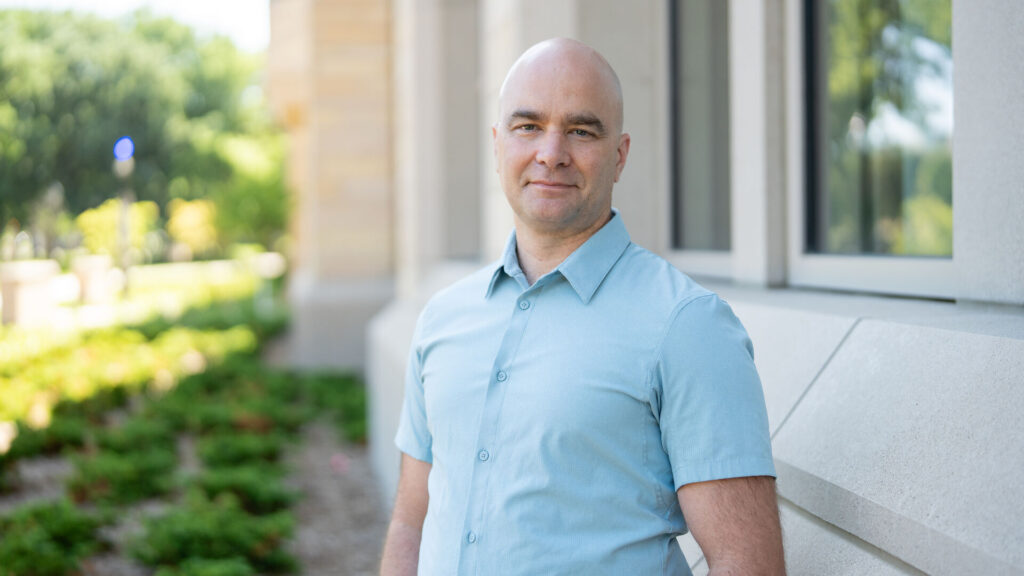
Dominic Adkins ’26 admitted he and his classmates were skeptical about AI when he enrolled in Feeney’s AI Ethics course. "We examined the destructive abilities of AI; and I, and much of the rest of the class, were convinced that AI was going to destroy the world,” Adkins, an accounting major with minors in philosophy and theology, said. “He constructed the class to make us feel the urgency of the threat that AI poses on the world and then calmed us down with the second half of the class.”
Later, the class examined the limitations of AI. Learning more about language models and how they are tuned to align with human users helped to put the students at ease.
Through class discussion the students changed their tune on the topic.
“Professor Feeney is always trying new methods and adapting, and it is something that I appreciate greatly about his teaching style,” said Adkins, who enrolled in three courses with Feeney as an undergrad. “Professor Feeney is a kind, humble man who cares about his students and caters to them and their individual needs.”
Using AI to its potential
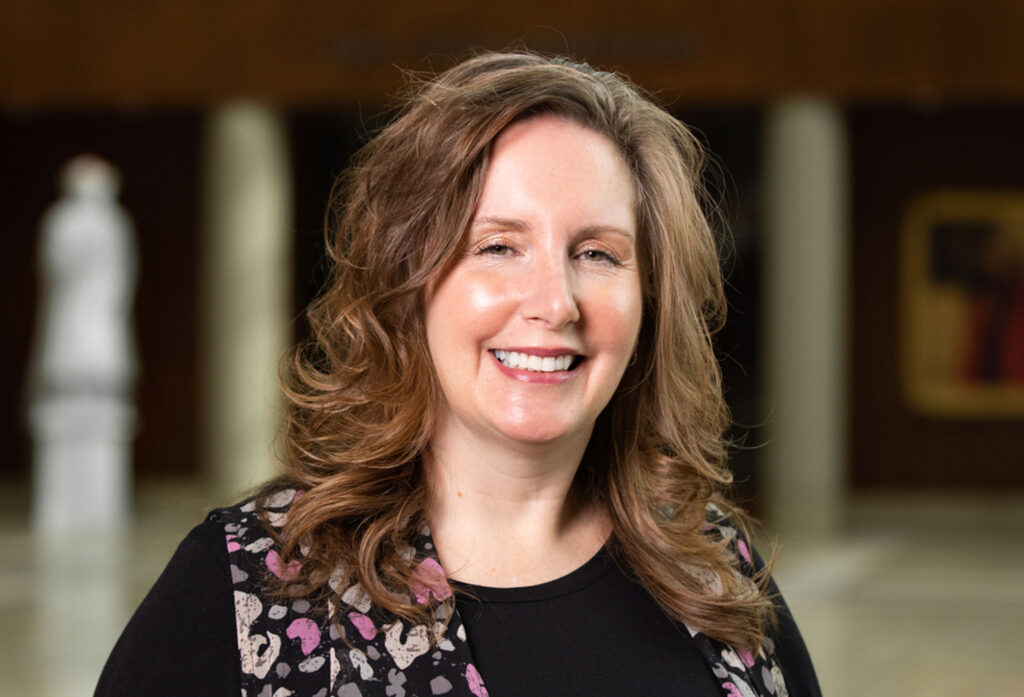
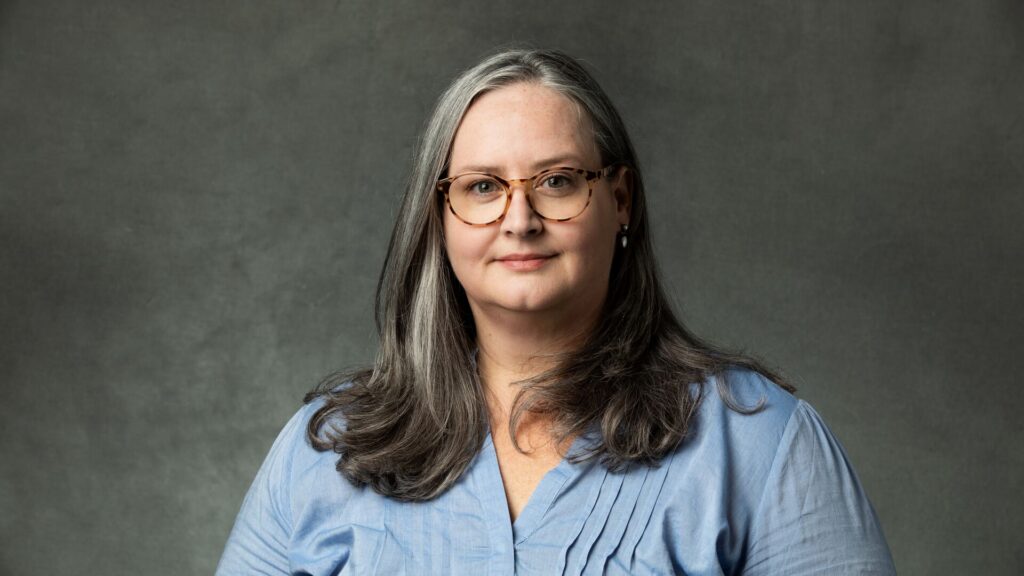
Jill Akervik MA ’07, director of academic affairs and registrar for the St. Thomas School of Law, has only met Feeney on a few occasions, but she loves what he’s built with the MAIL program. Akervik, the first University of St. Thomas staff member to enroll in the program, has built three applications, including a wellness app and an AI advising tool that the law school leverages toencourage the use of AI to achieve desired outcomes.
Now in her third asynchronous course in the MAIL program, Akervik says the seven-week semesters are intense, and she loves how much she’s learning in a relatively short time span.
"Most people use these systems for a Google search and they can do so much more underneath the hood,” Akervik said.
For example, Feeney uses AI outside of work to scale up recipes to accommodate his family and once used AI to replace a headlight on his car, which saved him money.
As with any tool, there are limits, and the user must be aware.
“I wouldn't turn the core work of raising children over to AI just yet,” said Feeney, a father of seven kids ranging from age 2-16.
Akervik’s next MAIL course with Feeney will touch on the ethics of using AI. She said that course, as well as courses that covered the history of AI and technical app building skills, will be helpful when she finishes her MA in Artificial Intelligence Leadership degree in 2027. With the university being proactive in exploring ways to integrate AI into its curriculum, she believes St. Thomas students will be more competitive in the workforce.
“Employers are really looking for people who have some hands-on experience and can use it,” Akervik said about fluency in artificial intelligence. “It’s exciting for me to be at the beginning of education’s acceptance of AI, because it’s here.”
Feeney agrees that employers need people who can collaborate around AI.
“The safest approach, with artificial intelligence, is to become an expert at using it,” Feeney said. “To understand the ethical dilemmas that corporations face with artificial intelligence, to understand the history and significance of the technology, to understand the legal issues involved.”