When the University of St. Thomas announced its recent Finding Forward event featuring Steve Grove, president and CEO of the Minnesota Star Tribune, and Duchesne Drew, president of Minnesota Public Radio, the friction and division surrounding the news media soon became evident.
“We got emails saying, how can this be ‘Finding Forward’ on the future of news media when you have two organizations that see everything through a liberal lens?” said University of St. Thomas President Rob Vischer, the event’s moderator.
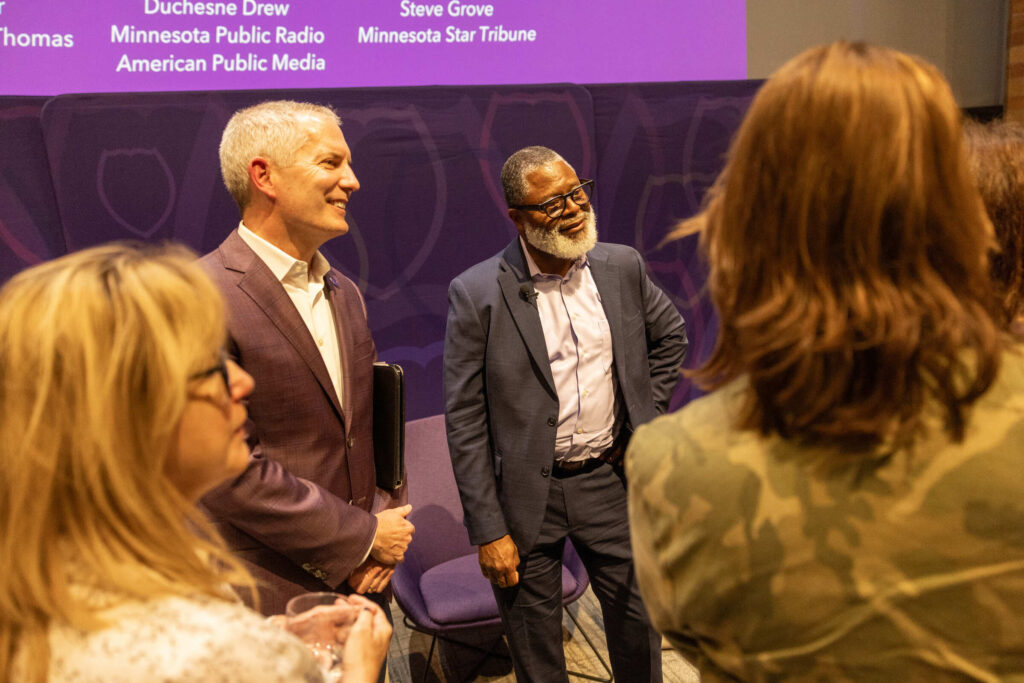
Allegations of bias, agenda-pushing, and media influence are not new, but they are intensified in today’s environment. These topics and more were on the table at Finding Forward, a speaker series at the University of St Thomas that aims to tackle controversial and divisive themes through discourse in a way that, as Visher said, “sheds more light than heat.”
Both Grove and Drew acknowledged that highly partisan views of news outlets, changes to the economics of journalism, shrinking newsrooms, a decline in media literacy, and the rise of news bubbles have forever changed the relationship between American society and the news media. Yet both hope the media can become a bridge rather than a source of division.
Rebuilding Trust by Reconnecting with Local Communities
It starts with trust, which for the media has eroded in recent decades. The news media bears some responsibility, Grove said.
In one powerful example, he shared that on a visit to the Leech Lake Indian Reservation, community leaders told him they no longer trusted the Star Tribune after a story ran many years ago.
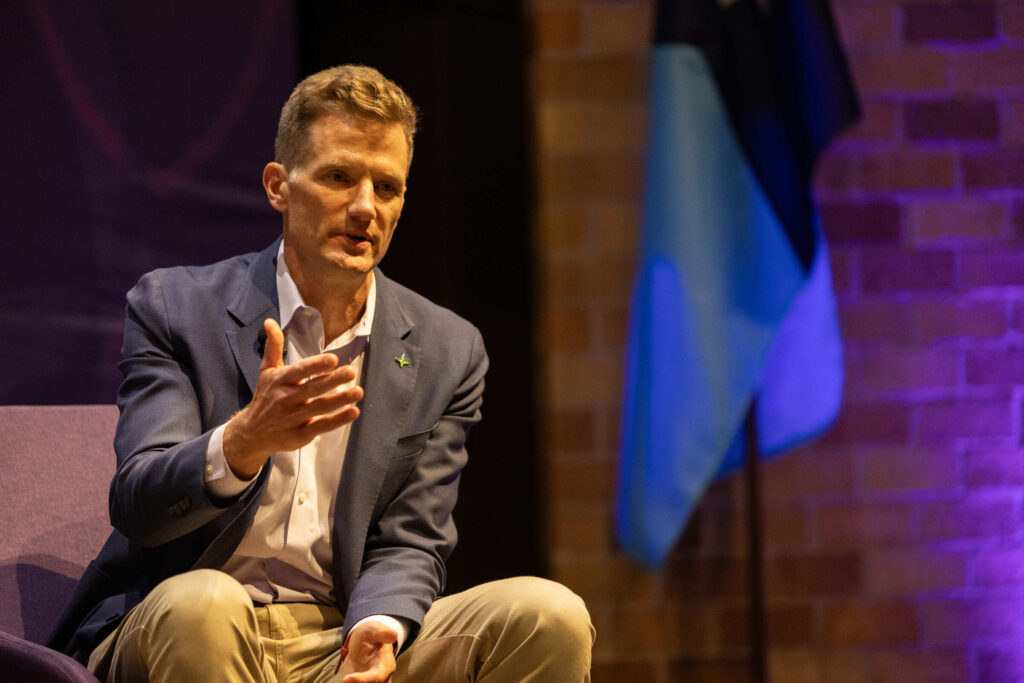
“It was an investigative story about a murder on that reservation that I'm sure was impeccably reported in terms of just the facts,” he said. “But that's the only story the Star Tribune wrote in 20 years about the Leech Lake Reservation. If that's the only story you write, that's the only perception people have of that place. And so of course, you got that community wrong.”
Both the Star Tribune and MPR are emphasizing more local, community-based reporting to help paint a fuller picture of places, beyond just the facts of particular events. “There's work for us to do in showing up,” Drew agreed. “Both of our organizations are adding journalists across the state. We're trying to be more present in more communities. That's about building trust and building relevance.”
Perceptions of Bias and How to Address Them
Regarding the idea that certain media organizations ‘lean’ one way or another, Drew noted that perceptions of bias can also really be the effect of media bubbles. “This is an issue at times on the left and on the right where people just don't want to hear something that they don't agree with,” he said. “It's not the way they were raised. There's an intolerance for hearing things that don't align with our view of the world.”

Some of the perception of bias can also be attributed to declining media literacy, Grove noted: While in the past people understood the division between news reporting and opinion, which were clearly labeled in separate sections of the paper, that line is badly blurred in social media, sometimes deliberately.
For the Star Tribune, the makeup of its editorial board traditionally tended left of center, Grove said. “So that criticism, I think, is fair,” he noted. But analysis of the Star Tribune’s news reporting by third parties, he said has consistently found it to be politically neutral or balanced between liberal and conservative points of view.
The Star Tribune has chosen to no longer make political endorsements. Grove noted that these carry little weight today and can reinforce the idea that the entire publication, not just its editorial board, is politicized. Additionally, the paper is actively trying to find more conservative voices to balance the opinion section.
Drew also feels MPR is more balanced than it gets credit for and notes that some on the left also think the station mis- or under-represents them. “I think that there are moments when we're probably more conservative than liberal and some folks just don't notice it,” he said. “I think it's easy, when you're hearing perspectives that are different than your own experience, to assume that’s about bias. But for [the media], the job is to show us to one another, right?”
MPR’s member-supported model provides a crucial buffer for editorial independence, Drew said. With tens of thousands of members, the organization isn't beholden to any single donor or advertiser. The federal government’s cuts to public broadcasting have left a hole in the budget, but the organization is redoubling its efforts to find other revenue sources, and never again rely so much on a single source.
Building New Relationships with Media Consumers
Changes to the media landscape mean modern media organizations need to rethink their relationships with those who listen to and read the news.
“We have to be worth their time,” Drew said. “We have to work harder to be relevant to them. Our goal is to for those moments when something meaningful happens, they choose to look to see what we have to say about it.”
Grove noted that the Star Tribune is investing to meet people where they live and reflect their interests – things like expanded prep sports and more local news for regions of the state outside the metro area. It is creating more digital content and even exploring soliciting donations from those who see media as a public good, to forge the kind of relationship MPR has with its donors.
Reasons for Hope in the Newsroom and Society
Both Grove and Drew see reasons for hope despite the polarization of media perceptions.

One is that there still are many people and organizations who value an independent, fact-based media. Grove said that trying to counter disinformation with facts can feel like trying to put out a blaze with a garden hose – “but if we have enough garden hoses, we can put out the fire.”
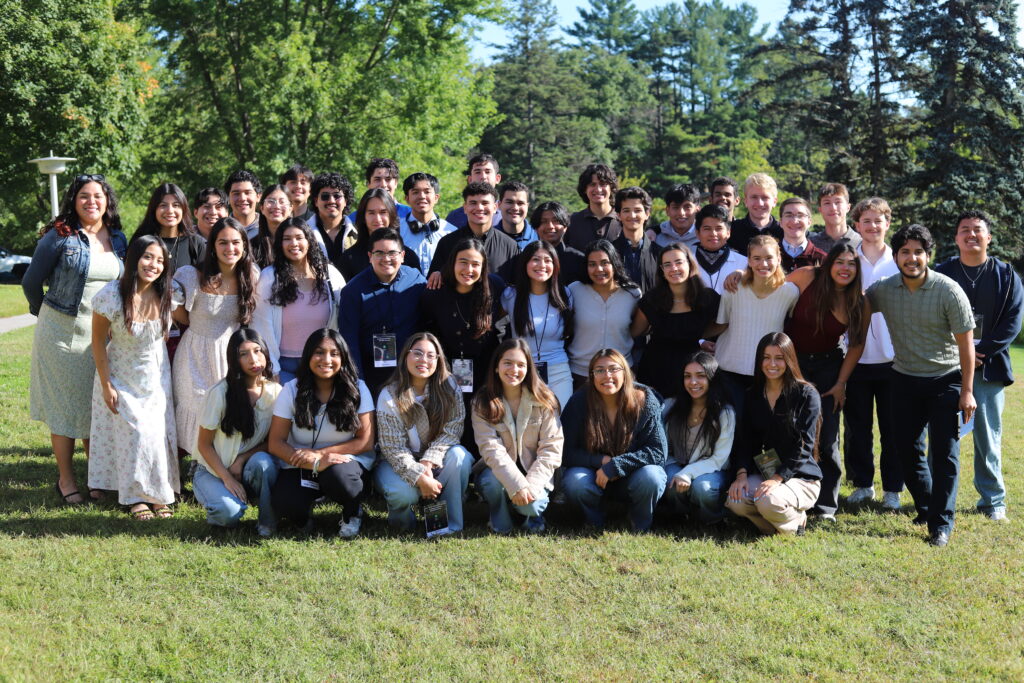
The influx of young talent into journalism promises to bring new ideas and perspectives – including those of future graduates the University of St. Thomas ThreeSixty Journalism program, many of whom were in attendance. “One thing both of our organizations are doing right is we've got 20- and 30- somethings helping us figure it out,” said Drew. “They've got the same habits as the people we’re chasing. We're going to continue to use audience research, and then use our hearts and our minds to come up with stuff that is better.”
Whether a new media innovator or a newsroom veteran, Grove said he takes hope from the people working in journalism – describing the Star Tribune staff as "dripping with purpose." It is that shared commitment to serving the public with shared facts, he says, that provides the most compelling reason to believe in the future of news.