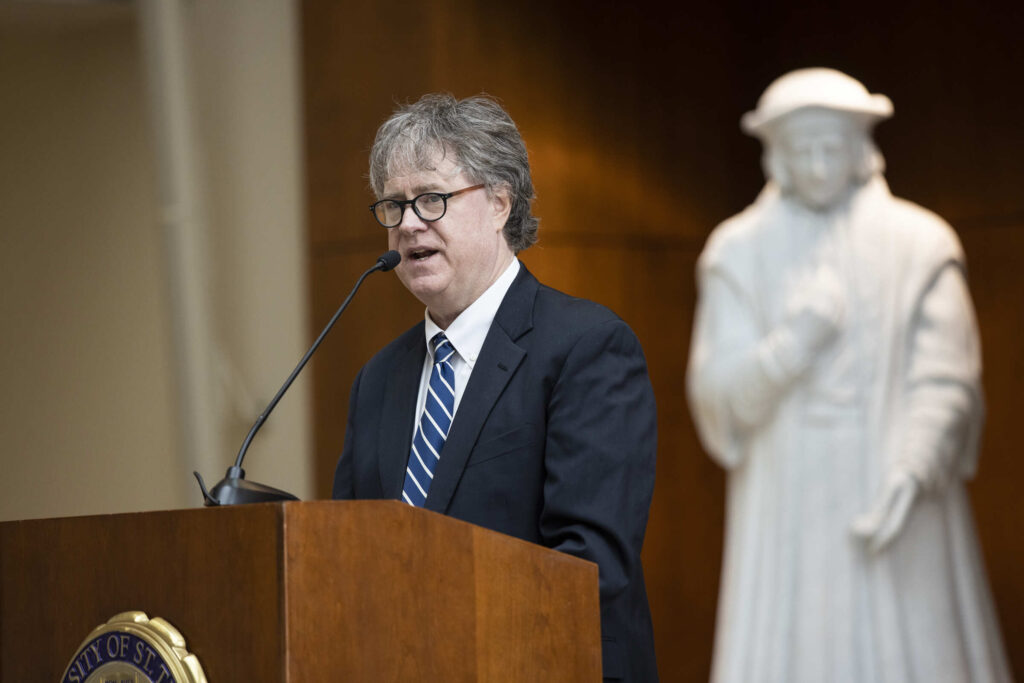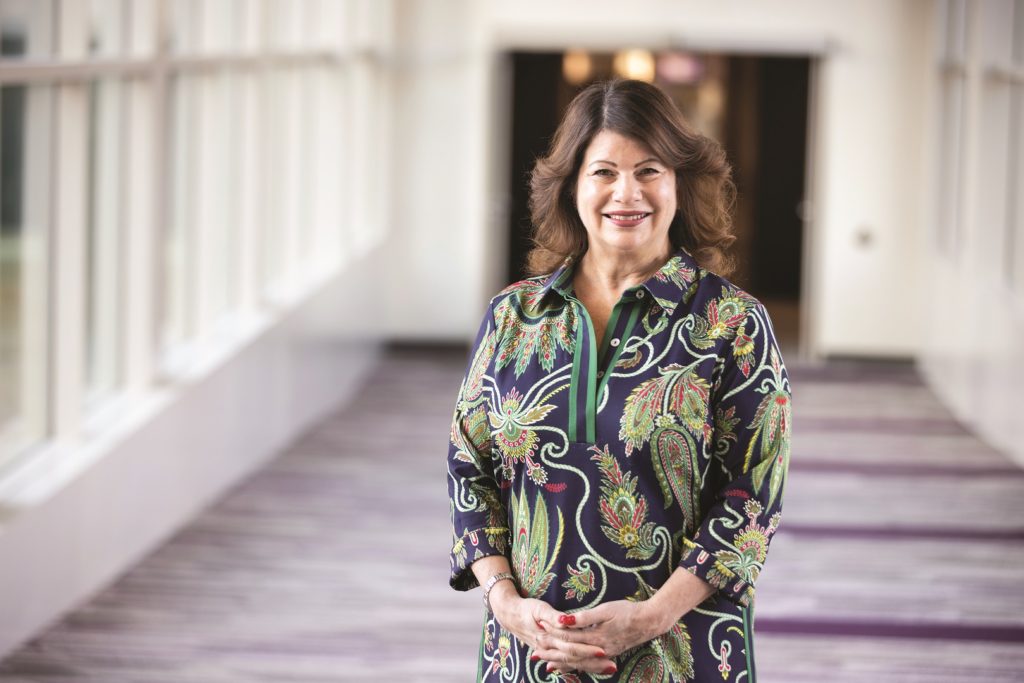
Ali Ling, an assistant professor of civil engineering at the University of St. Thomas, spoke with MPR News about concerns surrounding renewed mining activity near the Boundary Waters Canoe Area Wilderness. Ling discussed the challenges of balancing resource development with environmental protection and the factors policymakers and communities must consider as mining proposals move forward.

From the conversation:
Clay Masters: You said that you’ve been going to the Boundary Waters since you were a kid. What have you noticed about the landscape that’s changed, or has it?
Ling: I think there was a big blowdown and some fires happening, but overall I feel like the whole feel up there hasn’t changed a ton. It feels like there were more people that came up, maybe after COVID, as people were spending more time outside, but generally, you’re sitting at a campsite making s’mores or whatever, I feel like it feels pretty similar now to what it did in the past, and I think that’s part of the magic.
Masters: And you feel that that magic would not be affected by mining in the area, that it would continue to be like that for generations to come is how you’re seeing it.
Ling: I think we certainly have the engineering and the permitting capabilities here in Minnesota to operate mines in that watershed without negative effects to the Boundary Waters, but if we had fewer regulations for this kind of thing and permitting in the state, then it would be a different conversation.
I think if we were permitting this type of mine in this type of watershed in a different state with less stringent regulations, I think it would be different. But Minnesota is pretty great with our environmental permitting and regulations. People here in the state are excited about water, we’re excited about the environment, and I think that really drives our regulatory agencies to put that into their action in what they’re doing in managing environment in the state.