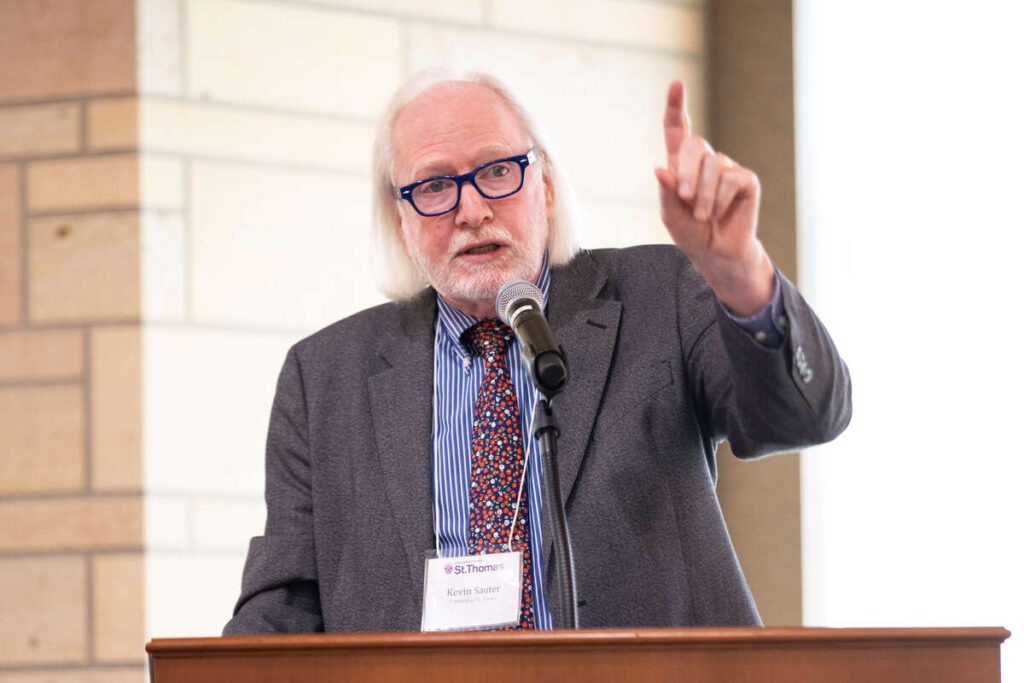
Andy Babula, finance professor and director of the real estate program at the University of St. Thomas Opus College of Business, offered insight into the dramatic shifts reshaping Minneapolis’ downtown office market. Following the steep discount sale of Wells Fargo Center, Babula weighed in on what the deal signals for future property values and the city’s broader economic outlook.

From the article:
Jon Septer was among the few people from law firm Maslon who frequented Wells Fargo Center in downtown Minneapolis in the early days of the Covid-19 pandemic.
Once a de facto highway for office workers, the art deco tower’s marble-and-granite skyway went as quiet as the rest of downtown. ...
The pandemic’s impact on Wells Fargo Center has been long-lasting. Between 2019 and last year, Wells Fargo Center’s occupancy rate dropped from 80% to 62%, according to previous Business Journal reports. ...
“There’s going to be some pain and there’s going to be a big reset that has to occur. It’s almost like things have to get worse before they can get better,” said Mike Ohmes, president of Frauenshuh Inc.
“It wasn’t entirely a surprise … but it [was] still shockingly low,” said Andy Babula, director of the real estate program at the University of St. Thomas.
"With new owners and new loans, it will give these owners the ability to operate at a baseline that’s more in line with reality,” said Jon Septer of Maslon.