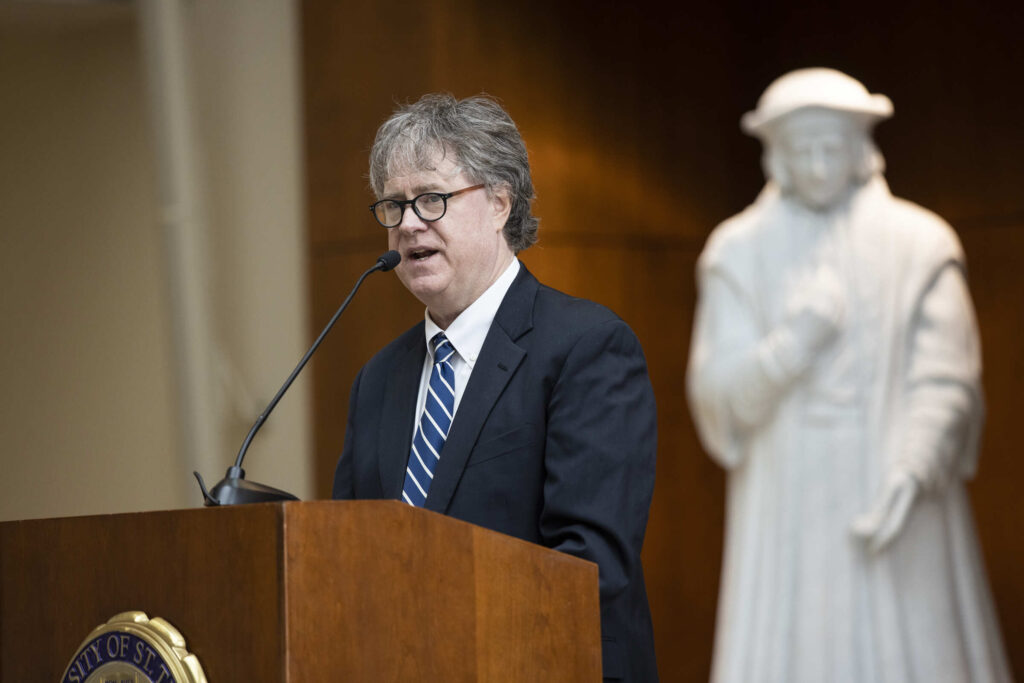
Ernie Owens, an associate professor in the Opus College of Business at the University of St. Thomas, spoke with FOX 9 about the growing number of companies requiring employees to spend more time in the office. Owens said organizations are increasingly focused on strengthening workplace culture, communication, collaboration, and professional development, while balancing the flexibility many employees value in remote work arrangements.

From the conversation:
Courtney Godfrey: I remember when they brought us back for our meetings. They said they were really missing that collaboration piece that we had when we were all here in person. A lot of people have found that work from home makes them happier. There are studies to show that employees are happier and last longer with a company if they get to work from home. Is there any truth to that? And does the productivity and the culture outweigh that benefit?
Owens: It’s going to be really dependent upon the individual. Some people just want to do a good job and work in a company, and going back to work may not have all the benefits per se. For those who are interested in climbing the corporate ladder, knowing more about the field and networking with people, having collaboration with people in their space and their competencies will find that being around people and sharing in the ritual is going to be a better thing. If you’re just going to work because it’s a job, it may not have all the benefits for you.
Godfrey: What about people who were hired under the understanding that they would be remote, and now they’re being told to come back? Are companies allowed to do that? Are there any protections for that employee who was hired under the understanding that they would be remote?
Owens: No, there’s no protection unless there was signed contract – a physical contract. There is no protection. The enterprise hires you, you don’t hire the enterprise. They bring you into the enterprise to work with them to do things and achieve their vision and mission and their objectives. And so change is common. I’ve been through points in time where we’ve had people hired, and I remember myself having had a contract for life with a company that got bought out, and those things happen. The environment changes, and as we go into more technologies like AI, go into more international things are going to change to meet the market and market needs, and so there’s no sort of implied contract, unless you physically have one. It’s up to the enterprise, and how they want to utilize you in the process.