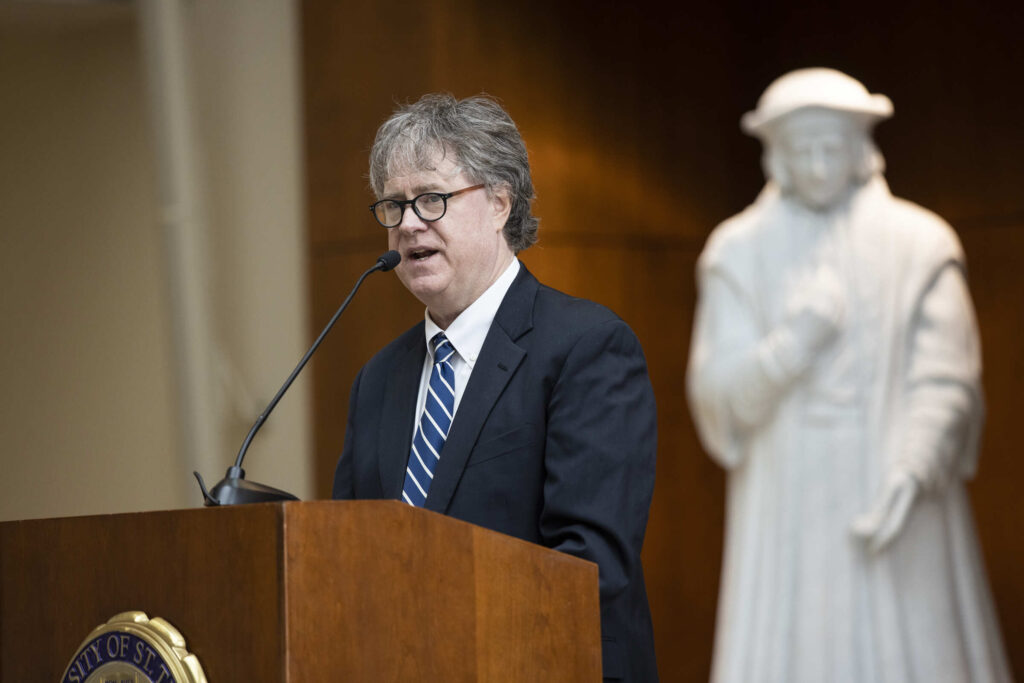
Christopher Wong Michaelson, professor of business ethics at the University of St. Thomas, joined MPR News to discuss the effectiveness of consumer boycotts. Michaelson said that while boycotts rarely have a large direct financial impact on major corporations, they can succeed by drawing attention to issues and encouraging changes in corporate practices.

From the conversation:
Catherine Richert: Nike is often held up as sort of one of those success stories. Consumers pushed back on sweatshop labor. The industry actually changed. We also, more recently, saw at Target, a boycott in response to the company’s decision to roll back its DEI initiatives. How do we know if maybe some of the policy changes that were made within these organizations were due to the boycott, or really was it other factors?
Michaelson: I think we can learn a lot from the Nike example. So this occurred in the 1990s, and there was a lot of concern, especially from the political left, about treatment of sweatshop workers in Southeast Asia who were making Nike shoes for pennies on the dollar for what they were actually costing the consumer.
And initially Nike’s response to the concerns was to say, these are actually not our manufacturing facilities. They are contract manufacturers. They’re not our employees. We don’t have a say in what they earn. We don’t have a say in the working conditions, and so on. Michael Jordan, who was the most famous athlete that endorsed Nike products at the time, was once asked what he thought of the sweatshop conditions.
And he famously quipped, and he maintains today it was a joke, but he said, “Republicans buy sneakers too.” So he essentially declined to take a position, as the company had. And the data really are inconclusive from way back then whether there was actually any economic adverse impact to Nike’s performance. But as you suggested, it led to increased awareness about the issue and a change in practice.
So Nike eventually said, we are the economic behemoth in this supply chain, and we do have the power to actually audit the factories that we work with and make sure that the health and safety of the workers is sound, that there’s no child labor or forced labor, and Nike eventually became a leader in supply chain sustainability. So in that case, I think it was ultimately successful. ...