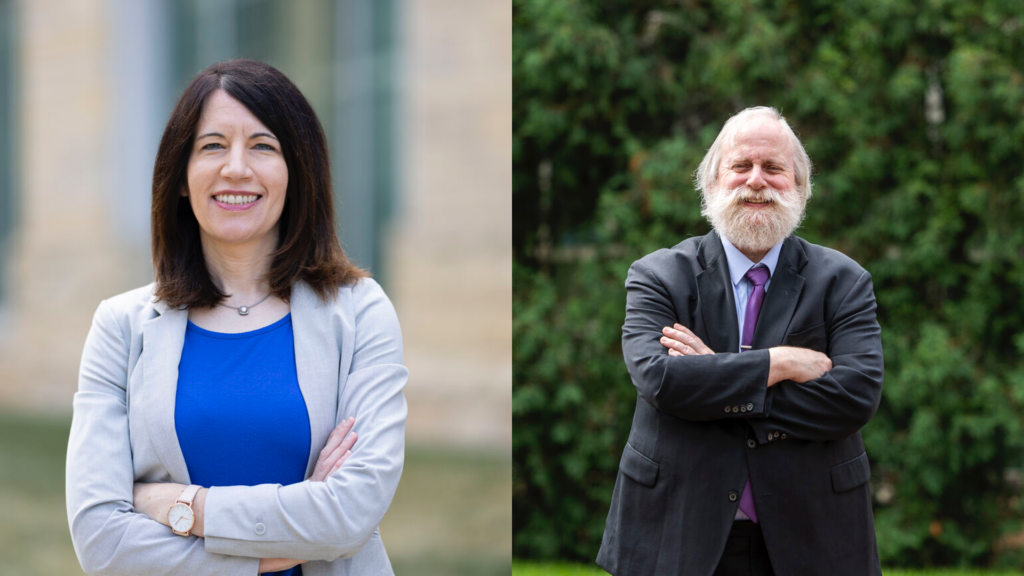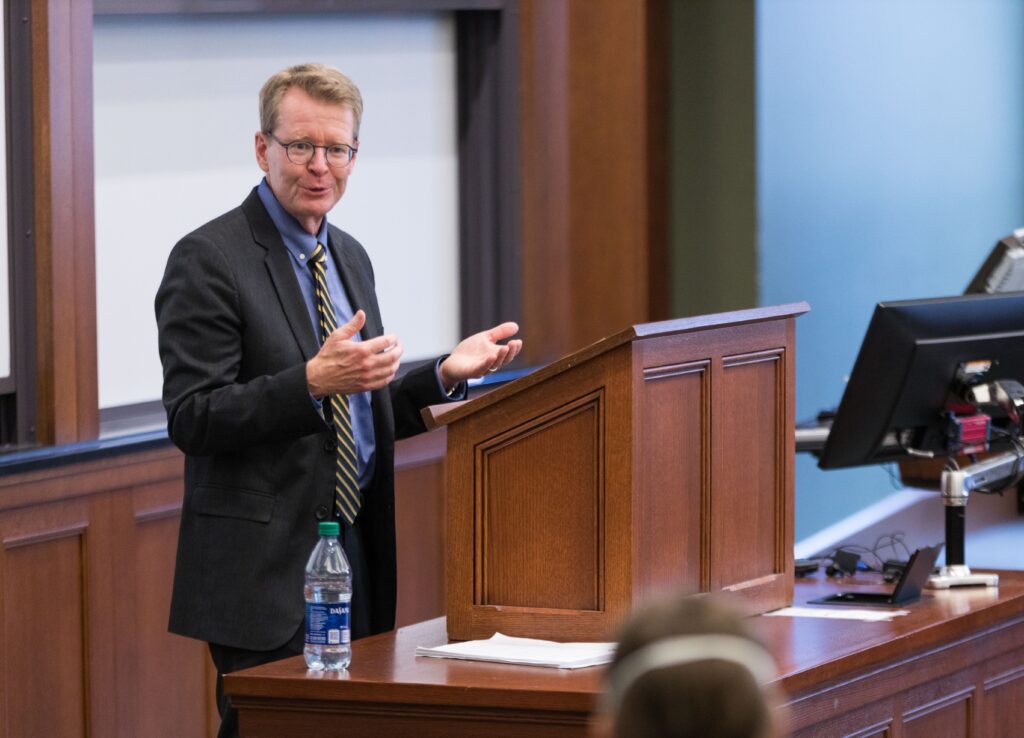
Rachel Moran, professor at the University of St. Thomas School of Law, has appeared in The New York Times along with multiple local broadcast outlets explaining the legal boundaries surrounding protests and immigration enforcement in Minnesota.

From The New York Times:
Moments before Renee Good was shot to death on a Minneapolis street last week, a federal agent ordered her to get out of her Honda Pilot.
Was she legally obligated to comply?
The answer is contingent on many factors, experts said, including the complex interplay of power and jurisdiction among law enforcement agencies. While Ms. Good was compelled to follow a lawful order, it is not clear whether the immigration agents on the scene were acting within their authority.
“What were the ICE officers even attempting to do?” asked Rachel Moran, an expert on police accountability at the University of St. Thomas School of Law in Minneapolis. “There’s a couple of key questions, I think. One is, were they involved in a legitimate enforcement operation at that point? And the second is, was she actually blocking their vehicles?”
Homeland Security Secretary Kristi Noem has said that agents had been trying to free a vehicle that was stuck in the snow when “a mob of agitators that were harassing them all day began blocking them in, shouting at them and impeding law enforcement operations.”

From KSTP:
... In recent weeks, people at demonstrations at immigration enforcement operations told 5 EYEWITNESS NEWS they were there to observe. Organizations have offered training on how to document safely.
“People in general have a right to stand in a public place and to record what they can see,” said Jane Kirtley, a professor of media ethics and law at the University of Minnesota. “It doesn’t matter if you’re a citizen observer, an ordinary person, or a journalist.”
She explained the First Amendment protects demonstrators’ rights to shout at ICE agents.
“What you cannot do is threaten them in a context of what would be considered a true threat, so imminent lawless action,” said Kirtley.
Both Kirtley and University of St. Thomas School of Law Professor Rachel Moran told 5 EYEWITNESS NEWS that protestors also cannot obstruct or interfere with an authorized government operation.
“The First Amendment does not protect violence, it does not protect damage to property,” added Moran.
After watching Friday’s video, she said there didn’t seem to be anything that crossed that line; however, she said there is still important context missing about the time leading up to the encounter between Good and ICE agents.
“A lot of context that’s not totally clear that I would want to know before I draw any conclusions about the legality of essentially everyone participating in this,” said Moran.
KSTP spoke with Moran again to help answer, “What are the rights of protesters and observers watching ICE operations?”

From ABC 6 News:
Two law professors from the Twin Cities chimed in, and both said the videos alone weren’t enough to make the determination.
“That’s something I cant really say without all the evidence,” said Professor Mark Osler, a former federal prosecutor and law professor for University of St. Thomas School of Law. “We don’t know what all they’re looking at, and so I’m always very cautious without all the evidence making a decision like that because there are things that they are going to have that we don’t have.”
Meanwhile, Professor Rachel Moran, another law professor for St. Thomas School of Law, said she was uncomfortable with politicians saying definitively the shooting was in self-defense based on the videos.
“It’s also too premature to make a definitive decision about that. I’m really uncomfortable with the politicians who have expressed that this was definitely self-defense because if anything, the video shows this might not have been justified,” Moran said.

From FOX 9:
Minnesota has filed a federal lawsuit seeking to halt a surge of ICE agents operating across the state. University of St. Thomas School of Law professor Rachel Moran breaks down what a temporary restraining order against ICE would mean, whether the lawsuit could bring real change, which federal judge will hear the case and whether Hennepin County Attorney Mary Moriarty has a legal path to prosecute an ICE agent.
“It means please stop certain activities. They’re not asking for ICE to be removed from the cities, they’re asking a judge to make ICE stop doing certain things,” said Moran.

From KMBC News:
Wednesday’s shooting by a federal ICE officer in Minneapolis has raised big legal questions over the use of deadly force, self-defense, and federal immunity.
Here’s how University of St. Thomas School of Law Professor Rachel Moran, based in Minnesota, breaks it down.
“Would an objectively reasonable officer believe that force was necessary to protect the officer from death or great bodily harm?” Moran said. “What were the ICE agents trying to do? How much were they actually being obstructed? What are the measurements of the street? Could they have simply gotten around this driver? Were there other avenues available to them that they didn’t need to create this altercation?”

From the Sahan Journal:
“It’s a very difficult case, but I don’t think it’s a lost cause because there is some video evidence that they do have access to,” said University of St. Thomas School of Law professor Rachel Moran. “(The video) does show the shooting itself. There are potentially other witnesses who might be perfectly willing and happy to talk to them.”