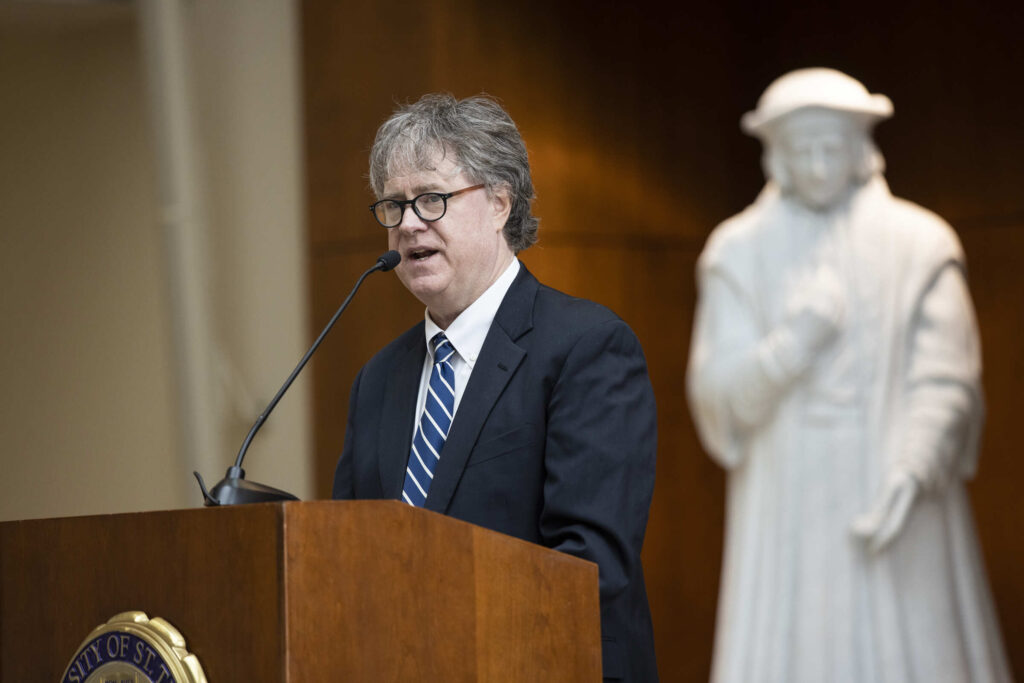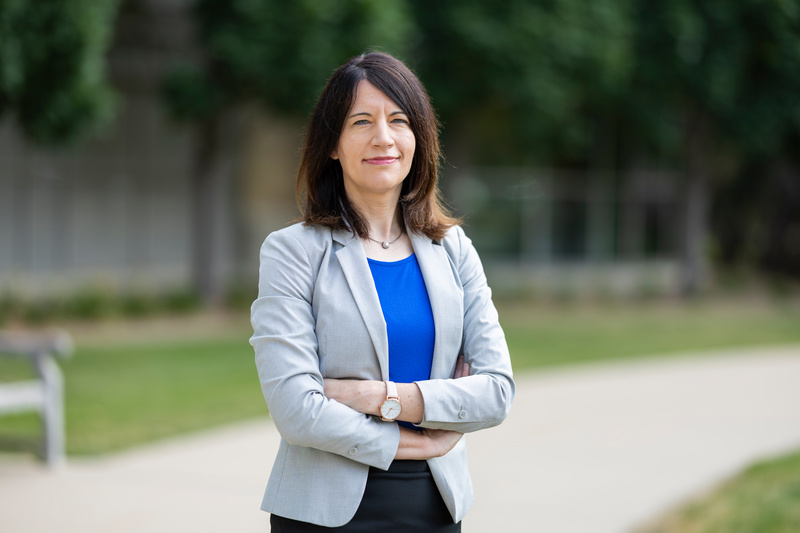
Rachel Moran, a professor at the University of St. Thomas School of Law, spoke with KSTP and FOX 9 about federal charges filed against individuals accused of interfering with immigration enforcement operations in Minnesota. Moran discussed the legal challenges involved in conspiracy prosecutions, the varying levels of evidence that may exist against different defendants, and the scrutiny courts may apply as the cases move forward.

From KSTP:
Moran said she reviewed the 94-page indictment and believes federal prosecutors gathered strong initial evidence, but she questioned whether the case is equally strong against all 15 people charged.
“My instinct in reading those 94 pages is that they seem to have much stronger evidence against some people than against others,” said Moran.
Moran said some people are mentioned far less than others in the indictment, which she believes defense attorneys will challenge.
“The line between what was protected protest activity and what crosses into impeding or obstructing is already not very clear, and then when you say ‘Well, there are particular people who maybe didn’t impede or obstruct but just entered into some possible agreement to do that,’ then you’re getting farther and farther away from the ones who actually did something problematic,” said Moran.

From FOX 9:
The FOX 9 Investigators tracked nearly 60 other assault cases in Minnesota where people were accused of assaulting or impeding a federal officer during Operation Metro Surge.
More than half of those cases have since been dropped, with some attorneys making accusations of “outrageous government conduct” and that it lacked “credible evidence.”
Dig deeper:
Assault cases were also regularly dismissed or declined to charge during the immigration enforcement surge in Chicago last fall.
“We have a number of demonstrably false claims where judges have found that Homeland Security agents were making misrepresentations about assaults,” said University of St. Thomas law professor Rachel Moran.