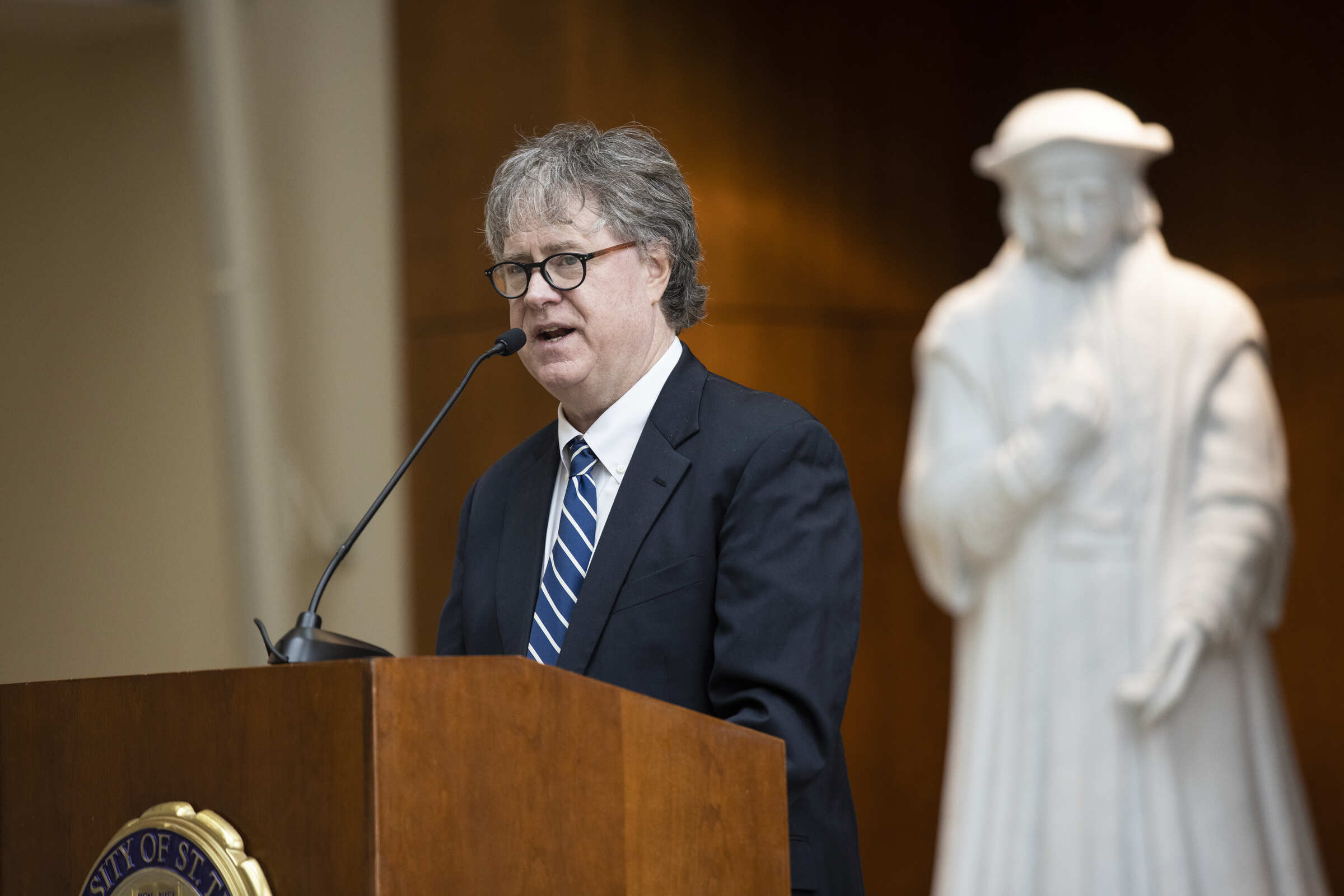
Mark Osler, a professor at the University of St. Thomas School of Law and a former federal prosecutor, spoke with The Guardian about lengthy prison sentences handed down to protesters convicted in connection with a 2025 demonstration outside an immigration detention facility in Texas. Osler discussed federal sentencing guidelines, judicial discretion, and why the decades-long prison terms imposed in the case are unusually severe.

From the article:
“It’s relatively unusual to see that kind of stacking,” said Mark Osler, a law professor and sentencing expert at the University of St Thomas in Minneapolis. “Usually the sentence for the core offense is pretty harsh in the federal system, frankly, and there’s no need to pile things on.”
O’Connor explained his harsh sentences as necessary to send a message. “The need to deter this type of conduct is high,” said O’Connor, who also called the attack an “assault on democracy,” according to The Associated Press.
While the government’s sentencing recommendations remain sealed in the case, the recommended sentences could have been inflated by a terrorism enhancement under the federal sentencing guidelines because of the specific crimes they were found guilty of. The enhancement drives up the seriousness of the offense and the relevant criminal history in the calculation judges rely on for a recommended sentence, said Osler and Douglas Berman, a law professor at the Ohio State University who is also a sentencing expert.
“It does this sort of double whammy that functionally makes the sentence recommendation from the guidelines extremely long,” Berman said. “I still can say these are extreme sentences.”
Even with a recommendation from the federal sentencing guidelines, judges still have discretion to depart from them. “Judges very often go below the guidelines, much more often than they go above,” Osler said.