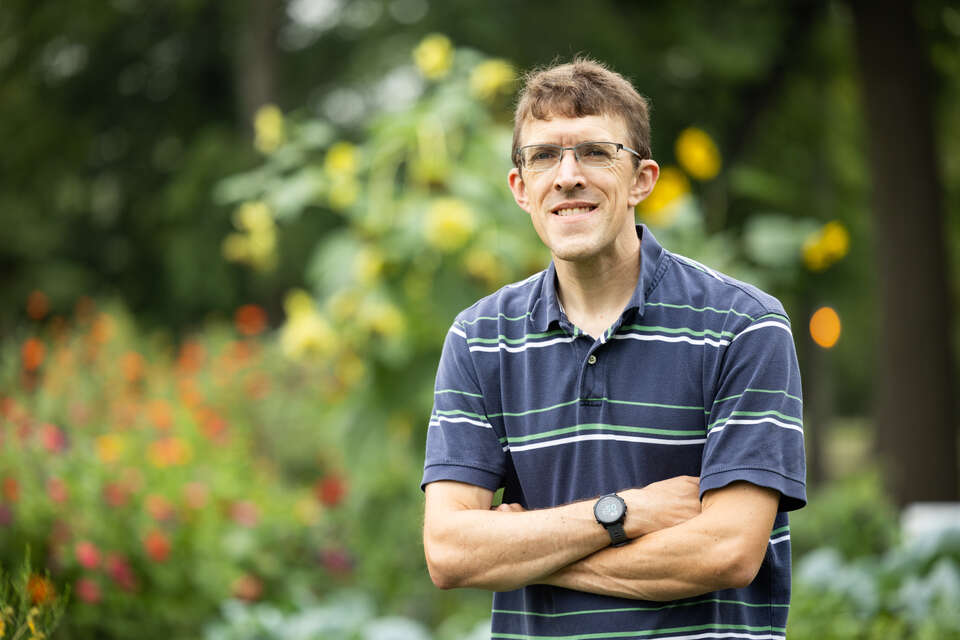
University of St. Thomas Biology Professor Chip Small recently spoke to the Minnesota Star Tribune regarding the effect of Minneapolis rain gardens.
From the story:

Managing stormwater and nutrient pollution has always been a trade-off for local governments, said Chip Small, a biology professor at the University of St. Thomas. Plants help reduce flooding by soaking up and storing water, creating healthier soil compositions and preventing erosion. They also benefit bees and other pollinators. But cultivating those plants also means introducing nutrients like phosphorus, which then can be leached into the water and fuel algae blooms in lakes.
“Sometimes these things are pitched like a panacea. Like, this is going to solve all the problems,” Small said. “But really, it solves some problems and it creates some other problems.”
One way to minimize nutrient runoff, Small added, is to use city-made compost in the rain gardens rather than compost made from manure, which tends to have higher concentrations of phosphorus. City compost, on the other hand, tends to be made of food and yard waste, he said.