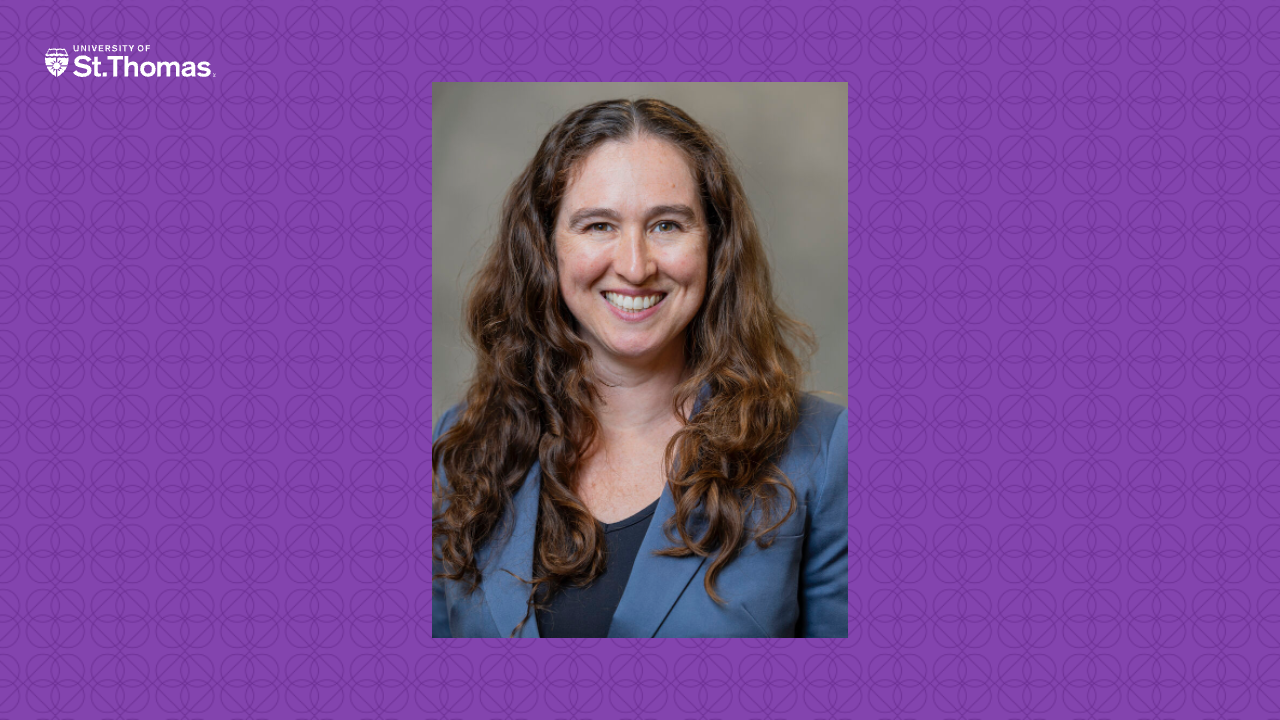
University of St. Thomas clinical nursing professor and certified nurse-midwife Emily Fitzgerald recently wrote an op-ed for the Minnesota Star Tribune about the importance of preserving birthright citizenship as the U.S. Supreme Court considers the issue. In the piece, Fitzgerald argues that ending birthright citizenship would have far-reaching consequences for maternal and child health, public health, and the future well-being of communities across Minnesota and the United States.

From the op-ed:
When giving birth, labor takes over the body and mind. Daily stressors pause. Focus becomes intense and singular. The pressure inside the body builds. When the baby emerges, the relief is great. For many new parents, life stressors re-enter quickly. As the umbilical cord is cut, new parents often ask a question that will define their child’s life: “When do we get the birth certificate?”
I am a nurse-midwife. We midwives welcome babies in hospitals, homes or birth centers in all 50 states and on military bases. In our work, we are among the first to welcome the newest Americans into our country.
As a midwife in the United States, I take pride that every baby I have greeted had a chance to thrive. All have been U.S. citizens, with potential for their American rights to liberty and the pursuit of happiness. That’s because the law of the U.S. includes something called jus soli, or “right of the soil.” It means that, each time I attend a birth on U.S. soil, the baby is born a citizen.
For more than 128 years, this fact has been based on the location of their birth. Jus soli is birthright citizenship. In 1898, the U.S. Supreme Court interpreted the 14th Amendment of the Constitution to mean that, with few exceptions, a baby born in the U.S. is legally a citizen regardless the status or nationality of their parents. Birthright citizenship is a constitutional right here. And while this isn’t the case in many countries, Mexico and Canada have similar laws.
With an executive order, President Donald Trump is attempting to dismantle birthright citizenship as we have known it for over a century. That’s because his administration suggests that children born here to parents who are refugees, undocumented, or international students should not have “the privilege of United States citizenship.”...