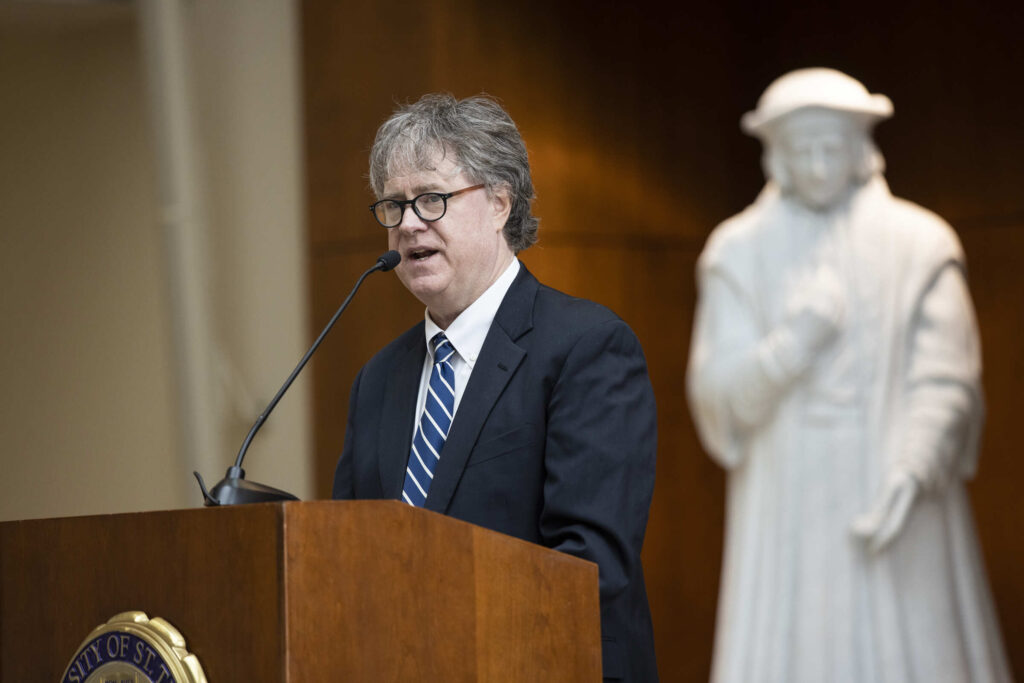
Julie Jonas, a professor at the University of St. Thomas School of Law, spoke with KARE 11 and MPR News about a Minnesota Supreme Court ruling that places new limits on how law enforcement can use cellphone location data. The decision affirms privacy protections under the state constitution and could impact how geofence warrants are used in future investigations, while also raising questions about an existing murder conviction.

From KARE 11:
Julie Jonas: Much new technology that can be used to track our citizens, and so we need to put some guardrails on that and I see the court doing that under the Minnesota Constitution, which is great.
Kent Erdahl: St. Thomas Law Professor Julie Jonas says she’s surprised by the timing of the decision, considering the United States Supreme Court is set to hear a similar case later this month.
Jonas: The court couldn’t go another way at the federal level and say, because you voluntarily give this information over to Google, you don’t have a reasonable expectation of privacy, and cut it off right there by electing not to wait.
Erdahl: The Minnesota Supreme Court now sends this case back to the appeals court. He could get a new trial. So the question then is, could old cases resurface?
Jonas: I don’t see this decision as being retroactive, so I don’t think it’s going to open up a whole lot of cases on this issue.
Erdahl: In regards to future cases, she points to the ruling where the court made a point to say geofence warrants are a useful tool for law enforcement, adding had there been judicial review of the reasonableness of that expanded search, the result here may have been different. In a way, does this ruling give law enforcement more of a rule book for how to go about this.
Jonas: It does. It says you can do this, but you need to have everything very carefully tailored as you go forward.

From MPR News:
University of St. Thomas law professor Julie Jonas said the court is standing by the Minnesota Constitution’s expectation of privacy for cell phone location data. Jonas said that the decision means that police across Minnesota will need to be more deliberate when they seek geofence warrants.
“I think now a cautious law enforcement agency will also get a warrant at step two, when they want to expand their search beyond that initial step one search area,” Jonas said.
The case now returns to the lower courts, which are expected to determine if Contreras-Sanchez should get a new trial. He remains in custody.
This is the first time that the Minnesota Supreme Court has addressed the constitutionality of geofence warrants.