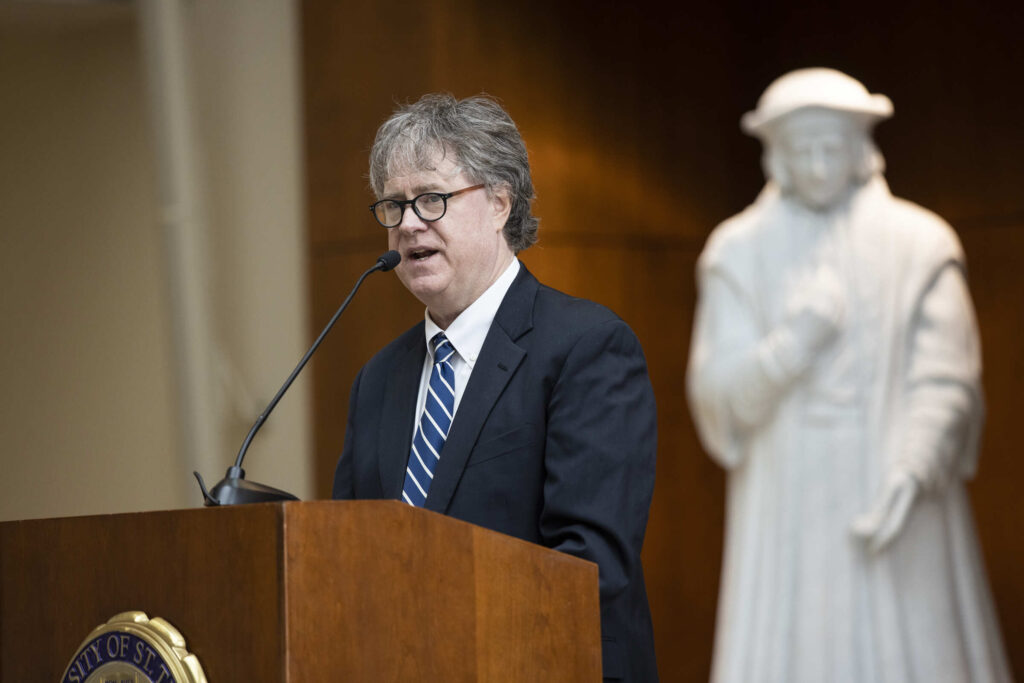
Julie Jonas, an associate professor at the University of St. Thomas School of Law, spoke with KARE 11 about the U.S. Supreme Court’s decision involving the use of geofence warrants in criminal investigations. Jonas discussed the constitutional questions surrounding digital privacy, location data, and law enforcement’s use of geofence warrants, as well as the potential implications of the court’s ruling for future Fourth Amendment cases.

From the story:
Julie Jonas: I’m a little surprised, but I’m very happy.
Kent Erdahl: St. Thomas Law Professor Julie Jonas has studied the use of geofence warrants for years.
Jonas: It’s really pervasive in law enforcement. That’s why Google, in large part, wanted them to get warrants, because the amount of requests that they were getting from law enforcement has been growing exponentially.
Erdahl: In the Chatrie case, Google initially provided a list of 19 anonymous accounts that were in the area of the bank at the time of the crime. The government then asked for more information on nine of them, and an officer later asked for detailed information on three accounts, including Chatrie’s. The lower court will now need to decide how much of that process requires signoff from a judge.
Jonas: When the Minnesota Supreme Court looked at this, they said, “No, you need to have a separate warrant with a finding of probable cause at each step from the magistrate or judge.”
Erdahl: The Minnesota case she’s referencing was decided just a few weeks ago and doesn’t ban geofence warrants, but she said it does significantly raise the bar to use them, and she says that will remain no matter how far the bar goes up across the country.
Jonas: We have a federal Constitution that covers the entire country, but that really is the floor of what states must do. Some states will find additional protections for their citizens in their state constitution, and that’s Minnesota. That’s exactly what they did.
Erdahl: Now, the Minnesota case overturned a murder conviction, but in that case, and in this case out of Virginia, the suspects are both still in custody as lower courts now try to figure out whether they will face a new trial and what evidence can still be used in that trial.